
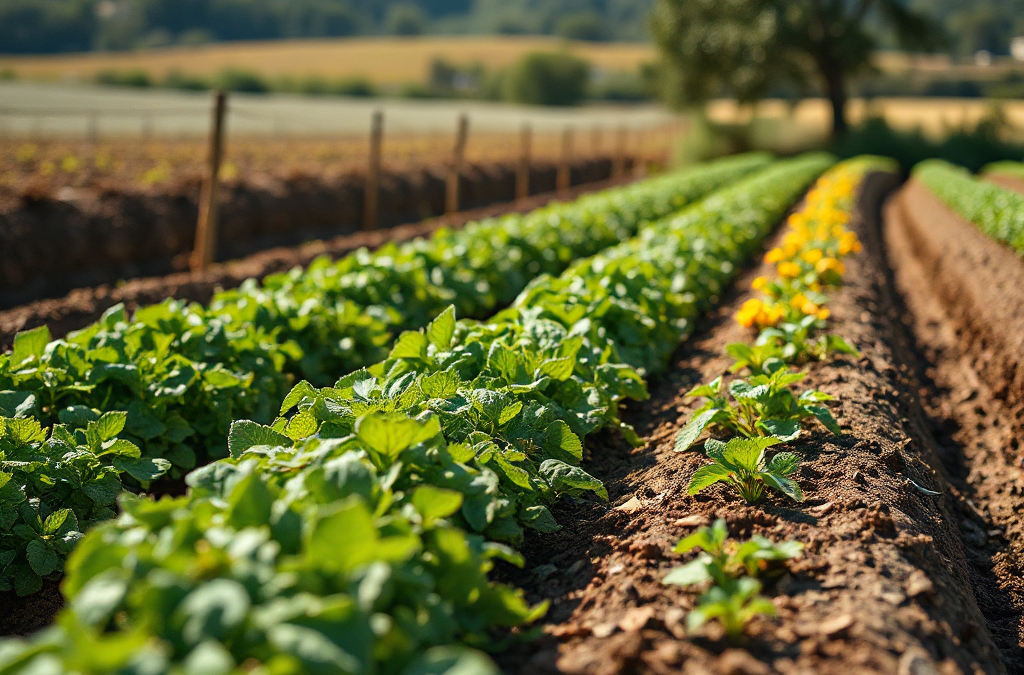
How organic farming affects biodiversity in your area depends mainly on whether farms build habitat, protect soil life, and reduce routine exposure to broad-spectrum pesticides. Organic fields may support more pollinators, beneficial insects, earthworms, birds, and microbial activity when they use crop rotation, cover crops, hedgerows, flowering margins, and varied planting dates. Benefits can be weaker where fields are large, hedgerows are removed, soil is disturbed heavily, or approved pesticides are applied without targeting. To judge local results, compare farm boundaries, field diversity, flowering resources, spray practices, and soil cover rather than relying on the organic label alone.
What Changes on an Organic Farm
Organic farming changes biodiversity through a production system rather than through one isolated input. Certification rules generally restrict synthetic fertilizers and many synthetic pesticides, but the ecological result depends on how the farm replaces those tools. Crop rotations, compost, green manures, mechanical weed control, livestock integration, and biological pest management can create more varied conditions for organisms living above and below the ground.
A diverse rotation gives insects, plants, fungi, and soil organisms a changing sequence of food and shelter. A field planted with one crop year after year offers a narrower set of resources than land moving between grains, legumes, vegetables, and cover crops. Legume phases may add plant diversity and organic matter, while winter cover keeps roots and habitat present after harvest. These effects can extend beyond the field when beetles, bees, birds, and other organisms move into neighboring gardens, drainage edges, or pasture.

The comparison with conventional farming needs care. Conventional farms can also use rotations, reduced tillage, integrated pest management, buffer strips, and habitat restoration. Conversely, an organic farm may still have simplified landscapes, frequent cultivation, or little noncrop habitat. The organic label describes a regulated production method; it does not automatically describe the condition of every hedgerow, stream bank, or field margin.
A common mistake is treating pesticide use as a simple organic-versus-conventional question. Some substances permitted in organic production can affect non-target organisms, especially if applied during flowering or under windy conditions. The stronger question is whether the farm prevents problems through rotation, resistant varieties, monitoring, and habitat for natural enemies before turning to a permitted treatment.
Soil Life, Pollinators, And Wildlife Habitat
Soil biodiversity often responds first to organic management because roots, residues, compost, and reduced reliance on soluble fertilizers alter the food supply for microorganisms and invertebrates. Bacteria, fungi, nematodes, mites, springtails, and earthworms participate in decomposition and nutrient cycling. Their activity can influence soil structure, water movement, and the availability of nutrients to plants, although outcomes vary with climate, soil type, tillage, and the quality of organic amendments.
Cover crops illustrate the mechanism clearly. A living mixture of grasses and legumes protects the surface between cash crops and provides roots for soil organisms when no harvest crop is present. A flowering cover crop may also offer forage for bees, while a grass component can create shelter for ground-dwelling insects. The tradeoff is that cover crops require seed, moisture, labor, and timely termination. A poorly timed cover crop can compete for water or delay planting, so biodiversity planning must fit local weather and farm operations.
Pollinators benefit when farms provide flowers across the season rather than one brief bloom. Field edges planted with native or locally adapted flowering species can supply nectar and pollen, while undisturbed banks provide nesting spaces for some solitary bees. Butterflies and moths may need particular host plants, not merely flowers. Bird diversity can increase where farms retain shrubs, trees, rough grass, ponds, and insect-rich areas instead of managing every edge as a uniform, closely cut strip.
Practical observation should focus on variety and continuity. A single flowering border beside a biologically sparse field may help, but a connected network of margins, hedges, waterways, and rotational fields usually offers more durable habitat. The failure mode to avoid is counting visible flowers while ignoring nesting sites, winter cover, soil disturbance, and pesticide timing. Biodiversity depends on the full life cycle of organisms, not just on what appears during midsummer.
Why Local Results Differ From Farm to Farm
Local biodiversity outcomes are shaped by the surrounding landscape as much as by the farm’s certification status. A small organic holding beside woodland, pasture, ponds, and unmanaged verges may support a richer wildlife community than a larger organic operation surrounded by roads and uniform fields. Nearby habitat supplies colonizing insects and birds, while the farm supplies food, shelter, or movement corridors at different times of year.
Field size and boundary design matter because large uninterrupted areas reduce the amount of edge habitat available to many species. Hedgerows can provide nesting cover, wind protection, flowers, and travel routes, but they can also harbor crop pests if poorly managed. A balanced approach combines habitat with crop scouting, selective mowing, and a clear plan for controlling outbreaks. Removing every hedge for efficiency may simplify machinery movement while reducing ecological functions that are difficult to replace.
Weed management creates another tension. Organic farms often rely more heavily on cultivation, mowing, or hand weeding because herbicide options are restricted. Repeated soil disturbance can damage ground nests, expose earthworms, and reduce plant diversity even when the farm avoids synthetic herbicides. In contrast, carefully timed shallow cultivation, mulching, stale seedbeds, and competitive rotations may suppress weeds with less disruption. The best practice depends on the crop, soil, rainfall, and equipment available.
Water movement is a useful local indicator. Bare soil, compacted headlands, and fertilized drainage channels can carry sediment and nutrients toward streams, where algae and aquatic habitats may be affected. Grass buffers, contour planting, healthy soil aggregation, and protected stream banks can reduce those pressures. Organic management may contribute to these improvements, but they require deliberate conservation work. A weak assumption is that avoiding synthetic inputs automatically protects a waterway; erosion and excessive nutrient movement remain possible under any farming system.
How to Assess Biodiversity in Your Area
Residents can evaluate local effects without conducting a formal scientific survey. Start by comparing several nearby farms, if possible, because one field rarely represents a whole production system. Look for differences in crop rotation, soil cover, field boundaries, flowering resources, water protection, and the presence of birds and insects across more than one season.
A practical site check works best when repeated at similar times. Record what is visible, where it occurs, and whether the feature remains through the year. Avoid drawing conclusions from a single day after mowing, harvest, heavy rain, or pesticide application. Weather strongly changes insect activity, and a recently harvested field may temporarily appear lifeless even when the wider rotation provides habitat at other times.
- Crop variety: Note whether neighboring fields contain one repeated crop or a changing mix of crops and cover crops.
- Habitat connections: Check for hedges, flowering margins, trees, ponds, rough grass, and protected stream edges.
- Soil protection: Look for living roots, residue, earthworm activity, and signs of erosion or compaction.
- Management timing: Observe whether mowing, cultivation, and pest treatments coincide with flowering or nesting periods.
- Wildlife indicators: Record pollinators, predatory insects, birds, amphibians, and visible soil invertebrates without assuming that one species proves overall health.
Conversations with growers can add information that observation cannot provide. Ask how rotations are planned, whether cover crops survive winter, how pests are monitored, and which areas are left uncultivated. Farmers may face constraints involving labor, water, machinery, market contracts, or invasive weeds. Those constraints explain why a seemingly obvious habitat measure may not be feasible in every field.
For a more formal comparison, local conservation groups, university extension programs, or government soil and habitat services may offer survey methods. Use the same observation area, timing, and recording method each year. The useful signal is a pattern: more continuous habitat, healthier soil cover, and a broader range of organisms over time, not an impressive count produced by one favorable afternoon.
Practical Choices That Strengthen Local Gains
Consumers and community members can reinforce biodiversity-friendly farming by asking questions that go beyond the label. An organic producer who maintains hedgerows, rotates crops, protects waterways, and monitors pests is addressing several ecological pressures at once. A buyer who purchases directly, joins a community-supported farm, or attends a local market can ask how land is managed and which improvements are realistic for that operation. The local biodiversity effects of organic farming become clearer when management details are available.
Prioritize habitat continuity before minor cosmetic changes. A connected flowering margin, intact hedge, and covered soil may offer more ecological value than a decorative planting that is isolated from other habitat. Encourage farms, schools, gardens, and municipalities to coordinate native plantings and avoid mowing all flowering areas at the same time. Where invasive plants are present, removal should be staged so that wildlife does not lose every shelter area at once.
Support farm practices according to local constraints. In a dry region, a low-water perennial margin may be more appropriate than a lush annual mix. On steep land, erosion control and permanent vegetation may outrank additional crop variety. In an area with intensive vegetable production, compost quality, soil disturbance, and insect exclusion methods deserve close attention. The most suitable action is the one that improves habitat without creating a new pressure that the farm cannot manage.
Readers often overestimate what individual purchasing can accomplish and underestimate the value of civic participation. Buying organic may support a market for ecological production, but local planning decisions also affect hedges, wetlands, pesticide drift, roadside mowing, and development. Share observations with land managers respectfully, participate in habitat monitoring, and consult the biodiversity practices used by farms in your area before making broad claims.
Signs of progress include flowering resources spread across seasons, fewer bare-soil periods, stable stream banks, more varied field edges, and recurring sightings of different insect and bird groups. Warning signs include eroding headlands, repeated cultivation with no soil cover, disappearing hedges, algae in drainage water, or treatment activity during peak pollinator use. Those observations point toward specific questions and possible improvements rather than proving that one farming label is wholly good or bad.
Frequently Asked Questions
Does organic farming always increase biodiversity?
No. Organic methods may create better conditions for soil organisms and wildlife, but results depend on rotation, tillage, field size, habitat, and pesticide timing.
Which organic practices usually help biodiversity most?
Crop rotations, cover crops, flowering margins, hedgerows, protected waterways, reduced unnecessary disturbance, and monitored pest control can address several habitat pressures together.
Can approved organic pesticides harm insects?
Yes. A permitted product can still affect non-target organisms. Risk depends on the substance, dose, weather, application method, and whether flowers or nesting habitat are exposed.
How can I compare farms near me?
Observe crop diversity, soil cover, field edges, waterways, flowering periods, and wildlife across seasons, then ask growers how they manage rotations and pests.
What can a community do to support farm biodiversity?
Buy from transparent local producers, protect connected habitat, coordinate mowing and planting, support soil and water conservation, and participate in local monitoring or extension programs.
Conclusion
Organic farming can strengthen biodiversity in a local area when its production rules are paired with deliberate habitat and soil management. Crop rotation, living cover, hedgerows, flowering resources, protected waterways, and targeted pest monitoring usually matter more than the label viewed in isolation. Local conditions still shape the outcome: repeated cultivation, simplified boundaries, water stress, and poorly timed treatments can reduce ecological gains. Assess several farms across the year, note what happens at field edges and in the soil, and ask growers about the practices behind their certification. Supporting producers who combine organic production with conservation gives biodiversity a better chance to persist, while community action can protect the connected habitats that individual farms cannot provide alone.
Huge Discount on the Best Certified Organic Nutrient Dense Supplement!

Related Content
- What Makes Organic Dairy Different From Conventional: Key Production Methods and Nutritional Benefits
- The Ultimate Organic Nutrition Guide 2025: 10 Effective Tips for Better Health
- The Benefits of Organic Berries: Types and Nutritional Info
- Best Organic Superfood in Beargrass North Carolina
- Best Local Organic Fruit Baskets in Lincoln, Nebraska 68522
Further Reading
Authoritative Sources
- Conservation and Biological Diversity in Organic Production
usda.govOrganic farmers and producers can also provide conditions that boost diversity in soil organisms by adding organic matter or growing deep rooting cover crops
- Increasing On-Farm Biodiversity | Integrated Pest Management
ipm.uga.eduFarmlands that incorporate pollinator habitat or utilize cover crops between cash crops tend to have more on-farm biodiversity and in turn, ...
- Cost-effective biodiversity conservation with organic farming
sciencedirect.comBy avoiding using synthetic pesticides and fertilizers, organic farming promotes a wide range of species and associated ecosystem services (Reganold and Wachter ...
- Why organic is better for wildlife
soilassociation.orgOrganic farms protect wildlife by working with nature - using fewer pesticides, creating richer habitats and supporting healthy soils where ...