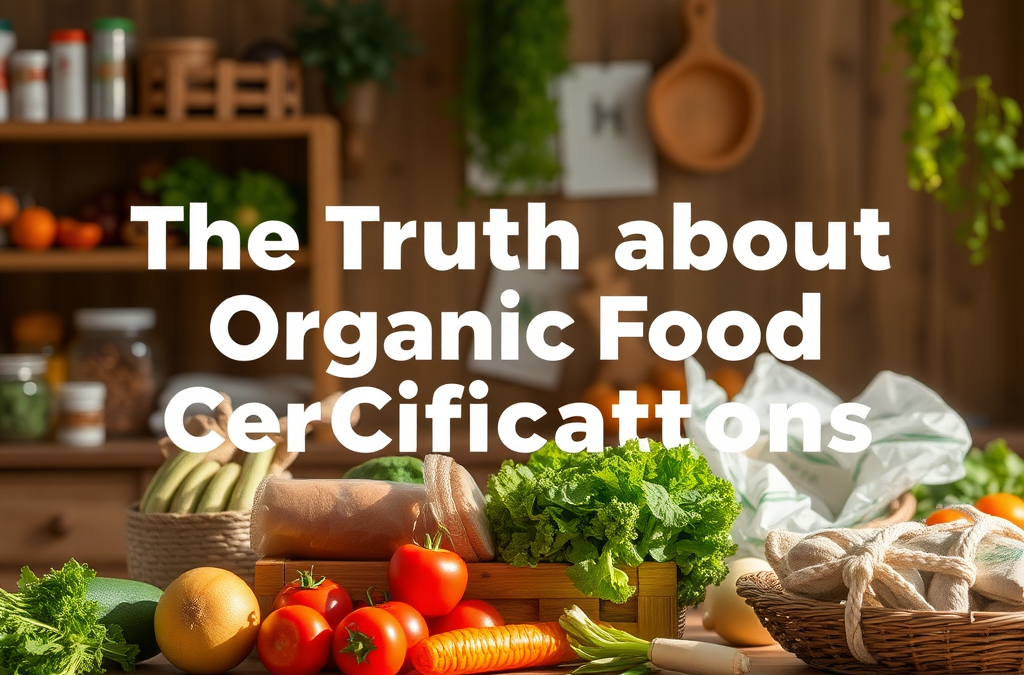
The truth about organic food certifications reveals that these labels ensure products meet specific agricultural standards, focusing on sustainable practices and environmental responsibility. Organic certifications, such as the USDA Organic label, require adherence to strict guidelines regarding pesticide use, soil management, and animal welfare. Consumers should be aware that not all organic products are created equal, as different certifying bodies may have varying standards. Understanding these nuances helps consumers make informed choices about their food.
What Are Organic Food Certifications?
Organic food certifications are labels that signify that agricultural products adhere to specific standards set forth by regulatory bodies. These certifications aim to ensure that food is produced without the use of synthetic fertilizers, pesticides, or genetically modified organisms (GMOs). The most recognized certification in the United States is the USDA Organic label, which has strict requirements regarding how food is grown, harvested, and processed.
The significance of these certifications lies in their role in promoting sustainable farming practices. By supporting organic farming, consumers contribute to environmental conservation, biodiversity, and the reduction of chemical runoff into water systems. Furthermore, organic certification often requires more humane treatment of livestock, which is an important consideration for many consumers.

What Are Organic Food Certifications? matters because it turns the truth about organic food certifications from a broad idea into a decision the reader can actually apply. The practical difference usually shows up in the details: how much is needed, when the choice is made, what tradeoff is acceptable, and what sign shows the approach is working. For nutrition topics, the strongest advice connects portion size, food quality, timing, and recovery instead of treating every meal as a fixed serving.
A useful way to handle this section is to compare the normal baseline with the situation that creates extra demand. If organic is the baseline concern, then food becomes the adjustment point and certifications becomes the outcome to watch. That keeps the advice specific without forcing the reader into a rigid formula that may not fit their routine, budget, tolerance, schedule, or current level of experience.
The most common mistake is changing too many variables at once. A better approach is to choose one measurable adjustment, use it consistently long enough to see a pattern, and then refine the next step based on energy, comfort, performance, safety, or reliability. This makes the guidance easier to trust because the reader can connect the recommendation to what they observe rather than guessing from a generic checklist.
The practical takeaway is to make the section actionable: identify the main constraint, choose the smallest useful change, and compare the result against the goal. When the outcome improves, the reader can keep the approach. When it does not, the next change should target the most likely bottleneck rather than repeating the same step with more effort.
Understanding the Certification Process
The process of obtaining organic certification involves several steps that farmers and producers must follow to ensure compliance with established standards. Initially, farmers must apply for certification through an accredited certifying agent, who will assess their farming practices and methods. This involves a thorough review of their soil management, crop rotation, pest control measures, and record-keeping practices.
Once the application is submitted, a site inspection is conducted. During this inspection, certifiers evaluate how well the farm adheres to organic standards. If the farm passes the inspection, it is granted organic certification. However, this process can take time and often requires ongoing compliance checks, making it crucial for farmers to remain diligent in maintaining organic practices.
Understanding the Certification Process matters because it turns the truth about organic food certifications from a broad idea into a decision the reader can actually apply. The practical difference usually shows up in the details: how much is needed, when the choice is made, what tradeoff is acceptable, and what sign shows the approach is working. For nutrition topics, the strongest advice connects portion size, food quality, timing, and recovery instead of treating every meal as a fixed serving.
A useful way to handle this section is to compare the normal baseline with the situation that creates extra demand. If organic is the baseline concern, then certification becomes the adjustment point and standards becomes the outcome to watch. That keeps the advice specific without forcing the reader into a rigid formula that may not fit their routine, budget, tolerance, schedule, or current level of experience.
The most common mistake is changing too many variables at once. A better approach is to choose one measurable adjustment, use it consistently long enough to see a pattern, and then refine the next step based on energy, comfort, performance, safety, or reliability. This makes the guidance easier to trust because the reader can connect the recommendation to what they observe rather than guessing from a generic checklist.
The practical takeaway is to make the section actionable: identify the main constraint, choose the smallest useful change, and compare the result against the goal. When the outcome improves, the reader can keep the approach. When it does not, the next change should target the most likely bottleneck rather than repeating the same step with more effort.
Common Misconceptions About Organic Labels
One of the most prevalent misconceptions about organic food certifications is that all organic products are completely free from pesticides. While organic farmers are limited in the types of pesticides they can use, some natural pesticides are permitted. This can lead to confusion among consumers who may believe that organic means entirely pesticide-free.
Another misunderstanding is that organic products are always healthier than non-organic alternatives. While organic foods are often grown with fewer synthetic chemicals, the nutritional differences are not always significant. Consumers should consider other factors such as freshness, local sourcing, and overall dietary balance when making food choices.
Common Misconceptions About Organic Labels matters because it turns the truth about organic food certifications from a broad idea into a decision the reader can actually apply. The practical difference usually shows up in the details: how much is needed, when the choice is made, what tradeoff is acceptable, and what sign shows the approach is working. For nutrition topics, the strongest advice connects portion size, food quality, timing, and recovery instead of treating every meal as a fixed serving.
A useful way to handle this section is to compare the normal baseline with the situation that creates extra demand. If organic is the baseline concern, then food becomes the adjustment point and certifications becomes the outcome to watch. That keeps the advice specific without forcing the reader into a rigid formula that may not fit their routine, budget, tolerance, schedule, or current level of experience.
The most common mistake is changing too many variables at once. A better approach is to choose one measurable adjustment, use it consistently long enough to see a pattern, and then refine the next step based on energy, comfort, performance, safety, or reliability. This makes the guidance easier to trust because the reader can connect the recommendation to what they observe rather than guessing from a generic checklist.
The Importance of Knowing Certification Standards
Understanding the various certification standards is critical for consumers who want to make informed decisions. Different certifying bodies may have different standards, and not all organic labels are created equal. For instance, products labeled as “100% Organic” must contain only organic ingredients, while those labeled as “Organic” can contain up to 5% non-organic ingredients.
Consumers should also be aware of terms such as “made with organic ingredients” or “natural,” which can be misleading. Products with these labels may not meet the same rigorous standards as those certified as organic. Therefore, it is essential to read labels carefully and understand what each certification entails.
The Importance of Knowing Certification Standards matters because it turns the truth about organic food certifications from a broad idea into a decision the reader can actually apply. The practical difference usually shows up in the details: how much is needed, when the choice is made, what tradeoff is acceptable, and what sign shows the approach is working. For nutrition topics, the strongest advice connects portion size, food quality, timing, and recovery instead of treating every meal as a fixed serving.
A useful way to handle this section is to compare the normal baseline with the situation that creates extra demand. If organic is the baseline concern, then standards becomes the adjustment point and labels becomes the outcome to watch. That keeps the advice specific without forcing the reader into a rigid formula that may not fit their routine, budget, tolerance, schedule, or current level of experience.
The most common mistake is changing too many variables at once. A better approach is to choose one measurable adjustment, use it consistently long enough to see a pattern, and then refine the next step based on energy, comfort, performance, safety, or reliability. This makes the guidance easier to trust because the reader can connect the recommendation to what they observe rather than guessing from a generic checklist.
Frequently Asked Questions
What does the USDA Organic label mean?
The USDA Organic label indicates that a product meets strict federal standards for organic farming, including restrictions on synthetic pesticides and fertilizers.
Are organic foods always healthier than non-organic?
Not necessarily; while organic foods often contain fewer chemicals, nutritional differences compared to non-organic foods can be minimal.
Can organic products contain pesticides?
Yes, organic products can contain natural pesticides, though synthetic ones are prohibited under organic standards.
What is the difference between "100% Organic" and "Organic"?
"100% Organic" means the product contains only organic ingredients, while "Organic" can include up to 5% non-organic ingredients.
How do I find out more about organic certifications?
Resources like the USDA Organic website and the Organic Trade Association provide extensive information on organic certifications and standards.
Conclusion
Understanding organic food certifications is essential for making informed choices about what we eat. By recognizing the meaning behind labels and the certification process, consumers can better navigate the market and support sustainable agriculture. It’s crucial to stay informed about the differences in organic standards and to question the claims made by various products. Ultimately, prioritizing transparency and knowledge will empower consumers to make choices aligned with their values and health goals.
Huge Discount on the Best Certified Organic Nutrient Dense Supplement!

Further Reading
Authoritative Sources
- Why Certified Organic Matters: The Truth About Labels
organicvoices.orgA proven standard Certified organic farming is regulated by strict national standards that ensure foods are grown without synthetic pesticides, ...
- USDA Certified Organic: Understanding the Basics
ams.usda.govOrganic is a label that indicates that a food or agricultural product has been produced according to the USDA organic standards,
- Understanding the value of Certified Organic labels
nasaaorganic.org.auStudies show that being Certified Organic and displaying a certification label has a direct impact on the perceived benefits of organic food. Kiss M., Kun A.
- Study of Consumer Perception about Organic Food Labels
digitalcommons.du.eduWhat meaning consumers assume of organic certification labels? This article tries to evaluate the certification issue related to organic food ...