
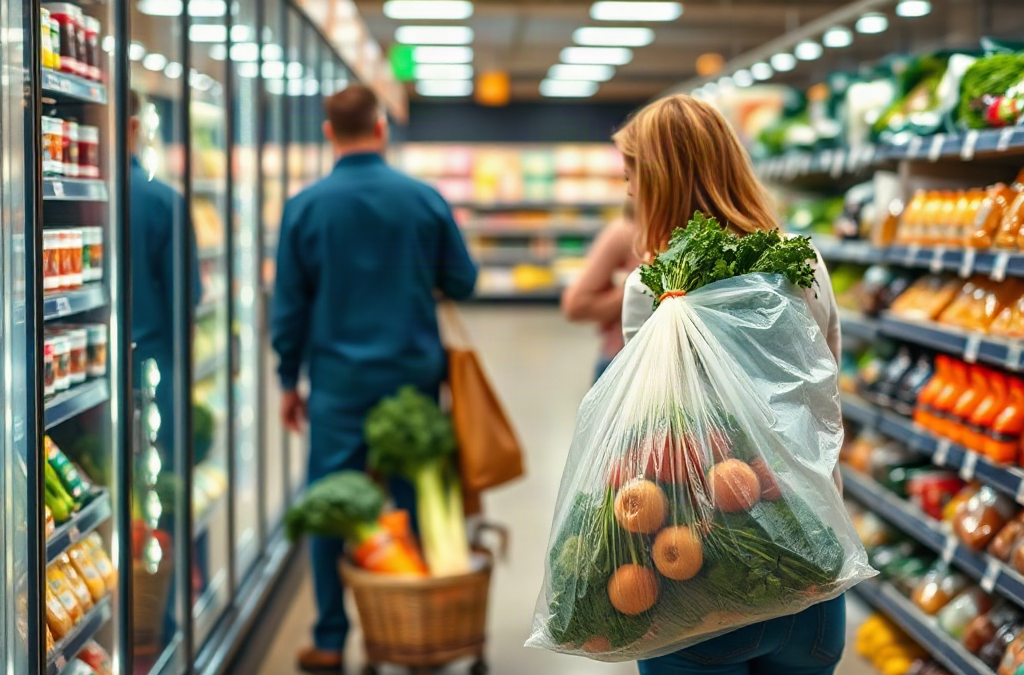
Shopping trip routes that protect frozen organic foods place the freezer aisle last, move directly from checkout to a pre-cooled insulated bag, and make home the next stop. Group frozen vegetables, fruit, meals, and desserts together so the packages help retain cold, while separating them from hot prepared items. Choose firm packages without thawing, wet cardboard, heavy frost, or damaged seals, then load the cooler inside the passenger compartment rather than a hot trunk when practical. If errands must continue, buy frozen items on a later stop or use an adequately chilled hard-sided cooler instead of relying on ordinary grocery bags.
How Should You Plan the Route Through the Store?
The most effective in-store route moves from temperature-stable goods to refrigerated products and ends at the freezer cases. That order limits the period during which frozen organic berries, vegetables, entrées, meat, seafood, or desserts sit in a room-temperature cart. It also prevents the common mistake of entering through a frozen-food aisle, selecting those products first, and then spending another half hour comparing pantry items.
Store layout may resist a perfect sequence, so plan around exposure time rather than walking the fewest possible steps. Begin with produce, dry groceries, canned foods, and household items. Continue to refrigerated foods, then collect frozen products immediately before checkout. If the freezer section is near the entrance but the registers are at the opposite end, save it for the return leg. A slightly longer walk is usually a better tradeoff than carrying frozen food throughout the entire visit.
A list organized by department makes this route easier to follow. Instead of writing foods in meal order, group them as shelf-stable, produce, refrigerated, and frozen. Keep the frozen group at the bottom of the list. For a typical basket, that could mean oats and canned beans first, fresh apples and greens next, yogurt afterward, and frozen spinach, blueberries, veggie burgers, and ice cream last.
Checkout delays deserve attention because the cold-protection route does not end at the freezer door. Before picking up frozen goods, look at register lines and finish any time-consuming tasks such as checking coupons, comparing ingredient lists, or handling a customer-service return. Self-checkout can be quicker with a small basket, but it may be slower with many produce codes or a full cart. Choose the lane that offers the most predictable exit, not automatically the shortest visible line.
Organic certification does not make frozen food more resistant to temperature changes. An organic frozen strawberry and its conventionally grown counterpart are both vulnerable to softening, leaking, clumping, and quality loss when their frozen state is interrupted. The useful distinction is the product type: a dense block of vegetables generally holds cold differently from a small box of frozen sandwiches or a pint of dessert. Route every frozen item as perishable merchandise rather than assuming the label changes its handling needs.
The route is working when packages remain hard and dry at checkout and can be transferred promptly into insulated storage. It is failing when frost starts melting on package surfaces, cartons feel damp, or an unplanned store task keeps the cart stationary. If a delay develops before payment, returning especially vulnerable products to the freezer and selecting them again later is preferable to letting them continue warming.
Which Frozen Packages Should You Choose?
Package condition reveals whether a product is a sensible choice before it ever reaches your cart. Select packages that feel solidly frozen, have intact seals, and show no wet areas, tears, open seams, or crushed corners that could expose the contents. Cardboard cartons should be dry and structurally sound. Flexible bags should not have punctures or food trapped in the seal.
Loose contents are normal for many individually frozen fruits and vegetables, while one solid mass can indicate that pieces thawed enough to stick together and then hardened again. That clue is not equally useful for every product: frozen purées, casseroles, pizzas, and foods intentionally packed as blocks will naturally feel solid. Judge the package according to what should be inside rather than treating every clump as proof of mishandling.
Heavy frost inside a transparent bag, large ice crystals around the food, or obvious freezer burn may point to moisture movement, a weak seal, long storage, or temperature fluctuation. These signs often concern texture and quality, but shoppers cannot reconstruct the package’s full temperature history from appearance alone. A suspicious package is simply a poor purchase when an intact alternative is available. Do not open, taste, or smell frozen merchandise in an attempt to assess it.
Where the package sits in the case also matters. Choose products from within the properly chilled display area and avoid packages stacked above a freezer case’s designated load boundary. Open cabinets should have a clear operating line or other store-specific loading limit. In upright freezers, close the door promptly after comparing choices so the cabinet can maintain its conditions for other products.
Shopping from the back of a case is not automatically better. Reaching behind packages can leave the door open longer, disrupt stock rotation, and produce no meaningful handling advantage. A better method is to choose the first undamaged, fully frozen package with a suitable date and ingredient profile. If several packages feel soft or the cabinet seems unusually warm, leave the products there and alert store staff rather than assuming they will refreeze safely at home.
Keep nutrition and ingredient decisions separate from cold-condition checks. A frozen organic meal may fit a shopper’s ingredient preferences yet still be high in sodium, low in protein, or packaged in a damaged carton. Conversely, an intact package does not establish that the food meets a particular dietary need. Review the organic certification statement, allergen information, ingredient list, and Nutrition Facts label before entering the freezer aisle when possible—for example, by comparing products online or making a short list—so the package spends less time outside the case.
How Do You Protect Food Between Checkout and Home?
The checkout-to-freezer segment should be treated as part of the shopping route, not as an afterthought. Bring an insulated bag or cooler into the store so frozen products can be packed immediately after scanning. A bag left in the vehicle may already be hot, particularly in direct sun, and valuable minutes are lost walking back to retrieve it.
Pack frozen products together because a compact group exchanges heat more slowly than isolated packages spread among dry groceries. Use frozen gel packs or another appropriate cold source when travel conditions warrant it. Keep raw frozen meat or seafood contained so leaking packaging cannot contact frozen fruit, bread, prepared meals, or reusable bag surfaces. A separate washable bag or sealed secondary container provides useful protection without requiring an elaborate packing system.
Loading order has practical consequences. Place shelf-stable groceries into the vehicle first and the frozen-food cooler last, where it can be removed first at home. Keep it shaded and, when feasible, in the climate-controlled passenger area rather than a sun-heated cargo space. Never compromise passenger safety or obstruct pedals, visibility, seat belts, or secure seating merely to position a cooler.
Vehicle temperature, journey duration, traffic, and packaging all affect how quickly food warms, so visual appearance alone cannot provide a precise safety assessment. Ice cream may soften before dense frozen vegetables, and a thin bag of fruit may respond faster than a tightly packed casserole. An insulated tote slows heat transfer but does not actively refrigerate food; adding cold packs improves its usefulness, while a hard-sided cooler may be more suitable for longer or hotter routes.
A compact departure checklist prevents avoidable detours:
- Before checkout: place frozen foods together and confirm that packages remain firm and undamaged.
- At packing: transfer them directly into insulated storage with cold packs as conditions require.
- At the vehicle: load the cooler last, secure it from tipping, and keep it away from heat and sunlight.
- On the road: go home without fuel, coffee, pickup, or social stops unless they are genuinely unavoidable.
- At home: unload the cooler first and return products to the freezer promptly.
Do not assume that refreezing restores the original condition. Food that has softened may develop larger ice crystals, damaged plant tissue, separated sauces, or a grainy dessert texture after it freezes again. Safety decisions also depend on the food’s actual temperature and exposure, which cannot be determined reliably by pressing a carton. When a product arrives partially thawed and its handling history is uncertain, consult current official food-safety guidance rather than relying on smell or refreezing it by default.
What If the Shopping Trip Includes Multiple Stops?
Multiple-stop routes should place the grocery store selling frozen products at the end whenever possible. Pharmacy pickups, banking, hardware shopping, and other errands belong before the freezer purchase. This order is more dependable than trying to estimate how long frozen food can remain in a parked vehicle, especially because a short errand can turn into a queue, a conversation, or a service delay.
When several food stores are involved, buy shelf-stable and fresh items at the earlier locations and frozen products at the final one. Suppose the route includes a farmers’ market, a bulk-food shop, and a supermarket. Visiting the market first, then the bulk shop, and ending at the supermarket freezer creates a cleaner cold chain than buying frozen berries at the supermarket and carrying them through two later stops.
Availability can complicate that ideal route. A specialty retailer may be the only source for a particular organic frozen product, yet it may be far from home or located near the beginning of an efficient driving loop. In that situation, choose between changing the route and upgrading cold storage. A pre-chilled hard-sided cooler with adequate cold packs offers more protection than an unchilled soft tote, but it still should not be treated as permission for an open-ended day of errands.
| Trip situation | Preferred route decision | Cold-storage choice |
|---|---|---|
| One store near home | Shop frozen aisles last, then drive home | Insulated bag; add cold packs for warm conditions or delays |
| Several stores | Schedule the frozen-food seller last | Pre-cooled insulated bag or cooler |
| Frozen specialty item bought early | Shorten remaining stops or split the trip | Hard-sided cooler with suitable cold sources |
| Long drive or uncertain delays | Buy closer to home or arrange another trip | Active temperature monitoring may be preferable to guessing |
Route planning should account for the return journey, not merely mileage between stores. School pickup queues, bridge traffic, road construction, parking garages, and electric-vehicle charging can change exposure more than a small difference in distance. Check foreseeable delays before entering the final store. If conditions become unfavorable, postponing frozen purchases is usually simpler than trying to rescue softened products later.
Signs of a successful multi-stop plan include a cooler that remains closed, packages that arrive hard, and immediate freezer space at home. Warning signs include repeatedly opening the cooler, placing warm prepared food beside frozen items, leaving the vehicle in sun, or discovering that the home freezer is too full. Make room before departure and label reusable cold packs for food transport. The strongest route connects three decisions—purchase timing, insulated transport, and immediate storage—rather than relying on any one of them to compensate for weak handling elsewhere.
Conclusion
A dependable frozen-food route is built around fewer warm minutes and fewer unpredictable stops. Organize the list by store zone, inspect packages before buying, visit freezer cases immediately before checkout, and transfer purchases into chilled insulated storage. Complete outside errands first, load the cooler last, and unload it before the rest of the groceries.
Equipment should match the trip rather than excuse a poor schedule. A basic insulated bag may suit a brief drive, while heat, distance, traffic, or multiple destinations can justify cold packs, a hard-sided cooler, or postponing the purchase. Before the next shopping trip, clear freezer space at home and map the final leg from the freezer aisle to your door. If a package arrives softened and its temperature history is uncertain, use current official food-safety guidance instead of judging it by smell or assuming refreezing will correct the problem.
Frequently Asked Questions
Should frozen organic food always be the last item placed in the cart?
Yes, when the store layout allows it. Finish shelf-stable and refrigerated shopping first, assess checkout lines, and then collect frozen products immediately before paying.
Is an insulated grocery bag enough for frozen food?
It may be adequate for a short, direct trip under moderate conditions, especially with cold packs. Longer drives, hot vehicles, or uncertain delays call for a better-insulated cooler and a more conservative route.
Can frozen food stay in the car while I make one more stop?
Avoid adding the stop if possible. Parked vehicles can heat quickly, and the errand may take longer than expected. Complete other errands before buying frozen food.
Does frost on a frozen package mean the food is unsafe?
Frost alone does not reveal the complete safety history, but heavy frost or large internal crystals can indicate moisture loss or temperature fluctuation. Choose an intact alternative when available.
Where should frozen groceries go in the vehicle?
Keep them secured, shaded, and away from heat—preferably in an insulated cooler within the climate-controlled area when practical. Do not place the cooler where it interferes with safe driving or passenger restraints.