
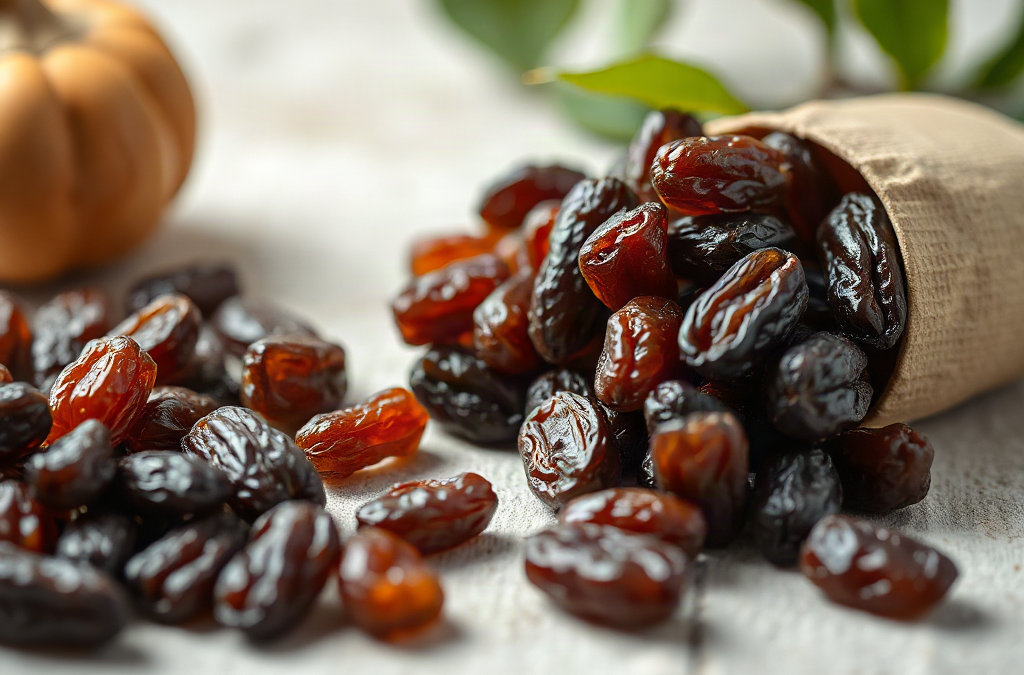
A practical organic raisins portion size is about 1/4 cup, or roughly 40 grams, because drying concentrates the grapes’ natural sugar into a small volume. Depending on the variety and brand, that serving commonly provides about 25–30 grams of total sugar, so an unmeasured handful can quickly become two portions. Raisins still offer fiber, potassium, and plant compounds, but organic certification does not reduce their sugar concentration. Measure them before eating, pair them with protein or fat such as plain yogurt or nuts, and use a smaller amount when raisins are one of several sweet ingredients in a meal.
Why Is the Natural Sugar in Raisins So Concentrated?
Raisins contain much more sugar by volume than fresh grapes because dehydration removes most of the fruit’s water while leaving its carbohydrate largely behind. A bowl that could hold only a modest number of plump grapes can hold many more dried grapes. The difference is concentration and packing density, not the addition of sugar to ordinary unsweetened raisins.

The sugars in raisins occur naturally in the grapes and include glucose and fructose. Those sugars remain part of the fruit’s food matrix alongside fiber, potassium, and various plant compounds. That context distinguishes unsweetened raisins from candy or dried fruit coated with syrup, but it does not make the carbohydrate amount negligible. Natural sugar can still contribute substantially to total carbohydrate intake, especially when the serving is larger than the quantity printed on the package.
Fresh grapes and raisins therefore create different portion cues. A person eating fresh grapes receives more water and sees a larger amount of food for a comparable amount of fruit solids. Raisins are compact, shelf-stable, and easy to eat rapidly. Their small size can weaken visual estimates: what looks like a light handful may contain far more individual grapes than expected.
Organic status changes how the grapes are produced and handled under applicable certification rules; it does not reverse the effects of drying. Organic and conventionally grown raisins of similar varieties can have comparable total carbohydrate and sugar values. Choosing organic may reflect preferences about agricultural practices, but it should not be treated as a lower-sugar choice unless the nutrition labels actually show a difference.
A common mistake is to classify all naturally occurring sugar as unrestricted. A more useful approach is to consider the complete eating situation: the measured amount, the other carbohydrate foods in the meal, and whether the raisins replace a sweetener or simply add another sweet component. A tablespoon stirred into plain oatmeal serves a different role from several handfuls eaten directly from a large bag.
What Does a Practical Raisin Portion Look Like?
A quarter cup, often close to 40 grams depending on the product, is a practical reference portion for raisins. It is approximately a small closed handful, but weighing or measuring it once provides a more reliable visual reference than relying on hand size. Package serving sizes vary, so the product label remains the final source for the exact gram amount and nutrient values.
| Amount | Approximate use | What to notice |
|---|---|---|
| 1 tablespoon | Oatmeal, salad, or yogurt topping | Adds scattered sweetness without making raisins the main ingredient |
| 2 tablespoons | Small snack mix or cereal addition | Leaves room for nuts, seeds, or another fruit |
| 1/4 cup | Standalone portion or substantial recipe addition | Often represents one labeled serving; verify the package weight |
| Unmeasured large handful | Eating directly from the bag | May exceed one serving before fullness cues catch up |
The best amount depends on the raisins’ role. If they are the primary fruit in a snack, a labeled serving may be reasonable for many adults. If they are mixed into granola that already contains honey, dried cranberries, or chocolate, one or two tablespoons may be enough to supply flavor. A child’s suitable amount may be smaller and depends on age, chewing ability, the rest of the meal, and individual nutrition needs.
Portion tools need not become permanent rules. Use a tablespoon, quarter-cup measure, or kitchen scale several times to learn how the amount looks in your usual bowl. Then pre-portion raisins into a small container instead of carrying the full package. The approach is working when the planned amount remains visible within the meal and the bag is not repeatedly reopened without a deliberate decision.
A failed approach often looks like “healthy handful” accounting: each handful seems minor, but several are eaten while cooking, driving, or working. Another weak assumption is that a small package must equal one serving. Some snack boxes are portioned that way, while larger pouches can contain multiple servings. Check both the serving size and servings per container before using package size as a cue.
People managing blood glucose, carbohydrate targets, or digestive symptoms may need individualized portions. Raisins should not be presented as a treatment for any condition. A registered dietitian or other qualified clinician can help interpret serving size within a person’s medication plan, activity level, overall dietary pattern, and health needs.
How Should You Read an Organic Raisin Label?
The ingredient list and Nutrition Facts panel answer different questions: the ingredient list reveals what was added, while the panel shows how much total carbohydrate and sugar occurs in the labeled serving. Start by matching the serving size in cups or tablespoons with its weight in grams. Gram weight is especially helpful because raisins settle, compress, and vary in size.
On a plain product, the ingredient list may contain only organic raisins, sometimes with a small amount of oil to reduce sticking. Total Sugars on the nutrition panel includes sugar naturally present in the fruit. Added Sugars is the separate line to inspect for sweeteners introduced during processing. A product can show a substantial Total Sugars value while showing no Added Sugars because dried grapes are naturally concentrated.
Compare products on equal gram weights rather than comparing one brand’s serving with another brand’s different serving. If one label uses 30 grams and another uses 40 grams, the larger serving will usually display higher totals even if the products are nutritionally similar per gram. This is a label-comparison problem, not necessarily a meaningful difference in the raisins.
Organic labeling should also be kept separate from sugar claims. The word “organic” addresses production standards; “no added sugar” addresses whether caloric sweeteners were introduced. Neither phrase means sugar-free. Likewise, terms such as “fruit-sweetened” or “naturally sweet” do not replace the Nutrition Facts panel. For flavored or coated raisins, look for ingredients such as sugar, juice concentrates, syrups, chocolate, or yogurt-style coatings, which can change the product’s composition.
A compact label check can prevent most buying mistakes:
- Confirm the serving weight. Note the grams, not only the household measure.
- Read both sugar lines. Distinguish Total Sugars from Added Sugars.
- Scan the ingredients. Check for coatings, sweeteners, oils, and preservatives relevant to your preferences.
- Compare like with like. Recalculate mentally to a similar gram amount when package servings differ.
The check is failing if the front label determines the decision before the back panel is read. For a straightforward everyday option, prioritize a short ingredient list, a serving size you can reproduce, and a form that fits the intended use. A premium organic package does not compensate for a portion that is routinely several times larger than planned.
How Can Raisins Fit into Meals and Snacks?
Raisins work best when their concentrated sweetness has a defined job in the meal. They can replace some table sugar in oatmeal, add contrast to a savory grain dish, or provide a portable carbohydrate source during prolonged activity. The amount should reflect that job rather than defaulting to a full serving every time.
Pairing raisins with protein, fat, or a less concentrated high-fiber food can create a more substantial snack than eating raisins alone. Examples include plain yogurt with walnuts and a tablespoon of raisins, unsweetened oatmeal with pumpkin seeds and raisins, or celery with peanut butter and a small raisin topping. These combinations do not remove the fruit’s sugar, but they add texture, nutrients, and staying power while making a modest amount feel intentional.
Trail mix illustrates the main tradeoff. Raisins add quick carbohydrate and make unsalted nuts more appealing, but both dried fruit and nuts are compact foods. Pouring freely from a large container can produce a much larger snack than expected. Build one portion in a small bowl using mostly nuts or seeds plus a measured spoonful of raisins, or choose fresh fruit when volume and hydration matter more than portability.
Cooking offers another useful strategy because raisins distribute sweetness across multiple servings. A quarter cup added to a pot of lentils, brown rice, or roasted vegetables is divided among everyone eating the dish. Raisins can also balance acidic or bitter ingredients in a salad without requiring a sweet dressing. Count the complete recipe, however: raisins added to a dish already containing maple syrup or sweetened sauce may be redundant rather than complementary.
Watch for signs that the portion plan is not serving its purpose. Raisins disappearing by the handful before they reach the recipe, frequent eating straight from the package, or routinely combining them with several other sweet ingredients all suggest that a smaller container or fresh-fruit alternative may work better. If a measured serving leaves the snack unsatisfying, adding yogurt, nuts, seeds, or a whole-grain food is usually more useful than repeatedly increasing only the raisins.
Individual responses and goals differ. Athletes may value portable carbohydrate around demanding activity, while someone following a clinician-directed carbohydrate plan may need a smaller amount or a different fruit. Dental considerations also matter because sticky dried fruit can cling to teeth; eating raisins as part of a meal, drinking water afterward, and following regular oral-care guidance may be preferable to grazing on them throughout the day.
Conclusion
Treat raisins as concentrated dried fruit rather than as an unlimited snack. Begin with the package’s gram-based serving, measure it a few times, and reduce the amount when it accompanies other sweet ingredients. Plain organic raisins can provide useful nutrients and convenient carbohydrate, but certification does not make their natural sugar disappear or guarantee a nutritional advantage over a comparable conventional product.
Prioritize three checks: serving weight, Total Sugars versus Added Sugars, and the complete ingredient list. For everyday eating, place a measured amount in oatmeal, yogurt, salads, or a balanced snack instead of eating from the bag. Choose fresh fruit when a larger, more hydrating portion better suits the situation, and obtain individualized advice if carbohydrate intake must align with diabetes care, medication, or another clinical nutrition plan.
Frequently Asked Questions
How many raisins count as one serving?
Count by weight or volume rather than by individual raisin because size varies. A common reference is about 1/4 cup or roughly 40 grams, but use the serving printed on your package.
Are organic raisins lower in sugar than regular raisins?
Not necessarily. Organic certification concerns production practices, while sugar content depends on grape variety, moisture, processing, and serving size. Compare Nutrition Facts panels at the same gram weight.
Does the sugar in raisins count as added sugar?
The sugar naturally present in plain raisins is included under Total Sugars, not Added Sugars. Sweetened, coated, or flavored products may contain added sugar, so check both the ingredient list and label.
Can raisins be eaten when monitoring blood sugar?
They may fit some individualized eating plans, but their carbohydrate is concentrated. Portion size, meal composition, medication, and personal response matter; seek guidance from a qualified clinician for condition-specific advice.
What is a less concentrated alternative to raisins?
Fresh grapes provide more water and greater volume per piece of fruit. Berries, chopped apples, or pears can also add sweetness and texture when portability and shelf life are less important.