Choosing organic bread by fiber and ingredients means checking the Nutrition Facts panel and ingredient list rather than relying on package color or grain-themed claims. Prioritize a whole grain as the first flour, compare dietary fiber per serving, and note whether added sugars, refined flours, isolated fibers, seeds, or sweeteners substantially shape the loaf. The USDA organic seal addresses how qualifying agricultural ingredients were produced, but it does not establish that a bread is whole grain or high in fiber. A practical choice balances recognizable grain ingredients, useful fiber, acceptable sodium and sugar, taste, texture, price, and any allergy or gluten restrictions.
What Does Organic Mean on a Bread Label?
An organic claim and a whole-grain claim answer different questions. Organic labeling concerns the production and handling of qualifying agricultural ingredients. Whole-grain wording concerns whether the grain kernel’s bran, germ, and endosperm remain represented in the food. A loaf may therefore be certified organic while relying mainly on refined organic wheat flour, and a nonorganic loaf may contain substantial whole-grain flour.

The wording on the package deserves close attention. Under USDA labeling categories, a product labeled “100 percent organic” is not the same as one labeled simply “organic” or “made with organic” ingredients. Shoppers who specifically want certified organic bread should look for the USDA organic seal and read the qualifying statement rather than treating the word “natural,” green packaging, or a picture of wheat as equivalent evidence.
Certification does not independently rate fiber, sodium, added sugar, protein, grain variety, or degree of processing. Those qualities must be evaluated elsewhere on the package. For example, an organic white sandwich bread may have a soft texture and a short ingredient list but offer less naturally occurring grain fiber than an organic whole-wheat loaf. Neither organic status nor a long ingredient list settles the nutritional comparison by itself.
Ingredient availability creates a practical tradeoff. Certified organic whole-grain bread may cost more, have a denser crumb, or be sold only in larger loaves. A household that dislikes its texture may leave it uneaten, while a moderately fibrous loaf everyone uses could be the more workable purchase. Freezing half a loaf can reduce waste when organic varieties have fewer preservatives or sell slowly in the household.
A common mistake is treating organic as a shortcut for every other desired quality. Use it as one filter: confirm the organic claim first, then separately assess grain type, fiber, sugar, sodium, allergens, serving size, freshness, and intended use. This keeps production preferences from obscuring the information that determines how the bread fits a meal.
How Should You Compare Fiber Between Loaves?
Fiber comparisons work only when serving sizes are aligned. One label may define a serving as one thick slice, another as two thin slices, and a third by weight. Comparing the printed fiber numbers without checking slices and grams can make two similar breads appear very different. Convert the information to the amount you actually expect to eat, such as two slices for a sandwich.
Fiber in bread can come from intact whole-grain ingredients, bran, seeds, legumes, or isolated fibers added during manufacturing. Whole-wheat flour, whole rye flour, oats, barley, wheat bran, flaxseed, chia seed, and psyllium are examples that may contribute fiber, although the actual amount depends on the recipe. Ingredients such as inulin, chicory root fiber, modified starch, or cellulose can increase the label value without making refined flour a whole grain.
That distinction is not a reason to reject isolated fiber automatically. It is a reason to interpret the number alongside the ingredient list. A loaf listing whole-wheat flour first and seeds later has a different structure from one listing refined wheat flour first and an isolated fiber near the end. Both might deliver fiber, but only the first clearly uses a whole grain as its main flour. Some people also find large amounts of certain added fibers cause digestive discomfort, especially when intake rises abruptly.
| Label Detail | What It Reveals | What It Cannot Prove Alone |
|---|---|---|
| Fiber per serving | Declared fiber in the stated portion | Whether whole grains supply most of it |
| Whole grain listed first | Main flour is identified as whole grain | That the loaf suits every dietary need |
| Seeds or bran | Potential sources of fiber and texture | A meaningful amount without label context |
| Serving weight | A basis for fair product comparison | How many slices a person will eat |
A useful real-world test is to compare two loaves by equal eating portions. If one serving is a single 45-gram slice and another is two 25-gram slices, calculate the fiber in the sandwich or toast portion rather than choosing the larger printed figure. A successful choice provides a useful contribution to total dietary fiber without creating a texture, taste, cost, or digestive barrier that makes regular use unlikely.
Which Ingredients Deserve Priority?
The first flour named in the ingredient list usually gives the clearest view of the bread’s foundation because ingredients are listed by weight. Look for explicit wording such as whole-wheat flour, whole-grain rye flour, or whole-grain spelt flour when whole grains are the priority. “Wheat flour,” “organic wheat flour,” and “unbleached wheat flour” do not necessarily mean whole wheat.
Multigrain is another frequently misunderstood term. It indicates that more than one grain may be present, not that those grains are whole. An organic multigrain loaf could combine refined wheat flour with small amounts of oats, millet, or corn. Reading past the product name shows whether the main grain ingredients are whole, refined, or a mixture.
Sweeteners affect both flavor and browning and can help yeast fermentation, so their presence does not automatically make a loaf unsuitable. The practical question is how much added sugar appears on the Nutrition Facts panel and how bread fits the rest of the meal. Honey, cane sugar, molasses, maple syrup, and fruit concentrates remain sweetening ingredients even when organic. A breakfast bread containing raisins and sweetener serves a different purpose from a minimally sweet sandwich loaf.
Sodium also varies among breads because salt contributes flavor, dough strength, and fermentation control. Someone comparing several acceptable whole-grain organic loaves can use sodium per intended portion as a tie-breaker, particularly if bread is paired with salty cheese, deli meat, soup, or spreads. Sodium should not be judged in isolation from serving size or the complete meal.
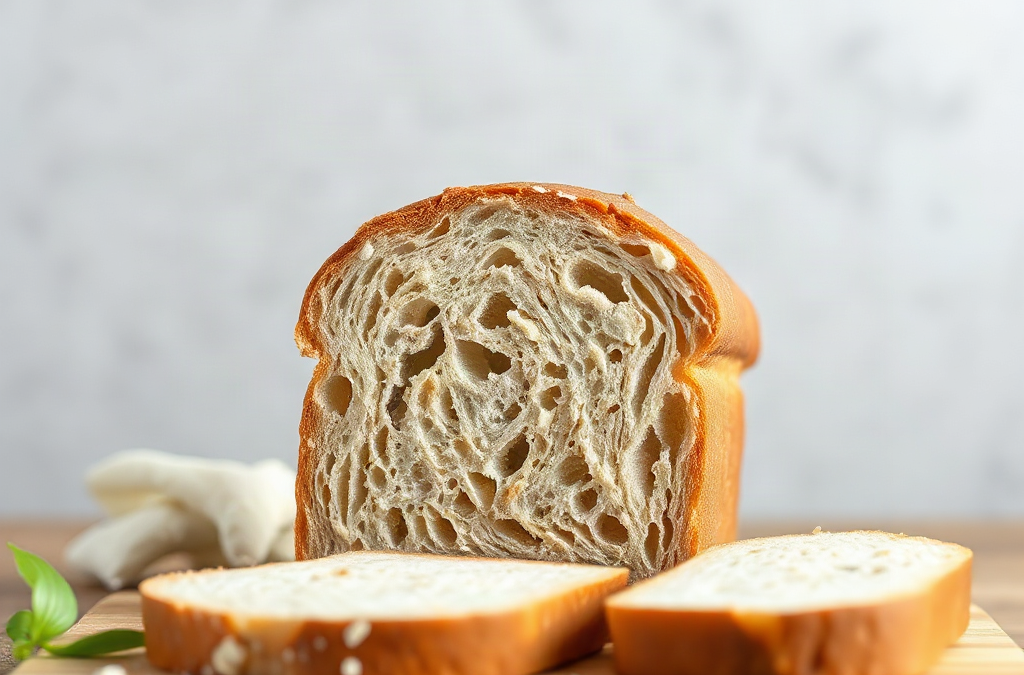
Seeds and visible grains can add texture, flavor, and nutrients, but appearance is unreliable. Seeds scattered on the crust do not prove that whole-grain flour forms the loaf’s base. Conversely, finely milled whole-wheat bread may look smooth and light while still listing whole-wheat flour first. Ingredient order and the Nutrition Facts panel provide stronger evidence than color, grain flecks, or rustic branding.
Allergen and dietary restrictions take precedence over preferred ingredient qualities. Wheat, sesame, milk, soy, eggs, and tree nuts may appear in bread recipes or shared-facility disclosures. Certified organic bread is not inherently gluten-free, and organic wheat still contains gluten. People with celiac disease, diagnosed allergies, or medically directed restrictions should follow appropriate label guidance and advice from a qualified clinician rather than relying on an organic seal.
Five Label Checks for a Better-Fitting Loaf
A consistent five-check process prevents one attractive claim from dominating the purchase. Begin with the feature that is nonnegotiable for your household, whether that is certified organic status, gluten avoidance, a whole-grain base, manageable cost, or a texture children will eat. Then compare the remaining qualities among products that pass that first screen.
- Verify the organic wording. Look for the USDA organic seal and identify whether the package says “100 percent organic,” “organic,” or “made with organic” ingredients.
- Read the first flour. Prefer an explicitly named whole grain when whole-grain content is a priority; do not assume “wheat” or “multigrain” means whole grain.
- Normalize the serving. Compare fiber, added sugars, and sodium for the number and weight of slices you will actually eat.
- Locate the fiber sources. Note whether fiber appears to come from whole grains, bran, seeds, legumes, isolated fibers, or a combination.
- Check practical constraints. Review allergens, texture, loaf size, price, storage needs, and compatibility with the planned meal.
Consider two organic breads intended for packed lunches. Loaf A lists organic whole-wheat flour first, has a firm texture, and costs more. Loaf B begins with organic enriched wheat flour, contains some whole oats and added fiber, and is softer. Loaf A more directly meets a whole-grain preference, but Loaf B may still be useful if softness determines whether the sandwich is eaten. The better decision depends on whether whole-grain composition or household acceptance is the higher priority.
Signs that a choice is working are practical: the bread is eaten before spoiling, its serving size matches normal meals, it contributes fiber without unwanted digestive effects, and its price is sustainable. Signs of a poor fit include repeatedly discarding stale slices, compensating for unpleasant texture with sugary toppings, or paying for seed-covered branding while the main flour remains refined.
If no single loaf meets every preference, rotate products or match them to specific uses. Dense seeded bread may work for open-faced toast, while a softer whole-wheat loaf may be better for lunch sandwiches. Freezing slices individually makes a more perishable organic loaf easier to use. The goal is not to identify a universally superior bread but to choose transparently, with the ingredient list and serving-based nutrition taking priority over package imagery.
Conclusion
A dependable bread decision comes from separating production claims from nutritional and practical qualities. Verify the organic label, identify the main flour, and compare fiber using equivalent portions. Then examine where that fiber comes from and how added sugars, sodium, allergens, texture, storage, and price affect the loaf’s role in actual meals.
Use the five checks on two or three products you can readily buy rather than searching for a theoretically perfect loaf. Choose an explicitly whole-grain base when that is a priority, but account for whether the household will eat the bread consistently. If freshness is the main obstacle, freeze part of the loaf; if texture is the obstacle, test a softer whole-grain option. Package design can suggest quality, but the ingredient list, Nutrition Facts panel, certification wording, and intended serving provide the evidence needed for a sound comparison.
Frequently Asked Questions
Does organic bread always contain whole grains?
No. Organic describes qualifying production and handling practices, while whole grain describes the grain ingredients. Confirm that a whole grain, such as whole-wheat or whole-rye flour, appears prominently in the ingredient list.
Is the bread with the highest fiber number always the best choice?
Not necessarily. Check serving weight, fiber sources, added sugars, sodium, allergens, taste, and tolerance. A high value may partly reflect isolated fiber rather than a whole-grain base.
Does multigrain mean whole grain?
No. Multigrain means that multiple grains are used, but they may be refined. Look for the word “whole” attached to the main grain flours.
Why does some organic bread spoil quickly?
Shelf life varies with moisture, formulation, preservatives, packaging, and storage. Keep bread as directed, and freeze extra slices if the loaf will not be used promptly.
Is organic bread gluten-free?
No. Organic wheat, rye, and barley still contain gluten. Anyone who must avoid gluten should choose bread specifically labeled gluten-free and follow appropriate medical guidance.