
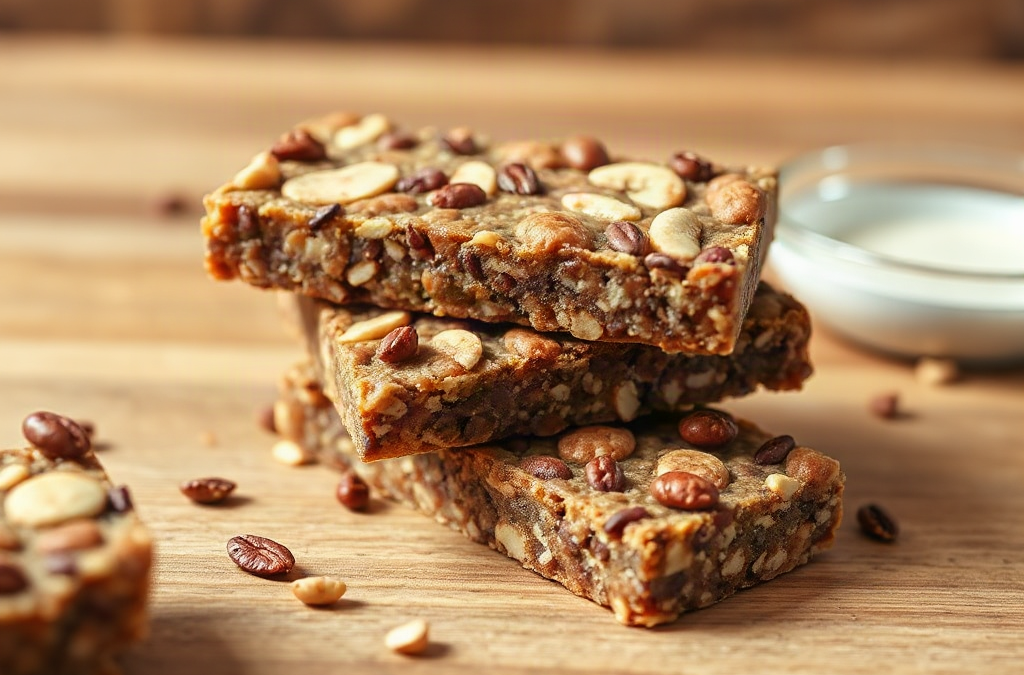
Lower-added-sugar organic nutrition bar choices work best when they pair modest added sugar with meaningful protein, fiber, nuts or seeds, and a short ingredient list. Compare the Nutrition Facts panel with the ingredients list because dates, syrups, fruit concentrates, and cane sugar can all sweeten a bar while the front label emphasizes “organic” or “no refined sugar.” A bar with roughly 5 grams or less of added sugar may suit a routine snack, but total carbohydrate, protein, fiber, calories, allergens, and portion size still determine how filling it will be. Choose softer fruit-and-nut bars for quick energy, denser protein bars for longer satiety, and whole-food snacks when a bar becomes a daily meal replacement.
What Makes a Lower-Added-Sugar Bar a Better Choice?
A lower-added-sugar nutrition bar is not defined by sweetness alone. The more useful question is whether the bar provides enough protein, fiber, and energy for the situation without relying heavily on sweeteners. A compact bar made mainly from nuts, seeds, oats, legumes, or unsweetened fruit may be more sustaining than a similarly labeled product built around crisped grains and syrup.
Added sugar matters because it contributes sweetness without the fiber, protein, or micronutrients found in many intact foods. A lower amount may make it easier to keep a snack from becoming a concentrated dessert, but the bar still needs a useful structure. For example, a bar containing almonds, pumpkin seeds, oats, and pea protein may be more filling than one containing a small amount of added sugar but very little protein or fiber.

Organic status answers a production question, not a complete nutrition question. An organic bar can still contain considerable sugar, refined starch, saturated fat, or a small amount of protein. Conversely, a conventional bar may have a nutrition profile that fits a particular need. Use organic certification as one selection criterion, then assess the panel and ingredients independently. The Lower-added-sugar organic nutrition bar choices that perform best are the ones whose nutrition profile matches the intended use.
A common mistake is treating “no refined sugar” as equivalent to low sugar. Dates, date paste, maple syrup, brown rice syrup, agave, honey, and fruit juice concentrate can all increase total sugar. Some may offer flavor or a less processed texture, but the body still receives sugar from the finished food. The practical standard is to compare grams of added sugar, total sugar, fiber, and protein rather than trusting a front-of-package phrase.
How to Read Sugar, Protein, and Fiber Information
The Nutrition Facts panel should be read as a group of connected measurements. Added sugar shows how much sweetener was included during formulation, while total sugar includes naturally occurring sugar from ingredients such as dates, raisins, or dried cranberries. Neither number alone tells you whether a bar will satisfy hunger. Protein and fiber help explain why two bars with similar calories can feel very different after eating.
For a routine snack, many shoppers may prefer a bar with a modest added-sugar amount, several grams of fiber, and enough protein to prevent it from functioning like candy. There is no universal cutoff that makes every bar appropriate, but a bar with 4 grams of protein and little fiber may be less filling than one with 8 or more grams of protein and a stronger fiber contribution. Those figures are examples for comparison, not medical targets or guarantees of satiety.
Consider the use case. A hiker carrying a bar for several hours may reasonably choose more total carbohydrate and calories than someone seeking a small desk snack. A person combining a bar with unsweetened yogurt may not need as much protein in the bar itself. Someone eating it alone between meals may benefit from a denser combination of nuts, seeds, oats, and protein ingredients. The Lower-added-sugar organic nutrition bar choices for one setting may be poorly matched to another.
Watch for serving-size tricks. If a package contains two small pieces but lists the nutrition for one, the apparent sugar and calorie amounts may be understated for the portion you intend to eat. Compare bars on a per-bar basis, and check whether the label lists added sugar separately. Also examine sodium and saturated fat when bars include nut butters, chocolate coatings, or salty protein ingredients.
- Added sugar: Compare the grams per bar, not just claims such as “naturally sweetened.”
- Total sugar: Interpret it alongside dates, raisins, fruit pieces, and other concentrated sweeteners.
- Protein: Look for a meaningful contribution when the bar is meant to carry a snack alone.
- Fiber: Nuts, seeds, oats, and legumes can contribute more structure than isolated sweeteners.
- Calories and portion size: Match the amount to a snack, emergency food, or meal accompaniment.
The weak assumption to avoid is that more protein automatically makes a bar healthier. High-protein products can contain sugar alcohols, coatings, excess sodium, or ingredients that cause digestive discomfort. A balanced panel and tolerable ingredient list matter more than a single impressive number.
Organic Certification, Ingredients, and Common Tradeoffs
Organic certification can help shoppers identify products made under defined organic production and handling standards, but it does not rank bars by sweetness, protein quality, or overall dietary value. Read the certification statement and ingredient list together. A bar may use organic oats and organic cane sugar while still being a relatively sweet product; another may use organic dates and nuts with no separately listed added sugar but a substantial total sugar content.
Ingredient order provides useful context because ingredients generally appear by weight. If syrup, cane sugar, or a concentrated fruit ingredient appears near the beginning, sweetness is likely central to the formulation. If nuts, seeds, oats, or a protein source appear first, the bar may have a more substantial base. “Organic” before an ingredient does not change its role in the recipe.
Lower-added-sugar formulations involve real compromises. Sweeteners contribute moisture, binding, browning, and palatability. Removing them may produce a bar that crumbles, tastes more earthy, or depends on dates and nut butter for cohesion. A product with fewer added sugars might compensate with sugar alcohols, soluble fibers, or high-intensity sweeteners. Those ingredients are not automatically harmful, but some people experience bloating or loose stools, particularly when several are combined.
Texture also affects practical use. A dense date-and-seed bar may travel well but be sticky in warm conditions. A refrigerated organic protein bar may have a favorable label yet be inconvenient for a commute. A bar with chocolate chips can remain lower in added sugar than a fully coated bar, but it may still be less suitable when someone is trying to minimize sweetness. Choose based on the whole formulation and storage reality rather than a single marketing claim.
Allergen and dietary restrictions deserve a separate check. Organic bars may contain peanuts, tree nuts, sesame, soy, dairy, or wheat, and shared-equipment statements can matter for people with medically diagnosed allergies. People with diabetes, digestive disorders, kidney disease, or other conditions should not assume that an organic or lower-added-sugar bar fits their needs; individualized advice from a qualified clinician may be appropriate.
Matching Bar Types to Real-World Snack Needs
Fruit-and-nut bars, oat-based bars, and protein-forward bars serve different purposes. Fruit-and-nut varieties often rely on dates or raisins for binding and sweetness, making them compact and easy to eat, but their total sugar may remain high even when added sugar is low. Oat-and-seed bars can offer a less candy-like texture and useful fiber, although syrup may still be used to hold the ingredients together. Protein bars may provide greater satiety for some people, but their ingredient lists can be longer and their sweetener systems more complex.
For a short gap between meals, a smaller bar paired with water may be sufficient. For a longer interval, combine a lower-added-sugar bar with a whole-food side such as plain yogurt, fresh fruit, or vegetables with hummus. That approach can add moisture, vitamins, and protein without forcing the bar to provide every nutrient. A bar should not automatically replace a varied meal simply because its packaging uses terms such as “meal” or “complete.”
Consider three practical scenarios. An office worker who eats at a desk may want a bar with moderate calories, minimal coating, and enough fiber to avoid immediately seeking another snack. A cyclist or hiker may prioritize portability and carbohydrate, accepting more natural sugar from dried fruit because rapid fuel is useful during activity. A parent packing school food may prioritize allergen information, low mess, and a taste children will actually eat. Each decision produces a different sensible choice.
Common failure occurs when shoppers select the lowest sugar number without checking whether they will eat two bars. A very small bar may appear favorable per serving but fail to satisfy, while a larger bar may be appropriate as an emergency meal component. Signs that a choice is working include predictable hunger, comfortable digestion, and no need to compensate with several additional sweet foods. Signs it is failing include persistent hunger, stomach upset, or routinely consuming multiple portions.
Use the Lower-added-sugar organic nutrition bar choices as convenience foods, not as proof that a packaged snack can substitute for variety. Nuts, fruit, oats, beans, yogurt, and vegetables still provide different nutrients and textures that bars cannot fully reproduce.
A Practical Shopping Checklist
Compare bars side by side rather than judging them in isolation. First identify the job the bar must do: a light snack, an activity fuel, a travel backup, or an accompaniment to a meal. Then assess whether the size, calories, carbohydrate, protein, fiber, and added sugar fit that job. A lower-added-sugar bar that is too small for the situation may be less useful than a moderately sweet bar eaten in a deliberate portion.
Use this compact sequence at the shelf:
- Check the serving: Confirm that the listed values represent one whole bar.
- Read added sugar and total sugar: Look for dates, syrups, fruit concentrates, and sweetened coatings.
- Inspect the base: Favor recognizable sources such as nuts, seeds, oats, legumes, or fruit when they suit your diet.
- Assess protein and fiber together: Decide whether the bar can carry the snack or needs a partner food.
- Screen constraints: Check allergens, storage instructions, sodium, saturated fat, and sweeteners that may upset digestion.
- Test one product: Notice taste, fullness, energy, and digestion before buying a large supply.
Price also changes the decision. Organic nuts, protein ingredients, and certified production can increase cost, while a premium bar may not offer a proportionate nutrition advantage. Compare price per bar or per ounce, not just package price. Buying a smaller quantity first reduces waste when texture, sweetness, or digestive tolerance disappoints.
Do not treat the checklist as a rigid scoring system. Someone with a nut allergy may need a seed-based option, while someone doing prolonged exercise may intentionally choose more carbohydrate. The priority is a transparent match between the bar’s composition and the occasion. If the product requires several exceptions to fit your needs, a simple whole-food snack may be the more dependable choice.
For current information about organic labeling and packaged-food nutrition, consult USDA organic standards and the U.S. Food and Drug Administration’s Nutrition Facts and added-sugars resources. These official sources can clarify certification terms and explain how to interpret the panel without relying on front-label marketing.
Frequently Asked Questions
What added-sugar amount is low for a nutrition bar?
There is no universal cutoff, but comparing bars around 5 grams or less of added sugar per whole bar can be a practical starting point. Check total sugar, protein, fiber, and portion size as well.
Can an organic bar still be high in sugar?
Yes. Organic cane sugar, syrups, dates, dried fruit, and fruit concentrates can produce a sweet bar. Organic certification does not establish a low-sugar nutrition profile.
Are date-sweetened bars lower in added sugar?
They may list little or no separately defined added sugar, but dates still contribute total sugar and calories. Read both the total-sugar line and the ingredient list.
Should a lower-added-sugar bar contain protein?
Protein can make a bar more useful as a stand-alone snack, especially between meals, but the ideal amount depends on the rest of the day’s food and the bar’s purpose.
When is a whole-food snack a better option?
Fruit with nuts, plain yogurt, vegetables with hummus, or oats may be preferable when you have access to them and want more moisture, variety, or less processing.
Conclusion
Choosing a lower-added-sugar organic nutrition bar is a comparison exercise, not a search for one perfect label claim. Give first priority to the whole bar’s serving size, added and total sugars, protein, fiber, ingredient base, and practical fit. Organic certification can align with production preferences, but it should not replace a nutrition-panel check. Use fruit-and-nut bars when portability matters, protein-forward options when a snack must last longer, and whole foods whenever they are convenient. Try a single product before buying in bulk, paying attention to fullness, digestion, taste, and storage. A bar earns a place in your routine when its composition matches the occasion without encouraging oversized portions or displacing a varied diet.
Huge Discount on the Best Certified Organic Nutrient Dense Supplement!



