
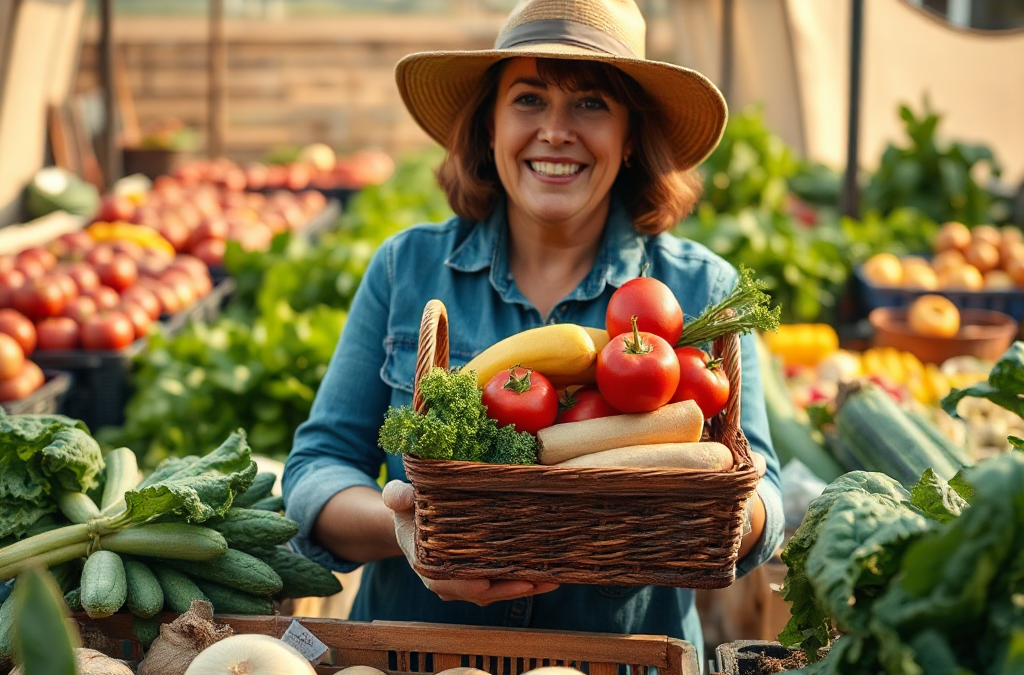
Support local organic farmers effectively by buying directly when possible, paying prices that reflect production costs, committing to seasonal purchasing, and building dependable relationships beyond occasional market visits. Choose farms that clearly explain their growing practices, use community-supported agriculture or preorders to improve cash flow, and accept cosmetically imperfect produce so less harvest is wasted. Restaurants, schools, and households can create more impact by ordering consistently, communicating demand early, and avoiding last-minute cancellations. Donations, volunteer help, and advocacy may supplement purchases, but recurring sales usually give a farm more practical support than one-time goodwill.
Buy In Ways That Improve Farm Stability
Direct purchasing gives local organic farmers a clearer connection to the people eating their crops, but the timing and reliability of those purchases often matter as much as the location. A weekly market sale is useful; a standing order, CSA membership, farm pickup, or recurring restaurant account can be more valuable because it gives the grower better information about expected revenue. That predictability helps with seed orders, labor scheduling, harvest planning, and decisions about whether to plant a crop with a long growing period.
Consumers should begin by identifying the sales channel they can maintain rather than choosing the most ambitious option. A CSA share may provide strong upfront support, but it requires flexibility with unfamiliar vegetables and variable quantities. A farm stand may suit someone who wants control over each purchase. Preorders can work well for households that need specific amounts, while direct delivery may justify a higher price through convenience and reduced selling time. The most effective choice is the one that fits a real routine for several months.

For example, a household that joins a seasonal CSA but repeatedly skips pickups may create avoidable losses and administrative work. That household might support the farm better by ordering a smaller share, arranging a reliable transfer with another customer, or buying a consistent basket every week. A common mistake is treating support as a one-time event. A large purchase during a harvest celebration does not necessarily help a farm manage the quieter weeks when cash flow is tighter.
A practical commitment can be simple:
- Choose one farm or producer you can buy from regularly.
- Ask which products and purchase schedules are most useful to the operation.
- Use preorders or recurring accounts when available.
- Give prompt notice if you must cancel or change an order.
Readers researching how to support local organic farmers effectively should measure consistency, not just enthusiasm. A smaller order that arrives every week may provide more operational value than occasional bulk buying followed by long gaps.
Pay Fairly And Respect Seasonal Reality
Fair pricing recognizes that organic production involves more than the item displayed on a market table. The price may need to cover certified inputs, soil-building work, crop losses, hand weeding, harvest labor, washing, cooling, packaging, transportation, market fees, and the time required to sell directly. Local food is not automatically affordable for every household, and a farmer’s price is not proof of excessive profit. Comparing it only with a supermarket promotion can conceal differences in scale, labor, distribution, and production conditions.
Ask questions about pricing without assuming that the farmer can simply lower the cost. If a family budget is limited, buying in-season staples, seconds, beans, storage crops, or larger quantities for preservation may stretch the purchase further. Some farms offer sliding-scale CSA shares, work exchanges, community funds, or flexible pickup options, but these arrangements vary. Customers should not request unpaid labor or bargain aggressively from a small producer whose costs they cannot see.
Seasonality changes what meaningful support looks like. Tomatoes, berries, and leafy greens may be abundant for a short period, while winter sales depend on storage crops, greenhouse production, preserved goods, eggs, meat, or other farm enterprises. A customer who demands the same product year-round may push a farm toward expensive infrastructure or outside sourcing. A better approach is to ask what the farm produces reliably during each season and build meals around that availability.
Consider two purchasing patterns. Buying imported organic strawberries in winter may satisfy a label preference but does little for a nearby grower who is not harvesting strawberries then. Purchasing local carrots, onions, apples, or preserved tomatoes during the appropriate season keeps money connected to the farm’s actual production calendar. The tradeoff is reduced variety, but that limitation can encourage preservation, recipe adaptation, and more realistic expectations.
Do not assume that every local farm uses identical organic methods or holds the same certification status. Ask whether the operation is certified, in transition, or following organic practices without certification, and understand the reason for the distinction. Certification questions should be factual rather than accusatory. Clear communication allows customers to align their purchasing decisions with their own standards while respecting the producer’s circumstances.
Choose Credible Farms And Reduce Waste
Effective support combines trust with informed attention. A local label describes proximity, not necessarily growing practices, and the word organic may be used differently depending on certification, scale, and the farm’s market. Look for a producer who can explain crop management, soil care, pest control, harvest handling, and the route from field to customer. A farm does not need to make grand claims to be credible; specific, straightforward answers are more useful than broad statements about being natural or sustainable.
Customers can ask where the produce was grown, which products are certified, how orders are handled, and whether the farm sells anything sourced from other producers. These questions matter especially at markets where a reseller may appear alongside growers. A farm website, market profile, signage, or conversation with the producer may clarify the arrangement. Avoid turning a short market interaction into an audit, but do not treat attractive branding as evidence of production practices.
Food waste can undermine the value of a purchase. Organic farms may face rejected produce because of size, shape, blemishes, weather damage, or uneven ripening even when the food remains usable. Buying seconds, mixed boxes, or surplus can convert a difficult harvest into revenue. Customers should ask how to store the product rather than buying more than they can use. A discounted crate is not supportive if half of it spoils before cooking.
For instance, a farm may have a large quantity of small potatoes after a grading process. A customer who accepts them for soups, roasting, or meal preparation provides a sale that may otherwise be difficult to place. Another buyer may be better served by a smaller bag of standard produce. The stronger decision depends on actual household use, not on choosing the option that appears most generous.
Food safety still applies to direct farm purchases. Keep perishable items cool, follow the producer’s storage guidance, wash produce appropriately, and use extra care with foods that require refrigeration. Organic status does not make food immune to contamination or spoilage. Nor should a desire to support a farm lead someone to ignore damaged packaging, unusual odors, poor temperature control, or clear handling concerns. Responsible customers protect both their household and the producer’s reputation.
Use how to support local organic farmers effectively as a decision question: can this purchase be used, paid for promptly, and repeated without creating waste or unreasonable strain?
Extend Support Beyond The Weekly Purchase
Purchases are usually the foundation of farm support, while cooperation and civic engagement can address barriers that individual shopping cannot solve. Restaurants, schools, workplaces, and community groups can create dependable demand by sharing forecasts early, accepting seasonal substitutions, and paying invoices on time. A chef who requests local greens only when supply is abundant may contribute less than one who develops a rotating menu that can accommodate weather-related changes.
Communication is especially valuable when a farm serves institutions or large groups. Buyers should state quantities, delivery windows, packaging needs, and budget limits before harvest whenever possible. Last-minute cancellations can leave a farmer with perishable inventory and wasted labor. A written purchasing agreement may help both sides, although small farms may prefer a simpler standing order. The appropriate arrangement depends on scale and the producer’s administrative capacity.
Individuals can also support infrastructure that makes local organic farming more viable. Attend farm events, recommend a producer to neighbors, volunteer when help is genuinely requested, and use local food directories or extension resources to find farms. Advocacy can include supporting farmers’ markets, local aggregation, cold-storage projects, food hubs, and public procurement policies. These actions may produce broader benefits, but they should complement—not replace—paying for food.
Donations require thoughtful handling. A contribution to a farm emergency fund or community-supported agriculture access program may be useful, but unsolicited supplies, labor, or advice can create additional work. Ask what the farmer needs before offering help. A trained volunteer who arrives during an agreed harvest window may be valuable; an unplanned visit during delivery preparation may disrupt the operation.
Support also means accepting that farms have limits. A small producer may not offer online ordering, year-round delivery, perfect packaging, or immediate replies during harvest. That does not excuse poor communication or unsafe handling, but it does call for realistic expectations. If a farm’s system does not fit your needs, choose a different channel rather than pressuring the producer to operate like a large retailer.
Before the next buying season, set a practical priority order:
- Commit to a purchase pattern you can maintain.
- Ask about the farm’s most useful products and timing.
- Pay promptly and communicate changes early.
- Use the full harvest, including seconds and unfamiliar crops.
- Share accurate information and support local food infrastructure.
That approach turns goodwill into dependable demand. It also gives farmers useful feedback: repeat orders, low waste, and clear communication show which products and services are working. For more ideas tailored to household purchasing, see how to support local organic farmers effectively.
Frequently Asked Questions
Is buying directly from a farm always the best way to help?
Direct buying can return more of the transaction to the producer, but a reliable purchase through a food hub, cooperative, or local retailer may be better if it creates steady demand or improves access.
Should I join a CSA if I have a limited food budget?
Compare the share size, pickup requirements, payment schedule, and likely food waste with your household’s routine. A smaller share, flexible farm stand budget, or seasonal staple purchases may be more practical.
How can I tell whether a local farm is genuinely organic?
Ask which products are certified and how the farm manages soil, pests, fertility, and harvest handling. Certification status and growing claims should be explained clearly rather than assumed from the word local.
Are cosmetically imperfect vegetables worth buying?
Yes, when you can use them promptly. Seconds may give farmers revenue for produce that does not meet standard retail appearance, but buy quantities based on realistic storage and cooking capacity.
What support is useful when I cannot afford frequent purchases?
Share accurate information, recommend the farm, volunteer only when requested, support market or food-hub infrastructure, and look for community programs that help households buy local produce.
Conclusion
Local organic farmers gain the most practical support from customers who create dependable, informed demand. Choose a farm or sales channel that fits your routine, pay the stated price when possible, accept seasonal variation, and use what you buy before adding more. A recurring order, CSA share, restaurant account, or well-planned market visit can improve farm cash flow more reliably than occasional praise or impulse purchases. Ask direct questions about production and certification without treating the conversation as a confrontation, and protect the value of each purchase through proper storage and prompt use. If money is tight, focus on seasonal staples, seconds, shared orders, and local food programs. Next, contact one nearby farm, ask which purchasing pattern helps most, and make a commitment you can keep.
Huge Discount on the Best Certified Organic Nutrient Dense Supplement!

Additional Resources
Authoritative Sources
- Guide to Developing A Community Farmers Market
agriculture.ny.govSupporting local agriculture and small family farms is a critical element for selling agricultural products directly to consumers at retail level pricing.