
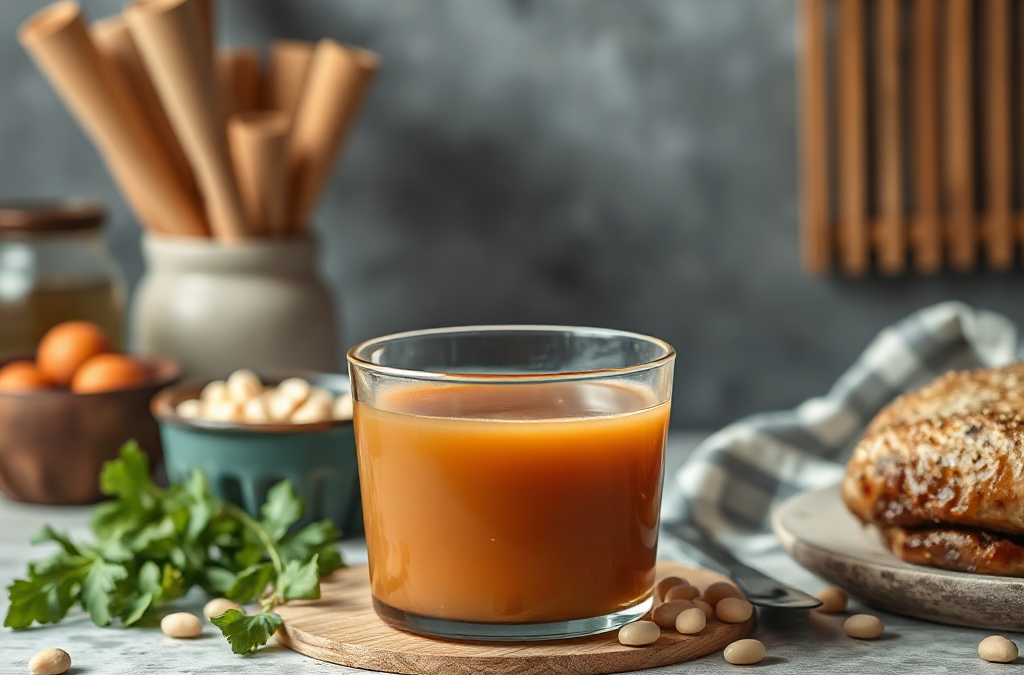
Organic bone broth can strengthen protein-rich meal planning when it is used as a flavorful base alongside foods that provide substantial complete or complementary protein, such as chicken, beans, lentils, eggs, tofu, or fish. Its protein contribution varies by recipe and serving, so the label matters more than the product name; sodium, added ingredients, and refrigerated storage also deserve attention. Use broth to cook grains, enrich soups, or braise vegetables, then add a clearly measured protein source rather than treating broth alone as a complete meal. This approach improves convenience and flavor while keeping expectations realistic about collagen, amino acids, and total daily protein.
What Organic Bone Broth Contributes To Protein Planning
Organic bone broth is most useful in a protein-rich eating pattern as a cooking liquid, soup foundation, or savory ingredient—not as the sole protein source. Broth made from bones contains collagen-derived amino acids and may contain some gelatin, but its nutrition varies considerably with the bones used, cooking time, dilution, straining, and the amount of meat left on the bones. A carton labeled organic describes production standards for the ingredients; it does not guarantee a particular protein content or make the broth nutritionally complete.
The first practical step is to read the nutrition panel. Compare the protein per serving, serving size, sodium, and ingredient list. A cup that contains a modest amount of protein may add flavor and liquid without meaningfully covering the protein target of a meal. That distinction prevents a common mistake: counting a mug of broth as equivalent to a serving of poultry, seafood, dairy, soy, beans, or eggs.

Collagen also deserves careful interpretation. It supplies amino acids that differ from the amino acid profile of many muscle foods and plant proteins, so it should complement rather than replace a varied protein pattern. Pairing broth with ingredients such as shredded chicken, white beans, lentils, edamame, eggs, or tofu creates a more substantial meal. Readers using Organic bone broth for protein-rich meal planning should therefore ask two separate questions: how much protein does the broth provide, and what main ingredient will carry the meal?
A simple example is a vegetable soup made with one cup of broth. Without an added protein source, it may be satisfying but relatively light. Adding lentils and a boiled egg changes the meal’s structure, while adding shredded chicken makes the protein contribution easier to estimate from the package or recipe. The broth improves moisture, salt balance, and savory depth; the added food determines whether the bowl is genuinely protein-rich.
How To Choose A Broth That Fits The Meal
The best organic bone broth depends on how it will be used. A low-sodium option is usually easier to reduce into a sauce or combine with seasoned ingredients, while a richer, saltier broth may work well in a quick soup where it is diluted with water and unsalted foods. Products sold as shelf-stable cartons, refrigerated liquids, and frozen portions can all fit a useful plan, but their storage requirements and texture differ.
Inspect the label for more than the organic seal. Look for a clear protein amount, recognizable ingredients, and a sodium level that suits the rest of the dish. Some broths contain onions, herbs, yeast extracts, or concentrated seasonings that may be helpful for flavor but can limit flexibility. Others may include added sugars or flavor blends that are unnecessary when the broth is being used in a simple grain, bean, or vegetable preparation.
Texture is another decision point. A broth that gels when chilled may contain more gelatinous material, but gel formation alone does not provide a reliable estimate of total protein. A thin liquid can still be a convenient cooking base, and a thick broth may taste too intense for delicate foods such as rice or poached fish. Choose based on the finished meal rather than assuming a premium texture equals a better nutritional result.
For a busy household, small frozen portions can be more practical than a large carton. They allow a cook to add a measured amount to quinoa, brown rice, beans, or a skillet sauce without opening a new container for every meal. The tradeoff is preparation and freezer space. A carton may be simpler for a large batch of soup, but unused broth must be handled according to its package instructions and refrigerated promptly after opening.
Use Organic bone broth for protein-rich meal planning as an ingredient with a defined job: moisture, flavor, tenderness, or sodium-bearing seasoning. If the label does not clearly state protein content, treat it as a flavorful stock and build protein from the other ingredients.
Meal-Building Methods That Actually Add Protein
Protein-rich meals become easier to plan when broth is assigned to a specific preparation method. It can cook grains, simmer legumes, form the base of a soup, or loosen leftovers into a new dish. Each method works because the broth adds water and savory compounds while the accompanying food supplies most of the meal’s protein, fiber, or energy.
Use broth to cook a complete bowl
Cook quinoa, barley, or brown rice in broth, then add a clear protein anchor. A bowl of quinoa with roasted vegetables and chickpeas offers a different balance from rice with salmon or chicken, but both can use broth during cooking. The important practice is to portion the protein separately instead of assuming that a flavored grain automatically qualifies as high protein.
Turn broth into a substantial soup
For soup, begin with broth and add two or more foods that change the nutritional structure: lentils and chicken, tofu and edamame, or white beans and turkey. Vegetables such as carrots, kale, mushrooms, and cabbage add texture and micronutrients, but they generally should not be counted as the main protein component. A soup that contains only broth, noodles, and vegetables may be nourishing in other ways while still falling short of a protein-focused meal.
Use it for leftovers and batch cooking
Broth can restore moisture to cooked grains, beans, or shredded meat during reheating. This is especially useful for batch preparation because dry leftovers often become less appealing by the third day. Add a small amount of broth to a covered pan, then stir in the protein after the base is hot. That method reduces the temptation to abandon prepared food and order a less balanced replacement.
A useful meal formula is broth plus one protein anchor, one plant food, and one satisfying carbohydrate or fat source. For example, simmer lentils in broth, add spinach and diced tomatoes, and finish with olive oil; or heat broth with shredded chicken, barley, mushrooms, and greens. Compare that structure with a mug of broth and crackers: the latter may be convenient, but it has fewer substantial ingredients and a less dependable protein contribution.
The frequent failure mode is making the broth the centerpiece while treating the actual protein as optional. Put the protein on the shopping list first, then select the broth that supports its preparation. More ideas for this approach appear in Organic bone broth for protein-rich meal planning.
Storage, Sodium, And Common Planning Mistakes
Safe handling and realistic nutrition estimates matter as much as flavor. Follow the package directions for refrigeration, freezing, and use after opening; when preparing homemade broth, cool it promptly and store it in shallow containers before refrigerating. Reheating only the portion needed helps maintain quality and avoids repeatedly warming the entire batch.
Sodium can accumulate quickly when broth is combined with canned beans, cured meats, salty sauces, cheese, or packaged grains. A low-sodium broth gives the cook more control, but it may taste flat until the meal is finished. Build flavor with garlic, ginger, citrus, vinegar, herbs, mushrooms, pepper, or toasted spices before adding more salt. People who have been advised to limit sodium should discuss suitable choices with a qualified clinician rather than assuming that an organic label solves the issue.
Another mistake is comparing products by marketing language instead of serving data. “Slow simmered,” “traditional,” and “collagen-rich” describe positioning or preparation claims, not a guaranteed amount of protein per bowl. Check whether the serving is one cup, a smaller quantity, or a concentrated spoonful. Dilution changes the nutrition per portion, and a recipe serving may be larger or smaller than the package serving.
Some people also expect bone broth to provide the same amino acid coverage as a varied protein meal. That assumption can lead to under-planning, particularly for someone who has elevated protein needs or eats mostly plant-based meals. Use beans, lentils, soy foods, eggs, dairy, poultry, fish, or meat according to personal preferences and dietary guidance. Broth can make these foods easier to eat, but it does not erase the need for variety.
- Check first: protein per serving, sodium, ingredients, and storage instructions.
- Add next: a measured protein food rather than relying on broth alone.
- Adjust: salt, dilution, texture, and portion size to the completed recipe.
- Review: whether the meal remains appealing and practical after several days of batch cooking.
A Practical Rotation For The Week
A useful rotation keeps broth from becoming repetitive. Choose one soup, one grain-based meal, and one leftover application, then vary the protein and vegetables. For instance, a batch of broth-based lentil soup can cover lunches, while broth-cooked quinoa can support dinners with roasted tofu or chicken. A smaller portion can moisten beans or rice later in the week.
Plan the protein before the broth. If the week includes eggs for breakfast, chickpeas for lunch, and fish or poultry for dinner, broth can connect those meals through preparation rather than making every dish taste the same. Use herbs and spices that suit each dish: ginger and scallion for a rice bowl, rosemary and garlic for beans, or lemon and dill for a light soup. The liquid remains useful without dictating the entire menu.
Signs the approach is working include less reliance on emergency meals, leftovers that retain moisture, and portions whose protein source is easy to identify. Signs it needs revision include consistently salty dishes, unopened cartons expiring, or meals that leave you hungry because the broth displaced a more substantial ingredient. Reduce the purchase size, freeze measured portions, or switch to a lower-sodium product when those problems appear.
People with kidney disease, medically prescribed dietary restrictions, food allergies, or nutrition goals set by a clinician may need individualized advice about protein, sodium, potassium, or ingredients. Organic bone broth can fit many eating patterns, but it should be evaluated as part of the complete recipe and day of eating—not as a stand-alone health solution.
Frequently Asked Questions
Is organic bone broth a high-protein food?
It can provide protein, but the amount varies by product and serving size. Read the label and add a separate protein source when building a substantial meal.
Can bone broth replace chicken, beans, or tofu in a meal?
Usually not. Bone broth may contribute collagen-derived amino acids, while chicken, beans, tofu, and similar foods provide the bulk and broader amino acid profile of the meal.
What should be added to broth for a protein-rich soup?
Try lentils, beans, shredded poultry, fish, tofu, tempeh, eggs, or edamame, then add vegetables and a grain or potato if desired.
Is low-sodium organic bone broth always the best choice?
It is often more flexible because you can season the finished dish, but taste and dietary needs differ. Compare sodium per serving with the other ingredients in the recipe.
How can broth make meal preparation easier?
Use it to cook grains, simmer legumes, build soup, or reheat leftovers. These applications improve moisture and flavor while keeping the main protein visible and measurable.
Conclusion
Organic bone broth earns a place in protein-rich meal planning when it improves the preparation of a meal that already contains a dependable protein anchor. Compare labels instead of relying on terms such as collagen-rich or slow simmered, and account for sodium, dilution, serving size, and storage. Cook grains and legumes in broth, build soups around beans, tofu, eggs, poultry, or fish, and use small portions to refresh leftovers. If a broth-based meal leaves you hungry, tastes overly salty, or provides no clearly identifiable protein food, revise the recipe rather than adding more broth. Treat the product as a useful culinary tool with variable nutrition, not as a substitute for a varied diet or individualized medical guidance.
Huge Discount on the Best Certified Organic Nutrient Dense Supplement!

Additional Resources
Authoritative Sources
- Bone Broth: Benefits, How To Make and Nutrition
health.clevelandclinic.orgBone broth benefits · Improved gut health · Lessen joint pain · Maintain strong bones and muscles · Reduce stress · Promote healthy skin.


