
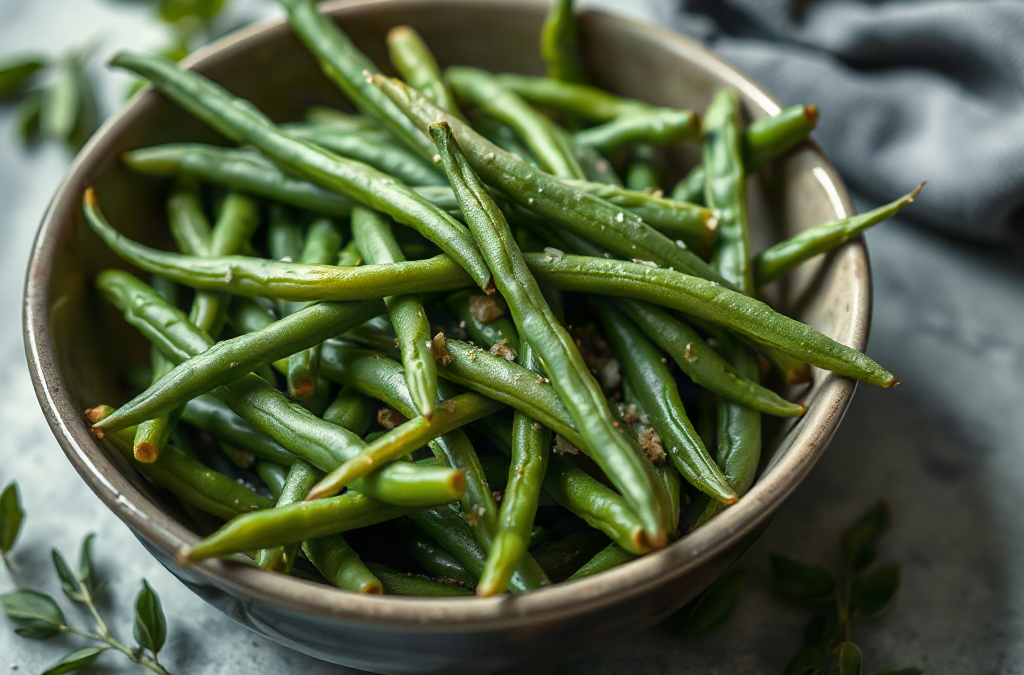
Prepare Organic Green Beans for Better Texture
Fresh organic green beans are easiest to enjoy when they are cleaned, trimmed, and cooked according to their size and freshness. Rinse the pods under cool running water, rub away visible soil, and drain them well. Organic produce still needs washing because handling, packaging, and kitchen surfaces can introduce dirt or microbes. Trim the stem ends with a knife or snap them by hand; the narrow, tapered tips are usually tender enough to leave in place.
Texture matters because green beans that remain slightly crisp contribute contrast to softer foods such as rice, mashed potatoes, lentils, or baked fish. Very thick beans may need a little more time than slim young beans, while older pods can develop a fibrous surface and stringy bite. A quick test with a fork is more reliable than a fixed cooking time: the fork should enter the bean without making it collapse.
Do not soak the beans for a long period before cooking. Excess water on the surface can dilute seasoning and make sautéing less effective. Pat them dry when using a skillet or roasting pan. If the beans are being cooked ahead, cool them promptly after blanching and store them covered in the refrigerator; reheating them briefly is generally better than cooking them from raw for a second extended period.
A useful preparation sequence is simple: wash, drain, trim, cut only if needed, and season after selecting the cooking method. Cutting every bean into very small pieces may speed cooking, but it also creates more exposed surfaces that can soften quickly. Whole or lightly cut beans usually work better for a plated meal, while smaller pieces suit soups, grain bowls, and skillet mixtures. For related meal ideas, see Cooking organic green beans for balanced meals.
Choose a Cooking Method That Fits the Meal

Steaming, blanching, sautéing, and roasting can all produce good green beans, but each method creates a different texture and flavor profile. Steaming is a strong default when the beans will accompany a seasoned main dish. It uses little added fat and keeps the pods moist without immersing them in water. Begin checking thin beans after a few minutes and remove them when they are bright and tender-crisp.
Blanching is useful when you want vivid color and a firm bite for salads or meal preparation. Place the trimmed beans in boiling water briefly, then transfer them to cold water to slow the cooking. The cooling step prevents residual heat from turning the beans soft. Blanched beans can later be warmed in a skillet with garlic, lemon, herbs, or a small amount of olive oil. The tradeoff is an extra pan and an additional handling step.
Sautéing develops more flavor because the beans contact a hot surface, but the pan should not be crowded. A crowded skillet traps steam and produces limp beans rather than lightly browned edges. Add a splash of water and cover the pan briefly if the surface browns before the centers become tender. This approach works well with onions, mushrooms, tofu, or leftover cooked grains.
Roasting offers concentrated flavor and mild caramelization. Toss dry beans with a small amount of oil, spread them in one layer, and check them before the pods wrinkle heavily. Roasting is less suitable when you need a very crisp, fresh texture or when the oven is already occupied by another dish. A common mistake is treating every method as interchangeable. Match the method to the meal: steam for a clean side, blanch for chilled preparations, sauté for a fast skillet dinner, and roast when deeper flavor is worth a softer texture.
Build a Balanced Plate Around Green Beans
Green beans provide vegetable volume, fiber, and a range of vitamins and minerals, but they are not usually enough to serve as the protein and energy foundation of a complete meal. A balanced plate pairs them with a protein food, a carbohydrate source, and a measured amount of fat. This combination tends to be more satisfying than a large serving of plain beans, particularly at lunch or dinner.
For a plant-forward plate, combine sautéed green beans with lentils, quinoa, brown rice, or baked tofu. Add tahini-lemon dressing, pumpkin seeds, or a small spoonful of olive oil for richness. For an animal-protein meal, serve steamed beans with grilled chicken, eggs, fish, or plain yogurt-based sauce, alongside potatoes, farro, or whole-grain bread. The goal is not to make every plate rigidly identical; it is to prevent the vegetable from carrying the entire meal by itself.
Flavor pairings can make this structure easier to follow. Lemon and herbs brighten beans served with fish or white beans. Toasted almonds add crunch to a vegetarian grain bowl. Garlic, ginger, and sesame can connect beans with tofu and rice. Tomatoes, corn, or roasted squash add color and carbohydrate, while mushrooms contribute savory depth without replacing the protein portion.
Portion needs vary with appetite, age, activity, and the rest of the meal. Someone serving beans beside a substantial lentil stew may need only a modest side, while a person using beans in a vegetable-heavy lunch may add a larger grain and protein component. Avoid the weak assumption that an organic label changes the basic meal-building role of the vegetable. Organic production may matter to a shopper’s farming and purchasing preferences, but balance still comes from the full combination of foods. The principles described at Cooking organic green beans for balanced meals work with either fresh market beans or properly stored organic beans.
Avoid Common Cooking and Nutrition Mistakes
The most frequent cooking failure is overcooking. Long boiling can make green beans dull, soft, and waterlogged, while repeated reheating further weakens their texture. If the beans are intended for leftovers, stop cooking when they are just tender and rewarm them briefly in a skillet or microwave-safe dish. A bright color and slight resistance when bitten usually indicate a better stopping point than a completely soft pod.
Another mistake is adding too much fat or salty sauce to compensate for bland cooking. Oil, butter, cheese, and creamy dressings can all fit within a balanced meal, but their amounts matter because the beans themselves are relatively light. First improve flavor with browning, citrus, vinegar, herbs, spices, toasted seeds, or aromatics. Then add enough fat to carry flavor rather than allowing the sauce to dominate the plate.
Uneven sizing also causes inconsistent results. If some beans are thick and others are very thin, the small ones may soften before the large ones are ready. Sort unusually large pods, cut them in half lengthwise, or give them a short head start. Frozen organic green beans are a practical alternative when fresh beans are unavailable; they may be softer after cooking, but they work well in soups, stir-fries, and casseroles.
Food safety deserves attention without turning meal preparation into a complicated process. Wash hands, clean cutting surfaces, keep raw animal foods separate from ready-to-eat vegetables, and refrigerate leftovers promptly. Do not assume that organic means risk-free or that a quick rinse removes every hazard. The practical priority is clean handling, adequate cooking where appropriate, and sensible storage. For a broader application, connect these choices with Cooking organic green beans for balanced meals.
Plan Practical Green Bean Meals
A workable weekly plan uses green beans in different formats instead of repeating one preparation until it becomes unappealing. Cook a batch of blanched beans for a cold salad, reserve another portion for a quick skillet meal, and prepare a fresh serving by steaming when texture matters most. Keeping the seasoning flexible allows the same vegetable to fit several cuisines and leftovers.
A simple dinner formula is green beans plus one protein and one carbohydrate. Try roasted beans with baked salmon and potatoes; sautéed beans with tofu and brown rice; or steamed beans with lentils and whole-grain toast. Add a sauce at the table so each person can control richness and salt. This is especially useful when the rest of the meal already contains a strongly seasoned component.
Signs the approach is working include beans that retain a pleasant bite, a meal that remains satisfying for several hours, and leftovers that can be reused without becoming watery. Signs it needs adjustment include reaching for extra snacks soon after eating, leaving most of the beans untouched, or finding that the beans overpower the plate’s texture. Add more protein, carbohydrate, seasoning, or acidity rather than simply increasing the vegetable portion.
- For speed: steam or sauté thin beans while a grain or protein reheats.
- For meal prep: blanch, cool, dry thoroughly, and finish portions with fresh seasoning.
- For maximum flavor: roast or sauté dry beans, then add lemon, herbs, or toasted seeds.
- For softer meals: fold beans into soups, stews, egg dishes, or grain bowls.
Budget and availability also influence the best choice. Fresh beans are appealing when they are firm and reasonably priced, while frozen beans reduce waste and require little trimming. Canned beans can be convenient, but draining and rinsing them may reduce excess brine; their softer texture makes them more suitable for mixed dishes than crisp side salads.
Frequently Asked Questions
What is the healthiest way to cook organic green beans?
Steaming, blanching, or a quick sauté can preserve a pleasant texture without requiring much added fat. The best method is the one that helps you eat the beans as part of a complete meal.
Should organic green beans be washed before cooking?
Yes. Rinse them under cool running water, drain them well, and wash your hands and preparation surface before trimming and cooking.
What foods go well with green beans in a balanced meal?
Pair them with lentils, tofu, eggs, chicken, fish, or beans for protein, then add potatoes, rice, farro, or whole-grain bread and a small amount of olive oil, nuts, or seeds.
Why do my green beans turn soft and dull?
They may be overcooked, crowded in the pan, or left in hot water after cooking. Check them early and cool blanched beans promptly when a firm texture matters.
Can frozen organic green beans be used for balanced meals?
Yes. Frozen beans are convenient for soups, stir-fries, and grain bowls. Expect a softer texture than fresh beans and season them after excess cooking moisture has evaporated.
Conclusion
Good green bean meals depend less on a single “best” recipe than on matching preparation, texture, and pairings to the occasion. Wash and trim the beans carefully, stop cooking while they still have some bite, and choose steaming, blanching, sautéing, or roasting according to the rest of the plate. Add a dependable protein, a satisfying carbohydrate, and a modest source of fat so the vegetable contributes to a complete meal rather than standing alone. Fresh beans are excellent when available, but frozen beans can reduce waste and make weeknight cooking easier. Start with one reliable combination, such as sautéed beans with tofu and rice or steamed beans with eggs and potatoes, then vary the seasonings and format to keep the meals practical.
Huge Discount on the Best Certified Organic Nutrient Dense Supplement!

Related Content
- Organic Raisins: Serving Sizes and Added Sugar—Portion Examples and Label Checks
- Best Organic Immune Support in Patterson California
- Are Organic Canned Foods Still a Good Option? Evaluating Nutritional Benefits and Safety
- Why Organic Foods Are Essential for Pregnant Women
- How to Find Local Organic Produce: Essential Methods and Resources


