
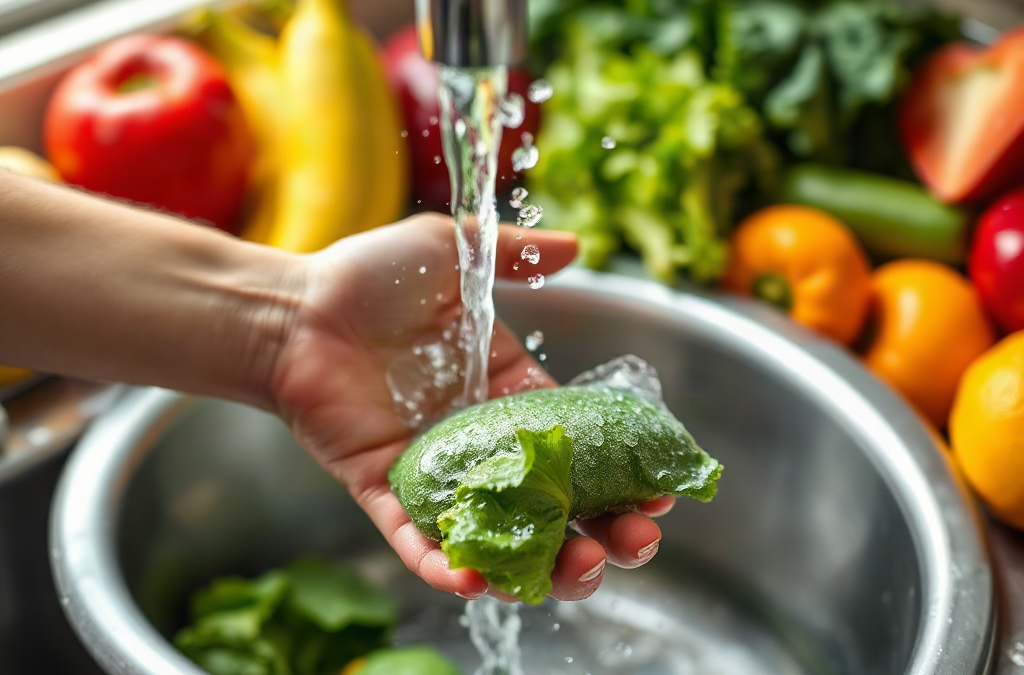
Washing organic produce and contamination control depend on clean hands, potable running water, separation from raw foods, and prompt drying rather than soap or commercial produce washes. Rinse firm and delicate produce under running water, rub surfaces with clean hands or a dedicated brush, remove damaged areas, and dry with a clean towel or air-dry before cutting. Organic certification does not mean produce is free from soil, microbes, or handling contamination, and washing cannot remove every hazard. Wash only what you plan to use soon when possible, because extra moisture can shorten storage life, and keep cut produce refrigerated.
Why Organic Produce Still Needs Contamination Control
Organic produce can carry soil, plant debris, microorganisms, and residues from harvesting, packing, transport, or retail handling. The organic label describes how the crop was produced under an organic certification system; it does not mean the item was grown in a sterile environment or that washing is unnecessary. Contamination control therefore begins with treating organic fruits and vegetables as fresh foods that need sensible handling from purchase through preparation.
Washing reduces surface dirt and may reduce some microorganisms, but it is not a sterilization step. Water cannot reliably remove contamination trapped in crevices, damaged tissue, or the folds of leafy greens. Cutting can also move organisms from the outside of a melon, cucumber, or squash into the edible interior if the surface has not been cleaned first. That is why a brief rinse before slicing matters even when the peel will be discarded.

Produce condition affects the value of washing. A firm apple with an intact skin can be rubbed under running water, while a bruised peach may have soft tissue that is easily damaged by pressure. A bag of leafy greens may be labeled ready-to-eat, but washing it again can introduce contamination from a sink, colander, or unwashed hands. Check the package instructions and avoid adding an extra washing step when the product is specifically sold as ready to eat.
Use the same discipline described in Washing organic produce and contamination control for farmers-market purchases, home-grown crops, and supermarket produce. The source changes, but the practical questions remain: Is the food intact, has it touched a dirty surface, and will it be eaten raw or cooked? Raw salad ingredients deserve especially careful handling because there is no cooking step afterward.
A Reliable Washing Method for Different Types of Produce
A dependable washing routine uses clean hands, a clean sink or basin, potable running water, and enough time to inspect the surface. Wash hands before handling produce, then remove visible soil and damaged portions. Rinse the item under running water rather than soaking everything together, because shared soaking water can spread dirt between pieces instead of carrying it away.
For firm produce such as apples, pears, potatoes, carrots, cucumbers, and winter squash, rub the surface with clean hands while water flows over it. A clean produce brush can help with ridged or thick-skinned items, but the brush should be reserved for food use and cleaned between uses. Scrubbing aggressively is not better; it can break the skin and create additional places for moisture and microbes to collect.
Leafy greens require a different approach. Remove outer leaves that are wilted, torn, or heavily soiled, separate the remaining leaves, and rinse them under running water. A salad spinner can remove excess water after rinsing, but the basket and bowl need to be clean before use. For herbs, berries, and other fragile produce, gentle rinsing is preferable to rubbing. Strawberries and raspberries can become waterlogged or bruised, so wash them close to the time they will be eaten and dry them carefully.
Melons, avocados, citrus fruits, and other produce with a peel still need surface cleaning before cutting. A knife can drag organisms from the rind across the flesh. Rinse and rub the outside, dry it with a clean towel, and then cut it on a clean board. Do not use the same unwashed cutting board for raw meat and ready-to-eat produce.
A compact working sequence is:
- Wash hands and clean the preparation surface.
- Inspect produce and discard or trim damaged areas.
- Rinse under running water and rub or brush as the surface allows.
- Dry with a clean towel or allow the item to air-dry.
- Refrigerate cut produce promptly and clean tools afterward.
The common failure is treating every item alike. A delicate berry, a dirt-covered potato, and a packaged salad do not need the same handling. Match the pressure, timing, and drying method to the food rather than assuming a longer soak provides more protection.
Water, Produce Washes, and Cross-Contamination
Cool or lukewarm potable tap water is generally the practical choice for household produce washing. Soap, detergent, bleach, disinfectant, and household cleaning products should not be applied to food. Produce can retain these substances, and swallowing cleaning chemicals creates a different hazard from the contamination the person was trying to address.
Commercial produce washes are not a substitute for clean handling. They may remove some surface material, but they do not make raw produce sterile, and their value varies by formulation and use. A vigorous rinse under running water, combined with hand rubbing and a clean work area, addresses visible soil and reduces the opportunity for transfer without leaving an unnecessary chemical residue. Cooking remains the more dependable control for hazards that may persist on raw produce, although cooking changes texture and may not suit salads or fresh fruit.
Cross-contamination often occurs after the rinse. A person may wash an apple, place it on a counter that held raw poultry, and then assume the food remains clean. The same problem can occur when a colander is used for raw meat and salad greens, when a damp cloth wipes both the sink and the cutting board, or when unwashed hands touch a phone before handling the prepared food.
Consider a simple kitchen scenario: a cook rinses lettuce in a sink containing soil from potatoes, drains it in a colander, and then chops it on a board used for raw chicken. The lettuce has been washed, but the overall process still allows contamination to move from surfaces and utensils to a ready-to-eat meal. Separating tasks and cleaning equipment can matter as much as the rinse itself.
Use a dedicated produce brush when it is useful, but do not assume equipment automatically improves safety. A brush with trapped soil can spread contamination. Clean and dry reusable tools, replace heavily worn sponges, and use paper towels or a washable clean cloth for drying. The goal is not to create a laboratory; it is to prevent a clean food from contacting a dirty object after washing.
More practical details about the food-handling side of this topic appear in washing organic produce and contamination control, especially when several ingredients are prepared in one meal.
Storage, Timing, and Higher-Risk Situations
Washing timing affects both contamination control and freshness. Extra surface moisture can encourage softening, mold growth, and deterioration during storage, particularly for berries, leafy greens, and herbs. Washing immediately before use is often the sensible choice for fragile produce. If produce is washed in advance for convenience, drain it thoroughly, dry it as much as practical, and store it in a clean container that allows moisture management.
Cut produce requires more attention than intact produce because cutting breaks the natural barrier of the skin and releases moisture. Refrigerate cut melon, sliced fruit, chopped vegetables, and prepared salads rather than leaving them at room temperature while a meal is assembled. Keep raw produce away from raw meat, poultry, seafood, eggs, and their juices. A clean container with a tight lid can also prevent contact with other refrigerated foods.
Higher-risk households may choose more conservative handling. Older adults, young children, pregnant people, and individuals with weakened immune systems can be more vulnerable to foodborne illness, so raw sprouts and damaged or questionable produce deserve particular caution. Washing cannot reliably remove hazards from sprouts because organisms may be present inside the growing seed. Cooking appropriate foods and following package directions may be safer than relying on rinsing alone.
Home-grown and farmers-market produce may arrive with more soil than a polished supermarket item, but appearance alone does not determine risk. A visibly clean item still needs hand and surface control, while a dirty carrot may simply need more rinsing and trimming. Do not use a strong chemical treatment to compensate for unknown growing conditions. If the source, water quality, or condition of the food is questionable, discard damaged items and follow local public-health advice rather than attempting to rescue them.
Signs that the process is working include visibly cleaner surfaces, no soil left in crevices, dry preparation tools, and no contact between washed produce and raw-food equipment. Signs of a weak process include a dirty sink, pooled water in storage containers, bruising from excessive scrubbing, or a towel that has already wiped contaminated surfaces. The priority is a clean chain from hands to food to storage, not simply a longer rinse.
Readers comparing household routines can use Washing organic produce and contamination control as a checklist: clean first, rinse appropriately, dry when needed, separate raw foods, and refrigerate cut items.
Frequently Asked Questions
Does organic produce need to be washed?
Yes. Organic certification does not mean produce is free from soil, microorganisms, or contamination introduced during harvesting and handling. Rinse it appropriately before eating or cutting.
Should produce be washed with soap?
No. Soap and household cleaners are not intended for eating and may leave harmful residues. Use potable running water, hand rubbing, and a clean brush when suitable.
Is rinsing enough to make produce safe?
Rinsing can reduce dirt and some surface contamination but cannot sterilize food or reliably remove hazards inside damaged tissue or sprouts. Clean handling and, when appropriate, cooking remain important.
Should berries be washed before storing them?
Washing berries close to use often preserves quality better because excess moisture can speed softening and mold. If washing ahead, drain and dry them thoroughly before refrigeration.
Do I need to wash a melon before cutting it?
Yes. Rinse and rub the outside first, then dry it before cutting. A knife can transfer organisms from an unwashed rind to the edible flesh.
Conclusion
Effective produce hygiene is a chain of small controls rather than a search for a powerful wash. Treat organic fruits and vegetables as fresh foods that may carry soil or handling contamination, then match the method to the item: rub firm surfaces, rinse delicate leaves gently, clean peels before cutting, and avoid washing ready-to-eat products unless the package directs it. Keep soap and household disinfectants away from food, and prevent recontamination through clean hands, boards, colanders, towels, and storage containers. Wash fragile items near the time of eating when possible, dry excess moisture, and refrigerate cut produce. Those priorities address the practical weaknesses that a longer rinse cannot fix.
Huge Discount on the Best Certified Organic Nutrient Dense Supplement!

Related Content
- The Ultimate Guide to 10 Effective Organic Nutrition for Weight Loss in 2025
- How to Navigate Organic Food Labeling: Key Terms, Standards, and Consumer Insights
- The Ultimate Guide to Gut Health Organic Nutrition (2025): 7 Effective Tips to Boost Your Microbiome
- Are Organic Canned Foods Still a Good Option? Evaluating Nutritional Benefits and Safety
- Understanding Antioxidants in Plants