
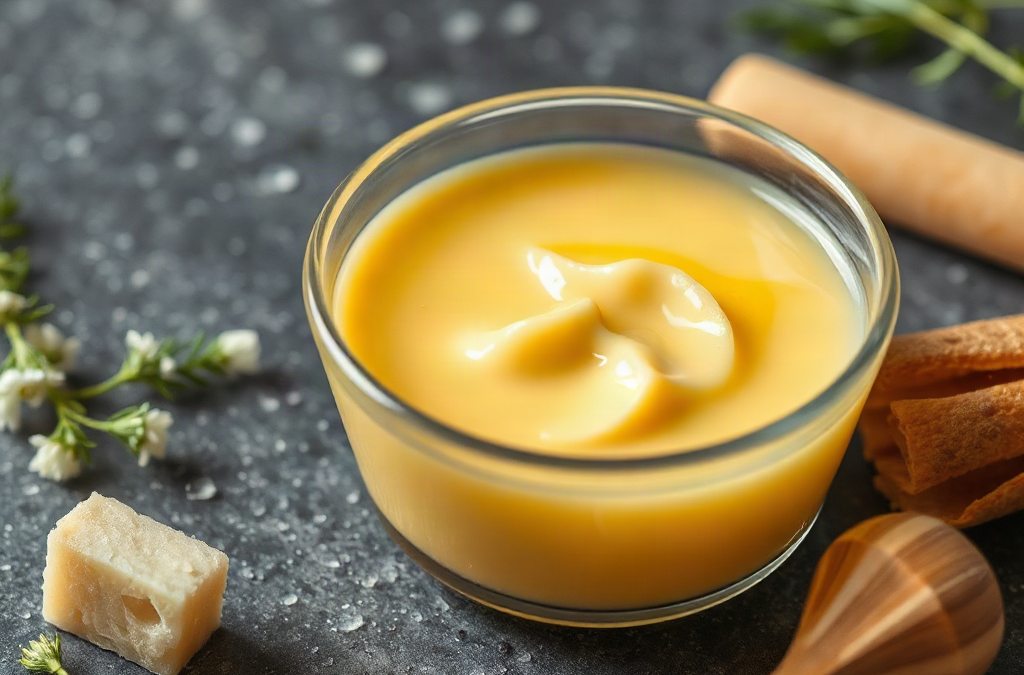
Organic ghee works best as a flavorful cooking fat for sautéing, roasting, frying, and finishing dishes, but its heat tolerance does not erase its saturated-fat tradeoffs. Removing most milk solids gives ghee a higher smoke point than butter and reduces browning or burning during hotter cooking. A spoonful can add concentrated buttery flavor to vegetables, eggs, grains, and spices, so modest amounts often suffice. Organic certification addresses how the dairy ingredients were produced; it does not make ghee low in saturated fat or suitable for everyone with a dairy allergy.
What Makes Ghee Useful for Cooking?
Ghee is butter that has been heated so water evaporates and most milk solids can be separated from the fat. That processing changes how it behaves in a pan. Ordinary butter contains milk proteins and sugars that brown readily and may burn during sustained high-temperature cooking. Ghee retains the rich character of butter while tolerating more heat before visible smoking becomes a concern.

The absence of water also matters. Butter may foam and sputter when its water meets a hot skillet, whereas ghee behaves more like a pure cooking oil. It coats food evenly, carries fat-soluble flavor compounds from herbs and spices, and encourages surface browning without adding water to the pan. When cumin seeds, mustard seeds, turmeric, or garlic are warmed briefly in ghee, their aromatic compounds disperse through the fat and then coat the rest of the dish.
Heat tolerance should not be mistaken for unlimited stability. Any fat can degrade when it is overheated, reused repeatedly, or left smoking. A pan producing steady smoke, a sharp odor, or unusually dark residue is signaling excessive temperature. Lower the heat, ventilate the kitchen, and replace badly scorched fat rather than assuming ghee is immune to damage. Its relatively high smoke point is a cooking advantage, not permission to run every burner at maximum.
Organic ghee differs primarily in the production standards applied to the dairy supply, not in its basic culinary function. Certification may matter to shoppers who prioritize organic livestock and feed requirements, but the word organic does not establish a particular smoke point, guarantee a grass-fed diet, or meaningfully reduce the product’s saturated-fat concentration. Those attributes require separate label checks.
A practical test is to compare the result with the amount used. If a small quantity gives vegetables a pleasantly nutty aroma and prevents sticking, ghee is serving a clear purpose. If food feels greasy, spices taste muted, or fat pools on the plate, the quantity is probably doing more than the dish needs. Concentrated flavor makes restraint both possible and useful.
Where Does Ghee Work Best?
Ghee earns its place when a dish benefits from both heat tolerance and buttery flavor. It is especially effective for sautéing aromatics, blooming spices, browning eggs, roasting dense vegetables, pan-cooking flatbreads, and adding a small finishing gloss to rice or lentils. Neutral oils may handle the same temperature, but they do not contribute ghee’s toasted dairy notes.
For a vegetable example, toss cauliflower or carrots with just enough melted ghee to create a thin coating, then roast until the edges brown. Thick puddles on the baking sheet indicate excess rather than better coverage. With mushrooms, heat the pan first, add a modest amount of ghee, and cook without crowding. The reduced water content helps the surfaces brown, but overcrowding still traps steam and defeats that advantage.
Ghee is also well suited to controlled stovetop frying, though the amount and food matter. A thin layer can cook an egg or crisp a leftover grain cake efficiently. Deep-frying requires far more fat, magnifying cost and making temperature control, filtering, storage, and disposal more consequential. A refined neutral oil may be the more economical choice when the desired flavor is not buttery.
Its finishing role deserves separate treatment because no high heat is involved. Half a teaspoon stirred into hot lentils, mashed sweet potato, steamed greens, or cooked millet can supply aroma across an entire serving. Adding it at the end makes its flavor easier to notice, which may reduce the amount needed. By contrast, using a generous quantity early in a strongly seasoned stew can bury the flavor while retaining all of the fat.
| Cooking task | Why ghee may fit | What to watch |
|---|---|---|
| Spice blooming | Disperses aromatic compounds | Keep spices moving to prevent scorching |
| Vegetable roasting | Promotes coating and browning | Avoid heavy pooling on the tray |
| Eggs and pancakes | Adds buttery flavor without butter solids | Use moderate heat for delicate foods |
| Finishing grains | Provides noticeable flavor in a small amount | Measure before adding more |
| Deep-frying | Can tolerate frying temperatures | Cost and total fat use may outweigh the benefit |
The common failure is selecting ghee only because it is labeled as a high-heat fat. Match it to the flavor and technique instead. Salad dressings usually benefit more from a pourable oil with a compatible flavor, while baked goods may need the water and milk solids found in butter for their intended texture and browning.
How Does Ghee Compare With Other Cooking Fats?
Ghee’s main nutritional tradeoff is its high proportion of saturated fat. Removing butter’s water concentrates the fat by volume, so comparing equal spoonfuls of ghee and butter is not the same as comparing equal amounts of fat. Anyone limiting saturated fat for cardiovascular risk management should consider the whole dietary pattern and seek individualized advice from a qualified clinician or registered dietitian when appropriate.
Olive, avocado, canola, and other plant oils generally provide more unsaturated fat than ghee. That makes them useful everyday alternatives when buttery flavor is unnecessary. Extra-virgin olive oil suits dressings, moderate stovetop cooking, and many roasted foods; refined oils can be selected for higher-temperature or neutral-flavor applications. Ghee may still make sense as an accent rather than the default fat used at every meal.
The comparison with butter is more culinary than transformative nutritionally. Ghee has little water and far fewer milk solids, so it is less likely to burn at temperatures where butter browns rapidly. Butter remains preferable when its water supports steam, when its solids contribute browning, or when a recipe was formulated around its structure. Substituting ghee one-for-one in cakes, cookies, or pastry can alter spread, tenderness, and moisture.
Dairy tolerance adds another constraint. Clarification removes most lactose and milk proteins, but residual amounts may remain, and composition varies by product and process. People with milk allergy should not assume that ghee is safe merely because it contains fewer milk solids. Lactose intolerance and milk-protein allergy are different concerns; a healthcare professional can help evaluate personal risk when reactions are involved.
Cost and sourcing can be decisive as well. Organic ghee is often more expensive than butter or common oils. Paying the premium may align with a shopper’s production preferences, but it does not convert saturated fat into unsaturated fat or guarantee superior culinary performance. Compare ingredient lists, certification marks, jar size, price per unit, and how quickly the product will be used.
A balanced kitchen does not need a single winning fat. Keep ghee for dishes where its flavor or lack of milk solids changes the result, and use unsaturated oils where they work equally well. That division preserves ghee’s distinctive contribution without letting a premium specialty product become an automatic addition to every pan.
How to Choose and Use Organic Ghee
A useful jar should have a clear ingredient list, credible organic certification, packaging that protects the contents, and a flavor suited to the dishes you cook. Plain ghee often lists only organic butter or organic milk fat. Added flavors are not inherently problematic, but they narrow versatility and should be intentional rather than hidden behind a rustic label.
Organic and grass-fed are separate claims. A certified-organic product must meet the applicable organic standard, while a grass-fed statement concerns the animal’s diet and may use different verification. Neither phrase tells you exactly how the finished ghee tastes. Cultured ghee may have a tangier, more complex profile; conventional sweet-cream ghee is often milder. Small jars reduce waste when trying an unfamiliar style.
Storage instructions vary, so follow the manufacturer’s label. Keep the jar tightly closed, prevent water or food crumbs from entering, and use a clean, dry utensil. Moisture and contamination can shorten quality even though ghee contains little water. Discard it if mold appears or if the aroma becomes distinctly rancid, sour, or paint-like. Normal graininess or separation can reflect temperature changes rather than spoilage.
Use this compact process when adding ghee to a routine:
- Name the job. Decide whether you need high-heat performance, buttery flavor, spice extraction, or a finishing fat.
- Choose the smallest useful amount. Begin with a thin pan coating or a measured finishing spoonful instead of pouring freely.
- Control the heat. Preheat sensibly, watch for smoke, and reduce the burner if aromas turn harsh.
- Judge the finished dish. Look for even browning and a clean, nutty flavor rather than greasiness or scorched residue.
- Rotate fats deliberately. Use olive, canola, avocado, or another suitable oil when unsaturated fat, neutral flavor, or lower cost is the priority.
Consider two breakfasts. Eggs cooked in a light film of ghee may gain a clear flavor benefit, especially if the pan tends to brown butter too quickly. Oatmeal already topped with nuts and seeds may not need another concentrated fat unless a small amount of ghee is specifically desired for taste. The decision depends on what the ingredient contributes, not on its wellness image.
The approach is working when food releases cleanly, browns at the intended pace, and tastes rich without leaving a heavy coating. Repeated smoking, a stale odor, greasy texture, or rapidly emptying jars point to excessive heat, poor storage, or oversized portions. Correct the specific problem rather than abandoning or idealizing the ingredient.
Frequently Asked Questions
Is organic ghee healthier than regular ghee?
Organic certification concerns production practices, not a major reduction in calories or saturated fat. Choose organic ghee for sourcing preferences, then evaluate portion size and overall dietary fat separately.
Can ghee replace butter in every recipe?
No. Ghee works well for sautéing and browning, but baking recipes may rely on butter's water and milk solids for texture, spread, steam, and color.
Is ghee safe for someone with a milk allergy?
Ghee may retain traces of milk proteins, so it should not automatically be considered safe for a milk allergy. Seek individualized medical guidance rather than testing tolerance casually.
How can I tell when ghee is too hot?
Steady smoke, a sharp burnt smell, rapidly darkening food, or scorched residue indicate excessive heat. Move the pan off the burner briefly and lower the temperature.
Should ghee be refrigerated after opening?
Follow the storage directions on the specific jar. In every case, close it tightly and keep water, crumbs, and wet utensils out to protect quality.
Conclusion
Ghee is most valuable when its concentrated buttery flavor, low moisture, and tolerance for hotter cooking solve a specific culinary problem. Use it for spice blooming, controlled sautéing, roasting, or finishing when those qualities improve the dish. Keep the quantity visible and deliberate, because a high smoke point does not offset saturated-fat intake or make unlimited use advisable.
Check certification and ingredient details instead of treating every package claim as interchangeable. Respect dairy-allergy concerns, follow the jar’s storage directions, and watch for smoke or stale aromas. For everyday decisions, reserve ghee for meals where it makes a noticeable difference and rotate in unsaturated plant oils when their flavor and performance fit. That approach balances cooking results, nutritional priorities, and cost without assigning one fat every job.
For additional context, consult USDA FoodData Central for nutrient profiles, the U.S. Department of Agriculture for organic-label standards, and established cardiovascular-health organizations for current guidance on saturated and unsaturated fats. Product-specific storage and allergen details should come from the manufacturer’s label.