
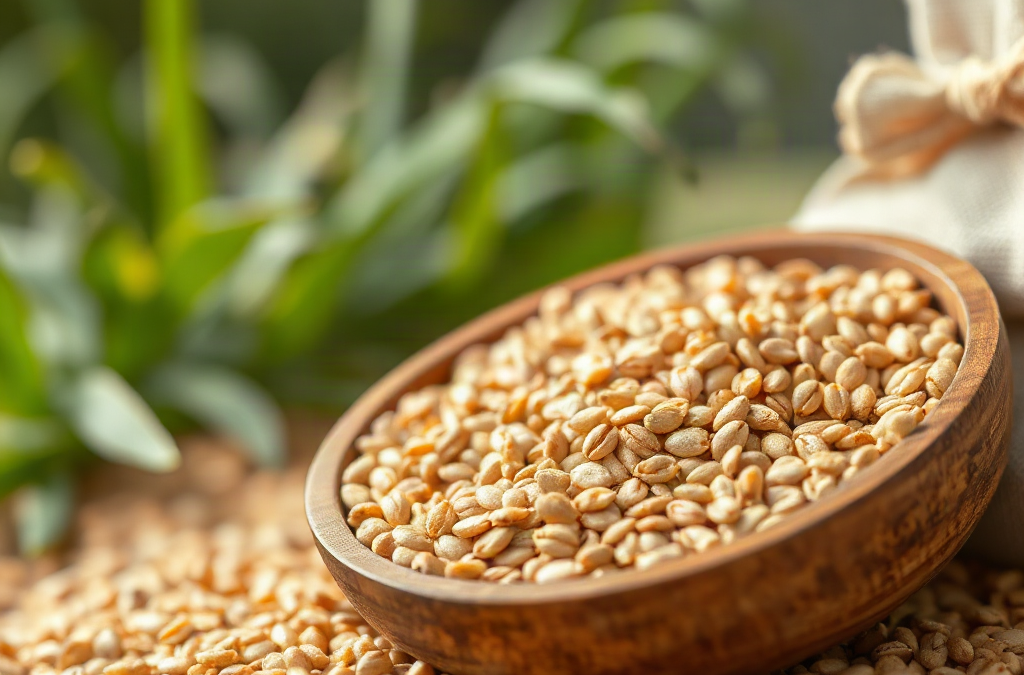
Organic flaxseed storage and ground-seed nutrition are closely linked because grinding exposes the seed’s oils to oxygen, light, and heat, while making its fiber and nutrients easier to use in food. Keep whole seeds sealed in a cool, dark place, but refrigerate or freeze ground flaxseed in an airtight container and grind only a practical amount at a time. A clean, mildly nutty aroma is expected; bitter, paint-like, or stale odors suggest oxidation. Ground flaxseed supplies alpha-linolenic acid, lignans, and fiber, but it should complement rather than replace a varied diet or prescribed medical care.
Why Does Grinding Change Flaxseed?
Grinding breaks the hard outer coat that otherwise allows some flaxseeds to pass through the digestive tract with limited breakdown. The resulting meal is easier to stir into oatmeal, yogurt, batters, and other foods, and its internal components become more accessible during digestion. That practical advantage comes with a storage cost: a much larger surface area is exposed to oxygen.

Flaxseed naturally contains polyunsaturated fat, including the plant omega-3 fatty acid alpha-linolenic acid, commonly abbreviated ALA. Polyunsaturated fats contain chemical structures that are relatively vulnerable to oxidation. Exposure to air, light, and warmth can accelerate this process, gradually producing unpleasant aromas and flavors. Grinding does not instantly destroy the seed’s nutritional value, but it removes part of the physical protection supplied by the intact hull.
A useful comparison is a sealed whole nut versus finely chopped nut pieces. Both contain the same components at the moment of cutting, yet the pieces have more exposed edges and usually lose freshness sooner. With flaxseed, the difference can be easy to miss because the meal may still look normal. Appearance alone is therefore a weak freshness test. Aroma and taste provide more useful clues: fresh meal tends to smell mild and nutty, while deteriorated oil may smell bitter, stale, grassy in an unpleasant way, or similar to paint or varnish.
The common assumption that commercially ground flaxseed is automatically inferior is too broad. Packaging, turnover, oxygen exposure, and storage after opening all influence quality. A sealed package from a store with steady sales may be a sensible choice for someone who cannot grind seeds at home. Buying an oversized bag that remains open for months, however, can cancel the convenience advantage.
Prioritize the form that matches actual use. Whole seed suits households that own a suitable grinder and can process small batches. Pre-ground meal is more practical when it will be consumed regularly and stored cold after opening. Neither option compensates for ignoring off odors, leaving the package beside a hot stove, or repeatedly admitting moist utensils into the container.
How Should Whole and Ground Flaxseed Be Stored?
Storage should become more protective after the seed is ground. Whole flaxseed retains its hull and can generally tolerate cool pantry storage better than meal, provided the container is tightly closed and kept away from sunlight, humidity, and heat. Ground flaxseed is better placed in the refrigerator or freezer after opening, especially when a package will not be finished quickly.
An airtight, food-safe container limits repeated air exchange and blocks kitchen odors. An opaque container or dark storage location also reduces light exposure. If the original bag seals securely, it can remain useful; press out excess air before closing it. A poorly closing paper or thin plastic package is better transferred to a jar or freezer-safe container. Labeling it with the opening or grinding date makes it easier to judge how long it has actually been in use without relying on memory.
| Flaxseed Form | Preferred Location | Main Risk to Control | Practical Check |
|---|---|---|---|
| Unopened whole seed | Cool, dark cupboard | Heat and package damage | Inspect the seal and printed date |
| Opened whole seed | Cool cupboard or refrigerator | Moisture and repeated air exposure | Keep tightly sealed and smell before use |
| Home-ground meal | Refrigerator or freezer | Oxidation after grinding | Date the container and make small batches |
| Opened pre-ground meal | Refrigerator or freezer | Warm storage and loose packaging | Follow package directions and check aroma |
Freezing is especially useful for larger quantities because ground flaxseed can usually be spooned out without thawing the entire container. Keep the lid closed while the container returns to storage so condensation does not collect inside. If meal has become wet, clumped from moisture, moldy, or insect-contaminated, discard it rather than trying to dry or sift it.
Printed best-by dates are quality indicators, not substitutes for sound handling. Storage life varies with packaging, processing, room temperature, and how frequently the container is opened, so a universal day count would imply more precision than the conditions allow. Manufacturer instructions should take priority when they are more restrictive.
A frequent failure is placing ground flaxseed in a clear jar near the oven because it is used at breakfast. That arrangement is convenient but combines light and fluctuating warmth. A smaller working container in the refrigerator provides nearly the same access with better protection. Success looks like a dry, free-flowing meal with a neutral or gently nutty scent; worsening bitterness or an oil-paint odor signals that storage is no longer preserving quality.
What Does Ground Flaxseed Contribute Nutritionally?
Ground flaxseed contributes dietary fiber, ALA, lignans, protein, and several micronutrients, but its value depends on the whole eating pattern. The soluble and insoluble fiber fractions add bulk and interact with water in the digestive tract. ALA is an essential fatty acid because the body cannot make it, although conversion of ALA into the long-chain omega-3 fats found in oily fish is limited and variable.
Lignans are plant compounds present in especially notable amounts in flaxseed. They are sometimes promoted with sweeping disease claims, but a food’s composition does not establish that it will treat or prevent a medical condition. Research on flaxseed and specific health outcomes varies by population, preparation, dose, and study design. Ground seed is best viewed as a nutrient-dense food ingredient, not as a replacement for medication, clinical evaluation, or a broader range of plant foods.
Whole and ground forms are not nutritionally identical in practice even though they begin with the same seed. Intact seeds may add texture to bread or cereal, yet some can remain unbroken through digestion. Ground meal exposes the interior and is therefore the more practical form when nutritional access is the goal. Flaxseed oil is different again: it supplies ALA but lacks the fiber and most of the intact seed structure. Choosing oil solely because it sounds more concentrated overlooks those lost components.
Meal context matters as well. Stirring flaxseed into plain yogurt with berries adds fiber and fat to a food that already supplies protein. Mixing it into oats creates a different balance than sprinkling it onto a pastry with little fruit or whole-grain content. The flaxseed does not erase the nutritional characteristics of the surrounding meal. Variety remains valuable because chia seeds, walnuts, legumes, vegetables, fruit, whole grains, fish, and other foods contribute different nutrient profiles.
People unaccustomed to fiber may find a gradual introduction more comfortable than a sudden large serving, and adequate fluid intake is relevant when adding concentrated fiber. Anyone with swallowing difficulty, bowel narrowing, significant digestive disease, medication concerns, pregnancy-related questions, or a medically restricted diet should seek individualized advice from a qualified clinician or registered dietitian. More is not automatically better, and supplement-like use deserves more caution than an ordinary culinary amount.
A Practical Grinding and Use Routine
A reliable routine matches batch size to consumption rather than chasing an arbitrary storage deadline. Estimate how much the household uses over the next several meals, grind that amount, and refrigerate the meal immediately in a dated container. Someone adding flaxseed to breakfast most days can prepare a modest batch; an occasional user is better served by grinding a smaller quantity or freezing most of a purchased package.
A clean coffee or spice grinder often works for home batches, although the appliance must be suitable for seeds and used according to its instructions. Pulse until the seeds become a coarse or fine meal rather than running the motor unnecessarily long. Excess processing can warm the seeds and may produce uneven clumps. Clean away old coffee, spices, and residual moisture first, since flaxseed readily picks up odors and wet equipment introduces a separate spoilage risk.
Use this compact handling sequence:
- Check: Smell the whole seeds or meal before adding other ingredients that could hide an off odor.
- Grind: Process only the quantity likely to be used while it remains fresh under cold storage.
- Seal: Transfer the meal promptly to a dry, airtight container and mark the date.
- Chill: Refrigerate routine-use portions and freeze surplus that will remain longer.
- Rotate: Finish the older batch before grinding or opening another one.
Ground flaxseed can be mixed into foods with enough moisture to distribute it evenly, such as oatmeal, smoothies, yogurt, pancake batter, muffins, soups, or bean-based patties. In baking, flaxseed changes texture and water absorption, so adding a large amount to a familiar recipe may create a dense or dry result. Begin with an established flax-containing recipe or make a modest adjustment rather than assuming it behaves like ordinary flour.
Flax meal mixed with water is often used as a binder in some egg-free baked goods, but it does not reproduce every function of an egg. It may work in muffins, pancakes, or cookies where binding is central, yet it is less dependable in recipes that rely on whipped egg structure or a delicate custard. That limitation is culinary rather than a sign that the flaxseed has failed.
The routine is working when the meal remains dry, pleasantly mild, easy to portion, and regularly consumed before quality declines. It is failing when several dated containers accumulate, the grinder produces warm paste, or the package sits unrefrigerated despite slow use. In that case, reduce the batch size, divide a bulk purchase into smaller freezer containers, or buy a smaller package even if its unit price is higher. Lower waste can matter more than the apparent savings from bulk buying.
Conclusion
Flaxseed quality depends on matching the storage method to the form of the seed. Keep whole seeds dry, sealed, cool, and away from light; give ground meal the added protection of refrigeration or freezing. Small batches, dated containers, clean grinding equipment, and a quick smell check prevent more waste than relying on a printed date alone.
Choose ground seed when access to the seed’s fiber, ALA, lignans, and other components is the priority, while remembering that flaxseed oil and intact seeds serve different purposes. Add the meal gradually to foods that suit its texture, and avoid treating it as a remedy or a substitute for dietary variety. The most useful next step is simple: inspect the current package, move opened meal to cold storage, and adjust future purchases to the amount actually used.
Frequently Asked Questions
Does organic flaxseed require different storage from conventional flaxseed?
No. Organic status concerns production standards, while storage needs are driven mainly by seed form, packaging, oxygen, light, heat, and moisture.
Should ground flaxseed always be refrigerated?
Cold storage is the prudent choice after opening or home grinding, particularly for slow use. Follow any more specific storage directions printed by the manufacturer.
Can flaxseed meal be frozen?
Yes. Freeze it in a tightly sealed, moisture-resistant container and remove only the amount needed, minimizing time at room temperature and condensation.
How can rancid ground flaxseed be identified?
Look for a distinctly bitter, stale, paint-like, or varnish-like odor or taste. Mold, damp clumps, insects, or package damage are separate reasons to discard it.
Is flaxseed oil nutritionally equivalent to ground flaxseed?
No. The oil supplies ALA but does not provide the intact seed’s fiber and full mixture of components, so it is not a direct nutritional substitute for the meal.