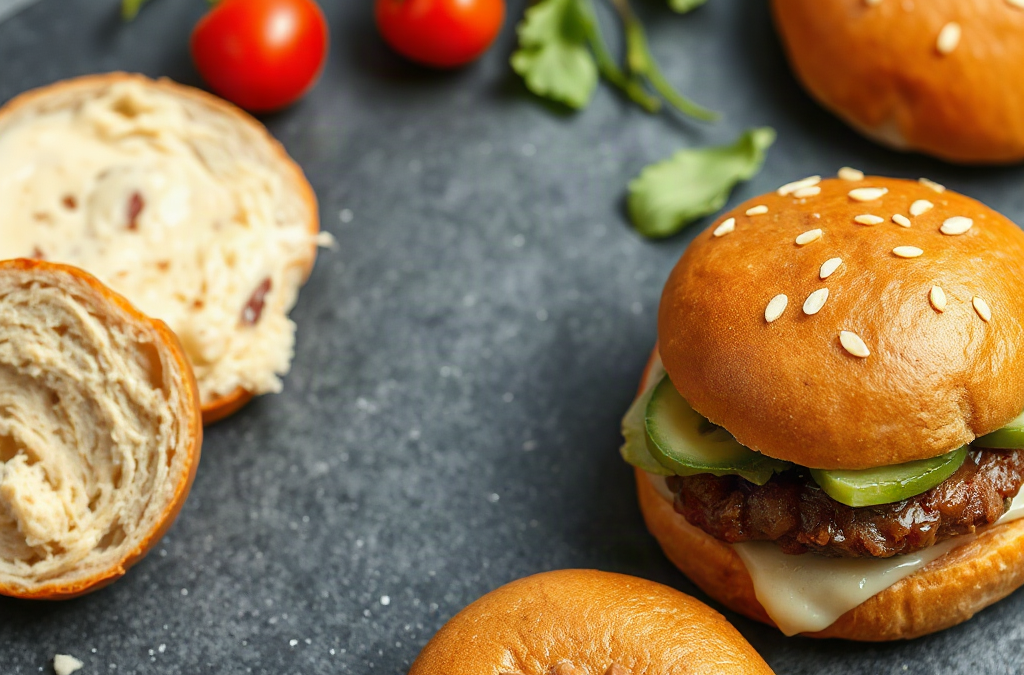
Organic hamburger buns with better ingredient profiles combine certified organic ingredients with a short, recognizable formula, meaningful whole-grain content, and moderate amounts of added sugar and sodium. Check the ingredient list before relying on front-label claims: whole-grain flour should appear first when fiber is a priority, while sweeteners, refined oils, dough conditioners, and preservatives should have a clear purpose. Compare Nutrition Facts panels using equal serving sizes because bun weights vary considerably. The best choice is one that fits the burger, provides the texture you want, and avoids ingredients that conflict with your dietary needs without assuming that organic certification automatically makes the bun nutritionally superior.
What Makes a Better Ingredient Profile?
A better bun formula is one whose ingredients match the shopper’s priorities without hiding important tradeoffs behind organic language. Organic certification addresses how qualifying agricultural ingredients are produced and handled; it does not, by itself, indicate that a bun is whole grain, high in fiber, low in sodium, minimally sweetened, or suitable for every allergy. A bun made mainly with refined organic wheat flour may still have less fiber than a non-organic bun made with whole wheat.

Start by deciding what “better” needs to mean for the meal. Someone serving a large, juicy vegetable burger may prioritize a sturdy bun that resists tearing. A shopper managing total carbohydrate intake may care more about serving weight, fiber, and added sugar. A household avoiding certain allergens needs to examine the ingredient statement and allergen declaration rather than infer safety from a certification seal. These goals can point toward different products, so a single universal ranking is rarely useful.
Ingredient order offers the clearest first screen because ingredients are generally listed by weight. Flour usually leads the list, followed by water and smaller amounts of sweeteners, oils, yeast, salt, seeds, or functional baking ingredients. A concise list can be easier to interpret, but length alone is not a measure of nutritional quality. A bun containing whole wheat flour, oats, flaxseed, sesame, and several necessary baking ingredients may have a longer list than a refined-flour bun with little fiber.
Use a short priority check rather than rejecting every unfamiliar term:
- Identify the primary flour. Look for explicit whole-grain wording if that is your goal.
- Check serving weight. A larger bun naturally tends to contain more calories, carbohydrate, and sodium.
- Review fiber, added sugar, and sodium. Compare products using similar gram weights.
- Screen allergens and dietary conflicts. Wheat, sesame, milk, soy, and eggs may appear depending on the recipe.
- Consider performance. The bun still needs to hold the filling and taste appropriate for the meal.
A common mistake is treating “free from” claims as proof of a better product. Removing one ingredient may require another ingredient to preserve softness or structure, and a gluten-free bun is not automatically higher in fiber. A sound choice balances the production standard, nutritional composition, ingredient tolerances, and practical use rather than maximizing one package claim.
How Should You Read the Flour and Grain List?
The first flour named usually reveals more than the color or rustic appearance of the bun. Terms such as “whole wheat flour” and “whole-grain spelt flour” identify whole-grain ingredients, while “wheat flour,” “enriched wheat flour,” or “unbleached wheat flour” generally refer to refined flour unless the word “whole” is present. Molasses, malt, seeds, or caramelized baking can darken a bun, so brown color is not reliable evidence of whole-grain content.
Whole-grain flour retains the bran, germ, and endosperm in their original proportions. That commonly gives the bun more fiber and a denser crumb than a comparable refined-flour product. Fiber on the Nutrition Facts panel provides a useful cross-check, although seeds, added fibers, and other grains can contribute to the total. A front-panel statement about grains should therefore be read alongside both the ingredient list and the fiber value.
Blended-flour buns occupy a practical middle ground. A recipe may list organic wheat flour first and organic whole wheat flour second to produce a softer texture than a fully whole-wheat bun. That can work well for children, delicate patties, or diners who dislike a coarse crumb. By contrast, a bun listing whole wheat first is often a stronger choice when the goal is to make the bread portion contribute more whole grain and fiber to the meal. Neither format guarantees a specific nutritional result, and recipes differ.
Sprouted grains, oats, rye, and ancient-grain blends can add flavor and textural variety, but their presence near the end of a long list may represent only a small proportion of the bun. The practical question is not whether an appealing grain appears somewhere on the package; it is whether the main flour and Nutrition Facts panel support the impression created by the marketing language.
Real-world handling matters too. Higher-fiber buns may feel firm when cold and can crumble if stale. Light toasting warms the crumb and creates a drier inner surface that handles sauces more effectively. For a bean burger with avocado and tomato, a substantial whole-grain bun may be useful. For a thin patty with minimal toppings, an oversized dense bun can dominate the filling and add more bread than the meal requires.
The usual failure is choosing by appearance and then discovering that the main ingredient is refined flour. Read the first two or three flour ingredients, verify the fiber amount, and choose a bun size proportionate to the filling. That sequence distinguishes meaningful grain composition from decorative seeds or whole-grain imagery.
Which Sweeteners, Oils, and Additives Matter?
Sweeteners, oils, and dough additives affect browning, softness, shelf life, and handling, so their presence should be evaluated by function and amount rather than by name alone. Sugar, cane sugar, honey, molasses, and syrups can feed yeast, encourage browning, and soften the crumb. The Added Sugars line shows their contribution more clearly than assuming one sweetener is inherently preferable because it sounds less processed.
A modest amount of sweetener may produce the familiar soft, lightly browned hamburger bun that many diners expect. A noticeably sweet bun, however, can compete with savory fillings and raise added sugar without offering more fullness. When comparing two similarly sized products, the panel can reveal whether one recipe uses substantially more sweetener. Ingredient order adds context: a sweetener near the beginning of the list contributes more by weight than one appearing near the end.
Oil and fat influence tenderness and how quickly bread seems stale. Organic sunflower, canola, olive, soybean, or other oils may appear in commercial buns, while richer recipes may include butter or eggs. The type of oil can matter to personal preferences or allergies, but rejecting every oil often means accepting a firmer bun with a shorter period of good texture. The more useful test is whether the fat serves the desired texture and whether the overall saturated-fat amount fits the rest of the meal.
Dough conditioners, enzymes, cultured ingredients, gums, starches, and preservatives can improve consistency or extend softness. Some shoppers prefer a formula made from flour, water, yeast, salt, and a few supporting ingredients. Others need a bun that remains usable for several days or survives transport to a cookout. A shorter list may become a poor value if half the package dries out before it can be eaten.
Unfamiliar does not automatically mean harmful, and familiar does not automatically mean nutritionally preferable. Salt and sugar are recognizable ingredients, yet their amounts still deserve attention. Conversely, an enzyme may perform a narrow baking function without materially changing the bun’s nutrition panel. People with diagnosed allergies or medically required restrictions should rely on specific allergen information and professional guidance rather than broad clean-label assumptions.
A practical sign that the formula suits your needs is predictable performance: the bun separates without tearing, holds the chosen filling, tastes balanced, and remains usable within the household’s normal storage period. Failure signs include excessive sweetness, a greasy surface, rapid crumbling, gumminess after toasting, or repeated waste. Those outcomes justify trying a different flour blend or package size more than chasing the shortest possible list.
How Do You Compare Nutrition, Texture, and Price?
Compare buns by equal weight before deciding that one nutrition panel is clearly better. One brand may define a serving as a small bun while another sells a broad bakery-style roll weighing considerably more. The larger option will often show more calories, sodium, and carbohydrate simply because it contains more food. Serving grams, buns per package, and the number of servings should be read together.
| Comparison Point | What to Check | Why It Changes the Decision |
|---|---|---|
| Primary grain | First flour and explicit whole-grain wording | Shows whether whole grain is central or incidental |
| Serving size | Weight in grams per bun | Prevents misleading comparisons between different bun sizes |
| Fiber and added sugar | Nutrition Facts values | Tests whether package claims match the formula |
| Sodium | Amount per bun and salty toppings | Places the bread within the complete meal |
| Storage value | Package size, freezing suitability, expected use | Accounts for waste rather than shelf price alone |
The full burger provides the correct nutritional context. A bun with moderate sodium may be reasonable beneath an unsalted homemade lentil patty, lettuce, and tomato, but the same bun paired with a salty prepared patty, cheese, pickles, and sauce creates a different total. Likewise, the difference between two buns’ added sugar may matter less than the quantity of sweet barbecue sauce used on the sandwich. Evaluate the bread carefully without pretending it is the entire meal.
Texture should match moisture and weight. Soft buns suit thin patties and simple toppings but can collapse under mushrooms, slaw, tomato, or a saucy plant-based burger. Firmer whole-grain rolls provide support, though an excessively thick bun may overwhelm a smaller patty. Toasting the cut surfaces is a useful compromise because it improves resistance without requiring a very dense roll.
Price per package can also mislead. Compare cost per bun, bun weight, and likely waste. A more expensive package may be economical if the buns freeze well and are used completely. Freeze extras promptly in an airtight package, preferably with separators if they tend to stick. Thaw only what is needed and toast briefly to refresh the surface. Repeated exposure to air, rather than the organic status of the ingredients, is a major reason bread loses desirable texture.
The common mistake is optimizing the nutrition panel while ignoring whether anyone will eat the product. Choose two or three nonnegotiables—such as certified organic ingredients, whole wheat as the first flour, and a manageable sodium level—then use flavor, sturdiness, package size, and cost to decide among the remaining options. A bun that meets realistic priorities and avoids waste is usually a better household choice than a theoretically ideal product left uneaten.
Frequently Asked Questions
Does organic certification mean a hamburger bun is whole grain?
No. Organic certification and whole-grain composition describe different attributes. Check whether a whole-grain flour is named near the beginning of the ingredient list.
Is a shorter ingredient list always better?
No. List length does not reveal ingredient proportions or nutritional value. Focus first on the main flour, serving weight, fiber, added sugar, sodium, allergens, and the purpose of functional ingredients.
How can I tell whether a dark bun is truly whole wheat?
Look for “whole wheat flour” as a leading ingredient and check the fiber value. Color can come from molasses, malt, seeds, or baking and is not dependable proof.
Should organic hamburger buns be refrigerated?
Follow the package directions. Refrigeration may slow mold but can make bread seem stale sooner; freezing unused buns is often more practical for longer storage.
Are gluten-free organic buns more nutritious?
Not automatically. Some rely heavily on refined starches and contain little fiber. Compare the grain and starch blend, fiber, added sugar, sodium, allergens, and serving weight.
Conclusion
The most useful comparison begins with the first flour and ends with how the bun performs in an actual meal. Verify whole-grain wording instead of judging by color, compare Nutrition Facts using similar serving weights, and consider added sugar and sodium alongside the burger’s fillings. Treat oils and baking additives according to their function rather than assuming that every long chemical-sounding name is undesirable or every familiar ingredient is harmless.
Set a few priorities before shopping: organic certification, a preferred grain profile, dietary compatibility, and an appropriate bun size are a practical starting set. Then consider texture, storage, cost per bun, and the likelihood of finishing the package. If a promising bun tears, tastes too sweet, or repeatedly goes stale, change the style or freeze extras sooner. Better ingredients matter most when the complete product suits the meal and is actually eaten.