
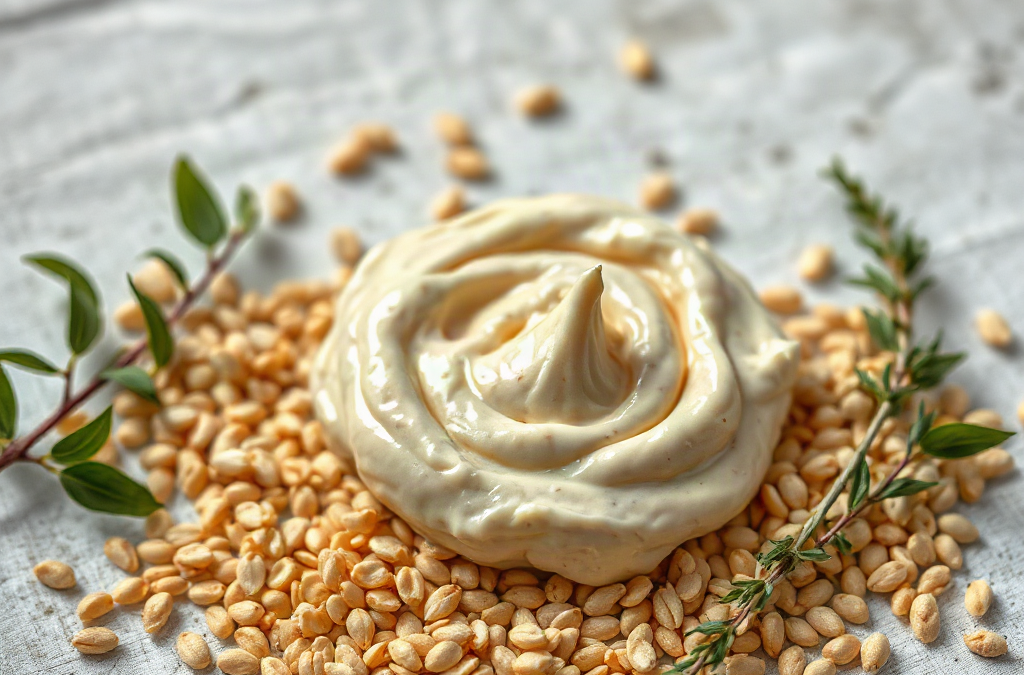
Organic tahini nutrition and ingredient checks should focus on sesame content, serving size, fat and protein values, added oil or salt, and a credible organic certification statement. A simple product made only from organic sesame seeds usually provides unsaturated fat, some protein, minerals, and the characteristic bitterness of ground sesame without needing sweeteners or stabilizers. Compare nutrition panels using the same serving amount because jar sizes and listed portions vary. Check allergen labeling carefully, since tahini is a concentrated sesame food, and inspect freshness after opening because separated oil is normal but rancid odors or harsh, stale flavors are not.
What Does Organic Tahini Provide Nutritionally?
Tahini is a concentrated sesame-seed paste, so a modest spoonful carries more energy and fat than the same volume of whole vegetables, beans, or yogurt. Most of its fat is unsaturated, while its protein and fiber make useful but relatively small contributions at ordinary serving sizes. Sesame also contains minerals such as calcium, iron, magnesium, phosphorus, copper, and zinc, although the exact amounts depend on the seed variety, whether the hulls remain, and the portion eaten.

The nutrition panel is more useful than a general claim that tahini is “nutrient dense.” Start with the stated serving size, then read calories, total fat, saturated fat, protein, fiber, sodium, and any listed minerals. One jar may use one tablespoon while another uses two, making the second product appear to contain far more of every nutrient. Convert both to the same portion before deciding that one is nutritionally different.
Hulled and unhulled tahini can differ. The hull contains minerals and fiber, so unhulled paste may retain more of certain nutrients. It also tends to taste more bitter and may feel coarser. Hulled tahini is generally smoother and milder, which can make it easier to use in dressings or sauces. A higher number on one mineral line does not automatically make unhulled tahini the better purchase if its flavor causes the jar to sit unused.
Tahini should not be treated as a complete substitute for all protein-rich foods. It contributes protein, but a typical spoonful provides less than a substantial portion of lentils, tofu, fish, eggs, or Greek-style yogurt. Its strength is combining flavor, fat, and sesame nutrients in a compact ingredient. For example, tahini stirred into chickpeas adds richness, while the chickpeas supply more carbohydrate, fiber, and protein volume.
A common mistake is interpreting unsaturated fat as permission to ignore quantity. Tahini can fit comfortably into many eating patterns, but pouring it freely may change a meal’s energy content quickly. Measure it at least once when learning how much produces the desired texture. That establishes a realistic visual reference without requiring permanent tracking.
How Should You Read a Tahini Ingredient List?
The shortest traditional ingredient list is simply organic sesame seeds. Salt is a reasonable addition when the product is intended as a seasoned spread, but it affects sodium and reduces control when tahini is used in recipes. Added sesame oil or another vegetable oil may create a looser texture; it is not automatically a safety or quality problem, though it means the jar is no longer solely ground seeds.
Read ingredients in descending order by weight. If sesame appears first, it forms the main part of the food. Sweeteners, flavorings, cocoa, emulsifiers, or stabilizers indicate a flavored or formulated spread rather than plain tahini. Such a product may still suit a particular use, but its nutrition and culinary behavior should not be assumed to match traditional sesame paste. A sweetened tahini spread, for instance, may work on toast yet produce an unexpectedly sweet hummus.
Use a compact sequence when checking a jar:
- Confirm the base: Look for organic sesame seeds as the first ingredient.
- Identify additions: Note salt, oils, sugars, flavors, and texture stabilizers.
- Match the nutrition panel: Check whether sodium or added sugars reflect those additions.
- Find the allergen statement: Treat sesame as a significant allergen, not a minor seasoning.
- Review storage directions: Follow the manufacturer’s instructions after opening.
Ingredient simplicity and texture are related, but not perfectly. A one-ingredient tahini can separate because sesame solids settle while oil rises. That separation is expected and is not evidence that the product is diluted or spoiled. Stir from the bottom until the dense layer and oil recombine. A narrow knife or sturdy spoon can reach compacted paste more effectively than shaking a full jar.
The allergen check deserves priority in shared households. Tahini is concentrated sesame, and a small amount can be spread across utensils, blender parts, countertops, or communal dips. Anyone managing a sesame allergy should rely on the package labeling and guidance from a qualified clinician rather than assuming an organic or minimally processed product is safer. Organic status does not remove sesame proteins responsible for allergic reactions.
A frequent purchasing error is rejecting every added ingredient without considering the intended use. Plain tahini offers maximum recipe flexibility, while a salted product may be convenient as a ready-to-eat drizzle. The better choice is the one whose formulation matches the meal, dietary constraints, and desired level of control.
What Does Organic Mean on a Tahini Jar?
An organic claim concerns how qualifying agricultural ingredients are produced and how the product is handled under an applicable certification system; it does not guarantee a particular nutrient profile, flavor, freshness level, or absence of allergens. For tahini, the practical question is whether the sesame seeds and any other agricultural ingredients support the claim displayed on the front of the jar.
Look beyond green packaging, farm imagery, and phrases that merely sound ecological. In the United States, a formal USDA organic claim is associated with certification requirements and labeling categories. The package may display the USDA Organic seal and identify the certifying agent. Wording matters because “organic,” “made with organic” ingredients, and a statement naming an individual organic ingredient do not communicate the same formulation.
Certification does not make two jars nutritionally interchangeable. One certified organic tahini may contain only sesame, while another may include salt or additional oil. Their saturated fat, sodium, flavor, and consistency can differ. Organic and non-organic plain tahini can also have broadly similar macronutrient patterns because both are primarily sesame paste. The organic decision is therefore separate from the nutrition-panel comparison.
Consider a shopper choosing between a certified one-ingredient jar and a less expensive jar labeled simply as sesame paste. If organic sourcing is a firm priority, the certification evidence should carry more weight than a vague front-label phrase. If budget is tighter and the main goal is an unsweetened sesame paste, the ingredient list, allergen information, freshness, and price per unit may become the deciding factors. Neither decision requires pretending that certification answers every nutrition question.
The weak assumption to avoid is equating “organic” with no processing. Sesame seeds still need to be cleaned and ground, and they may be hulled or roasted before milling. Those processing choices influence color, bitterness, smoothness, and recipe performance. Select organic tahini for the production standard it represents, then assess formulation and quality separately.
Compare Quality, Freshness, and Value Before Buying
Fresh tahini should smell recognizably nutty or sesame-like and taste pleasantly earthy, with bitterness that does not resemble stale oil. Roasting level, seed origin, and hull content can all alter flavor, so darkness or bitterness alone cannot diagnose spoilage. A paint-like, waxy, soapy, or sharply rancid odor is a stronger reason to stop using the product.
Oil separation is usually a texture issue rather than a freshness failure. By contrast, visible mold, an unexpectedly swollen or leaking container, or a seriously damaged seal warrants rejection. Once opened, prevent contamination by using clean, dry utensils and closing the lid promptly. Storage requirements vary by manufacturer, so the jar’s directions should override general habits. Refrigeration may slow quality changes for some products but can also make tahini thick and difficult to stir.
Texture should be judged according to use. A fluid, smooth paste blends readily into lemon dressing and hummus. A thicker product may be convenient on toast but require more water and mixing in a sauce. When tahini meets water or lemon juice, it often tightens before loosening as additional liquid is incorporated. That reaction is normal; add water gradually and whisk rather than concluding that the paste has failed.
| Check | What It May Mean | Practical Response |
|---|---|---|
| Oil layer on top | Natural seed oil has separated | Stir thoroughly from the bottom |
| Dense paste below | Sesame solids have settled | Recombine before measuring |
| Harsh stale-oil odor | Quality may have deteriorated | Do not disguise it in a recipe |
| Very thick after chilling | Cold fat and solids have firmed | Follow label storage advice and allow manageable warming |
Value is better measured by usable product than by jar price alone. Compare unit prices, but also consider whether a large container can be finished while it still tastes fresh. A smaller, slightly more expensive jar may waste less in a household that uses tahini only occasionally. Frequent hummus makers may benefit from a larger size if they store and handle it properly.
Do not assume premium packaging predicts better taste. If possible, begin with a smaller jar and test it in the foods you actually prepare. Successful tahini should stir back together, provide the expected sesame flavor, and produce a sauce or spread you enjoy. Repeated reluctance to use it signals that the roast, bitterness, texture, or package size is poorly matched to your needs.
Using Tahini in Balanced Meals
Tahini works best as a concentrated component of a meal rather than as the entire nutritional foundation. Pair it with vegetables, legumes, whole grains, fruit, or a substantial protein source to build volume and variety. A bowl of lentils, roasted vegetables, and brown rice gains richness from a lemon-tahini sauce without relying on the sauce to supply all the protein or fiber.
For a basic dressing, whisk tahini with water and an acidic ingredient such as lemon juice, then season to suit the dish. Water changes the consistency dramatically, so add it in small amounts. If the tahini is already salted, taste before adding more salt. Garlic, cumin, or herbs can change the flavor without turning the sauce into a sweetened spread.
Breakfast and snack uses need the same portion awareness as savory meals. A thin layer on whole-grain toast with sliced fruit offers a different nutrient mix from tahini eaten by the spoonful. Stirring a modest amount into oatmeal can add sesame flavor and fat, while oats remain the primary source of grain and fiber. People who need more energy may intentionally use a larger portion; those managing intake may prefer measuring the first few times.
Tahini is sometimes promoted as a special solution for calcium, iron, or hormonal health. Its nutrients can contribute to an varied diet, but a jar should not be treated as a treatment or a guaranteed way to correct a deficiency. Mineral content varies, serving sizes are limited, and individual needs differ. Anyone with a diagnosed deficiency, food allergy, digestive concern, or medically prescribed diet should seek individualized advice rather than relying on marketing claims.
The practical sign of a good choice is consistent usefulness: the ingredient suits several meals, tastes fresh, and fits the household’s dietary requirements. Failure looks like a jar that is too bitter to use, contains unwanted salt or sweetener, triggers an allergen concern, or is repeatedly discarded before it is finished. Buying for realistic use produces more value than choosing solely from a front-label health impression.
Conclusion
A useful tahini comparison separates four decisions that packaging often blends together: certification, formulation, nutritional contribution, and eating quality. Confirm the organic claim if production standards matter to you, then inspect the ingredient list for sesame, salt, oils, sweeteners, or stabilizers. Compare nutrition using equal portions, with particular attention to serving size and sodium rather than expecting certification to predict the numbers.
After purchase, stir natural separation back into the paste, use clean utensils, and follow the jar’s storage directions. Choose hulled or unhulled tahini according to the flavor and texture you will actually use. The next practical step is to compare two candidate jars side by side, check their unit price and package size, and select the one that fits both your ingredient priorities and normal meals.
Frequently Asked Questions
Is organic tahini more nutritious than conventional tahini?
Organic certification does not by itself establish a superior nutrient profile. Compare equal serving sizes, seed type, added ingredients, sodium, and listed nutrients rather than using the organic claim as a nutrition shortcut.
Should tahini contain oil?
Sesame naturally releases oil when ground, so an oil layer can appear even when sesame is the only ingredient. Added oil is optional and should be identified separately on the ingredient list.
Is separated tahini spoiled?
Separation alone usually is not spoilage. Stir the oil and settled solids together, then assess the aroma, flavor, seal, and any visible contamination.
Does tahini need refrigeration after opening?
Follow the storage statement on the specific jar. Refrigeration may preserve quality but often thickens the paste, while storage advice can differ by formulation and manufacturer.
Is tahini safe for someone with a sesame allergy?
No assumption of safety should be made: tahini is concentrated sesame. Avoid it when medically required and address cross-contact, package labeling, and personal emergency planning with a qualified clinician.