
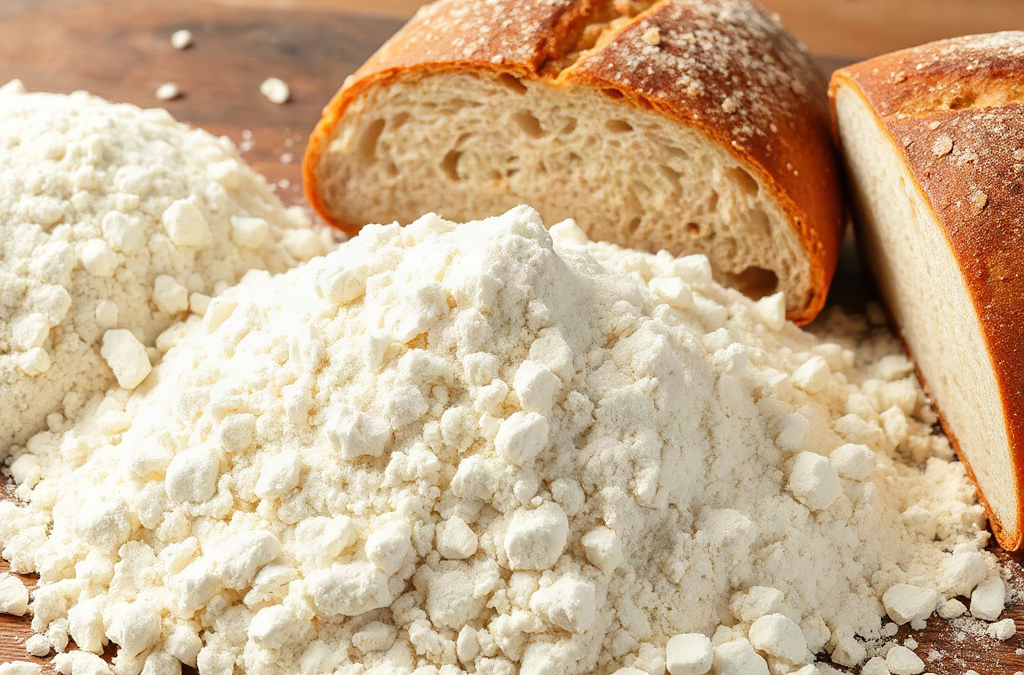
Organic bread flour selection for home baking should prioritize certified-organic status, protein content, wheat type, milling style, and freshness rather than relying on the words “bread flour” alone. Choose roughly 12–14% protein for yeasted loaves that need strong gluten development, while lower-protein flour may suit softer rolls or enriched dough. Check whether the flour is refined, whole wheat, malted, or enriched because each feature changes hydration, fermentation, flavor, and browning. Buy a manageable package, note the best-by date, and test a new flour with a familiar recipe before adjusting water or kneading time.
What Should the Flour Label Reveal?
A useful bread-flour label identifies more than the farming method. Look for an organic certification statement, the grain or wheat type, protein content when provided, ingredient additions, milling details, package date information, and storage guidance. These clues help distinguish flour that merely meets an organic production standard from flour that also suits the loaf you plan to bake.

In the United States, a certified-organic claim concerns how the agricultural ingredients are produced and handled under the applicable organic program. It does not guarantee a particular protein level, gluten strength, flavor, nutritional profile, or baking result. An organic all-purpose flour and an organic bread flour can therefore carry similar certification language while behaving very differently in a high-hydration dough.
Read the ingredient list even when the front of the bag appears straightforward. Some bread flours contain malted barley flour or another source of enzymes that can promote fermentation and crust color. Enriched refined flour may include added iron and B vitamins. Whole-wheat flour contains the bran and germ as well as the endosperm, so it absorbs water differently and has a shorter window of peak freshness. None of these descriptions is automatically better; each changes how the flour works.
Protein percentage, when listed, offers a helpful starting point but not a full measure of gluten quality. Two flours with the same stated protein can differ in elasticity, extensibility, water absorption, and tolerance for long fermentation because wheat varieties and milling choices vary. Package terminology is also inconsistent: “strong,” “high-gluten,” “artisan,” and “bread” may not represent identical specifications across mills.
Use a short label check before buying:
- Certification: Confirm that the organic claim is supported by the appropriate seal or certifier information.
- Ingredients: Note whether the flour is whole grain, enriched, malted, or blended.
- Protein: Compare the percentage where the mill supplies it rather than inferring strength from marketing language.
- Freshness: Prefer intact packaging with a useful date and enough remaining shelf life for your baking schedule.
- Intended use: Match the flour description to pan bread, hearth loaves, bagels, rolls, or another specific bake.
A common mistake is paying a premium for an organic bag without checking whether its functional properties match the recipe. Certification may be a purchasing priority, but dough performance still depends on flour strength, composition, and condition. Treat the label as a set of practical specifications rather than a quality ranking.
How Much Protein Does Your Bread Need?
Protein level should match the structure and tenderness expected from the finished bread. Flour around 12–14% protein is a practical range for many lean yeasted loaves, sourdough boules, and chewy pan breads. The available proteins form gluten when flour is hydrated and mixed, creating a network that holds fermentation gases. More protein generally increases potential strength, but stronger flour is not automatically the best choice for every dough.
A crusty loaf made with substantial water and a long fermentation usually needs enough strength to retain shape and gas. A very soft sandwich loaf enriched with milk, butter, eggs, or sugar may benefit from moderate-strength bread flour, yet an extremely high-protein flour can produce more chew than desired. Dinner rolls intended to be tender may work better with a blend of bread flour and lower-protein all-purpose flour.
| Flour Profile | Useful Applications | Likely Tradeoff |
|---|---|---|
| About 12–13% protein | Pan loaves, rolls, everyday sourdough | May spread in very wet or heavily fermented dough |
| About 13–14% protein | Chewy hearth bread, bagels, higher-hydration loaves | Often needs more water and may feel tougher |
| Whole-wheat bread flour | Whole-grain or blended loaves | Bran can weaken gas retention despite substantial protein |
These ranges are working estimates rather than universal grades. Nutrition labels may round protein values, and mills do not all publish laboratory specifications for retail flour. A measured percentage also cannot show how readily the proteins form a balanced gluten network. That uncertainty is why dough behavior matters more than chasing the highest number on a bag.
Watch the dough after hydration. Suitable flour should become smoother and more elastic through mixing or folding, hold some tension during shaping, and expand without quickly flattening. Flour may be too weak for the process if the dough stays slack despite reasonable development, tears during shaping, or spreads before baking. Excessively strong flour may produce a tight dough that resists extension, requires more water, and yields a dense or overly chewy crumb if fermentation is cut short.
Do not compensate for every problem by purchasing stronger flour. Under-fermentation, inaccurate water measurement, inadequate dough development, and poor shaping can resemble a flour-strength problem. Test the same formula twice before drawing conclusions, changing only one variable at a time. That comparison separates a flour mismatch from a process mistake.
Which Wheat and Milling Style Fit the Loaf?
Wheat type and milling style determine flavor, color, water demand, and crumb character alongside protein. Refined white bread flour contains mostly endosperm and tends to form a relatively predictable gluten network. Whole-wheat flour retains bran and germ, bringing more pronounced grain flavor and naturally occurring nutrients, but the bran competes for water and can interrupt the gluten structure.
Hard red wheat commonly contributes a robust wheat flavor, while hard white wheat can produce a milder whole-grain loaf with a lighter appearance. Both may provide enough protein for bread, but the sensory result differs. A baker who finds a 100% whole red wheat loaf too assertive could try whole white wheat or combine whole-wheat flour with refined bread flour. That changes flavor and handling without abandoning organic sourcing.
Stone-ground flour is valued for its texture and character, yet the phrase does not reveal particle size, protein quality, or exact extraction. Roller-milled flour can be equally suitable for home bread and may be more uniform from batch to batch. Finely milled whole wheat often integrates into dough more readily than coarse flour, while coarser bran can require longer hydration. The mill’s technical description is more informative than assuming one milling method is universally superior.
Consider the loaf before choosing the bag. A high-rising sandwich bread may benefit from refined organic bread flour or a blend containing a modest portion of whole wheat. A dense seeded loaf can accommodate more whole-grain flour because a compact crumb is less problematic. For an open-crumb hearth loaf, substantial whole wheat adds flavor but usually reduces maximum volume unless hydration and fermentation are adjusted carefully.
Whole-grain flour often needs more water and additional resting time. An initial rest after combining flour and water allows bran and endosperm particles to hydrate before intensive mixing. Add water gradually rather than copying a hydration percentage from a formula written for refined flour. A dough that initially feels firm may soften after resting, while adding too much water immediately can leave it difficult to shape.
The recurring misconception is that darker flour is necessarily stronger or more suitable for bread. Color reflects grain components and wheat type, not simply gluten performance. Whole-wheat flour can display a high protein figure while producing less loaf volume because bran changes the structure. Choose it for flavor, whole-grain composition, and the style of bread desired, then adapt the process to its actual behavior.
How to Test, Store, and Adjust New Flour
A controlled test bake is the most reliable way to evaluate an unfamiliar organic bread flour. Use a recipe you know, weigh the ingredients, and keep fermentation conditions as consistent as practical. A new recipe introduces too many uncertainties because flour, hydration, mixing, timing, and shaping may all be responsible for the result.
Begin by holding back a small portion of the recipe’s water. Mix the remaining water with the flour and assess the dough after it has rested. Add the reserved water in stages if the dough remains firm and can accept more without losing structure. This approach is safer than adding extra flour late in mixing, which changes the salt and yeast proportions and leaves newly added particles underhydrated.
Record a few observations rather than relying on memory: flour brand and lot if visible, water used, room or dough temperature, mixing method, fermentation time, shaping feel, oven spring, and crumb texture. Signs of a productive match include steady strengthening during folds, a shaped loaf that retains tension, controlled expansion during proofing, and a crumb appropriate for the intended style. Failure signs include persistent tearing, rapid spreading, a gummy interior despite adequate baking, or a tight crumb paired with dough that resisted extension.
Interpret those signs cautiously. Rapid spreading can result from weak flour, excess water, over-fermentation, or poor shaping. A dense loaf may reflect insufficient fermentation rather than excessive flour strength. If the dough is slack, reduce water slightly on the next bake before changing flour. If it is tight and slow to expand, increase water modestly, extend fermentation where appropriate, or blend in a less-strong flour.
Storage can erase the advantage of careful selection. Keep refined flour sealed in a cool, dry, dark place and protect it from moisture, heat, insects, and strong odors. Whole-wheat flour contains germ oils that make freshness more consequential; buy quantities you can use reasonably soon and consider colder storage for longer keeping. Let chilled flour approach the temperature expected by the recipe, or account for its cooling effect on fermentation.
Large bags offer a lower unit cost only when the flour will be used before quality declines. An occasional baker may get better results from a smaller, fresher package even at a higher price per pound. Avoid mixing an old bag into a new one until the new flour has been tested independently. Otherwise, a weak or stale remainder can obscure how the replacement flour performs.
Once a flour proves dependable, standardize around it. Keep one familiar loaf formula as a benchmark, note the typical water range, and make small seasonal adjustments because kitchen temperature and humidity affect dough handling. Consistency comes from understanding the flour’s response, not from expecting every organic bread flour to behave identically.
Frequently Asked Questions
Is organic bread flour always high in protein?
No. Organic certification describes production and handling standards, not protein strength. Check the stated protein percentage or the mill’s product specifications.
Can organic all-purpose flour replace bread flour?
It may work in lower-hydration pan breads and soft rolls, but wet hearth loaves may spread more. Reduce water slightly or blend it with stronger flour if the dough lacks structure.
Does whole-wheat bread flour need more water?
It often does because bran and other grain components absorb water. Add extra water gradually and allow a rest before deciding whether the dough is too dry.
Should bread flour contain malted barley flour?
It is optional. Malted barley flour can supply enzymes that affect fermentation and browning, but unmalted flour can also make excellent bread when the formula and fermentation are appropriate.
How can I tell whether flour is too old?
Reject flour with evidence of moisture, pests, mold, or an unpleasant stale or rancid odor. Whole-wheat flour deserves particular attention because its germ oils are more vulnerable to deterioration.
Conclusion
Choose flour by working backward from the loaf rather than treating every organic bread flour as interchangeable. Confirm the certification, then compare protein, grain type, whole-grain content, added ingredients, freshness, package size, and the mill’s intended use. Stronger flour suits many wet or chewy breads, but softer rolls and enriched loaves may need less strength. Whole-wheat options contribute distinctive flavor and grain components while demanding closer attention to hydration and gas retention.
For the next bake, use a familiar formula and reserve a little water until the dough has rested. Note how it strengthens, shapes, proofs, and rises before changing another variable. A flour that repeatedly produces the texture you want, fits your storage capacity, and remains available at a workable price is a better household choice than one selected from a single label claim.
For additional detail, consult the USDA Agricultural Marketing Service materials on organic labeling and production, then use flour specifications and baking notes published by established mills to compare protein, grain type, and intended applications. Product formulas can change, so the current package label remains the controlling source for the flour in your kitchen.