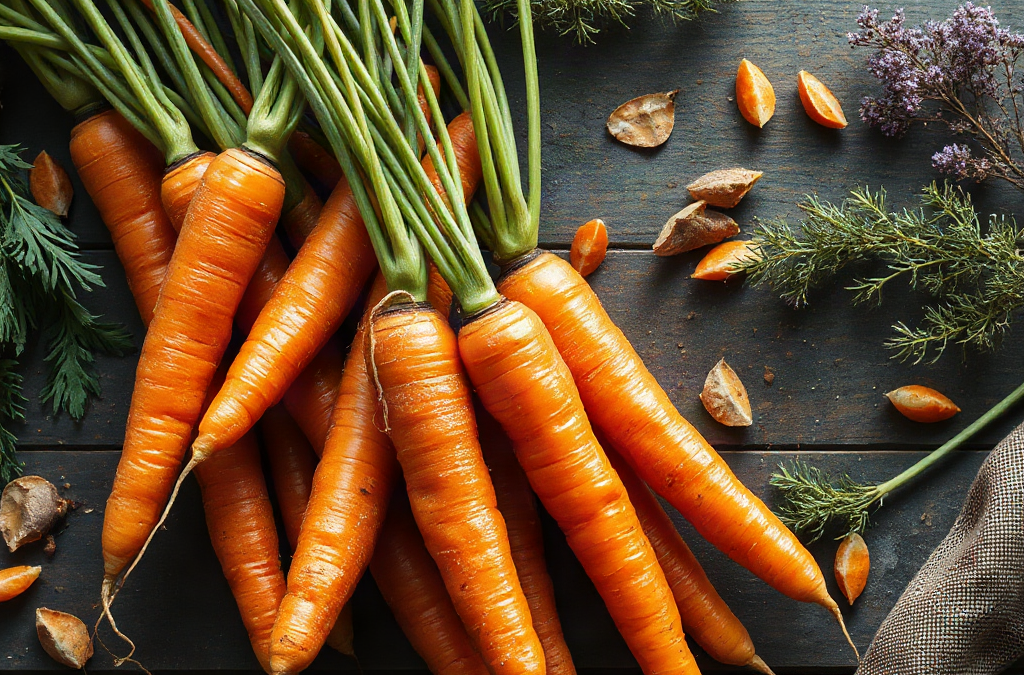
Carrots provide beta carotene and meal variety most effectively when they are served in different forms, paired with some dietary fat, and prepared without relying on juice as the default. The body converts beta carotene into vitamin A as needed, while chopping, grating, puréeing, and cooking carrots can make their carotenoids more accessible. Raw sticks retain crunch, roasted pieces develop sweetness, and grated or blended carrots fit sauces, soups, and grain dishes. Color matters too: deep-orange carrots are generally the strongest beta-carotene choice, whereas purple, yellow, and white varieties contribute different flavors and plant compounds.
How Do Carrots Supply Beta Carotene?
Orange carrots are especially useful because their pigments include beta carotene, a provitamin A carotenoid that the body can convert into vitamin A. Vitamin A has established roles in normal vision, immune function, and cell development, but eating carrots should not be treated as a treatment for poor eyesight or a medical condition. Conversion also varies among individuals, so the beta carotene in a food is not equivalent to taking the same quantity of preformed vitamin A.
Color offers a practical buying clue. USDA Agricultural Research Service reporting on carrot breeding notes that darker-orange carrots can contain more beta carotene than paler orange types. That does not mean every dark carrot has an identical nutrient content: cultivar, growing conditions, storage, and preparation all influence the final food. Still, shoppers who specifically want beta carotene can prioritize firm, deeply colored orange carrots rather than assuming that every carrot color supplies the same carotenoid profile.
Purple, yellow, red, and white carrots remain useful for variety, but their colors point to different pigment mixtures. Purple carrots may contain anthocyanins, while red types may provide lycopene; white carrots have little of the orange pigment associated with beta carotene. A mixed bunch can make a tray or salad more appealing, yet orange carrots should remain part of the mix when beta carotene is the main nutritional objective.
Whole carrots also contribute water and fiber, making them different from isolated beta-carotene supplements. A medium carrot, a handful of baby-cut carrots, or a scoop of cooked slices can be incorporated without making the vegetable the dominant part of a meal. Exact nutrient needs and serving requirements differ, and people with clinical concerns should use advice from a qualified healthcare professional rather than trying to correct a suspected deficiency with one food.
A common mistake is treating carrots as nutritionally interchangeable with every orange food. Sweet potatoes, winter squash, and carrots may all contain carotenoids, but they differ in starch, texture, cooking behavior, and how they fit a plate. Use carrots when crispness, quick preparation, or a savory-sweet accent is useful; choose squash or sweet potato when a more substantial carbohydrate component is wanted. That distinction creates genuine meal variety rather than merely changing one orange ingredient for another.
Are Raw or Cooked Carrots the Better Choice?
Raw and cooked carrots serve different purposes, and neither form needs to win every meal. Raw carrots offer a crisp texture, minimal preparation, and an easy way to add produce to lunches or snacks. Cooking softens the plant structure, which can make carotenoids easier to release during digestion. Chopping, grating, blending, and thorough chewing also break down physical barriers within the vegetable.
A comparative study available through PubMed Central has examined beta-carotene bioavailability from fresh carrots and fresh carrot juice, illustrating why the food matrix matters. Juice mechanically disrupts carrot tissue, but it also removes or reduces much of the structural fiber found in intact carrots and is easy to consume quickly. Greater accessibility of a compound does not automatically make juice the best everyday choice. Whole or puréed carrots usually provide more texture and satiety, while juice may be useful as an occasional ingredient rather than a replacement for vegetables.
| Preparation | Best Use | Practical Tradeoff |
|---|---|---|
| Raw sticks or coins | Snacks, lunch boxes, crunchy sides | Convenient, but a large plain portion can become repetitive |
| Finely grated | Slaws, oats, patties, sandwich fillings | Easy to distribute, though moisture can soften a dish |
| Steamed or simmered | Soups, bowls, soft side dishes | Soft texture; avoid cooking until flavor becomes washed out |
| Roasted | Sheet-pan dinners, salads, grain bowls | Concentrated sweetness, with extra time and added fat often involved |
| Blended or puréed | Sauces, soups, dips | Smooth and versatile, but less textural contrast |
For a weeknight dinner, thick carrot batons can roast beside chickpeas or chicken, while thin coins cook more quickly in a skillet. In a soup, carrots can be simmered until tender and partially blended, leaving some pieces intact for texture. Raw grated carrot works differently: it can brighten a cabbage slaw or add moisture to a lentil patty without requiring a separate side dish.
The main preparation failure is overcooking carrots until they are watery, limp, and indistinct. Tender carrots should yield to a fork while retaining enough structure for the intended dish. Roasting at adequate heat encourages browning; steaming briefly preserves a cleaner flavor. Alternating raw and cooked forms is more useful than forcing one preparation method into every meal, because enjoyment and repeat use influence whether the vegetable remains part of the diet.
How Should Carrots Be Paired for Carotenoid Absorption?
Carrots are best paired with a meal containing some fat because beta carotene is fat-soluble. Dietary fat participates in the digestive processes that allow carotenoids to be incorporated into mixed structures for absorption. This does not require soaking carrots in oil or turning them into a rich side dish; a modest amount already present in a mixed meal may be enough to make the pairing sensible.
Useful combinations include roasted carrots with olive oil and lentils, raw carrot ribbons with tahini dressing, or steamed carrots served beside salmon and brown rice. Chopped walnuts in a carrot-and-apple salad provide another option. For breakfast, grated carrot stirred into oats can be accompanied by yogurt, seeds, or nut butter. Each example combines the vegetable with fat while also adding protein, fiber, or textural contrast.
Fat-free snacking is not a failure, and a plain raw carrot still supplies nutrients. The practical point is to look at the entire eating occasion rather than attach rigid rules to every bite. A carrot eaten alongside a sandwich containing hummus or avocado is already part of a mixed meal. Adding oil solely for absorption may be unnecessary when fat is present elsewhere on the plate.
More fat is not automatically better. Heavy glazes, large amounts of butter, or deep frying can shift the energy density and flavor balance without providing proportionally greater nutritional value. Sweet coatings can also make carrots taste like the same side dish repeatedly, limiting rather than expanding their use. Begin with enough oil to coat roasting pieces lightly, or use a spoonable dressing that complements rather than hides their flavor.
Preparation and pairing work together. A blended carrot soup made with a little olive oil disrupts the plant structure and supplies fat in the same dish. A raw salad relies more on fine grating, chewing, and its dressing. Signs that a pairing works are practical: the carrots fit the meal, their texture remains appealing, and the accompanying fat comes from a food that contributes something useful. If carrots are regularly left uneaten or only accepted under a sugary glaze, changing the cut, seasoning, or cooking method is more productive than increasing the serving.
How Can Carrots Add Variety Across the Week?
Meal variety comes from changing the carrot’s role, not simply placing the same steamed side beside different main dishes. Carrots can supply crunch, sweetness, body, color, or aromatic depth depending on how they are cut and cooked. Assigning a different function to them across several meals reduces repetition while making use of an affordable vegetable that stores well.
A practical sequence starts with raw carrots early in the week, when they are at their crispest. Cut sticks can accompany hummus, and grated carrots can be folded into a slaw with cabbage and a tart dressing. Later, roast a tray with cumin, coriander, or thyme. Leftover roasted pieces can be chopped into a grain bowl or blended with beans and seasonings for a spread. Carrots that have begun to soften are often better suited to soup, stew, stock, or sauce than to a raw platter, provided they show no signs of spoilage.
Use the following priorities when planning several carrot dishes:
- Change the cut: choose ribbons, matchsticks, coins, batons, or a fine grate to alter texture and cooking time.
- Change the cooking environment: alternate raw, roasted, steamed, sautéed, and blended preparations.
- Change the flavor direction: pair carrots with herbs and lemon in one dish, warming spices in another, and ginger or miso in a third.
- Change their job: use carrots as a side, a soup base, a salad component, or part of a filling rather than always as the main vegetable.
A household with limited cooking time can simplify this approach by preparing one batch in two forms. Keep half the carrots raw and roast the remainder. The raw portion covers snacks and slaw; the roasted portion can move into bowls, wraps, or soup. This creates variation without requiring four separate cooking sessions. Frozen sliced carrots are also reasonable for soups and mixed dishes when fresh preparation is a barrier, although their softer texture makes them less suitable for crunchy applications.
The weak approach is hiding tiny amounts of carrot in every recipe and assuming that repetition equals variety. A more useful plan rotates carrots with leafy greens, legumes, tomatoes, cruciferous vegetables, squash, and other produce. Beta carotene is available from foods such as sweet potatoes and dark leafy greens as well, so carrots need not carry the entire nutritional burden. Variety should broaden the diet, not turn a single nutritious vegetable into a compulsory ingredient at every meal.
Frequently Asked Questions
Does cooking destroy the beta carotene in carrots?
Cooking can cause some nutrient changes, but it also softens carrot tissue and may make beta carotene more accessible during digestion. Brief steaming, sautéing, or roasting offers a practical balance between tenderness and quality.
Do baby carrots contain beta carotene?
Yes. Most baby-cut carrots are larger orange carrots shaped into smaller pieces, so they remain a source of beta carotene. Check for freshness and choose unsweetened products without unnecessary coatings.
Are purple carrots better than orange carrots?
They provide different pigment profiles rather than a simple upgrade. Purple carrots may add anthocyanins, while deeply colored orange carrots are the more direct choice when beta carotene is the priority.
Is carrot juice as useful as whole carrots?
Juice can provide carotenoids, but whole carrots retain their food structure and fiber and are generally more filling. Treat juice as an occasional option or recipe ingredient, not the default vegetable serving.
What seasonings work well with carrots?
Carrots suit thyme, dill, parsley, cumin, coriander, ginger, miso, citrus, and mild chile. Select one flavor direction at a time so their sweetness complements the meal rather than competing with it.
Conclusion
Deep-orange carrots are a practical whole-food source of beta carotene, but their value extends beyond a single nutrient. The most useful approach is to vary texture and purpose: keep some raw for crunch, cook some until tender, and grate or blend others into dishes where they contribute moisture, color, or body. Include a modest source of dietary fat within the meal rather than assuming that plain carrots or heavy oil are the only choices.
Start with two preparations that fit the week’s schedule, such as raw sticks and a tray of roasted batons. Pair them with legumes, grains, eggs, fish, yogurt, nuts, seeds, or a suitable dressing, then rotate in other vegetables and carotenoid-rich foods. If a method produces leftovers no one wants, adjust the cut, seasoning, or cooking time instead of abandoning carrots or serving them the same way again.
Additional Resources
Authoritative Sources
- Dark-Orange Carrots Deliver More Beta-Carotene
ars.usda.govDec 5, 2002 — The researchers believe making high-carotene carrots more readily available will help increase beta-carotene consumption and improve the vitamin ... Read more
- Comparative bioavailability of β-carotene from raw carrots and ...
pmc.ncbi.nlm.nih.govBy M Choi · 2024 · Cited by 11 — Carrots are a major source of beta-carotene, This study compared the rates of β-carotene absorption from fresh carrots versus fresh carrot juice. enhancing β- ...
- Beta-Carotene: Benefits and Best Sources
health.clevelandclinic.orgOct 18, 2023 — Beta-carotene's benefits include keeping your vision healthy. Find it in foods like carrots, sweet potatoes and leafy greens.