
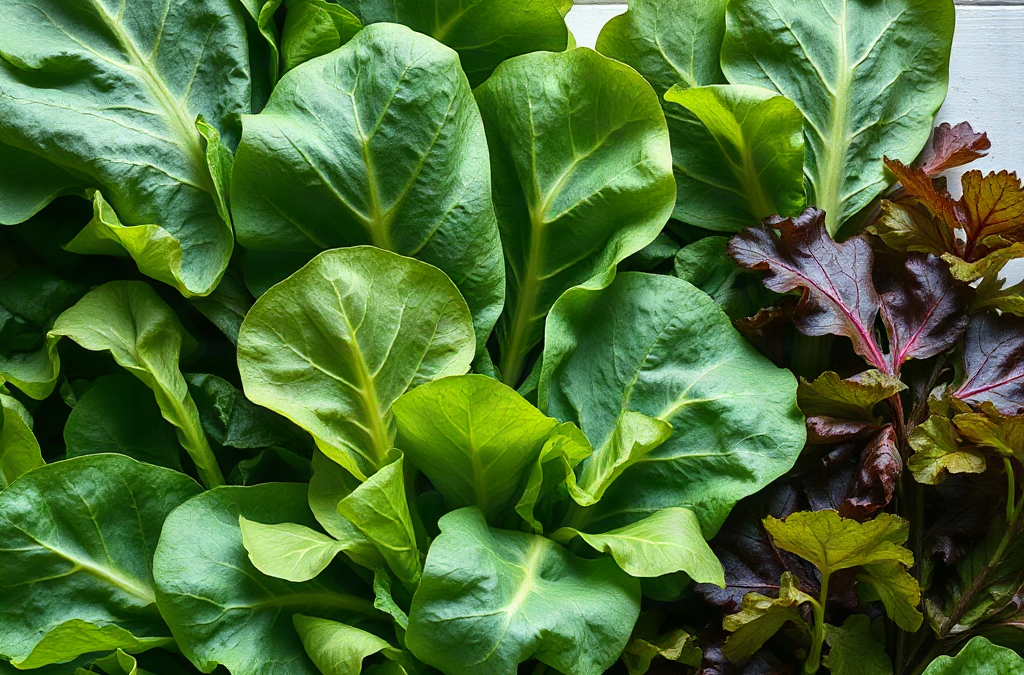
Organic leafy greens can broaden micronutrient coverage when meals rotate dark-green varieties and pair them with foods that improve nutrient use rather than relying on one salad green. Kale, spinach, collards, chard, and romaine contribute different combinations of folate, vitamin K, carotenoids, vitamin C, magnesium, and potassium. Light cooking can reduce volume and make larger portions practical, while a little dietary fat supports carotenoid absorption and vitamin C-rich foods improve non-heme iron uptake. Organic certification describes production methods, not guaranteed nutrient superiority, so freshness, variety, storage, preparation, and consistent intake remain the more useful nutritional priorities.
Which Leafy Greens Cover the Most Nutrients?
Different leafy greens fill different nutritional roles, so no single variety provides complete micronutrient coverage. Dark-green leaves generally contribute vitamin K, folate, carotenoids that the body can convert to vitamin A, and varying amounts of vitamin C, magnesium, potassium, calcium, and iron. The amounts differ by species, maturity, growing conditions, storage, and whether the serving is measured raw or cooked.

Kale and collard greens are useful when carotenoids, vitamin K, vitamin C, and calcium are priorities. Spinach and Swiss chard contribute folate, magnesium, potassium, carotenoids, and iron, but they also contain substantial oxalate, which limits how much calcium the body can absorb from those particular leaves. Romaine offers folate and carotenoids in a mild, crisp form that is easier to eat in a large raw portion. Arugula and mustard greens bring peppery or sharp flavors that can make a mixed bowl more appealing without a heavy dressing.
Serving form changes the comparison. A cup of raw spinach is light and loosely packed, whereas a cup of cooked spinach contains far more leaves because heat collapses their water-filled structure. Cooked greens can therefore deliver a more concentrated portion, although heat and cooking water may reduce some water-soluble nutrients. Comparing equal volumes of raw and cooked greens without accounting for this difference can create a misleading impression.
| Green | Notable Nutritional Contributions | Practical Use | Important Limitation |
|---|---|---|---|
| Kale | Vitamin K, carotenoids, vitamin C, calcium | Massage for salads or sauté briefly | Tough stems and mature leaves need preparation |
| Spinach | Folate, magnesium, carotenoids, iron | Add raw to bowls or wilt into hot dishes | Oxalate reduces calcium availability |
| Collards | Vitamin K, carotenoids, calcium, vitamin C | Slice thinly and braise or sauté | Long boiling can move nutrients into discarded water |
| Swiss chard | Vitamin K, magnesium, potassium, carotenoids | Cook stems before adding leaves | High oxalate content may matter for some people |
| Romaine | Folate, carotenoids, vitamin K | Use as a high-volume raw base | Less nutrient-dense than many darker greens by weight |
A sound priority is diversity rather than chasing a single “most nutritious” leaf. Keep one sturdy cooking green and one tender raw green available. That simple contrast expands the nutrient mix and makes it less likely that spoilage, bitterness, or preparation time will stop regular use.
How Do You Build a Useful Greens Rotation?
A useful rotation changes the type of leaf and the way it is served across the week. Buying five varieties at once may look diverse, but it often produces waste. A more practical pattern is to choose two greens per shopping cycle, finish them, and select different ones next time.
For example, a household might buy romaine and kale one week, then spinach and collards the next. Romaine can anchor lunches, while kale goes into a bean soup, grain bowl, or egg dish. During the following week, spinach can be folded into pasta sauce and collards can accompany lentils. The rotation works because it connects each green to a planned use instead of treating leaves as an obligation added at the end.
Food pairing matters because the amount present in a food is not always the amount the body can use. Carotenoids are fat-soluble, so greens served with olive oil, avocado, tahini, eggs, nuts, or seeds provide the dietary fat needed for absorption. Plant iron is non-heme iron and is generally absorbed less efficiently than heme iron. Pairing greens with a vitamin C source such as citrus, bell pepper, tomatoes, strawberries, or broccoli can improve non-heme iron absorption within that meal.
A compact planning sequence keeps the rotation manageable:
- Select one tender and one sturdy green. Give each a specific meal before buying it.
- Use the most perishable leaves first. Tender spinach or arugula usually deserves priority over intact kale or collards.
- Plan both raw and heated preparations. This changes texture, portion size, and the nutrients retained.
- Add a complementary food. Include a modest fat source for carotenoids or a vitamin C-rich ingredient with plant-iron meals.
- Review waste. If leaves repeatedly spoil, buy less, choose frozen greens, or select sturdier varieties.
Signs that the approach is working are operational rather than dramatic: greens are used before they wilt, more than one variety appears over several weeks, and meals remain enjoyable. A failing plan usually involves oversized packages, no assigned recipes, or an expectation that every serving must be a salad. Frozen organic spinach or kale can be a better choice for soups, curries, and cooked dishes when schedules are unpredictable.
Are Raw or Cooked Leafy Greens More Nutritious?
Raw and cooked greens offer different advantages, and using both is more sensible than declaring one universally better. Raw leaves avoid heat-related losses and preserve crisp texture. Cooking shrinks leaves, softens fiber, and can make a substantial serving easier to eat. Heat also disrupts plant structures, which may make some carotenoids more accessible, especially when the meal includes fat.
Preparation method determines much of the tradeoff. Steaming, microwaving, or quickly sautéing greens uses little water and short exposure to heat. Boiling can be appropriate for tough or bitter greens, but some vitamin C, folate, and minerals may move into the water. That loss is less consequential when the liquid remains in a soup, stew, or sauce. Discarding a large pot of cooking water removes what has leached into it.
Consider two practical meals. A raw spinach salad with orange segments and a seed-based dressing combines vitamin C, fat, and tender leaves, but the spinach still contains oxalate and should not be treated as a highly available calcium source. A bean and collard soup uses heat to soften sturdy leaves, concentrates a large quantity into a bowl, and retains the cooking liquid. Neither meal wins every nutrient comparison; each solves a different preparation problem.
Overcooking is a common failure mode because dull color and very soft texture can reduce both appeal and nutrient retention. For tender leaves, stop when they have just wilted. For kale or collards, remove thick stems, slice the leaves uniformly, and cook only until the desired tenderness is reached. Chard stems can be chopped and started several minutes before the leaves rather than discarded.
Raw preparation also requires sound food-safety habits. Rinse unpackaged leaves under clean running water and remove damaged portions. Do not use soap or household detergents on produce. Prewashed packaged greens generally do not need another wash unless the label directs otherwise; extra handling can reintroduce contamination from sinks, utensils, or hands. Organic status does not remove the need for safe handling.
Buying, Storing, and Using Organic Greens
Organic certification addresses how food is produced and handled under defined standards; it does not promise that every organic leaf contains more vitamins or minerals than its conventional counterpart. Nutrient composition varies for many reasons, and a fresh conventional green that gets eaten may contribute more to a diet than an organic bunch that deteriorates in the refrigerator.
Choose organic greens when their production standard aligns with your priorities and the price fits your food budget. For nutrient coverage, place equal or greater weight on color, condition, variety, and actual use. Look for crisp leaves with species-appropriate color, avoiding sliminess, widespread yellowing, or wet decay. Small holes or cosmetic variation do not necessarily indicate poor nutritional quality, but damaged areas should be trimmed if they are deteriorating.
Storage should control moisture without dehydrating the leaves. Excess surface water accelerates spoilage, while unprotected leaves wilt. If greens are washed at home, dry them thoroughly before refrigeration. Store them in a clean container or bag with an absorbent towel, allow enough space to avoid crushing, and keep them away from raw meat juices. Check the package date and follow any storage directions provided by the producer.
Budget constraints call for selectivity rather than abandoning variety. Compare the usable amount, not only the sticker price. A large bunch of collards may yield several cooked servings, while a small container of baby greens may disappear in one meal. Frozen spinach is particularly efficient when recipes require cooking because it is already compact and has a longer useful life. Buying loose leaves can reduce waste when only a small quantity is needed.
The most reliable use strategy assigns greens to flexible dishes. Tender leaves can be added to sandwiches, tacos, bowls, or scrambled eggs. Sturdy greens fit soups, bean dishes, stir-fries, and braises. When a package approaches the end of its usable life but shows no signs of spoilage, cook the leaves and refrigerate or freeze the prepared portion promptly. Slimy, foul-smelling, or visibly decayed greens should be discarded rather than rescued through cooking.
Limits, Interactions, and Common Mistakes
Leafy greens strengthen dietary variety, but they do not supply every micronutrient in sufficient amounts. They are not dependable sources of vitamin B12, and they generally cannot replace broader sources of protein, essential fats, zinc, iodine, vitamin D, or other nutrients that require attention across the whole diet. Treating greens as nutritional insurance can obscure gaps elsewhere.
Vitamin K deserves special consideration for people taking warfarin or another medication affected by vitamin K intake. The issue is often consistency rather than eliminating greens, but medication management is individualized. A clinician or registered dietitian familiar with the person’s treatment should advise on changes. Someone should not abruptly add large daily green smoothies or remove a longstanding greens habit without discussing the change with the relevant healthcare professional.
Oxalate is another constraint. Spinach, beet greens, and Swiss chard contain relatively high amounts, which can matter for people advised to limit oxalate because of certain kidney stone risks or medical conditions. Rotating in lower-oxalate choices such as kale or collards may be useful, but personal recommendations depend on health history, total diet, hydration, and clinical guidance. Cooking does not make every oxalate concern disappear.
Large blended servings can also create a misleading sense of balance. A smoothie may compress several handfuls into a drink that is consumed quickly, yet it can repeatedly expose the diet to the same greens and displace more varied foods. Rotating ingredients and keeping portions compatible with individual tolerance is more measured than assuming that larger amounts are automatically better.
Common mistakes include using only pale lettuce, discarding nutrient-containing cooking liquid, adding no fat to carotenoid-rich meals, and buying more organic produce than can be used. Another weak assumption is that a supplement and a leaf are interchangeable. Whole greens provide fiber, water, and a complex food matrix, while supplements deliver selected compounds in concentrated forms and can create different risks. Anyone considering supplementation to correct a suspected deficiency should seek individualized assessment rather than infer a deficiency from food choices alone.
Conclusion
Micronutrient coverage improves when leafy greens are treated as a rotating food category rather than a single mandatory ingredient. Choose a tender leaf and a sturdy cooking green, connect each purchase to specific meals, and alternate varieties over time. Use quick cooking or retain cooking liquid when appropriate, include a modest source of fat with carotenoid-rich leaves, and add vitamin C-rich foods to meals built around plant iron.
Organic certification may influence how you shop, but it should not override freshness, affordability, food safety, or the likelihood that the produce will be eaten. Start with two manageable greens, monitor waste, and use frozen options when fresh bunches repeatedly spoil. People with medication interactions, kidney-related restrictions, or suspected deficiencies should obtain individualized guidance before making large dietary changes.
Frequently Asked Questions
Which organic leafy green is the most nutrient-dense?
No single green leads in every nutrient. Kale, collards, spinach, and chard are all nutrient-rich, but rotating them provides broader coverage and reduces dependence on one nutrient profile.
Are organic greens more nutritious than conventional greens?
Organic certification does not guarantee higher micronutrient content. Freshness, variety, storage, preparation, and how regularly the greens are eaten are more dependable planning factors.
Does cooking destroy the nutrients in leafy greens?
Cooking may reduce some heat-sensitive or water-soluble nutrients, but it also concentrates portions and can improve access to certain carotenoids. Short cooking methods and retaining cooking liquid limit avoidable losses.
Can frozen organic greens provide useful micronutrients?
Yes. Frozen spinach, kale, and similar greens are practical for cooked meals, reduce spoilage, and can retain useful nutrients. Choose plain products when you want control over sodium and seasoning.
Who should be cautious about eating large amounts of leafy greens?
People managing warfarin therapy, certain kidney stone risks, kidney disease, or medically prescribed nutrient restrictions should discuss major intake changes with an appropriate healthcare professional.