
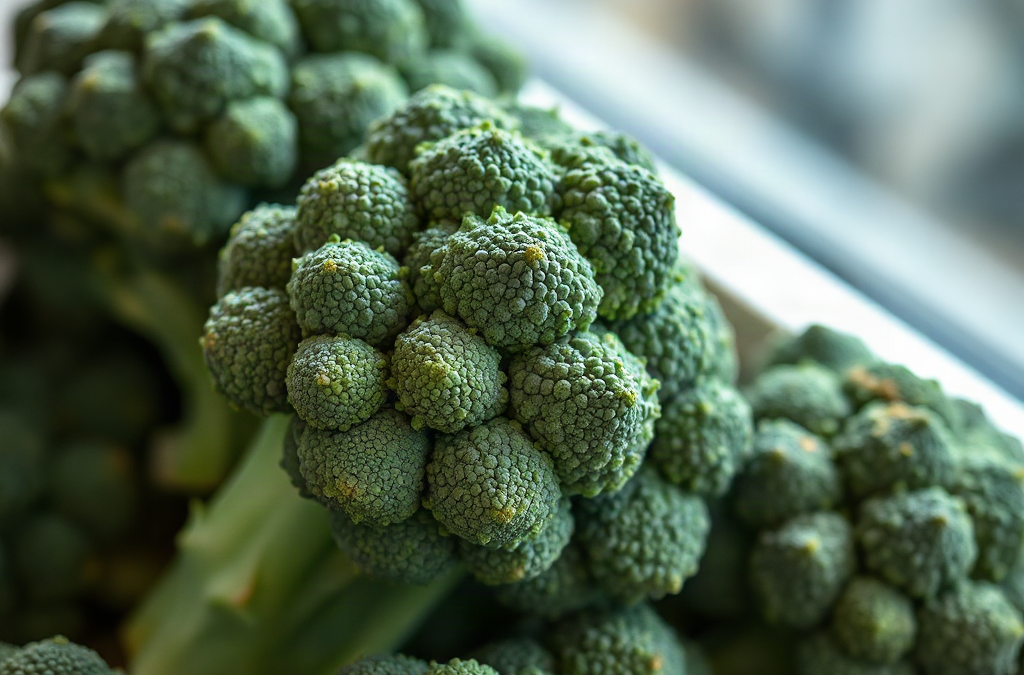
Organic broccoli storage and nutrient retention depend mainly on limiting moisture loss, heat, and unnecessary processing from purchase through cooking. Refrigerate unwashed broccoli promptly in a breathable bag or loosely wrapped container, and use it while the stems remain firm and the florets are tightly clustered. Chopping exposes more surface area to air and may increase nutrient losses over time, so cut only what you plan to cook soon. Steaming or microwaving with little water generally preserves more water-sensitive nutrients than prolonged boiling, while quick use of fresh broccoli offers the best texture and nutrient quality. Discard broccoli with extensive slime, mold, or a strong sour odor.
How Refrigeration Protects Fresh Broccoli
Fresh broccoli continues to respire after harvest. That process uses stored carbohydrates and gradually affects crispness, color, aroma, and texture. Cooler storage slows these changes, which is why broccoli usually keeps better in the refrigerator than on a kitchen counter. Organic certification does not change the vegetable’s basic storage biology; organic and conventionally grown broccoli should both be handled as fresh, perishable produce.
Place broccoli in the refrigerator soon after bringing it home. Keep the head whole and delay washing until you are ready to prepare it. Water left between the florets can encourage surface deterioration, especially when the broccoli is sealed tightly and air cannot circulate. A produce drawer or another consistently cold area is generally more suitable than the refrigerator door, where temperatures fluctuate more often.

Look for firm stalks, compact green florets, and a fresh vegetal smell. Small yellow flowers do not automatically mean the broccoli is unsafe, but they indicate that the head is aging and may have a more developed flavor and less appealing texture. Limp stems often reflect moisture loss rather than immediate spoilage. A short soak in cold water may temporarily firm the vegetable, but it cannot reverse age-related nutrient or flavor changes.
A common mistake is treating the plastic produce bag as a permanent sealed package. A completely airtight environment can trap condensation, while no protection at all allows the stalks and florets to dry. The practical target is controlled humidity with some ventilation. If the original packaging is wet inside, replace it with a clean breathable bag or loosely cover the broccoli rather than wrapping it tightly in wet plastic.
For a meal planned within the next day or two, refrigeration of the intact head is usually the simplest choice. If the broccoli already looks tired or your schedule is uncertain, move it higher on the use-first list instead of expecting storage to restore its quality. The related broccoli storage and nutrient retention decisions become easier when freshness, preparation time, and cooking plans are considered together.
Moisture, Packaging, and Signs of Decline
Packaging affects broccoli through two competing forces: dehydration and condensation. Loose florets lose water quickly because they have more exposed surface area, which leads to limp stems and a dull appearance. Tight packaging can preserve humidity but may create droplets that remain on the vegetable. Those wet surfaces can accelerate soft spots and unpleasant odors when the broccoli is stored for too long.
Use a clean, dry container or breathable produce bag. If you wash broccoli in advance, drain it thoroughly and dry the florets as much as practical before refrigeration. A dry towel inside a container may absorb excess droplets, but it should be replaced if it becomes damp. Do not store broccoli pressed against leaking meat, seafood, or other foods; a separate drawer or sealed lower-shelf container reduces cross-contamination risks.
Freshness checks should focus on several signs rather than color alone. A few pale or yellowing florets may signal age, whereas widespread sliminess, fuzzy mold, collapsing tissue, or a strong sour smell indicates that the vegetable should be discarded. Cutting away one visibly damaged spot is not a reliable solution when mold has spread through moist florets. Softness limited to a slightly dry stem is a different issue and may simply reduce eating quality.
Temperature abuse is another weak assumption. Returning broccoli to the refrigerator after it has sat out does not erase the time spent warm. Short preparation periods are usually manageable, but prolonged exposure to heat can speed wilting and spoilage. If broccoli is part of a packed lunch, use an insulated container with a cold source rather than relying on room-temperature storage.
Freshness and nutrient retention are related but not identical. Broccoli that remains edible may still lose some sensitive compounds during extended storage, particularly after cutting. A firm, recently purchased head used promptly is therefore a better starting point than an older head kept for a later “perfect” recipe. Storage should protect quality, not become a reason to postpone eating the vegetable.
Cutting, Freezing, and Choosing a Storage Plan
Keeping broccoli whole generally offers the strongest short-term protection because fewer cut surfaces are exposed to oxygen, moisture exchange, and handling. Separate the florets only when needed, and keep the stem if you plan to use it. The stem is edible after trimming the tough outer layer and can be sliced for stir-fries, soups, or roasting. Using the whole head also reduces food waste without requiring a separate storage system.
Pre-cut broccoli is convenient, especially for quick dinners, but convenience has a quality cost. More exposed surface area means faster drying and more opportunities for bruising. If you prepare it ahead, use a clean knife and dry work surface, place the pieces in a ventilated container, and schedule them for early use. Do not leave cut broccoli submerged in water for prolonged storage; it can become waterlogged and the surrounding moisture may encourage deterioration.
Freezing is the better option when fresh broccoli will not be used soon. Raw freezing can produce a softer, less pleasant texture after thawing because ice formation damages cell structure. Brief blanching before freezing helps preserve color, flavor, and texture by slowing enzyme activity. Cool the broccoli promptly after blanching, drain it well, pack it in airtight freezer packaging, and label it with the date. Frozen broccoli is especially useful for soups, grain bowls, pasta dishes, and blended sauces where a softer texture is acceptable.
Freezing does not make old or spoiled broccoli usable. Start with sound pieces, remove damaged sections, and avoid packing large wet clumps that freeze together. The tradeoff is straightforward: refrigerated whole broccoli is usually preferable for crisp salads or roasted florets, while frozen broccoli is practical for longer storage and cooked dishes. Thawing is often unnecessary; add frozen pieces directly to a hot soup, steam basket, or skillet and adjust cooking time.
A useful decision rule is to match storage to the next realistic use. Choose whole-head refrigeration for near-term meals, cut-and-refrigerate preparation for a short convenience window, and blanch-and-freeze when the cooking date is uncertain. That plan usually retains more quality than repeatedly opening a container, washing portions, and returning damp leftovers to the refrigerator.
Cooking Methods That Preserve More Nutrients
Cooking changes broccoli’s nutrient profile through heat, time, and contact with water. Water-soluble nutrients can move into cooking liquid, while prolonged heat can reduce some heat-sensitive compounds. These effects do not make cooked broccoli nutritionally poor, but they explain why a short, low-water method is often a sensible choice when nutrient retention is a priority.
Steaming is a strong everyday option because the florets cook above the water rather than sitting in a large volume of it. Use pieces of similar size so thin stems do not become mushy before dense stalk sections soften. Broccoli is usually ready when a fork enters the stem with slight resistance and the florets remain bright rather than collapsing. Serve it soon after cooking instead of holding it hot for a long period.
Microwaving with a small amount of water can also be efficient. A covered, microwave-safe dish creates steam without requiring a pot of water, and short cooking intervals make it easier to stop at the desired texture. Stir or rearrange the pieces midway when practical. The result depends on portion size and appliance power, so visual and texture checks matter more than a rigid time copied from another kitchen.
Boiling is not automatically wrong, but a long boil can soften broccoli and allow more water-soluble compounds to enter the discarded water. If boiling is the only convenient method, use the shortest time that produces the texture you want and consider incorporating the cooking liquid into a soup or sauce. Roasting can produce appealing browning and concentrated flavor, though very high heat or extended cooking may darken small florets before thicker stems are tender.
Raw broccoli preserves a different set of qualities, including crunch and compounds affected by heat, but it may be harder to chew or digest for some people. Lightly cooked broccoli can be more practical in a complete meal. Pairing it with olive oil, beans, eggs, tofu, or whole grains improves the meal’s overall nutritional balance, but no added ingredient should be described as guaranteeing absorption of every broccoli nutrient. Preparation should serve the eater’s texture preference, digestion, and schedule rather than chasing a single “perfect” method.
A Practical Broccoli Use-First Checklist
The most reliable way to protect quality is to reduce delays between purchase, storage, preparation, and eating. A simple check before each use can prevent both needless waste and questionable leftovers. Start by examining the florets and stem, then choose the least disruptive preparation that fits the meal.
- Inspect before storing: Remove damaged packaging and note whether the head is firm, dry, and free of unusual odor.
- Refrigerate promptly: Keep the broccoli whole, unwashed, and loosely protected in a cold produce area.
- Prepare only what is needed: Cut the amount for the meal and keep unused portions dry and ventilated.
- Choose the method: Steam or microwave for a tender-crisp result, roast for browning, or boil briefly when the cooking liquid will be used.
- Freeze surplus: Blanch sound broccoli, cool it quickly, drain it well, and package it tightly for later cooked dishes.
Signs that the plan is working include firm stems, intact florets, a clean smell, and cooked pieces that retain some structure. Signs of failure include condensation pooling in the container, increasing limpness, dark wet patches, or an odor that becomes sour or fermented. At that point, changing the container may help only if deterioration has not begun; do not use packaging adjustments to justify keeping visibly spoiled produce.
Meal planning also changes the best choice. Broccoli intended for a raw platter deserves careful short-term refrigeration and minimal cutting. Broccoli destined for soup can be frozen earlier without sacrificing the final dish’s texture. A household that repeatedly forgets fresh produce may retain more usable food by freezing portions on purchase day than by buying fresh heads and storing them indefinitely.
For more context on applying these decisions, see organic broccoli storage and nutrient retention and the preparation notes in this broccoli quality reference. The goal is not to preserve every nutrient perfectly; it is to limit avoidable losses while producing food that is safe, appealing, and likely to be eaten.
Frequently Asked Questions
Should organic broccoli be washed before refrigeration?
Usually, wash it shortly before use. Storing it wet can trap moisture among the florets and encourage deterioration.
Does cutting broccoli reduce nutrient retention?
Cutting exposes more surface area to air and moisture loss, so quality may decline faster. Cut close to cooking time when possible.
Is yellow broccoli safe to eat?
A few yellow flowers usually indicate age rather than immediate danger, but discard broccoli with slime, mold, collapsing tissue, or a strong sour odor.
Is steaming better than boiling broccoli?
Steaming often retains more water-soluble nutrients because the broccoli has less contact with cooking water. Brief boiling can still work, especially when the liquid is used.
Can fresh broccoli be frozen without blanching?
It can be frozen, but blanching first generally gives better color, flavor, and texture during later cooking.
Conclusion
Good broccoli storage is a sequence of small choices: refrigerate the intact head promptly, avoid storing it wet, limit unnecessary cutting, and freeze surplus before quality falls. Use firmness, moisture, odor, and surface condition to decide whether the vegetable is still worth preparing. Steaming or short microwave cooking usually offers a useful balance between nutrient retention, texture, and convenience, while boiling becomes more reasonable when its liquid is saved for the dish. Fresh broccoli does not need perfect handling to be nutritious, but extended warmth, trapped condensation, and prolonged cooking create avoidable losses. Match the storage method to your actual meal schedule, use older heads first, and discard produce showing clear spoilage rather than trying to rescue it.
Huge Discount on the Best Certified Organic Nutrient Dense Supplement!