
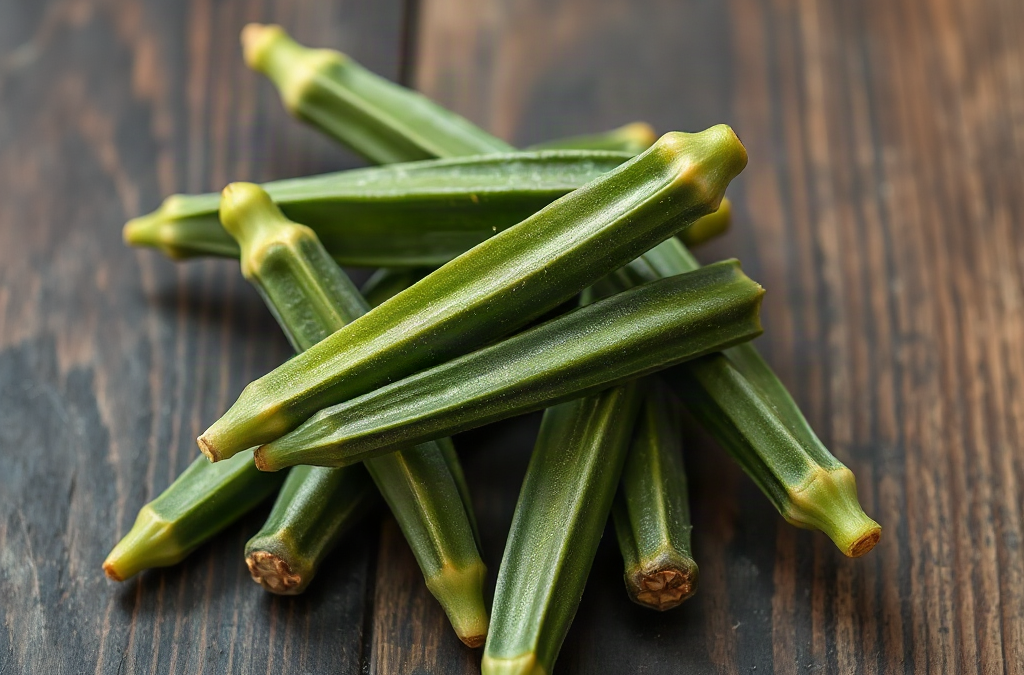
Okra combines useful nutrition with natural thickening power: its pods provide fiber, folate, vitamin C, vitamin K, magnesium, and other plant compounds, while their soluble mucilage gives soups, stews, and sauces more body. Sliced pods release the most mucilage when simmered in liquid, whereas whole pods, dry heat, and acidic ingredients such as tomatoes limit the thickening effect. For a thicker dish, cut okra into small rounds and cook it directly in the broth; for firmer pieces, roast or sauté them before adding. Okra remains a food rather than a treatment, and its nutritional value depends on the entire meal.
What Nutrients Does Okra Provide?
Fresh okra is a non-starchy vegetable with dietary fiber, folate, vitamin C, vitamin K, magnesium, potassium, and carotenoid pigments. Its exact nutrient contribution varies with serving size, maturity, storage, and preparation, so it is more useful to view okra as one component of a varied eating pattern than as a concentrated source of any single nutrient.
The pod’s fiber comes from both its outer structure and its gel-forming interior. Fiber adds bulk to a meal and may contribute to digestive regularity, although individual tolerance differs. Folate participates in cell division, vitamin C functions as an antioxidant and supports normal collagen formation, and vitamin K contributes to normal blood clotting. Magnesium and potassium perform numerous roles in normal muscle, nerve, and cellular function. These nutrients do not make okra a treatment for blood sugar, cholesterol, digestive disorders, or any other medical condition.
Preparation changes what reaches the plate. Boiling okra in water can move some water-soluble nutrients into the cooking liquid. That is not necessarily a meaningful loss when the liquid becomes part of a soup or stew. Discarding the water removes both flavor and some dissolved compounds. Roasting and quick sautéing use little water, but longer or hotter cooking can reduce heat-sensitive vitamin C. Frozen okra remains a practical alternative because it is usually prepared soon after harvest, though texture after thawing is softer than that of fresh pods.
The surrounding meal matters more than treating okra as an isolated health food. A tomato, bean, and okra stew offers vegetables, legumes, fiber, and protein in one dish. Deep-fried okra has a different nutritional profile because breading, frying oil, portion size, and accompanying sauces may contribute substantial sodium and fat. Pickled okra can be crisp and convenient, but shoppers who monitor sodium should compare labels rather than assuming every jar is equivalent.
A common mistake is assigning the properties of okra’s mucilage to the whole body. A food becoming gel-like in a pot does not prove that it will cleanse the digestive tract, block nutrient absorption, or produce a specific clinical result. Prioritize ordinary culinary use, a varied plate, and preparation methods that fit your needs. Anyone taking warfarin or another medication affected by vitamin K intake should ask a qualified clinician how to keep dietary intake consistent rather than eliminating vegetables without guidance.
Why Does Okra Thicken Food?
Okra thickens liquid because its pod contains mucilage, a mixture of long, water-binding plant carbohydrates. Cutting the pod exposes internal cells; simmering then disperses these compounds through the cooking liquid. As they hydrate, the liquid becomes more viscous and better able to suspend seasonings and small pieces of food.
The amount of thickening depends on surface area, moisture, agitation, and time. Thin rounds expose more interior tissue than whole pods, so they release mucilage faster. Stirring and prolonged simmering encourage further dispersion. A pan of whole okra cooked quickly over dry heat behaves very differently from chopped okra simmered in broth for half an hour. The first can remain distinct and lightly crisp; the second can become an integrated thickener.
| Cooking choice | Expected effect | Useful application |
|---|---|---|
| Thinly sliced, simmered in liquid | Strongest release of mucilage | Gumbo, vegetable stew, soup |
| Whole or halved pods | Less exposed interior and lighter thickening | Braises or curries with visible pieces |
| Roasted or sautéed over high heat | Drier surface and firmer texture | Side dishes, grain bowls, warm salads |
| Cooked with tomato or another acidic ingredient | Often a more restrained, structured texture | Tomato-based stews and skillet dishes |
| Frozen and added directly to a wet dish | Softens readily and releases thickening compounds | Convenient soups and long-simmered dishes |
Okra does not behave exactly like flour, cornstarch, or a puréed vegetable. Starch thickeners can create a comparatively smooth and predictable sauce when measured carefully. Okra contributes a more fluid, sometimes silky or ropy consistency along with vegetable flavor and visible pieces. It is particularly useful where that texture belongs to the dish rather than where a neutral, glossy sauce is required. A delicate pan sauce, for example, may be better suited to reduction or a small amount of starch.
Adding more okra is not the only way to correct a thin stew. Cutting the existing pods smaller, giving them enough simmering time, or lightly pressing some pieces against the side of the pot may release more mucilage. If the liquid becomes thicker than intended, add broth in small amounts and allow it to return to a simmer before reassessing. The frequent failure point is expecting whole pods added near the end to thicken a large volume of broth; they have limited exposed surface and little time to work.
How Can You Control Okra’s Texture?
Texture control starts before the pan is heated. Choose firm, brightly colored pods that bend slightly but are not limp, deeply blemished, or split. Smaller pods are often more tender, while oversized mature pods may be fibrous even after extended cooking. Refrigerate them dry and use them while they remain firm; lingering surface moisture can accelerate deterioration.
For dry cooking, wash the pods and dry them thoroughly before trimming. Moisture on the surface creates steam, which works against browning. Leave the pods whole, split them lengthwise, or cut them into large pieces, then give them enough room in a hot pan or on a roasting tray. Crowding traps steam and can produce soft okra before its surfaces brown. The approach is working when cut sides color and the pieces remain separate rather than sitting in a pool of released moisture.
For intentional thickening, use the opposite strategy. Slice the pods into rounds, add them to the liquid early, and maintain a steady simmer. Stir enough to prevent sticking and distribute the mucilage, but recognize that vigorous, constant stirring can break down the pieces. A stew that gradually coats a spoon while still moving freely is developing body; a dense, stringy mass signals too little liquid, too much okra, or excessive reduction.
Acidic ingredients such as tomatoes, citrus juice, or vinegar can temper softening and complement okra’s green flavor. Timing provides another control: tomato and okra cooked together tend to retain more structure than okra simmered first in plain broth and acidified at the end. Acid is not an eraser, however. It will not restore firmness after the pods have been finely sliced and heavily cooked.
A practical sequence keeps the result predictable:
- Choose the target: decide whether the pods should thicken the dish or remain visibly distinct.
- Match the cut: use small rounds for body, or whole and lengthwise-cut pods for firmer pieces.
- Control moisture: simmer in liquid for thickening, or dry thoroughly and avoid crowding for browning.
- Check before finishing: adjust a thin dish with more cooking time and a thick dish with small additions of liquid.
Trying to remove all mucilage through rinsing is usually counterproductive. Repeated washing after cutting can dilute flavor, make handling awkward, and still may not create a crisp result if the pan is crowded. The more reliable choice is to select a cooking method suited to the desired texture rather than treating okra’s natural structure as a defect.
Using Okra in Everyday Meals
Okra works best when its preparation is matched to the rest of the meal. In a broth-based soup, sliced pods can replace part or all of a separate thickener while adding vegetable pieces. In a quick dinner, halved pods can be roasted beside onions and peppers, then served with lentils, fish, eggs, tofu, or another protein. The ingredient is versatile, but no single method provides both maximal thickening and a dry, crisp bite.
For a vegetable and bean stew, sauté aromatics, add tomatoes or broth, then stir in sliced okra early enough to soften and release mucilage. Start with a moderate amount because viscosity builds as water evaporates. Beans add starch and their own thickening effect, so the combination may become dense faster than expected. If preparing the dish ahead, leave it slightly looser than the final target; refrigerated stews often appear thicker when cold and may need water or broth during reheating.
For a less viscous skillet dish, dry whole or halved okra, coat it lightly with oil, and cook it in a single layer. Add watery vegetables only after the okra has begun to brown, or cook those ingredients separately. Salt is not the only variable; pan temperature, crowding, pod size, and surface moisture usually have a more visible effect. If the pieces turn pale and soft without browning, use a larger pan, cook a smaller batch, or raise the heat within the safe limits of the cooking oil.
Frozen okra is well suited to soups, curries, and braises where tenderness and thickening are welcome. Adding it straight from the freezer limits extra handling, but it may cool the pot temporarily and release water as it heats. Fresh okra is usually the stronger choice for roasting or grilling because intact cell structure gives it a better chance of retaining shape. Canned or pickled versions serve different purposes and should not be expected to reproduce the texture of fresh pods.
Flavor pairings can make the vegetable feel integrated rather than merely added for nutrition. Tomatoes, onions, garlic, chile, cumin, coriander, smoked spices, lemon, and vinegar can balance okra’s grassy notes. Rich dishes may benefit from acidity, while lean soups may need enough salt, aromatics, or fat to carry flavor. Taste after the dish has thickened because reduction concentrates seasoning.
The most useful buying decision is based on the intended dish, not a blanket fresh-versus-frozen rule. Select small fresh pods for dry heat and visible presentation; choose frozen cut okra for convenience in wet preparations. Discard pods with mold, an off odor, or extensive decay. A few surface marks may be cosmetic, but softness and leaking tissue indicate that quality has moved beyond simple appearance.
Conclusion
Okra earns its place in the kitchen through both its nutrient content and its unusual ability to change a dish’s texture. The main decision is whether to encourage mucilage or contain it. Small cuts, moisture, and simmering build body in soups and stews; intact pods, careful drying, high heat, and adequate pan space favor browning and firmer pieces.
Choose fresh or frozen okra according to the method rather than assuming one form is universally better. Pair it with legumes, grains, protein foods, and other vegetables to build a complete meal, and account for sodium, breading, or frying oil when using processed preparations. For the next dish, define the desired texture first, match the cut and heat to that goal, and adjust liquid only after the okra has had time to respond.
Frequently Asked Questions
Does okra lose nutrients when cooked?
Cooking can reduce some heat-sensitive vitamin C and move water-soluble nutrients into cooking liquid. Eating the broth retains compounds that would otherwise be discarded, while roasting uses less water but still exposes okra to heat.
How should okra be cut for the most thickening?
Cut it crosswise into small rounds to expose more of the interior, then simmer the pieces directly in the soup or stew. Whole pods release less mucilage over the same cooking period.
Can okra replace cornstarch or flour?
It can thicken suitable soups and stews, but it does not create the same neutral, smooth finish. Use okra when its vegetable flavor and characteristic texture fit the dish.
Is frozen okra as useful as fresh okra?
Frozen okra is convenient for wet dishes and generally thickens effectively, although it tends to soften more readily. Fresh, firm pods are usually preferable for roasting, grilling, or sautéing.
Why did roasted okra turn soft instead of brown?
The usual causes are wet pods, a crowded tray, insufficient heat, or watery ingredients added too soon. Dry the okra, spread it in one layer, and allow hot air or pan contact around each piece.