
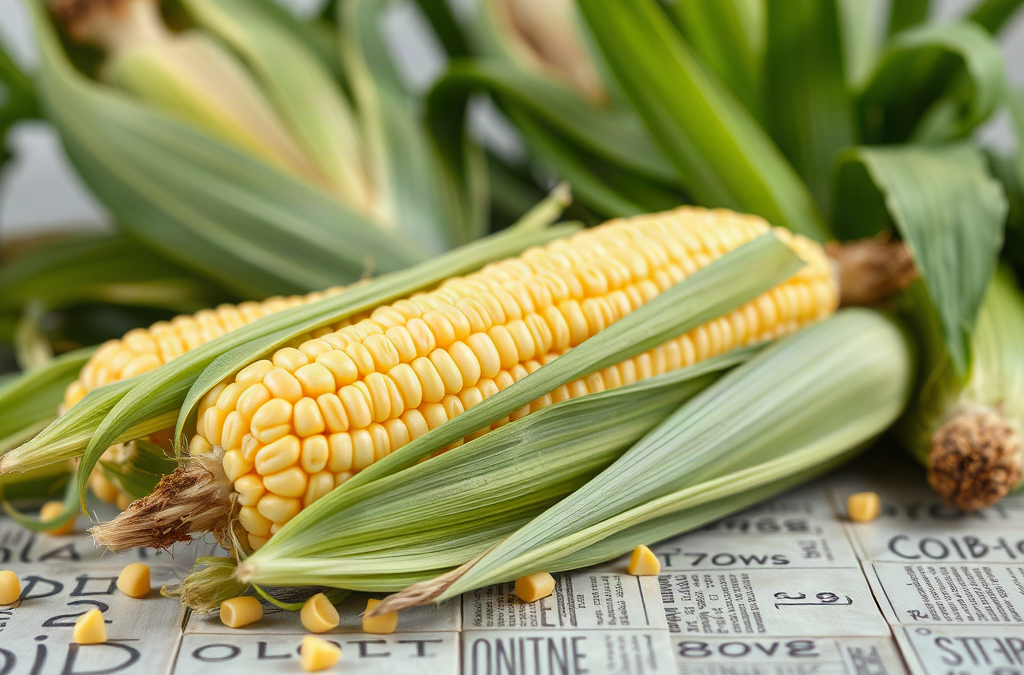
Organic corn nutrition and portion considerations are best handled by treating corn as a starchy vegetable, choosing an amount that fits the meal, and accounting for added fats, sodium, and other carbohydrate foods. A medium ear or roughly half to one cup of kernels is a practical starting portion for many adults, although energy needs and blood-glucose goals vary. Corn contributes carbohydrate, fiber, folate, thiamin, and carotenoid pigments, but organic certification does not make it nutritionally superior to conventional corn. Pairing it with beans, eggs, fish, poultry, or tofu and non-starchy vegetables creates a more complete, filling plate.
What Nutrients Does Organic Corn Provide?
Sweet corn supplies mostly carbohydrate, along with fiber, a modest amount of protein, and relatively little fat before butter, oil, cheese, or dressing is added. It also contributes micronutrients that include thiamin and folate, while yellow corn contains carotenoid pigments such as lutein and zeaxanthin. Exact values change with the variety, maturity, processing method, and serving size, so a food database entry should be matched to the form actually eaten.

Corn sits between common vegetable categories in everyday meal planning. Botanically, it is a grain, but fresh sweet corn is often grouped with starchy vegetables because its carbohydrate concentration is higher than that of leafy greens, peppers, or broccoli. A plate containing corn therefore differs nutritionally from one containing the same volume of salad greens. Corn can still contribute fiber and useful nutrients, but it should not automatically be treated as an unlimited non-starchy vegetable.
Fresh, frozen, and no-salt-added canned kernels can all be reasonable choices. Frozen corn is typically convenient and easy to measure, while canned corn requires attention to sodium and serving information. Draining and rinsing canned kernels can remove some surface sodium, although the resulting amount cannot be assumed from the label. Corn on the cob offers a visible unit that may make portions easier to judge, but ear size varies enough that “one ear” is not a precise universal measure.
Organic certification primarily addresses how the crop is produced and handled under an organic standard. It does not guarantee that the corn contains more vitamins, fewer calories, more fiber, or less sugar than a comparable conventional product. Variety, freshness, storage, and cooking often create more practical nutritional differences. Organic corn may still be the preferred purchase for someone prioritizing organic farming practices, but that preference should remain separate from claims of automatic nutrient superiority.
A common mistake is confusing sweet corn with every food made from corn. Cornmeal, tortillas, popcorn, corn chips, and sweetened corn-based cereals have different water content, nutrient density, portions, and ingredient profiles. A half cup of cooked kernels cannot be exchanged volume-for-volume with a half cup of dry cornmeal or chips. Check the product form first, then evaluate its serving size and full ingredient list rather than relying on the word “corn.”
How Much Corn Fits a Meal?
A sensible portion depends on what else is on the plate, not on corn alone. Roughly half to one cup of cooked kernels, or a medium ear, is a workable starting range for many adult meals. It is not a medical prescription: appetite, body size, activity, total energy needs, and individual glucose management can justify a smaller or larger amount.
The most useful adjustment is to count overlapping starches. A meal with grilled fish, corn, and a large serving of non-starchy vegetables leaves more room for corn than a meal already containing rice, bread, and beans. Corn and beans both provide valuable nutrients, but both contribute carbohydrate; combining them may call for smaller portions of each rather than removing either food. Similarly, corn used as a garnish in a taco bowl has a different role from corn served as the primary starch beside chicken and cabbage slaw.
| Meal situation | Practical corn amount | What to assess |
|---|---|---|
| Corn is the main starch | About 1 medium ear or 1/2–1 cup kernels | Add protein and non-starchy vegetables |
| Another starch is included | Use a smaller scoop | Consider the combined rice, bread, potato, or corn portion |
| Corn is a topping | A few spoonfuls may be enough | Account for sauces, cheese, chips, and the bowl base |
| Higher activity or energy needs | A larger portion may fit | Judge the full meal and usual hunger afterward |
Household measuring can help recalibrate visual estimates. Spoon a usual serving into a measuring cup once or twice, then place it on the plate normally used at home. The goal is not permanent measurement; it is learning what a half cup and a cup look like in a familiar bowl. Restaurant scoops, oversized ears, and deep serving dishes can otherwise make portions difficult to estimate.
People monitoring blood glucose may need more individualized decisions because corn contributes digestible carbohydrate even though it also contains fiber. Pairing it with protein, fat, and fiber-rich foods may produce a different meal response than eating a large bowl of corn alone, but no pairing makes the carbohydrate disappear. A clinician or registered dietitian can help interpret personal glucose readings, medication timing, or prescribed carbohydrate targets.
Portioning is failing when corn repeatedly crowds out protein and varied vegetables, or when a meal combines several starches without intention and leaves the person uncomfortable or outside an established nutrition plan. It is working when the plate remains varied, the amount matches hunger and activity, and the meal fits any individualized goals without requiring rigid avoidance.
How Preparation Changes the Meal
Cooking method usually changes the nutritional character of a corn dish more through added ingredients than through the heat itself. Steamed, boiled, grilled, microwaved, and roasted corn can all fit a balanced meal. The larger differences commonly come from butter, mayonnaise, cheese, salt, sugary glazes, or deep-frying.
Plain cooked kernels retain their identity as a minimally processed starchy vegetable. Creamed corn may include added fat, sodium, sugar, or thickeners, depending on the recipe or product. A street-corn preparation can be flavorful and satisfying, but mayonnaise, cheese, and salty seasoning make it meaningfully different from a plain ear with lime and herbs. Neither dish needs to be labeled “good” or “bad”; the richer version simply warrants attention to quantity and the rest of the plate.
Water content also affects comparisons. Fresh or frozen kernels contain substantial water, while cornmeal and chips are drier and more concentrated. That means a modest-looking portion of chips can deliver more energy and sodium than a similar volume of kernels. Popcorn is another separate form: air-popped popcorn is a whole-grain food with a large volume, whereas heavily buttered or sweet-coated popcorn has a different ingredient and energy profile.
Use a short label check for packaged corn:
- Confirm the form and serving size: kernels, creamed corn, cornmeal, chips, and popcorn are not interchangeable.
- Compare sodium: especially for canned corn, seasoned frozen products, and prepared side dishes.
- Read the ingredient list: note added oils, sweeteners, cheese powders, sauces, and thickeners.
- Check servings per container: a small package may contain more than one labeled serving.
Organic packaged corn products still require the same scrutiny. An organic label does not make a fried chip nutritionally equivalent to cooked kernels, nor does it remove added sodium or sugar. The common failure is allowing the production claim on the front of the package to override the nutrition facts and ingredients on the back.
For a practical flavor upgrade, try charred corn with lime, cilantro, black pepper, or smoked paprika, adding a measured amount of oil or cheese rather than pouring directly from the container. This preserves control over the additions without making the dish austere. If a richer preparation is the point of the meal, serve a moderate amount and pair it with simpler protein and vegetable dishes.
Building Balanced Meals With Corn
Corn works best when its role is decided before the plate is assembled. It can serve as the primary starch, a smaller component of a mixed dish, or a garnish that adds sweetness and texture. Defining that role prevents accidental stacking of corn with several other carbohydrate-rich foods while leaving little space for protein or vegetables.
When corn is the main starch, pair it with a substantial protein source and non-starchy produce. Grilled chicken, one ear of corn, and tomato-cucumber salad is one straightforward combination. Plant-based meals can use corn with black beans, cabbage, salsa, and avocado; because beans and corn both contribute carbohydrate, their amounts can be adjusted to the eater’s energy needs while still providing complementary textures and a broader nutrient mix.
Mixed dishes require closer judgment because portions become harder to see. In a corn-and-quinoa salad, for example, both ingredients add carbohydrate. Increasing peppers, tomatoes, greens, and herbs can create volume and variety without relying only on larger scoops of quinoa and corn. In soup, corn may be one of several ingredients alongside potatoes, noodles, or beans. Identifying every starch in the bowl is more reliable than judging corn in isolation.
A useful plate-building sequence is:
- Choose the protein, such as eggs, tofu, fish, poultry, yogurt-based dressing, or beans.
- Add a generous variety of non-starchy vegetables.
- Decide whether corn is the main starch or a smaller accent.
- Review other starches and adjust their combined amounts.
- Add fats, sauces, and salty toppings deliberately rather than automatically.
Budget and access matter as much as ideals. Frozen organic corn can reduce waste because only the needed amount is used, but conventional frozen or canned corn may be more affordable. Choosing conventional corn does not make a meal nutritionally inadequate. A minimally seasoned product that fits the household budget may be more useful than a costlier organic option that displaces other nourishing foods.
Children, athletes, older adults with small appetites, and people following clinician-directed diets may need different portions. A highly active person may use corn alongside rice or tortillas intentionally, while someone with a lower energy requirement may prefer corn as the only starch. The weak assumption is that one plate formula applies to everyone. A better sign of success is a repeatable meal pattern that provides variety, satisfies hunger appropriately, and aligns with personal health guidance.
Conclusion
Corn deserves a deliberate place on the plate rather than automatic restriction or an unlimited-vegetable label. First identify its form: fresh kernels, canned corn, cornmeal, chips, and popcorn differ substantially in concentration and added ingredients. Next decide whether corn is the meal’s primary starch or a smaller accent, then account for rice, bread, potatoes, beans, or tortillas served alongside it.
Choose organic corn when its farming and handling standards align with personal priorities and budget, not because the label guarantees a stronger nutrient profile. For the next meal, measure a usual serving once, pair it with a clear protein source and non-starchy vegetables, and note whether the combination provides suitable fullness. People managing blood glucose or following a prescribed diet should adapt portions with qualified professional guidance rather than relying on a universal serving rule.
Frequently Asked Questions
Is organic corn more nutritious than conventional corn?
Organic certification describes production practices, not guaranteed nutrient superiority. Variety, freshness, processing, preparation, and portion size often matter more to the finished meal.
Is corn a vegetable or a grain?
Fresh sweet corn is commonly treated as a starchy vegetable in meal planning, while dried mature corn and products such as cornmeal are categorized as grains.
What is a reasonable serving of corn?
A medium ear or about half to one cup of kernels is a practical adult starting range. Adjust it for appetite, activity, other starches, and individualized nutrition goals.
Does corn fit a blood-glucose-conscious meal?
It can, but corn contributes carbohydrate and should be counted with the meal’s other starches. Personal responses and prescribed targets should be discussed with a qualified clinician or dietitian.
Are frozen and canned organic corn good alternatives to fresh corn?
Yes. Plain frozen corn is convenient, and canned corn can work well when serving size, sodium, and added ingredients are checked. Draining and rinsing may reduce some surface sodium.