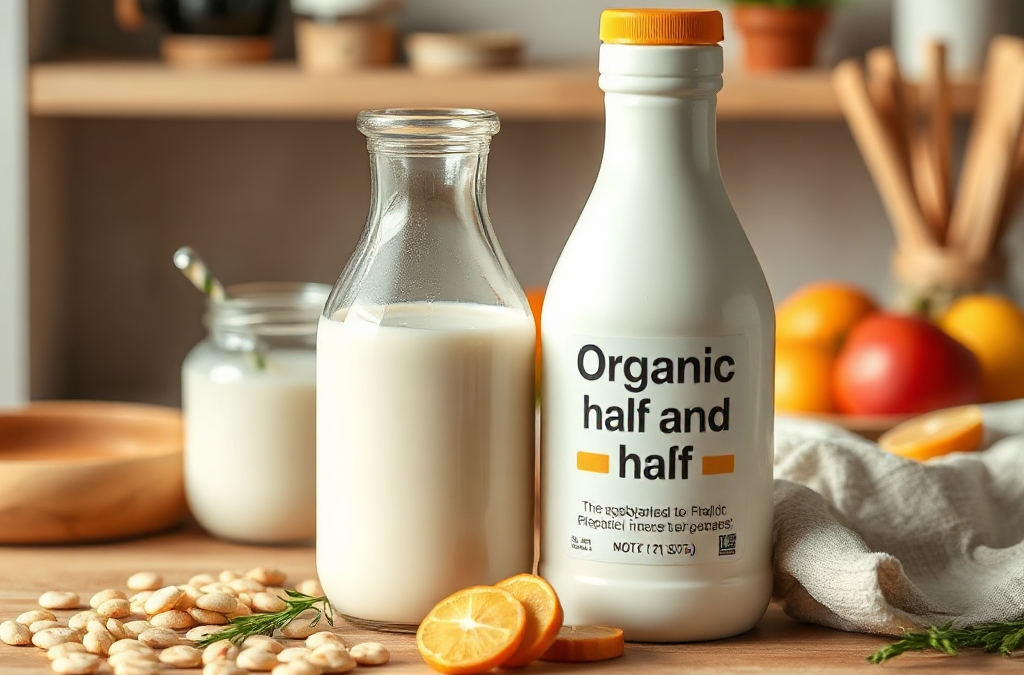
Organic half and half is usually not nutritionally different from conventional half and half because both are primarily a mixture of milk and cream, with similar calories, fat, protein, and carbohydrate amounts. The meaningful differences usually involve organic production standards, permitted feed and farming practices, ingredient lists, and sometimes small nutrient variations linked to cows’ diets or seasonal conditions. Organic certification does not automatically make the product lower in saturated fat, sugar, or calories. Compare the Nutrition Facts panels, check whether the carton contains only milk and cream, and choose based on your priorities, budget, and tolerance for dairy rather than assuming the organic label changes its basic nutrition.
What Organic Certification Changes
Organic certification changes the way the milk is produced, not the basic identity of half and half. The product remains a dairy mixture made from milk and cream, while the organic label relates to farming, feed, and production requirements. In the United States, certified organic dairy operations follow standards involving organic feed and restrictions on certain production inputs. Those rules are separate from the Nutrition Facts panel.
That distinction matters because shoppers often treat “organic” as a shorthand for lower fat or fewer calories. A tablespoon of organic half and half can have a very similar nutritional profile to a tablespoon of a conventional brand. The exact numbers depend more on the milk-to-cream ratio, serving size, and whether the manufacturer adds stabilizers than on the farming label.
Organic production may still matter to a household that prioritizes farming practices, organic feed, or avoiding certain agricultural inputs. It may also affect price and availability. A higher shelf price represents production and supply-chain choices; it should not be interpreted as proof that the carton contains more protein or less saturated fat.
A common mistake is assuming that organic and “natural” mean the same thing. They are different labeling concepts, and neither one replaces reading the ingredient list. For shoppers comparing two cartons, the useful first step is to separate the farming claim from the nutritional claim: assess certification if that is a priority, then inspect calories, fat, saturated fat, carbohydrates, sodium, and ingredients.
Readers comparing dairy products can also use Is organic half and half nutritionally different as a reference point when evaluating organic milk, cream, and coffee additions.
Nutrition Compared With Conventional Half And Half
Organic and conventional half and half generally provide comparable calories, total fat, saturated fat, protein, and carbohydrate per matching serving. Half and half is usually used in small quantities, so the amount added to coffee, tea, sauces, or oatmeal often has more effect on total intake than whether the carton carries an organic seal.
The product’s composition explains the similarity. Milk contributes water, lactose, protein, and minerals, while cream raises the fat content and gives the mixture its texture. Changing the proportion of cream changes calories and fat more directly than changing conventional farming to organic farming. Two brands with different formulations may therefore differ more from each other than an organic and conventional carton with nearly identical formulas.
For a practical comparison, place two cartons side by side and use the same serving size. A label listing one tablespoon for one product and two tablespoons for another can make the products appear different when the serving basis is the real cause. Compare saturated fat especially if half and half is used generously in several drinks each day. The organic seal does not remove the saturated fat naturally present in dairy cream.
Small variations in nutrient values can occur. Cow diets, breed, season, processing, and formulation may influence the final product, but those differences should not be assumed to be consistent or large enough to change a dietary decision. USDA FoodData Central is useful for checking general nutrient profiles, while the carton remains the best source for a specific brand.
Another weak assumption is that organic dairy automatically provides a meaningful nutritional advantage in every diet. If someone uses a teaspoon in one morning coffee, the nutrition difference may be negligible. If someone pours half a cup into multiple beverages or recipes, serving quantity becomes the more relevant issue. For a lower-calorie choice, compare with reduced-fat half and half, milk, or an unsweetened alternative rather than relying on organic status.
Ingredients, Additives, And Dairy Tolerance
Ingredient lists can reveal differences that the word organic does not. A simple carton may contain milk and cream, while another includes stabilizers such as carrageenan, gums, or other texture agents. These ingredients can help prevent separation and maintain a smooth pour, but they may matter to shoppers who prefer a shorter ingredient list or who notice digestive discomfort with a particular product.
Organic half and half can contain permitted stabilizers, so “organic” does not necessarily mean additive-free. Conversely, a conventional carton may have a short, familiar ingredient list. The sensible comparison is specific: read the ingredients, note added sugars or flavorings, and check whether the product is a dairy blend rather than assuming the label category tells the whole story.
Dairy tolerance is another separate question. Half and half contains lactose, although the amount per serving may be modest. People with lactose intolerance may react according to serving size and individual tolerance; organic certification does not remove lactose. Lactose-free half and half, when available, addresses that particular issue more directly than choosing an organic carton.
Flavored coffee creamers create a different comparison. Some are made with dairy, while others rely on oils, sweeteners, or emulsifiers and may contain more added sugar than plain half and half. An organic sweetened creamer can still contribute added sugar, and an unsweetened conventional dairy product may be the more suitable option for someone limiting sweetness.
A realistic kitchen example is a person who experiences bloating after switching brands. The cause might be a larger serving, a flavored formulation, lactose, or a stabilizer rather than the organic production method. Change one variable at a time, keep portions consistent, and check the label. Anyone with persistent or severe symptoms should discuss them with a qualified clinician instead of using a product label as a diagnosis.
For related label-reading context, see Is organic half and half nutritionally different alongside the product’s own ingredient panel and allergen statement.
How To Choose A Carton
The best carton depends on what the half and half is doing in the diet. Someone choosing organic food for environmental or farming reasons may reasonably pay more for certified organic dairy. Someone focused on saturated fat, calories, lactose, or budget should prioritize those characteristics directly. The organic label can be part of the decision, but it should not substitute for the nutrition panel.
Use a short comparison process before buying. First, match serving sizes. Next, compare calories and saturated fat for the amount you actually pour, not the amount printed in an idealized serving. Then check protein and carbohydrates if those nutrients matter to your meal plan. In summary, read the ingredients for added sugar, flavorings, and stabilizers.
- For farming standards: verify that the product is certified organic rather than relying on vague front-label language.
- For lower fat: compare reduced-fat dairy or milk, because organic status does not lower cream’s fat content.
- For lactose concerns: look for a lactose-free formulation or use a tolerated alternative.
- For minimal processing: favor a short ingredient list, while recognizing that stabilizers can improve texture and shelf performance.
- For cost control: buy organic when its production standards matter enough to justify the premium, not because it promises different macronutrients.
Storage and usage also affect the practical choice. Keep the carton refrigerated, follow the package date and handling instructions, and avoid leaving dairy at room temperature for extended periods. If the product separates slightly, shaking may restore texture; an off smell, unusual curdling, or a swollen container is a reason not to use it.
One frequent failure is comparing brands by front-label claims alone. “Organic,” “farm fresh,” and “natural” do not tell you whether a product is sweetened, reduced-fat, lactose-free, or heavily stabilized. A better decision uses the front label for certification, the Nutrition Facts panel for nutrient amounts, and the ingredient list for formulation details. That approach works whether the half and half goes into coffee, a pan sauce, or a dessert.
When the choice remains close, prioritize the product you will use in a reasonable portion and enjoy consistently. A conventional carton with the desired nutrition and ingredients may be a sound choice, while organic may be worthwhile when production standards are central to your purchasing values. Neither option should be treated as a health treatment or a guaranteed nutritional upgrade.
Frequently Asked Questions
Does organic half and half have fewer calories?
Usually not. Calories depend mainly on the milk-to-cream ratio and serving size, so compare the Nutrition Facts panels directly.
Is organic half and half lower in saturated fat?
Organic certification does not make dairy cream low in saturated fat. Choose a reduced-fat product if lowering saturated fat is the priority.
Does organic half and half contain lactose?
Regular organic half and half generally contains lactose because it is made from dairy milk. A lactose-free version may be more suitable for people who cannot tolerate lactose.
Should I choose organic half and half for health reasons?
Choose it if its production standards and ingredient profile fit your priorities, but do not expect the organic label alone to lower calories, sugar, or saturated fat.
Conclusion
Organic half and half is usually nutritionally similar to conventional half and half. The larger differences come from formulation, serving size, and the amount of cream, while organic certification primarily addresses production standards. Read both cartons on the same serving basis, check saturated fat and calories, and inspect the ingredients for added sugar, flavorings, stabilizers, or lactose-free processing. Organic may be a worthwhile purchase when certified farming practices align with your values, but it is not a substitute for choosing the nutrient profile you need. For everyday use, measure the amount you pour and select the version that fits your dietary goals, tolerance, taste, and budget. That method produces a more reliable decision than assuming the organic label changes the underlying nutrition.
Huge Discount on the Best Certified Organic Nutrient Dense Supplement!