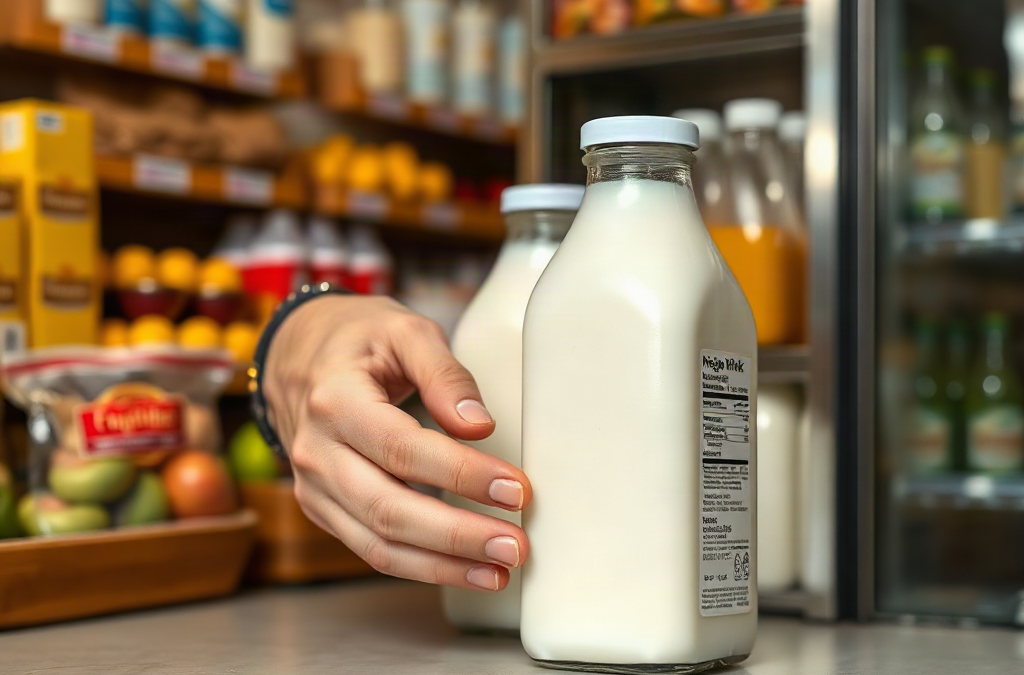
Safe handling of organic raw milk products means controlling contamination and temperature from purchase through serving, because organic certification does not make raw milk pasteurized or eliminate pathogens. Buy only from a lawful, reputable source, keep containers cold in an insulated carrier, refrigerate them promptly, and use clean hands, utensils, and storage shelves. Separate raw milk from ready-to-eat foods, follow the seller’s use-by guidance, and discard products that have been warm for an uncertain period or show spoilage. Children, pregnant people, older adults, and anyone with weakened immunity face greater consequences from foodborne illness and should generally choose pasteurized dairy instead.
Why Organic Raw Milk Needs Extra Care
Organic status describes how a product is produced and certified; it does not mean the milk has been pasteurized. Raw milk can carry harmful microorganisms from the animal, milking equipment, water, soil, handlers, or transport environment even when a farm follows careful sanitation practices. The absence of an obvious odor, sediment, or visual defect cannot confirm safety.
Pasteurization uses controlled heat to reduce disease-causing microorganisms while preserving milk’s basic nutritional role. Raw milk has not received that treatment, so handling decisions have a smaller margin for error. Chilling slows microbial growth, but it does not reliably remove contamination that may already be present. Keeping a container cold is therefore a control measure, not a substitute for pasteurization.

A useful distinction is between quality clues and safety evidence. A clean label, pleasant flavor, organic certification, and trusted farm may support a purchasing decision, but none proves that a particular container is free of pathogens. Claims that raw milk is automatically safer because it is local, organic, or minimally processed should be treated cautiously.
For example, a bottle purchased at a farm stand may remain safe-looking after sitting in a warm vehicle, while its microbial risk has changed. The practical priority is to limit the time and temperature exposure, prevent cross-contamination, and avoid serving raw dairy to people at higher risk of serious illness. Readers comparing these choices can also review Safe handling of organic raw milk products alongside local food-safety information.
Buying and Transporting Raw Milk Safely
Purchase raw milk products only from a source that clearly identifies the product, provides handling instructions, and operates within applicable local requirements. Check that the container is sealed, clean on the outside, properly labeled, and cold when you receive it. A damaged lid, leaking bottle, swollen package, or missing date is a reason to choose another container rather than relying on smell or taste.
Transport time matters because a grocery trip, farm pickup, and long drive do not expose the product to the same conditions. Use an insulated bag or cooler with frozen packs, place the milk away from direct sunlight, and make it the final purchase before returning home. Do not leave it in a parked car while completing errands. Heat inside a vehicle can rise quickly even when outdoor temperatures feel moderate.
At home, inspect the container before placing it in the refrigerator. If the milk is noticeably warm, has leaked, or has spent an unknown period outside refrigeration, the safest decision is not to taste-test it. Smelling a product may identify obvious spoilage, but it cannot detect every pathogen. When a farm provides a specific storage period, use that information rather than assuming raw milk keeps as long as a commercial pasteurized product.
Buying in smaller quantities can reduce waste and shorten the time a container remains open. That tradeoff may cost more per serving, but it is often more practical than purchasing a large volume that sits in a frequently opened refrigerator. Keep purchase records or label the opening date when several containers are in use; uncertainty about age is itself a reason to discard the product.
Refrigeration, Containers, and Kitchen Hygiene
Store raw milk at the coldest stable part of the refrigerator, not in the door, where temperatures fluctuate as the door opens. Keep the container closed and place it below ready-to-eat foods so a leak cannot drip onto fruit, cooked meals, or other items. A separate bin can make this arrangement easier, especially when children regularly access the refrigerator.
Clean handling prevents organisms on the outside of a container or on hands from reaching foods eaten without further cooking. Wash hands with soap and water before and after handling raw milk, and clean measuring cups, bottle caps, refrigerator shelves, and work surfaces that contact spills. Do not pour leftover raw milk back into the original container; that can introduce contamination and make the remaining product harder to date.
Use dedicated equipment if raw milk is regularly used for yogurt, cheese, smoothies, or other preparations. A cutting board or blender that is rinsed but not properly washed can transfer contamination to salad ingredients or prepared foods. Wash with hot, soapy water and follow the equipment manufacturer’s instructions for sanitizing parts that can be submerged.
A common mistake is assuming that a sealed bottle cannot contaminate nearby food. The outside may contact a cooler, counter, hand, or refrigerator shelf. Another weak assumption is that freezing makes raw milk safe. Freezing can extend storage life by slowing deterioration, but it should not be treated as a reliable pathogen-control step. Label frozen containers with the date, leave expansion space, thaw them in the refrigerator, and avoid repeated freeze-thaw cycles that damage quality and complicate storage control.
Using, Heating, and Discarding Raw Milk Products
Cooking or heating raw milk changes the safety decision only when the entire product reaches a sufficiently controlled temperature for the intended use. Casual warming, adding it to coffee, or heating only until it feels hot does not provide the same control as a validated pasteurization process. A kitchen thermometer is more dependable than touch, but home heating can still be uneven, especially in a thick mixture or large pot.
People who choose to heat raw milk should use a clean saucepan, stir gently to distribute heat, avoid scorching, and cool the milk promptly in a clean covered container if it will not be used immediately. Do not let the milk sit warm on the counter while preparing other ingredients. Heating may alter flavor and texture, and it may not be appropriate for every raw-milk product or recipe, so follow a reliable food-safety method rather than improvising.
Fermentation is not automatically a safety step. Homemade yogurt, kefir, soft cheese, and cultured drinks may become acidic, but acidity, time, starter quality, and temperature vary. A desirable tang does not prove that all harmful organisms were controlled. Fermenting raw milk also introduces equipment and handling variables that can compound the original risk. Pasteurized milk is generally a more predictable base for home culturing.
Discard raw milk when it has an unusual odor, curdled texture unrelated to an intentional cultured product, a leaking or swollen package, visible contamination, or an uncertain temperature history. Never taste a questionable product to decide whether it is safe. If raw milk spills, blot it up, wash the area with hot soapy water, and clean nearby items that may have been splashed. Keep a practical rule in mind: when the storage history cannot be reconstructed, replacing the product is safer than trying to rescue it.
Who Should Avoid Raw Milk
Raw milk carries greater consequences for people whose immune defenses are still developing, reduced, or more vulnerable to complications. Young children, pregnant people, older adults, and individuals with weakened immunity should generally choose pasteurized milk and dairy products. People managing a medical condition or treatment that affects immunity should ask a qualified clinician about their personal risk rather than relying on a farm’s safety record.
Households with mixed preferences need a clear separation plan. Store raw dairy below other foods, use separate utensils when practical, and wash hands before preparing meals for someone who does not consume it. Do not give raw milk to a child simply because an adult in the household tolerates it; exposure and consequences are not interchangeable across family members.
When choosing between raw and pasteurized organic milk, the organic label and pasteurization status answer different questions. Organic certification may matter for production preferences, while pasteurization addresses a specific microbial hazard. A pasteurized organic product can meet an organic purchasing preference with a lower foodborne-illness risk than raw milk. That comparison is often more useful than debating whether one farm appears cleaner than another.
If someone develops severe or persistent gastrointestinal symptoms after consuming raw dairy, especially fever, bloody diarrhea, repeated vomiting, dehydration, or symptoms during pregnancy, seek medical advice promptly. Do not prepare food for others while ill, and tell a clinician that raw milk was consumed if relevant. Safe handling reduces exposure opportunities, but it cannot guarantee that raw milk is pathogen-free.
Frequently Asked Questions
Does organic certification make raw milk safe to drink?
No. Organic certification concerns production standards and does not mean the milk has been pasteurized or is free from harmful microorganisms.
Where should raw milk be stored in the refrigerator?
Keep it in a cold, stable area below ready-to-eat foods rather than in the door. Keep the container closed and clean up any leaks immediately.
Can freezing raw milk make it safe?
Freezing may extend storage life and preserve some quality, but it should not be treated as a dependable method for eliminating pathogens.
Is homemade yogurt from raw milk safe?
Fermentation does not automatically make raw milk safe. Pasteurized milk is a more predictable starting point for homemade yogurt and other cultured products.
Who should avoid raw milk products?
Young children, pregnant people, older adults, and people with weakened immunity should generally choose pasteurized dairy and discuss personal risks with a clinician.
Conclusion
Safe handling of organic raw milk products depends on recognizing that organic production and pasteurization address different concerns. Buy sealed, clearly labeled containers from a reputable source, keep them cold during transport, refrigerate them promptly, and prevent contact with ready-to-eat foods. Clean hands, utensils, shelves, and preparation equipment matter because contamination can spread from a bottle or spill even when the milk looks normal. Do not rely on smell, freezing, fermentation, or casual warming to prove safety. Pasteurized organic dairy is the lower-risk option for children, pregnant people, older adults, and those with weakened immunity. When storage history is uncertain or a product shows spoilage, discard it rather than taste-testing it.
Huge Discount on the Best Certified Organic Nutrient Dense Supplement!

Related Content
- The Relationship Between Organic Farming And Animal Welfare Through Daily Farm Practices
- Can Organic Eating Improve Energy Levels Daily: Key Foods and Habits
- How Clean Nutrition Supports Your Body: Essential Foods for Optimal Health
- Best Neighborhood Organic Smoothie Bars in Malaga, New Jersey 08328
- What to Consider When Switching to Organic Grains: Labels, Cost, Storage, and Meal Planning