
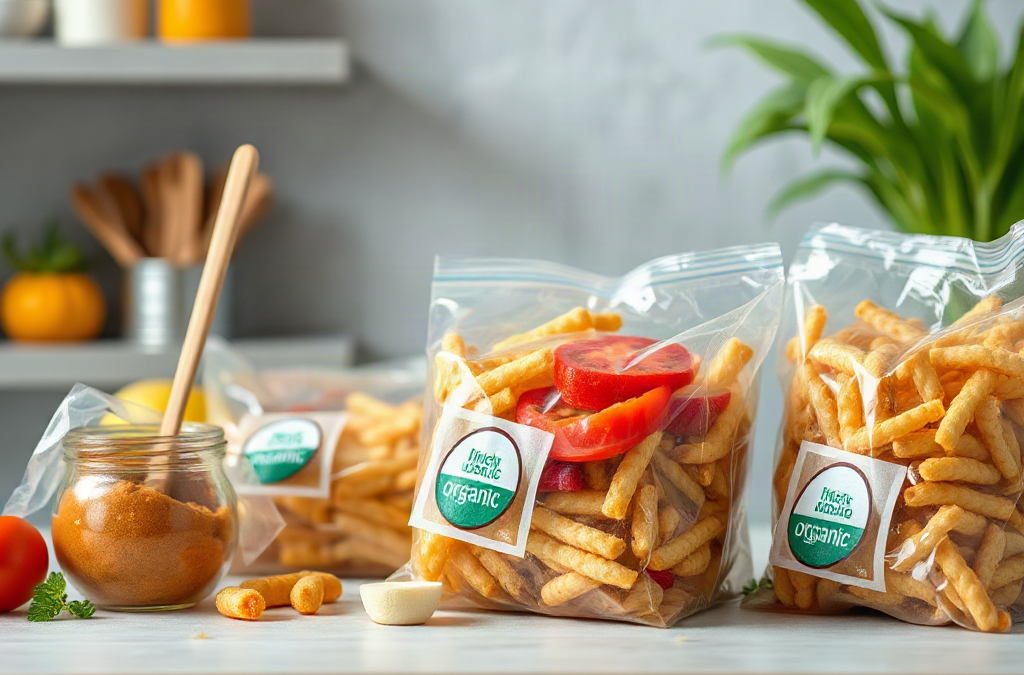
Assess packaged organic convenience foods by examining the ingredient list, food structure, added sugars, sodium, refined oils, flavorings, and the purpose of each processing step. An organic seal describes how qualifying agricultural ingredients were produced; it does not mean a frozen meal, snack bar, or instant soup is minimally processed or nutritionally balanced. Favor products built from recognizable whole-food ingredients, with fiber and protein appropriate to the meal or snack. Compare similar products rather than judging one additive in isolation, and weigh processing alongside portion size, convenience, dietary needs, cost, and how the item fits the rest of the day.
What Does Organic Reveal About Processing?
Organic status and processing level answer different questions. Organic certification concerns how qualifying agricultural ingredients are produced and handled. Processing describes how far a product has been changed from its original food structure and whether it has been formulated from extracted, refined, or modified components. A package can satisfy organic requirements while containing a highly formulated product.

Consider three products made with organic oats: plain rolled oats, granola with oil and sweetener, and a frosted oat snack bar containing oat flour, syrup, oil, flavoring, and an emulsifier. All may use organic ingredients, but they differ in structure, sweetness, formulation, and likely eating pattern. Rolled oats retain an obvious connection to the grain. Granola combines recognizable ingredients but may be energy-dense. The bar has been designed for portability, texture, sweetness, and shelf stability rather than simply preserving oats.
Processing itself is not automatically harmful. Freezing vegetables, pasteurizing milk, cooking beans, grinding nut butter, and canning soup can improve safety, storage, digestibility, or convenience. A frozen organic vegetable blend without sauce may remain close to its starting ingredients despite industrial freezing. By contrast, an organic frozen entrée may combine refined starch, concentrated sauce, cheese, oil, and substantial sodium. The useful question is not whether machinery touched the food, but what the processing changed and why.
Food structure deserves particular attention. Whole beans, intact grains, chopped vegetables, and recognizable pieces generally preserve more of the original food matrix than powders, isolates, syrups, and reconstituted mixtures. That distinction can affect how filling a product feels and how quickly it is eaten, although no single structural feature determines its nutritional value. A puréed vegetable soup, for example, is physically altered but may still be based primarily on vegetables and legumes.
A common mistake is treating the organic seal as a complete health rating. It does not replace the ingredient list, Nutrition Facts panel, allergen statement, or food-safety instructions. Use it for the production attribute it communicates, then conduct a separate processing check. That separation allows an organic frozen meal to be evaluated against another frozen meal rather than receiving an automatic advantage over every non-organic alternative.
How Should You Read the Ingredient List?
Read an ingredient list by identifying the product’s foundation before focusing on unfamiliar terms. Ingredients generally appear in descending order by weight, so the opening items reveal whether a product is built mainly from vegetables, beans, intact grains, dairy, meat, refined flour, sweeteners, or oils. The first several ingredients usually provide more decision value than the total number of entries.
For an organic lentil soup, an opening sequence of lentils, tomatoes, carrots, onions, and water indicates a recognizable meal base. A product marketed as a vegetable bowl may instead begin with white rice, sauce, and oil, with vegetables appearing later. Both can be convenient, but the first is more likely to deliver legumes and vegetables as central ingredients. Marketing language on the front cannot establish that distinction.
Next, look for signs that intact foods have been replaced by refined fractions. Flour, starch, protein isolates, fruit juice concentrate, syrups, and extracted oils may serve legitimate functions, yet a cluster of them suggests a more extensively formulated product. One isolated component is not a reason to reject a food. Organic hummus made with chickpeas, tahini, oil, lemon juice, and salt is processed, but its identity remains clear. An organic snack puff made from multiple starches, oil, seasoning powders, and flavors has less intact-food structure even if every eligible ingredient is organic.
Additives need context rather than blanket approval or rejection. Pectin can thicken a fruit preparation, an antioxidant may protect oil from rancidity, and an emulsifier can keep a sauce stable. Spices and natural flavors may appear under broad names rather than listing every component. The practical issue is whether additives support a food-centered formulation or help construct a product largely from refined components. People with allergies or intolerances should follow relevant labeling and professional advice rather than trying to infer safety from how familiar a name sounds.
Use this compact ingredient check:
- Name the base: Identify the foods represented by the first few ingredients.
- Notice structural loss: Mark prominent flours, starches, isolates, syrups, concentrates, and oils.
- Find repeated sweeteners: Several forms can appear in separate positions rather than as one entry.
- Interpret additives by function: Ask whether they preserve safety and quality or mainly create flavor, color, and texture.
- Check what is missing: A meal may lack vegetables, legumes, protein-rich ingredients, or intact grains despite appealing claims.
Ingredient-list length alone is a weak shortcut. A curry containing vegetables, legumes, herbs, and spices can have a long list without being dominated by refined ingredients. Conversely, a three-ingredient confection made from sugar, oil, and flour is simple on paper but still highly refined. Composition and function are more informative than counting commas.
Which Nutrition Facts Matter Most?
The Nutrition Facts panel shows whether the final formulation suits its intended role. Processing level and nutrient profile overlap, but they are not interchangeable. A minimally formulated product can be high in sodium, while a more processed item may provide useful protein, fiber, or fortified nutrients. Reading both the ingredients and the nutrient panel prevents either measure from carrying too much weight.
Start with serving size and servings per container. A frozen bowl may represent one realistic meal, whereas a pouch or tray may display values for a portion smaller than what most people would eat at once. Compare products only after putting them on the same serving basis. If one soup lists one cup and another lists the full container, comparing the printed numbers directly will distort the choice.
Added sugars and sodium often reveal how convenience and palatability were engineered. Sweeteners may be used in breakfast cups, pasta sauces, plant-based yogurts, snack bars, and drinks that do not taste like desserts. Sodium supports flavor, preservation, and texture in soups, entrées, sauces, and meat alternatives. Neither number should be judged without context: a condiment is eaten differently from a full meal, and someone with a medically prescribed diet may need individualized limits from a qualified clinician.
Fiber and protein help determine whether a convenience item can carry the role advertised for it. An organic grain bowl with brown rice, black beans, and vegetables will generally function more like a meal than a bowl composed mainly of refined rice and sauce. A snack bar with nuts, seeds, and oats may offer more staying power than a bar based on syrup and crisped starch. Protein quantity alone can mislead, however, when it comes mainly from an isolate added to a product otherwise low in whole-food ingredients.
| Check | What It Can Reveal | Interpretation Limit |
|---|---|---|
| Serving size | The amount used for listed nutrient values | It may not match the portion actually eaten |
| Added sugars | Sweeteners introduced during formulation | Does not describe all carbohydrate quality |
| Sodium | Salt and sodium-containing ingredients | Needs meal and medical context |
| Fiber | Contribution from plants or added fibers | Added fiber does not recreate intact food structure |
| Protein | Potential meal or snack substance | Does not identify ingredient quality by itself |
The usual failure mode is selecting one favorable number and ignoring the rest of the product. “High protein” does not neutralize concentrated sweeteners, and “no added sugar” does not guarantee adequate fiber or a satisfying meal. Decide what job the product must perform, then assess the group of values most relevant to that job.
A Practical Product Comparison Method
Compare convenience foods within the same use case rather than ranking every package on one universal scale. A shelf-stable snack for travel has different constraints from a frozen dinner eaten at home. Portability, refrigeration, preparation time, allergies, appetite, price, and access can justify more processing when the alternative is skipping a meal or relying on something less suitable.
Begin by defining the role: complete meal, side dish, snack, beverage, or emergency backup. A complete meal usually needs more substance and variety than a snack. If an organic frozen pasta entrée contains mostly refined pasta and sauce, adding frozen vegetables and beans may make it more useful. That does not change the package’s processing level, but it improves the eating occasion without requiring a perfect ready-made product.
Then compare two or three direct alternatives using the same sequence. Check the first ingredients, structural integrity, added sugars, sodium, fiber, protein, and realistic portion. Note why each processing step appears to be present. Frozen vegetables are processed mainly for preservation; instant flavored oatmeal may combine milling, precooking, sweetening, flavoring, and portion packaging. The latter offers speed but may trade away texture and control over sweetness.
Budget also changes the decision. A plain organic grain pouch paired with canned beans and frozen vegetables may cost less per meal than a premium formulated bowl, though it requires assembly and seasoning. An individual snack pack may reduce waste and help with portioning but cost more than a larger package. Processing checks should clarify these tradeoffs rather than produce a rigid pass-or-fail label.
Signs that the comparison is working include choosing products whose ingredients match their front-label identity, obtaining enough substance for the intended meal, and using packages as convenient components rather than automatic replacements for all cooking. Warning signs include buying foods mainly because of organic imagery, repeatedly feeling hungry soon after a supposed meal, overlooking multiple servings per container, or consuming most vegetables and grains only as powders, crisps, or sweetened formulations.
A sensible final choice may not be the least processed option. Someone traveling without refrigeration may reasonably choose an organic shelf-stable bean pouch, nut bar, or boxed soup. At home, plain frozen vegetables, cooked grains, eggs, yogurt, beans, or minimally seasoned proteins may provide more flexibility. Prioritize the least-refined option that remains affordable, safe, practical, and likely to be eaten.
Frequently Asked Questions
Does an organic label mean a packaged food is minimally processed?
No. Organic labeling addresses qualifying production and handling requirements, not the degree of physical or industrial processing. Organic cookies, frozen dinners, and snack bars can still contain refined flours, concentrated sweeteners, oils, flavors, and numerous formulated ingredients.
Is a long ingredient list always a sign of heavy processing?
Not necessarily. A soup may list many vegetables, herbs, and spices, while a short-list product can still be mostly refined starch, oil, and sugar. Judge the identity and function of ingredients, not the count alone.
Are all food additives nutritionally undesirable?
No. Some additives maintain safety, texture, stability, or nutrient content. Consider what an additive does, how prominent it is in the formulation, and whether the product remains useful nutritionally rather than rejecting every unfamiliar name.
What should I compare between two organic convenience foods?
Compare equivalent serving sizes, ingredient structure, added sugars, sodium, fiber, protein, saturated fat, and intended use. The better choice is the one that fits the same meal or snack role with fewer nutritional compromises.
Can a highly processed organic food still fit a balanced diet?
Yes. Frequency, portion, meal context, and dietary needs matter. A formulated product may provide practical value during travel or a demanding day, but it should not automatically displace less-refined foods that supply greater variety and structure.
Conclusion
Treat organic certification as one product attribute, then evaluate processing on its own evidence. Start with the first ingredients, identify whether the package contains intact foods or mainly refined fractions, and use the Nutrition Facts panel to test whether it performs as a meal, side, or snack. Serving size, added sugars, sodium, fiber, and protein are most useful when compared across genuinely similar products.
Do not reject freezing, canning, grinding, or stabilizing automatically; those processes can improve safety and practicality. Be more cautious when refinement, sweeteners, oils, flavor systems, and texture agents replace much of the original food. On the next shopping trip, compare two products intended for the same occasion and choose the option that preserves recognizable ingredients without creating an unrealistic burden on time, budget, storage, or dietary needs.
For official background, consult the USDA resources explaining organic labeling and the FDA materials covering ingredient lists, serving sizes, added sugars, sodium, and other elements of the Nutrition Facts label. These resources clarify what package labels do and do not establish, allowing processing judgments to remain separate from certification and nutrient claims.
Huge Discount on the Best Certified Organic Nutrient Dense Supplement!

Related Content
- The Natural Nutrition Shift: Key Foods and Practices for Sustainable Health
- Organic Tahini Uses In Balanced Meals: Sauces, Breakfasts, And Plant-Protein Pairings
- The Impact of Organic Nutrition on Mental Health
- How to Incorporate Nutrient Dense Foods into Your Meals
- Discovering the Superiority of Natural Choices: Why Organic Nutrition Outperforms Synthetic


