
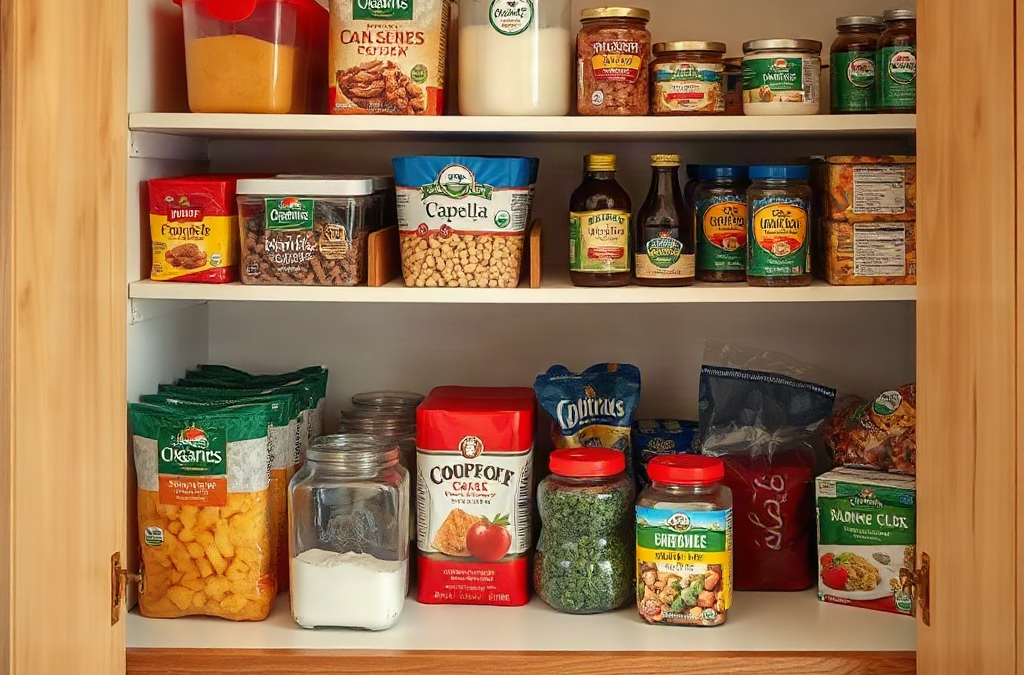
A practical home pantry rotation system for organic staples uses three zones: everyday stock, reserve packages, and use-first items nearing their quality date. Record purchase or opening dates, place older packages ahead of newer ones, and inspect grains, flours, nuts, oils, beans, and dried fruit for moisture, pests, damaged seals, or rancid odors before use. Match purchase quantities to actual household consumption rather than filling containers automatically. Organic certification does not determine shelf life, so packaging condition, ingredient composition, temperature, light, humidity, and how quickly an opened food is used remain the decisive controls.
How Does the Three-Zone Pantry System Work?
A three-zone pantry assigns every staple a role based on when it should be used, rather than arranging food only by package size or appearance. The active zone holds opened containers and the next packages expected to enter meals. The reserve zone holds unopened replacements. The use-first zone collects sound products that need prompt attention because they are older, already open, or vulnerable to quality loss.

Physical separation makes rotation easier to follow at the moment food is selected. Without defined zones, a newly purchased bag of organic brown rice may be placed in front of an older bag, while half-used lentils disappear behind tall containers. The household then consumes the most visible package rather than the one that should be used first. A dedicated use-first shelf, tray, or basket turns age and condition into a visible cue.
The system does not require a large walk-in pantry. In a single cabinet, the front row can serve as the active zone, the back row as reserve stock, and a small bin as the use-first area. Deep shelves benefit from pull-out baskets because packages at the back otherwise become difficult to inspect. In an open pantry, zones can be separated by shelf: active items near eye level, use-first products immediately below, and reserves higher or lower according to weight and access.
A compact setup can follow these priorities:
- Active: opened foods and one working package of frequently used staples.
- Reserve: sealed replacements arranged with the oldest acquisition at the front.
- Use first: older, opened, or quality-sensitive products that remain suitable to eat.
“First in, first out” is useful, but condition can override purchase order. A newer package with a weak seal, a dented closure, or evidence of moisture deserves attention before an older intact package. The use-first area should never become a holding place for questionable food. Bulging containers, active mold, insect activity within food, wet packaging, or distinctly rancid odors call for evaluation and likely disposal, not expedited meal planning.
The clearest sign that the system is working is turnover: active containers empty, reserve packages move forward, and the use-first area changes from week to week. If the same products remain there through several checks, the household is buying foods it does not use, storing too much, or lacking realistic meal applications. Correct the purchase pattern before adding more labels or containers.
Which Dates Belong on Pantry Staples?
Useful pantry dating distinguishes what the manufacturer printed from what happened inside the home. Keep the original best-if-used-by or similar quality date visible, then add the purchase month to slow-moving reserves and the opening date to foods that change appreciably after exposure to air. Repackaged staples should also carry the product name and any original date or lot information worth retaining.
Package dates do not all communicate the same thing, and a quality date should not automatically be treated as a safety deadline. Shelf-stable foods still require judgment based on package integrity, storage history, appearance, odor, and the characteristics of the product. Conversely, a future printed date does not make food acceptable when the package is leaking, wet, infested, or otherwise compromised.
Opening dates are especially helpful for organic whole-grain flour, brown rice, nuts, seeds, nut butter, and cooking oils. These contain fats that can oxidize, producing stale, paint-like, bitter, or rancid aromas and flavors. Refined white rice, dry beans, and granulated sugar generally behave differently because their limiting quality factors are not identical. Applying one universal pantry deadline ignores these differences and may encourage either premature disposal or overconfidence.
| Label | Use It For | Decision It Supports |
|---|---|---|
| Original package date | All packaged staples | Comparing manufacturer-indicated quality order |
| Purchase month | Reserve stock and bulk purchases | Identifying inventory that has remained unused |
| Opened date | Oils, whole grains, flours, nuts, seeds, and dried fruit | Prioritizing foods exposed to air and handling |
| Repackaged date | Food transferred from its retail package | Preserving traceability and rotation order |
Use a format that cannot be misread, such as “Opened 12 Sep 2026,” rather than a purely numeric date. A removable label on the lid works for reusable containers, although the name and date should remain with the food if lids are interchangeable. Writing only on a lid creates an avoidable mix-up when several jars look similar.
Over-labeling can make the system harder to maintain. Fast-moving oats emptied every two weeks may need only an opening date or no added date when the original package remains attached. A rarely used specialty flour deserves more detail. The practical goal is to record information that changes a decision. If no one consults a field, remove it and keep the labels legible enough to use while cooking.
How Should Different Organic Staples Be Stored?
Storage should follow the food’s exposure risks, not the organic seal on its package. Organic certification addresses how qualifying agricultural products are produced and handled; it does not make a staple uniformly more perishable or exempt it from moisture, oxygen, heat, light, and pantry pests. Ingredient composition and packaging remain more useful rotation signals.
Dry beans, white rice, pasta, rolled oats, and similar low-moisture staples need a cool, dry location in sound packaging or clean food-grade containers. Airtight containers can limit humidity exposure and contain a pest problem if one develops, but transferring food is not automatically better. An intact retail package preserves product identification, preparation directions, allergen information, and lot details. A sensible compromise is to place unopened bags inside a larger sealed bin, then transfer only the active package when necessary.
Whole grains and whole-grain flours contain more oil-bearing components than highly refined alternatives. Heat and oxygen therefore matter more to their flavor over time. If a household uses organic whole-wheat flour slowly, keeping a small working quantity in the pantry and a tightly wrapped reserve in the refrigerator or freezer may be more practical than buying a large pantry container. Cold storage should protect food from moisture and odors, and the container should remain closed while warming enough to avoid condensation on the contents.
Nuts, seeds, natural nut butters, and unrefined oils also deserve smaller purchase quantities when turnover is low. A large bottle may have a lower unit price yet cost more per usable serving if its flavor deteriorates before it is finished. Store oils away from the stove, dishwasher, sunny windows, and other warm locations. Refrigeration suitability varies by product and may cause harmless cloudiness or thickening, so follow the package directions where provided.
Dried fruit can become sticky or absorb moisture after opening, while sugar and salt may clump without necessarily becoming unsafe. Spices gradually lose aroma and potency, making sensory quality the main rotation issue. Canned staples require dry storage and periodic checks for leakage, severe rust, swelling, or damaged seams. Do not taste food from a suspicious container to decide whether it is acceptable.
A common failure is purchasing matching jars before measuring actual consumption. Containers improve visibility only when they fit the food, shelf depth, and refill pattern. Begin with the original packages and a few bins; add food-grade containers where they solve a defined problem such as open bags, pest containment, or awkward stacking.
What Rotation Routine Prevents Forgotten Food?
A workable rotation routine connects three moments: putting groceries away, choosing meals, and performing a brief shelf check. Rotation fails when it is treated as a separate organizing project that occurs only after clutter becomes obvious. Small actions attached to normal kitchen work require less effort and reveal purchasing errors sooner.
When groceries arrive, inspect packaging before storage, mark dates where useful, and place new reserves behind older intact stock. Do not top up a container by pouring new food over old remnants. Mixing batches hides age, makes cleaning difficult, and may spread a pest or moisture problem through the fresh purchase. Empty and inspect the container first; wash it when needed and allow it to dry completely before refilling.
Before planning meals or making a shopping list, scan the active and use-first zones. An opened bag of quinoa, aging walnuts, and two cans of tomatoes can become specific meal prompts rather than vague inventory. Quinoa might replace a planned grain side, walnuts can be added to oatmeal or salad, and the tomatoes can anchor a bean dish. The aim is not to create unusual meals merely to clear shelves; it is to substitute compatible staples before purchasing duplicates.
A compact pantry check should cover:
- Packages with broken seals, holes, moisture, leaks, swelling, or severe corrosion
- Webbing, larvae, insects, or unexplained powder around grains and flour
- Opened fats, nuts, seeds, and whole grains with stale or rancid odors
- Duplicate reserves that exceed the household’s likely use
- Empty spaces or low active stock that genuinely need replenishment
The appropriate check frequency depends on shopping habits and storage conditions. A household buying groceries weekly can perform a short scan before each list and a deeper shelf cleaning periodically. A pantry in a warm, humid setting or a home that buys bulk grains deserves closer observation than a cool cabinet holding only small packages. Precision matters less than linking the review to a recurring event.
Track only enough information to change buying behavior. A paper list taped inside the door works well for reserve staples; a shared phone note can suit households with multiple shoppers. Record package counts rather than exact weights unless bulk stock makes quantities hard to judge. If inventory records repeatedly disagree with the shelves, simplify the categories instead of demanding more data entry.
Success appears as fewer duplicate purchases, steady movement from reserve to active storage, and less food discarded for quality problems. Warning signs include crowded shelves, containers without identities, use-first items that never enter meals, or repeated pest activity. Persistent insects require removal of affected foods, inspection of nearby packages, thorough cleaning, and correction of the access point; simply moving infested goods to another shelf spreads the problem.
Conclusion
Effective rotation comes from making age, condition, and intended use visible at the moment someone reaches for food. Assign a small active area, keep unopened replacements together, and reserve a clearly marked space for sound products that deserve priority. Add opening or purchase dates only where they inform a real choice, especially for whole grains, flours, nuts, seeds, oils, and slow-moving bulk goods.
Start by sorting one shelf rather than buying a complete set of containers. Remove questionable packages, identify duplicates, and plan meals around usable open stock before shopping again. During the next grocery cycle, place incoming reserves behind older intact packages and avoid combining batches without emptying and inspecting the container. If products remain untouched in the use-first zone, reduce future quantities or stop treating them as pantry staples. A successful system is measured by predictable turnover and fewer preventable losses, not by uniform jars.
Frequently Asked Questions
Does organic food need a different pantry rotation schedule?
Not solely because it is organic. Base rotation on the ingredient, fat content, packaging, opening date, storage conditions, and how quickly the household uses it.
Should new staples always go behind older packages?
Usually, provided the older package is intact. A newer item with damaged packaging or an earlier quality date may need to move into the use-first zone instead.
Is it better to transfer every staple into a jar?
No. Transfer open or awkward packages when a food-grade container improves sealing and visibility, but retain product names, dates, allergen details, and cooking instructions.
What should go in the use-first zone?
Place acceptable but older products, opened quality-sensitive staples, and packages with near-term quality dates there. Exclude leaking, moldy, infested, swollen, or rancid food.
How can a small pantry use three zones?
Use shelf depth rather than separate shelves: active products in front, reserves behind them, and a small labeled tray for use-first items.
Further Reading
Huge Discount on the Best Certified Organic Nutrient Dense Supplement!



