
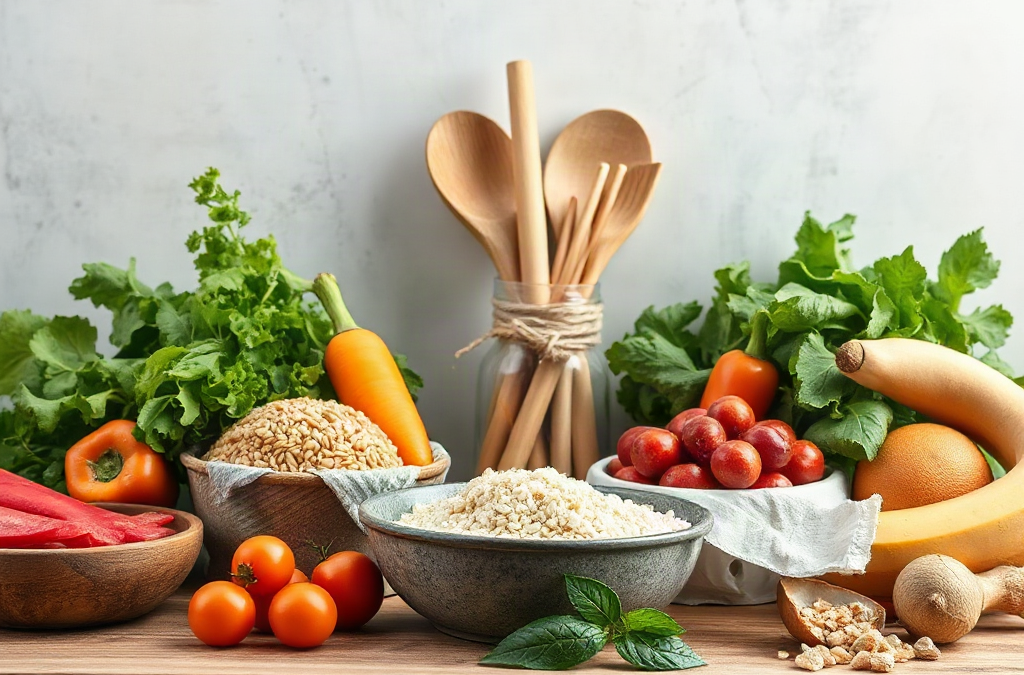
Essential organic ingredients for balanced cooking include vegetables and fruit, whole grains, beans or other protein foods, unsaturated fats, and flavor-building staples chosen with certified-organic labeling where it matters to you. Balance comes from combining fiber-rich carbohydrates, protein, fat, and varied produce rather than relying on any single premium ingredient. Stock versatile foods such as oats, brown rice, lentils, canned tomatoes, leafy greens, seeds, and olive oil, then buy perishables in realistic amounts. Check packaged foods for added sodium and sugar, because an organic claim does not make a highly processed product nutritionally complete.
What Belongs in a Balanced Organic Kitchen?
A useful organic kitchen contains complementary ingredient groups, not a collection of expensive specialty products. Vegetables and fruit provide color, texture, fiber, and a broad range of vitamins and minerals. Whole grains and starchy vegetables supply substantial carbohydrates, while beans, lentils, eggs, dairy products, tofu, fish, poultry, meat, nuts, and seeds can contribute protein. Oils, nuts, seeds, avocado, and similar foods add fat, which affects flavor, fullness, and cooking performance.

The word organic describes a production and certification system; it does not describe the complete nutritional quality of a meal. Organic cookies, sweetened cereals, and salty snack foods may still be rich in refined flour, added sugar, or sodium. Conversely, a simple dish of brown rice, black beans, cabbage, and salsa can provide more useful meal structure than a collection of organic packaged snacks. The entire combination matters more than one claim on the front of a package.
For everyday cooking, select ingredients that can cross meal boundaries. Rolled oats can become breakfast porridge, a savory grain bowl base, or a binder in patties. Lentils work in soup, salad, curry, or a pasta sauce. Frozen peas can join fried rice, stew, or a quick side dish without creating pressure to use them immediately. These flexible staples make balanced meals easier when schedules or appetites change.
A compact foundation might include brown rice or oats, lentils or beans, canned tomatoes, two frozen vegetables, sturdy fresh produce, eggs or tofu, plain yogurt or an unsweetened alternative, olive or another suitable cooking oil, nuts or seeds, and several herbs and spices. Dietary needs will change the details. Someone avoiding dairy might choose calcium-fortified alternatives, while a person limiting sodium may favor no-salt-added beans and tomatoes. People with allergies, gastrointestinal conditions, kidney disease, or other medical needs may require individualized guidance from a qualified clinician.
The common failure is treating variety as a requirement to buy many foods at once. Variety can develop across a week rather than appearing in every dish. Begin with a small set that you reliably cook, then rotate the vegetables, grain, protein source, and seasoning profile. A kitchen is functioning well when most ingredients find more than one use and ordinary meals include several food groups without elaborate preparation.
How Do You Build Meals by Ingredient Function?
Build a meal by assigning each ingredient a job: produce for volume and variety, a protein source, a substantial carbohydrate, a source of fat, and seasonings that make the combination satisfying. This functional approach is more dependable than memorizing recipes because it works with substitutions. If quinoa is unavailable, brown rice, barley, potatoes, or whole-grain pasta can fill the carbohydrate role; they are not nutritionally identical, but they can perform a similar meal-building function.
Consider a weeknight grain bowl. Brown rice supplies the base, lentils add protein and fiber, roasted broccoli and carrots increase vegetable variety, and tahini contributes fat and a creamy texture. Lemon, garlic, cumin, and parsley provide acidity and aroma. The same structure can become a soup by replacing the tahini dressing with a tomato-based broth, or a wrap by reducing moisture and placing the filling in a whole-grain tortilla.
Cooking method changes how well these ingredients work together. Dry heat concentrates sweetness in carrots, squash, onions, and cauliflower, while simmering softens beans, grains, and tougher greens. A small amount of oil improves browning and carries fat-soluble flavors from spices. Acid added near the end—such as lemon juice or vinegar—can brighten a dish that tastes dull without requiring excessive salt. Fresh herbs are useful but perishable; dried herbs and spices offer a practical backup.
A simple sequence keeps the process manageable:
- Choose the anchor. Start with beans, lentils, eggs, tofu, fish, poultry, or another protein food appropriate to your diet.
- Add a substantial base. Use a whole grain or starchy vegetable in an amount suited to appetite and energy needs.
- Include produce. Combine one sturdy vegetable with a fresh, frozen, or canned option for convenience.
- Finish for flavor. Add oil, nuts, seeds, yogurt, herbs, spices, citrus, or vinegar as the dish requires.
Do not assume every meal must fit a rigid visual formula. Soup, pasta, casseroles, and mixed dishes hide their components, but they can still include the same functions. Signs the method is working include ingredients being used before they spoil, meals feeling substantial, and substitutions being easy. If dinners repeatedly leave people hungry, check whether protein, a substantial carbohydrate, or fat is too limited. If vegetables remain untouched, preparation and seasoning may need attention rather than simply buying more.
Which Organic Labels Deserve Attention?
Certified-organic labeling is most informative when it identifies how an agricultural ingredient was produced under an established standard. In the United States, the USDA organic program defines labeling categories and oversees certification requirements. A certified seal is different from loose marketing terms such as “natural,” which do not communicate the same production standard. Shoppers who value organic production should look beyond green packaging and read the actual certification language.
Label interpretation becomes more important with multi-ingredient products. A package may feature organic ingredients prominently while still containing refined starches, concentrated sweeteners, substantial sodium, or a long list of additives. The organic status and the nutrition profile answer different questions: one concerns production standards, while the other concerns what the food contributes to the diet. Check the ingredient list, serving context, sodium, added sugars, and the presence of whole-food components rather than letting one front-label claim settle the decision.
Plain foods make comparisons easier. Organic rolled oats contain one recognizable ingredient, while flavored instant oatmeal may include sweeteners and flavorings. Organic dried beans are similarly straightforward, whereas prepared bean dishes can vary widely in sodium and sauces. Convenience is not inherently a poor choice. Low-sodium canned beans, frozen vegetables without heavy sauces, and canned tomatoes can shorten cooking time while retaining the core ingredient’s usefulness.
Organic purchasing also involves tradeoffs. Availability, price, transportation, seasonality, and household waste all affect the practical value of a choice. Buying a large organic salad mix that spoils is not necessarily more useful than buying a smaller amount or selecting conventional produce that will actually be eaten. Organic and conventional foods can coexist in a balanced kitchen when budget or access requires it; washing produce and following ordinary food-safety practices remain relevant either way.
A frequent mistake is assuming organic certification guarantees superior nutrient content, perfect sustainability, local origin, or minimal processing. Those characteristics should be evaluated separately. Prioritize certification when the production method aligns with your values and the price is workable, but judge nutritional fit from the food itself. For packaged staples, a short ingredient list and a format suited to your meals generally offer more decision value than decorative claims.
How Can You Stock Organic Ingredients Without Waste?
Stocking succeeds when purchase quantities match storage space, cooking frequency, and the number of people eating. Organic perishables do not become economical merely because they are bought in bulk. Begin with shelf-stable and frozen foundations, then add fresh items that have a clear role in upcoming meals. Rice, oats, pasta, dried or canned beans, canned tomatoes, nut or seed butter, frozen vegetables, and dried spices create flexibility without a short deadline.
Fresh produce should be divided by durability. Cabbage, carrots, onions, apples, winter squash, and similar sturdy foods usually tolerate schedule changes better than delicate greens, berries, or herbs. Buy fragile items for the first meals after shopping and reserve durable or frozen produce for later. If spinach is planned for Monday but dinner changes, it can be folded into eggs, soup, pasta, or a lentil dish before it deteriorates.
Use a priority check before shopping:
- Use first: note opened packages and produce approaching the end of its useful life.
- Fill missing roles: buy only the grain, protein food, produce, fat, or seasoning needed to complete planned meals.
- Check storage: leave enough refrigerator and freezer room to preserve what you purchase.
- Compare usable cost: account for trimming, spoilage risk, and whether the ingredient will serve multiple dishes.
Batch preparation is valuable when it preserves options. A pot of plain lentils can become soup one night and a seasoned salad the next; heavily seasoning the entire batch may reduce flexibility. Cooked grains can be portioned promptly and refrigerated or frozen using sound food-safety practices. Sauces should often remain separate so vegetables and grains retain better texture.
Signs of overbuying include repeatedly discarding greens, accumulating duplicate grains, or purchasing ingredients for recipes that require many additional items. Correct the pattern by reducing variety per shopping trip, not by abandoning balanced cooking. One grain, one bean, two or three vegetables, one flexible protein, and a dependable sauce can produce several distinct meals when seasonings change. A pantry is failing when it looks abundant but cannot assemble dinner; it is working when a limited selection combines easily and replenishment needs are obvious.
Conclusion
A dependable organic kitchen is built around ingredient roles rather than an oversized shopping list. Keep a few whole grains, beans or other protein foods, vegetables in fresh and frozen forms, useful fats, and strong seasonings available. Let certification guide production-related choices, then use ingredient and nutrition labels to assess packaged foods separately.
For the next shopping trip, inventory what you already have and identify the one or two missing components that would turn those foods into meals. Buy fragile produce only for near-term plans, choose durable staples for schedule changes, and favor ingredients that work in several dishes. If food is regularly wasted or meals feel incomplete, adjust quantities and meal structure before adding more products. Balanced cooking should make the kitchen easier to use, not more complicated.
Frequently Asked Questions
Do all ingredients need to be organic for a balanced meal?
No. Nutritional balance depends on the combination of food groups and the overall eating pattern. Choose certified-organic options according to your values, access, and budget, while continuing to include produce, protein foods, substantial carbohydrates, and appropriate fats.
Which organic pantry staples are the most versatile?
Oats, brown rice, lentils, beans, canned tomatoes, frozen vegetables, nuts or seeds, and cooking oil cover many meal functions. Select the foods your household already enjoys so that versatility translates into actual use.
Are frozen organic vegetables a good option?
Yes. Plain frozen vegetables are convenient, reduce spoilage pressure, and can be added directly to soups, grain dishes, pasta, and stir-fries. Compare sauces and sodium when buying seasoned versions.
Does an organic label mean a packaged food is healthy?
No. Organic certification concerns production and handling standards, not whether a product is low in added sugar, sodium, or refined ingredients. Review the ingredient list and nutrition information alongside the organic claim.
How can I make organic cooking more affordable?
Emphasize dried beans, lentils, oats, seasonal produce, and store-brand frozen foods; compare prices by usable quantity; and avoid bulk perishables unless you can store or finish them. Mixing organic and conventional purchases is a practical option.
Additional Resources
Authoritative Sources
- A Comprehensive Analysis of Organic Food - PMC - NIH
pmc.ncbi.nlm.nih.govBy A Rahman · 2024 · Cited by 88 — The most essential minerals are calcium, magnesium, potassium, iron, zinc, copper, manganese, selenium and iodine [40]. Studies have shown that ... Read more