
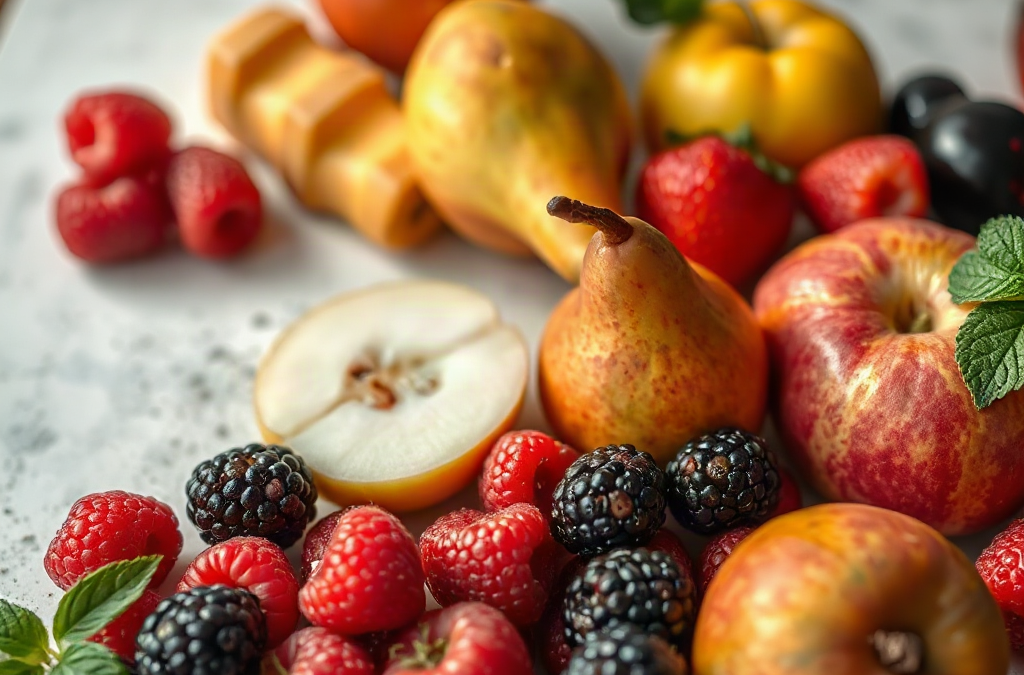
Organic fruit choices for higher fiber intake should emphasize whole raspberries, blackberries, pears, apples, guava, passion fruit, oranges, kiwi, and avocado rather than juice or peeled fruit. Seeds, edible skins, and intact pulp supply much of the fiber, while juicing removes most of the structure that makes fruit filling. Organic certification addresses how fruit is produced, not whether it contains more fiber, so variety, ripeness, edible portions, price, and waste still matter. Increase fiber gradually, drink adequate fluids, and use frozen organic berries or seasonal fruit when fresh options are costly or likely to spoil.
Which Organic Fruits Offer More Fiber?
Fruit with edible seeds, skins, membranes, or dense pulp generally delivers more fiber than watery fruit without those structures. Fiber content still varies by variety, size, ripeness, and serving, so a large piece of fruit should not automatically be treated as nutritionally equivalent to a small one. The useful comparison is the amount of intact fruit you will realistically eat, not which package carries the most appealing health language.

Raspberries and blackberries are strong choices because their numerous seeds and clustered structure are eaten rather than discarded. They fit oatmeal, plain yogurt, or a snack bowl without peeling or chopping. Frozen organic berries are especially practical when fresh berries spoil before the container is finished. Check that the ingredient list contains fruit without syrups or added sweeteners.
Pears and apples contribute fiber through both flesh and edible peel. A whole pear or apple is therefore more useful for this purpose than peeled slices, strained applesauce, or juice. Wash the surface under running water before eating; organic status does not remove the need for normal produce handling. If the peel is difficult to tolerate, eating peeled fruit remains reasonable, but another food may be needed to replace some of the fiber that was removed.
Guava, passion fruit, kiwi, oranges, and avocado broaden the choices beyond familiar snack fruit. Guava has edible flesh and seeds, passion fruit is eaten with its seed-filled pulp, and kiwi can be eaten with its washed skin if the texture is acceptable. Whole oranges retain fibrous membranes that orange juice largely leaves behind. Avocado is botanically a fruit and offers fiber in a savory form, although its higher energy density makes it different from berries or citrus in meal planning.
| Fruit | Fiber-relevant structure | Practical use |
|---|---|---|
| Raspberries and blackberries | Edible seeds and clustered flesh | Fresh or unsweetened frozen |
| Pears and apples | Edible peel and firm flesh | Whole snack or chopped into oats |
| Guava and passion fruit | Seed-rich pulp | Sliced guava or spooned passion-fruit pulp |
| Orange and kiwi | Membranes, pulp, and optional kiwi skin | Eat whole rather than juiced |
| Avocado | Dense, fiber-containing flesh | Add to toast, salads, or beans |
A common mistake is choosing only dried fruit because it appears concentrated. Dried fruit can contribute fiber, but its smaller volume makes portions easy to underestimate, and some products contain added sugar. Whole fresh or frozen fruit is usually easier to use as the foundation, with unsweetened dried fruit serving as a compact addition rather than the default.
Why Does Whole-Fruit Form Matter?
Processing changes the physical parts of fruit that reach the plate. The peel, seeds, pulp, and membranes contain varying amounts of dietary fiber, while juice extraction separates liquid from much of that material. A bottle labeled organic may meet organic production requirements, yet it does not regain fiber removed during juicing. Organic and high-fiber describe different attributes and should not be treated as interchangeable claims.
Whole fruit also requires chewing and retains more of its natural volume. Those features can make a serving more satisfying than drinking the same fruit as juice, although individual appetite responses differ. A practical comparison is an orange with its membranes versus a glass of orange juice: the whole orange preserves the structure, while juice is easy to consume quickly and may represent several pieces of fruit.
Smoothies occupy a middle ground. Blending generally retains the fruit solids if nothing is strained out, so it differs from extracting juice. Even so, a blended drink can combine several servings that would be difficult to eat whole, and sweeteners, sweetened yogurt, or juice bases can change the final drink substantially. Use whole fruit, keep the pulp, avoid straining, and consider whether the mixture functions as a meal component or an unnoticed beverage.
Preparation decisions matter at home as well. Peeling every apple, discarding kiwi skin, or pressing berries through a fine sieve removes edible plant material. That does not make the remaining fruit worthless; it simply changes the fiber contribution. Texture preferences, swallowing limitations, gastrointestinal conditions, and dental concerns may make softer or peeled fruit more suitable for some people. In those circumstances, cooked pears, unsweetened applesauce with retained pulp, or blended berries may be more workable than insisting on tough skins.
Ripeness creates another tradeoff. Very firm fruit may be unpleasant, while overripe fruit can spoil before use. Buy a mix of ready-to-eat and firmer pieces, then refrigerate them as they ripen when appropriate. Signs that the approach is working include less discarded produce and regular use of whole fruit in meals. Repeatedly throwing away delicate berries or relying on juice because preparation feels inconvenient signals that frozen fruit or sturdier apples and pears would be a better fit.
How Should You Choose for Budget and Convenience?
The best purchase is the organic fruit that fits both the household budget and the way the fruit will actually be eaten. Paying more for a fragile item that spoils unopened does not improve intake. Compare usable portions, storage life, preparation time, and whether family members accept the texture. Organic certification concerns production and handling standards; it should not be assumed to make one apple, berry, or orange inherently richer in fiber than its conventionally grown counterpart.
Fresh berries are convenient but perishable. Frozen organic raspberries or blackberries can reduce waste because only the needed amount is removed from the package. They soften after thawing, which works well in oats, yogurt, or cooked fruit but may disappoint someone expecting the firmness of fresh berries. Choose fresh for eating out of hand and frozen for mixed dishes where texture matters less.
Apples, pears, oranges, and kiwi are often easier to pack and store than delicate fruit. They also require little equipment. Pears need some timing because they may be sold firm and then ripen quickly; checking them daily prevents the common cycle of eating them underripe or losing them to spoilage. Oranges travel well but require peeling, while kiwi can be halved and scooped with a spoon if eating the skin is unappealing.
Less familiar choices deserve a trial purchase rather than a large commitment. Buy one or two guavas or passion fruits, confirm how they ripen, and test them in a familiar meal. Passion fruit may be flavorful but expensive for the amount of pulp provided. Avocado works well in savory dishes, yet its ripening window and higher calorie density can make it a poor substitute for a large bowl of berries when volume is the priority.
Use a short buying check before placing fruit in the cart:
- Form: Prefer whole, frozen without additions, or canned fruit packed without heavy syrup.
- Edible structure: Look for fruit whose peel, seeds, membranes, or pulp will actually be eaten.
- Storage: Match quantity to shelf life and available freezer space.
- Label: Distinguish organic certification from fiber content and added-sugar claims.
- Cost per usable serving: Account for peels, pits, spoilage, and discarded portions.
A common failure is treating organic purchasing as an all-or-nothing requirement. If a fully organic basket exceeds the food budget, prioritize a varied pattern of whole fruit rather than replacing affordable fruit with organic juice, snack bars, or sweetened dried products. Fiber intake depends more directly on the edible plant material consumed than on the production label alone.
Building a Higher-Fiber Fruit Routine
A sustainable routine adds whole fruit to eating occasions that already happen. Pairing berries with breakfast, keeping apples near a work bag, or adding avocado and orange segments to a lunch is usually easier than creating an entirely new meal. The aim is not to force all fiber into one sitting but to distribute fiber-containing foods across the day alongside vegetables, legumes, whole grains, nuts, and seeds.
Begin with one practical substitution. Replace a morning glass of fruit juice with a whole orange, add frozen blackberries to oatmeal instead of relying on a flavored packet, or choose a pear rather than a low-fiber dessert on some days. Each change preserves more fruit structure without requiring elaborate preparation. A fruit-only strategy, however, can become expensive and unnecessarily narrow; beans, lentils, and whole grains can complement fruit and make higher-fiber eating more economical.
Increase intake gradually if the current diet contains little fiber. A sudden jump from juice and refined snacks to several servings of berries, pears, and seed-rich fruit may lead to gas, bloating, or changes in bowel habits. Adequate fluid intake is relevant as fiber rises, but individual needs vary. Anyone managing a gastrointestinal disorder, swallowing difficulty, medically prescribed diet, or persistent digestive symptoms should seek individualized advice from a qualified healthcare professional rather than using a general fruit list as treatment.
Track behavior rather than chasing a supposedly perfect fruit. A simple weekly pattern might use frozen berries on several mornings, apples or pears for portable snacks, citrus with lunch, and avocado in a savory meal. Guava, passion fruit, or kiwi can rotate in when available and affordable. Variety changes the mix of flavors, textures, and nutrients while reducing dependence on one perishable product.
Check the routine after a week or two. Fruit should be getting eaten before it spoils, whole forms should be replacing at least some juice or highly refined snacks, and digestive comfort should remain manageable. If produce accumulates, buy fewer varieties or shift to frozen berries. If skins or seeds cause discomfort, reduce the portion, use softer preparations, or choose a different fiber source. The common mistake is increasing quantity without considering tolerance, fluid, total diet, or food waste; a smaller repeatable change is more useful than an ambitious basket that goes unused.
Conclusion
Prioritize fruit whose edible seeds, peel, membranes, and pulp remain intact, then choose the form that fits your budget and routine. Berries, pears, apples, guava, passion fruit, oranges, kiwi, and avocado offer distinct textures and uses, but none needs to appear every day. Fresh produce works well when it will be eaten promptly; frozen berries provide a lower-waste alternative for oatmeal, yogurt, and blended preparations.
Treat the organic label as information about production rather than proof of higher fiber. Start by replacing one juice or refined snack with whole fruit, increase fiber gradually, and monitor comfort and waste. If a purchase repeatedly spoils or a peel is poorly tolerated, change the fruit or preparation instead of abandoning the goal. A varied, repeatable pattern matters more than finding a single ideal choice.
Frequently Asked Questions
Does organic fruit contain more fiber than conventional fruit?
Organic certification describes production and handling practices, not a guaranteed fiber advantage. Fruit type, edible portion, serving size, and processing are more useful for comparing fiber.
Is frozen organic fruit a good high-fiber option?
Yes. Frozen whole fruit generally retains its edible pulp, skins, and seeds. Choose plain products without syrups or added sweeteners, and expect a softer texture after thawing.
Does blending fruit remove its fiber?
Blending retains more fiber than juicing when all solids remain in the drink. Avoid straining the mixture, and watch portions because several fruits can be consumed quickly in blended form.
Should fruit skins always be eaten for fiber?
Edible skins can add fiber, but they are not mandatory. Wash them under running water, and peel fruit when texture, swallowing, dental, or digestive concerns make that more appropriate.
Can dried organic fruit replace fresh fruit?
Unsweetened dried fruit can contribute fiber, but its concentrated form makes portions easy to underestimate. Use it as a compact addition while relying mainly on whole fresh or frozen fruit.