
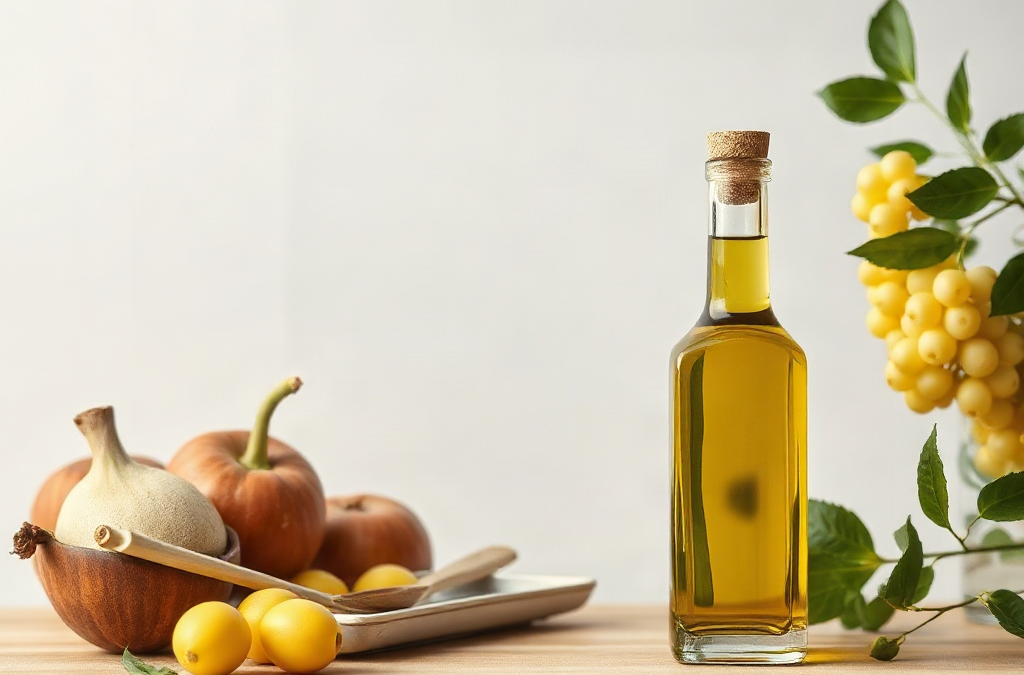
An organic EVOO label means the oil is certified organic and qualifies as extra virgin olive oil, but those claims describe different qualities. Organic certification addresses how olives are grown and processed, while extra virgin refers to the oil’s grade, production method, and sensory condition. Check the certifier, ingredient list, harvest or best-by date, container, origin statement, and storage guidance before buying. Use a fresh, balanced oil for dressings, dipping, roasting, sautéing, and finishing dishes, while protecting it from heat, light, and air.
What Do Organic and EVOO Mean on the Same Label?
Organic and extra virgin identify two separate aspects of olive oil. An organic claim concerns agricultural production and handling under an applicable certification system. EVOO, the common abbreviation for extra virgin olive oil, is a grade associated with oil obtained from olives through mechanical means and meeting chemical and sensory criteria established by the relevant market or standard-setting body.

Reading the terms separately prevents a common mistake: treating “organic” as proof that an oil is fresh, flavorful, or correctly graded. Certification does not tell you whether the bottle sat under bright store lights, whether the oil has begun to taste stale, or whether its flavor suits a delicate salad. In the same way, an extra virgin designation does not automatically mean the olives were organically grown. A bottle may legitimately carry either claim, both claims, or neither.
On a packaged oil sold with an organic claim, look for the recognized organic seal or wording appropriate to the country of sale and the name or identification of the certifying organization. The ingredient panel should also reveal whether the product is entirely extra virgin olive oil or a flavored preparation containing herbs, citrus, or other ingredients. Organic wording printed prominently on the front should not replace the certification details elsewhere on the package.
The phrase “cold pressed” receives more attention than it deserves when it appears beside EVOO. Modern olive mills often use centrifugation rather than a traditional press, so “cold extracted” may be the more technically relevant wording. Either phrase can describe processing conditions, but neither serves as a complete freshness test. A clear harvest date, sensible packaging, credible origin information, and good storage conditions are more useful together than one appealing production phrase.
Flavor remains part of the buying decision because extra virgin oils vary substantially. Some taste grassy, peppery, or bitter; others are mild, ripe, or buttery. Bitterness and a throat-catching pepperiness can reflect naturally occurring phenolic compounds and are not automatically defects. By contrast, odors resembling crayons, putty, old nuts, or stale cooking oil can indicate oxidation. The practical goal is not to find an oil that tastes universally “best,” but one that is sound, fresh enough for its intended use, and enjoyable with the foods you prepare.
Six Label Clues Worth Checking Before You Buy
A useful EVOO label should help you verify certification, composition, age, origin, protection, and intended handling. No single clue establishes quality by itself, so compare the complete package rather than choosing solely by a green label, premium-looking bottle, or high price.
- Organic certification: Find the applicable seal and certifier details, not merely words such as “natural,” “pure,” or “responsibly grown.” Those expressions do not substitute for certified-organic labeling.
- Ingredient statement: Plain EVOO should list extra virgin olive oil. Infused or flavored products may include additional ingredients and can require different handling.
- Harvest or milling date: A harvest date gives a more direct indication of age than a best-by date. Olive harvests are seasonal, and the date may be shown as a range or crop year.
- Best-by date: Treat this as the producer’s quality window for an unopened bottle, not proof of recent harvest and not a safety deadline that applies identically after opening.
- Origin statement: Distinguish where olives were grown from where oil was bottled or packed. A country named in branding may not be the agricultural origin.
- Container and storage directions: Dark glass, coated metal, or another light-protective package is preferable to clear glass displayed in strong light. A secure closure limits repeated air exposure.
For a practical comparison, imagine two similarly priced bottles. The first has a decorative clear container, vague “Mediterranean” imagery, and only a distant best-by date. The second identifies its certifier, gives a recent harvest season, states where the olives were grown, and uses dark glass. The second bottle provides more decision-relevant information even if its front label looks less elaborate.
Origin language deserves especially careful reading. “Imported from,” “packed in,” and “product of” may convey different information depending on local labeling rules. Multi-origin oil is not automatically inferior; blending oils from several harvest areas can create consistency and value. The limitation is transparency: shoppers should be able to tell whether they are purchasing single-origin oil, a regional blend, or oil bottled somewhere other than where the olives grew.
Package size is another quality decision hidden outside the descriptive claims. A large tin may offer a lower unit price, but it is poor value if one household needs a year to finish it. Choose an amount you can use while the aroma remains lively. People who cook with olive oil daily can reasonably buy more than someone who uses it only for occasional dressings. A smaller, recently dated bottle often delivers better kitchen value than a discounted oversized container that oxidizes slowly in the pantry.
Does Organic EVOO Work for Heating and Everyday Cooking?
Organic EVOO can be used for many ordinary stovetop and oven applications as well as raw preparations. The organic designation does not change how the oil behaves in a pan; temperature, exposure time, oil condition, and cooking technique matter more. Routine sautéing, roasting, baking, and gentle pan cooking are reasonable uses when the oil is kept below the point where it produces persistent smoke.
Smoke is a practical warning rather than a target. If oil begins smoking steadily, lower the heat, move the pan off the burner, and assess whether the oil has scorched. Preheating an empty pan on high and then adding oil is a frequent failure mode because the thin film heats quickly. A better sequence is to use moderate heat, add the oil before the pan becomes extremely hot, and introduce the food without a long delay.
Flavor intensity should guide where a particular bottle goes. A robust, peppery oil can complement roasted cauliflower, white beans, lentil soup, grilled bread, tomatoes, or bitter greens. A mild oil may fit cakes, eggs, fish, or a subtle vinaigrette without dominating other ingredients. Heat softens some aromatic character, so reserving a distinctive or costly oil for finishing can preserve the traits that justified its price. A sound but less complex EVOO can handle most sautéing and roasting.
| Kitchen Use | Oil Style to Consider | Practical Approach |
|---|---|---|
| Salad dressing or dipping | Fresh oil with a flavor you enjoy | Taste it first because no cooking will soften bitterness or pungency. |
| Sautéing vegetables | Mild or medium EVOO | Use moderate heat and avoid leaving the pan unattended. |
| Oven roasting | Balanced, reasonably priced EVOO | Coat food lightly rather than allowing excess oil to pool and scorch. |
| Soup, beans, or pasta finishing | More aromatic EVOO | Add a small drizzle after cooking to retain aroma. |
| Very high-heat searing | An oil suited to the chosen temperature and method | Do not force a prized finishing oil into a task where its flavor will be lost. |
The belief that extra virgin olive oil must never be heated is too broad, but the opposite claim—that cooking conditions never matter—is equally weak. All edible oils change with prolonged or excessive heat. Repeatedly heating the same oil, allowing food residue to burn, or pushing a pan until it smokes degrades kitchen results. Organic certification does not protect oil from these handling problems.
Nutrition should remain in proportion to the meal. EVOO supplies mostly unsaturated fat and contains minor compounds that vary with cultivar, maturity, processing, age, and storage. It can replace fats that bring a different flavor or fatty-acid profile, but adding unlimited amounts does not turn a dish into a balanced meal. Vegetables, legumes, whole grains, fish, eggs, or other nutrient-dense foods still determine much of the plate’s overall composition.
How to Store and Use It Before Quality Fades
Light, oxygen, and heat gradually reduce olive oil’s aroma and fresh flavor. Keep the working bottle tightly closed in a dark cupboard away from the stove, oven vent, sunny windowsill, and other warm locations. The convenient shelf directly above a cooktop is often one of the worst storage places because it experiences repeated heat and light exposure.
Refrigeration is not generally necessary for a bottle used regularly. Cold storage may make olive oil cloudy or partly solid, and it usually clears as the oil returns to room temperature. Cloudiness alone does not prove purity, quality, or spoilage because temperature and the oil’s natural wax content can affect appearance. A cool, dark cupboard with a stable temperature is simpler for routine household use.
Opening introduces fresh air into the container, while pouring repeatedly expands the headspace over time. The exact rate of decline cannot be determined from the label because packaging, initial freshness, room temperature, and frequency of opening differ. Use sensory checks instead of relying on a rigid after-opening deadline. Pour a little into a clean spoon or cup, smell it, and taste a small amount. Fresh oil should have identifiable olive-derived aromas or flavors; an increasingly flat, waxy, stale-nut character suggests it is fading.
A common storage mistake is transferring oil into an attractive clear cruet and leaving it near a window. If a cruet makes pouring easier, fill it with only a small amount, keep it shaded, clean and dry it before refilling, and retain the main supply in its protective container. Continually topping up old oil can mix oxidized residue into a fresher batch.
Match purchasing habits to actual consumption. A household that uses several spoonfuls for vegetables, grains, sauces, and dressings each day will move through a bottle faster than one that cooks mostly with other fats. Write the opening month on the label if bottles tend to linger. When the same bottle survives multiple seasons and loses its aroma before it is empty, buy a smaller size next time.
Oil that has become mildly dull may still be usable in a cooked dish if it has no clearly objectionable odor, but premium finishing applications will expose its weakness. Once it smells distinctly rancid, replacing it is the better culinary choice; extra herbs, vinegar, or garlic will mask rather than reverse oxidation. Success looks like purchasing a protected bottle, enjoying its flavor while it is vivid, and finishing it without a stale remainder. Failure usually appears as a dusty bottle beside the stove, an unknown opening date, a loose cap, or flavor that no longer resembles fresh olives.
Conclusion
Read organic EVOO packaging as a set of separate signals rather than one blanket promise. Verify genuine organic certification, confirm that the ingredient is extra virgin olive oil, and then compare harvest information, origin wording, package protection, and bottle size. Those details reveal more than decorative claims about purity or tradition.
In the kitchen, assign the oil according to flavor and technique. Use aromatic bottles where their character remains noticeable, choose a sound everyday EVOO for moderate-heat preparation, and lower the heat if the pan begins to smoke. Keep the cap closed and the bottle away from light and stove heat. On your next purchase, inspect six label clues, select a quantity that fits your actual pace of use, and taste the oil soon after opening so you know its fresh baseline.
Frequently Asked Questions
Does organic EVOO mean the oil is higher quality?
Not by itself. Organic certification concerns production and handling standards, while extra virgin grade, freshness, packaging, storage, and flavor determine other dimensions of quality.
Is cold-pressed olive oil the same as extra virgin olive oil?
Not necessarily. Cold-processing language describes part of production, while extra virgin is a grade with additional chemical and sensory requirements. Read the complete label rather than treating “cold pressed” as a substitute for EVOO.
Can organic EVOO be used for frying?
It can suit many pan-frying tasks at controlled temperatures. Avoid persistent smoking, excessively long heating, and repeated reuse; a costly aromatic oil may be better reserved for finishing.
Is a harvest date more useful than a best-by date?
A harvest date more directly indicates when the olives were collected, while a best-by date reflects the producer’s quality window for an unopened product. Both are useful when interpreted together.
Should extra virgin olive oil be refrigerated after opening?
Routine refrigeration is usually unnecessary. Store the bottle tightly closed in a cool, dark cupboard; temporary cloudiness or solidification in the refrigerator does not establish quality or spoilage.