
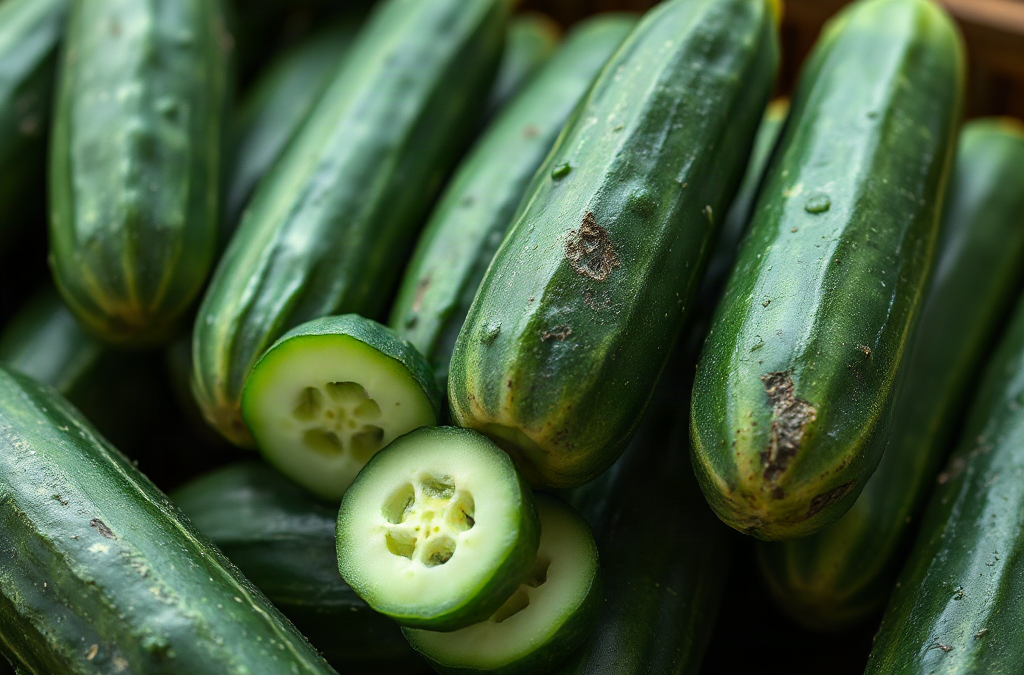
Choosing organic cucumbers for everyday meals is easiest when you prioritize firmness, intact skin, suitable size, and proper refrigeration over appearance alone. Select cucumbers that feel heavy for their size, have crisp ends, and show no soft spots, shriveling, cuts, or yellowing; smaller types often suit salads and snacking, while larger varieties work well for slicing, chilling, or infusing water. Organic certification addresses production standards, but it does not make damaged produce safe to eat. Rinse cucumbers under running water before cutting, dry them well, and store them in the refrigerator away from ethylene-producing fruit to preserve texture and reduce premature spoilage.
What to Look for When Buying Organic Cucumbers
Freshness is the first buying priority because cucumbers lose water and crispness quickly after harvest. A good cucumber should feel firm from end to end, have smooth or naturally textured skin appropriate to its variety, and seem relatively heavy for its size. The blossom end should not feel mushy, and the stem end should not look excessively dry or collapsed. These checks tell you more about eating quality than a glossy appearance.
Color provides useful information, but it needs context. Deep green skin is common in many slicing cucumbers, while some varieties are naturally pale, striped, or white. Yellowing on a normally green type may signal overripeness, especially when paired with large seeds or a watery interior. Minor surface scuffs are usually a quality issue rather than a reason to reject the entire cucumber, but deep cuts, leaking areas, mold, and soft patches are stronger reasons to choose another.

Organic status and freshness answer different questions. The organic label concerns how the crop was produced and handled under the applicable certification system; it does not guarantee a particular sweetness, size, harvest date, or absence of damage. If organic production is part of your household priorities, verify the official organic labeling rather than relying on words such as “natural” or “farm fresh.” Then inspect the individual cucumber just as you would conventional produce.
A practical store decision can be made in under a minute:
- Choose firm cucumbers with unbroken skin and no wet, sunken, or moldy areas.
- Match size to the meal instead of assuming the largest piece offers the best value.
- Compare price per unit or weight when buying several for lunches, salads, or meal preparation.
- Buy only the amount you can use while the texture is still crisp.
For instance, a firm medium cucumber may be a better purchase than a discounted oversized one if you plan to eat it raw. The larger option may contain more seeds and a softer center, which can make sandwiches watery. Readers who want more produce-selection ideas can also use Choosing organic cucumbers for everyday meals as a focused reference when planning a weekly shopping list.
Choosing Cucumber Types and Sizes for Meals
Cucumber variety affects texture, seed development, skin thickness, and convenience at the cutting board. Thin-skinned cucumbers are often pleasant to eat without peeling, while thicker-skinned types may be better suited to recipes where the cucumber is sliced, salted, pickled, or blended. Mini and Persian-style cucumbers are convenient for lunch boxes because they are compact and commonly have a crisp bite. Standard slicing cucumbers offer more volume for salads, sandwiches, and chilled soups.
Size should follow the meal rather than a general belief that bigger is better. Small cucumbers work well whole or halved with hummus, yogurt-based dips, or a simple dressing. Medium cucumbers are versatile for chopped salads and sandwiches. Large cucumbers can be useful when a recipe needs considerable volume, but check the center before serving raw: mature seeds and excess moisture may affect texture. Removing the seeded center can improve a salad, although it also reduces usable flesh and increases preparation time.
Meal planning changes the best choice. For a single serving, buying several small cucumbers may reduce waste because each one can be finished quickly. For a family salad, a standard cucumber may be more economical and easier to portion. If you are preparing a yogurt-cucumber dish, draining grated cucumber matters more than choosing a particular label because the released water can thin the mixture. For infused water, firm flesh and clean flavor matter more than decorative shape.
Skin decisions also involve tradeoffs. Leaving edible skin on preserves convenience and contributes texture, while peeling may be preferable when the skin is tough, bitter, or marked. Washing does not remove every possible residue, and peeling is not a substitute for selecting sound produce or preventing cross-contamination. The choice should be based on variety, texture, and recipe requirements rather than an assumption that peeled cucumber is automatically superior.
A useful comparison is raw use versus cooked use. Raw cucumber requires crispness and a clean bite, so firmness deserves top priority. Cooking softens the flesh, making minor texture differences less noticeable, although damaged or spoiled areas should still be discarded. Choosing the type around its intended use prevents the common mistake of buying a large quantity for one recipe and allowing the remainder to deteriorate before it reaches another meal.
Washing, Storing, and Handling Cucumbers
Proper handling preserves quality after purchase. Keep whole cucumbers refrigerated unless you will use them shortly, and follow the storage guidance available from your retailer or produce supplier when it differs. A produce drawer can help reduce moisture loss, but cucumbers should not be sealed while visibly wet. Excess moisture encourages slimy surfaces and shortens their useful life.
Store cucumbers away from fruits that release substantial ethylene, such as ripe bananas, apples, and tomatoes. Ethylene sensitivity varies by produce item, but separating items that accelerate one another’s deterioration is a practical way to limit premature yellowing or softening. Avoid placing heavy containers on top of cucumbers, since pressure bruises the flesh even when the skin looks intact.
Wash whole cucumbers under clean running water before cutting or eating them. Use clean hands and a clean cutting surface; do not use soap or household cleaners on produce. Drying the surface with a clean towel can improve texture and reduce water carried into a salad. Washing before storage may be convenient, but storing produce while damp can encourage spoilage, so many households get better results by washing just before preparation.
Once cut, cucumber has more exposed surface area and should be refrigerated in a covered container. A cut piece that develops a sour odor, slimy coating, extensive softening, or mold should not be rescued by trimming only the visible defect. When one section is clearly deteriorated, moisture and microbial growth may extend beyond what the eye can identify. Freshly cut cucumber is generally best used promptly, particularly when mixed with salt, dressing, dairy, or other moist ingredients.
Consider a packed lunch: slicing cucumber the night before may work if it is dried thoroughly and stored cold, but salting it in advance can draw out water and make it limp. For a crisp sandwich, add slices shortly before eating. For a salad intended to rest, remove excess seeds or drain the cut pieces first. These small handling choices often affect the final meal more than a modest difference between organic cucumber varieties.
Common Buying Mistakes and Better Decisions
The most common mistake is treating the organic label as a complete quality inspection. Organic production may align with a shopper’s environmental, farming, or purchasing values, but the label does not tell you whether the cucumber is crisp today. Inspect firmness, ends, surface condition, and color separately. A conventionally grown cucumber that is fresh is not interchangeable with an organic cucumber for every shopper, but an organic cucumber with decay is not a better meal choice.
Another mistake is buying by appearance alone. A perfectly smooth cucumber can be watery or overmature, while a slightly ridged or blemished cucumber may have excellent texture. Press gently rather than squeezing repeatedly, and avoid produce with pressure marks. If a package contains several cucumbers, check the bottom and sides for trapped moisture, soft pieces, or condensation that may indicate declining quality.
Price can create a false economy. A larger package may have a lower unit price but produce more waste if your household eats cucumber only occasionally. A smaller quantity of firm pieces may cost more per cucumber yet deliver better value when less is discarded. Households that use cucumber daily can reasonably buy more, while occasional users should prioritize smaller amounts and flexible meal ideas such as salads, snacks, sandwiches, or quick pickles.
When freshness is uncertain, use a priority order:
- Reject mold, leaking, or substantially soft produce.
- Choose firmness and appropriate size for the planned meal.
- Confirm organic labeling if that purchasing standard matters to you.
- Plan storage and the first use before buying a large quantity.
Watch for signs that your approach is working: the cucumbers remain firm, the cut surface stays clean and moist rather than slimy, and the planned quantity is used before quality falls. If cucumbers repeatedly spoil, the solution may be buying fewer at a time, improving drying before refrigeration, or separating them from ripening fruit. More meal-planning context is available through Choosing organic cucumbers for everyday meals, especially when balancing freshness with a grocery budget.
For produce safety and organic-label questions, consult current guidance from the U.S. Department of Agriculture, the U.S. Food and Drug Administration, and your local university extension service. These sources can clarify produce-washing practices, food-storage recommendations, and how organic labeling is defined without substituting marketing language for verified standards.
Frequently Asked Questions
Are organic cucumbers always fresher?
No. Freshness depends on harvest timing, transport, store handling, and home storage. Check firmness and surface condition regardless of the production label.
Should cucumbers be refrigerated?
Refrigeration is generally useful for preserving whole cucumbers, especially when they will not be eaten soon. Keep them dry and protected from crushing.
Do organic cucumbers need to be washed?
Yes. Rinse them under running water before cutting or eating, then dry them with a clean towel. Organic labeling does not remove the need for produce hygiene.
Which cucumber size is best for salads?
Small to medium cucumbers are often convenient for salads because they tend to provide a crisp bite and manageable seed content. Larger cucumbers can work if the center is watery or seedy and removed.
How can I prevent cucumber slices from becoming watery?
Dry the cucumber after washing, remove excess seeds when needed, and add salt or dressing close to serving. Store cut pieces covered and cold.
Conclusion
Choosing organic cucumbers for everyday meals is a practical balance of production preferences, freshness, intended use, and storage capacity. Start by rejecting soft, damaged, leaking, or moldy pieces, then select a size and variety that fits the meal you will actually prepare. Small cucumbers suit snacks and lunch boxes, medium types cover most salads and sandwiches, and larger ones can work when you are prepared to manage seeds and excess moisture. Rinse produce before cutting, dry it well, refrigerate whole cucumbers appropriately, and keep cut pieces covered. If waste is frequent, buy less rather than accepting a larger package as a bargain. A firm cucumber that reaches the plate promptly is usually the most useful purchase.
Huge Discount on the Best Certified Organic Nutrient Dense Supplement!