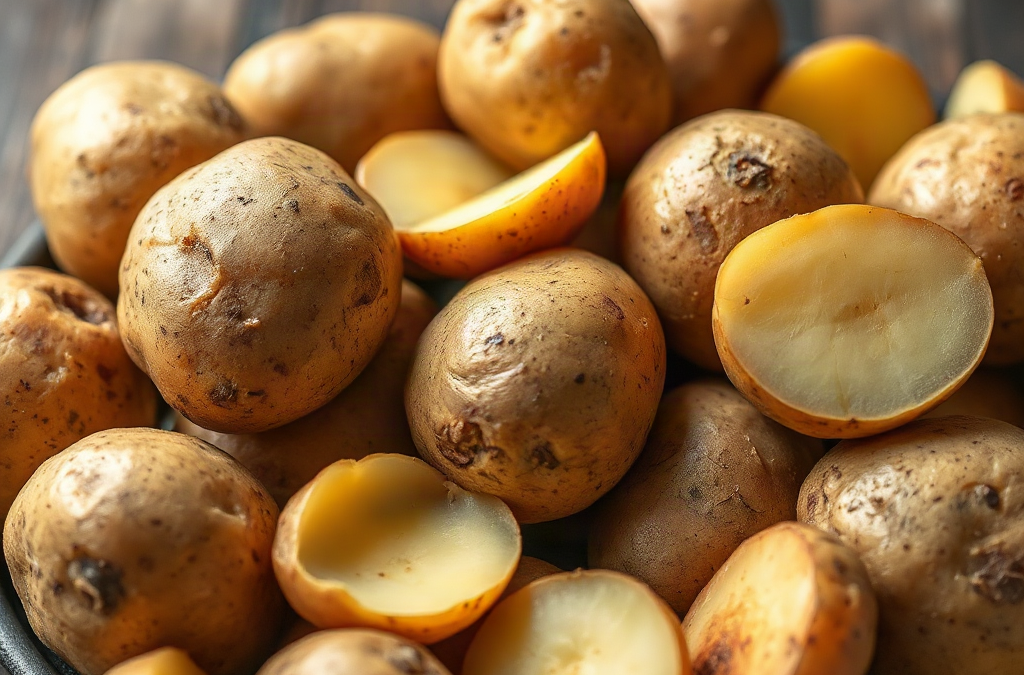
Nutrition and preparation choices for organic potatoes with skins affect fiber intake, nutrient retention, texture, and food safety. Leaving a well-scrubbed skin on usually preserves useful fiber and concentrated nutrients, while baking, steaming, or microwaving generally avoids the nutrient losses associated with prolonged boiling. Choose firm potatoes without green areas, remove sprouts and damaged sections, and cook them until tender. Organic certification does not make a potato automatically safer to eat raw or eliminate natural glycoalkaloids in green or sprouted tubers. Pairing a skin-on potato with beans, eggs, yogurt, vegetables, or another protein creates a more balanced meal than treating it as a stand-alone starch.
What The Skin Adds Nutritionally
Keeping the skin on changes the nutritional profile of a potato modestly but meaningfully. The peel and the flesh immediately beneath it contribute dietary fiber, potassium, vitamin C, and other plant compounds, although the exact amounts vary with variety, size, storage, and cooking. A skin-on potato is still primarily a carbohydrate food; the peel does not transform it into a low-carbohydrate or unlimited food.
Fiber is the clearest practical reason to retain an edible skin. It adds bulk and may make a meal more satisfying, while the potato flesh supplies starch that provides energy. Potassium is another relevant nutrient, particularly when the potato is prepared without excessive salt. Vitamin C is present in raw potatoes but is sensitive to heat and water, so cooking conditions matter. Removing the peel before boiling can increase nutrient loss because cut surfaces release water-soluble compounds into the cooking water.
A useful comparison is a scrubbed baked potato versus peeled potato cubes boiled in a large pot. The baked version keeps its structure and avoids direct contact with cooking water; the boiled cubes may become softer and lose some water-soluble nutrients. Boiling is not a poor method, especially when the cooking liquid becomes part of a soup, but it is less efficient when the water is discarded.
Use Nutrition and preparation choices for organic potatoes with skins as a food-quality decision, not a health guarantee. A large potato topped with butter, cheese, and salty processed meat can deliver a very different meal from a moderate portion topped with lentils, plain yogurt, and vegetables. The skin is useful, but the whole plate determines much of the meal’s nutritional balance.
Choosing And Cleaning Organic Potatoes
Good skin-on preparation begins with selecting sound potatoes. Choose firm tubers with intact skins, no strong odor, and no extensive bruising, leaking, or shriveling. Small blemishes can often be trimmed, but a soft or heavily damaged potato is a poor candidate for keeping the skin. Green discoloration deserves particular attention because it can accompany higher levels of naturally occurring glycoalkaloids, including solanine and chaconine.
Organic certification concerns how the crop was produced; it does not remove the need for inspection and cleaning. Soil, microbes, and residues can remain on the surface, so rinse potatoes under running water and scrub them with a clean produce brush. Do not use soap or household detergent. Clean the brush between uses, and wash potatoes immediately before preparation if storage moisture is a concern.
Sprouts should be removed generously, along with nearby soft or green areas. Cutting away a tiny superficial mark is different from trying to rescue a potato that is extensively green, bitter-smelling, or badly sprouted. Cooking does not provide a dependable way to make a questionable potato appropriate to eat, so discarding it is the sensible choice.
Consider the intended method when buying. Even, medium-sized potatoes cook more predictably in the oven or microwave, while waxier varieties hold their shape in salads and soups. A rough russet may produce a fluffy interior, but a thin-skinned red or yellow potato can be more convenient when the goal is a firm skin-on side dish. The common mistake is assuming every organic potato has the same texture or cooking time; variety and size matter more than the organic label for that outcome.
Cooking Methods And Nutrient Tradeoffs
Baking, steaming, microwaving, boiling, and roasting all produce edible potatoes, but they differ in water exposure, texture, added fat, and convenience. Baking a pierced potato at a moderate oven temperature creates a dry, fluffy center and a firmer skin without requiring cooking water. Steaming limits leaching and can preserve a moist texture, although the skin may remain less crisp.
Microwaving is a practical option for a single serving. Pierce the cleaned potato, place it on a microwave-safe plate, and cook it in intervals, turning it as needed until the center is tender. Resting time matters because heat continues to distribute after the cycle ends. A microwave does not inherently make the potato less nutritious; the main advantages are shorter cooking time and little added water.
Boiling works well for mash, soups, and salads. Keep potatoes in fairly large pieces when possible, use only enough water to cover them, and avoid prolonged cooking after they become tender. If the cooking water is discarded, some water-soluble nutrients go with it. Adding the potatoes to a soup or stew retains more of those dissolved compounds. Roasting can deliver appealing browning, but generous oil or salty coatings can outweigh the nutritional advantage of retaining the peel.
For a weeknight decision, match the method to the desired result:
- Choose baking for a fluffy center and crisp skin with minimal added ingredients.
- Choose steaming for intact pieces in a bowl or salad.
- Choose microwaving when speed and a single portion matter.
- Choose boiling when softness or a recipe’s cooking liquid is central.
The failure mode to avoid is judging doneness by the outside alone. A browned skin can surround a firm center, while a potato boiled too long may split and become waterlogged. Test the thickest part with a fork, and use a food thermometer for dishes containing other ingredients that require temperature control.
Building A Balanced Skin-On Potato Meal
A potato becomes more nutritionally complete when it is paired with protein, vegetables, and a measured source of fat. The starch supplies energy, while beans, lentils, eggs, fish, tofu, yogurt, or poultry can contribute protein. Broccoli, cabbage, peppers, tomatoes, leafy greens, or a simple side salad add contrasting colors, textures, and nutrients.
For example, a baked potato topped with black beans, plain yogurt, chopped tomatoes, and herbs offers more balance than a potato covered only with a large amount of cheese. A warm potato salad can combine skin-on potatoes with green beans, tuna or white beans, olive oil, vinegar, and mustard. These combinations also make the potato more satisfying without requiring an oversized portion.
Preparation choices should reflect personal constraints. Someone limiting sodium may prioritize herbs, garlic, lemon, or vinegar over packaged sauces and heavily salted toppings. Someone managing blood glucose may find a moderate potato portion alongside protein and non-starchy vegetables more workable than a large serving eaten alone, although individual responses differ. Cooling cooked potatoes and using them later can alter starch characteristics, but that does not cancel the meal’s total carbohydrate content or make portion size irrelevant.
Fat is not automatically a problem, but it is easy to add more than intended through oil, butter, sour cream, cheese, and bacon together. Select one or two additions that serve a purpose. The practical test is whether the finished meal has a clear protein source and a substantial vegetable component, rather than whether the potato is organic or skin-on by itself.
Readers comparing potato preparation choices should also consider eating context. A skin-on potato after physical activity may fit comfortably into a meal, while the same potato as a frequent snack with salty toppings may contribute less balanced eating. Nutrition is shaped by the surrounding foods, cooking method, and portion—not one ingredient label.
Common Mistakes And Practical Safety Checks
The most common mistake is treating the skin as automatically wholesome regardless of condition. A clean, intact skin can be eaten when the potato is sound; a green, bitter, or extensively sprouted potato should not be rescued simply because it is organic. Another mistake is scrubbing briefly under still water. Running water and friction are more useful for removing soil than a quick rinse.
Store potatoes in a cool, dark, dry, well-ventilated place rather than a warm, brightly lit area. Light encourages greening, and excess moisture can encourage decay. Avoid storing raw potatoes next to foods whose odors they may absorb. Once cooked, refrigerate leftovers promptly in a shallow container and reheat only the portion needed. Cooked potato dishes should not sit at room temperature for extended periods.
Use this short pre-cooking check:
- Inspect for green patches, extensive sprouts, soft spots, leaks, and unpleasant odors.
- Scrub under running water and trim minor damage with a clean knife.
- Discard potatoes that remain strongly green, bitter, or badly deteriorated after trimming.
- Choose a method that avoids unnecessary water exposure or incorporates the cooking liquid into the dish.
- Cook until tender, then handle leftovers as perishable cooked food.
People with kidney disease, certain medication-related potassium restrictions, diabetes, or another condition requiring individualized carbohydrate or mineral guidance may need advice from a clinician or registered dietitian. Potatoes are not a treatment food, and organic status does not change medical dietary limits. For most healthy adults, the sensible priority is sound produce, thorough cleaning, a suitable cooking method, and a balanced plate.
For current food-safety handling advice, consult the U.S. Department of Agriculture and your local university extension service. Nutrition details can be checked against a recognized food-composition database, while individualized potassium or carbohydrate guidance should come from a qualified health professional.
Frequently Asked Questions
Is it healthier to eat organic potatoes with the skin?
Keeping a clean, sound skin can retain fiber and some nutrients, but organic status alone does not make the potato nutritionally superior to every conventionally grown potato.
How should organic potatoes be cleaned before cooking?
Rinse them under running water and scrub firmly with a clean produce brush. Do not use soap, detergent, or bleach on the skin.
Which cooking method best preserves nutrients?
Baking, steaming, and microwaving limit contact with water. Boiling is still appropriate, particularly when the cooking liquid is retained in soup or stew.
Should green or sprouted potatoes be eaten?
Remove small sprouts and nearby damaged areas from an otherwise sound potato, but discard potatoes that are extensively green, heavily sprouted, soft, or bitter.
What foods pair well with a skin-on potato?
Beans, lentils, eggs, tofu, fish, yogurt, vegetables, herbs, and modest amounts of oil or cheese create a more balanced meal than potato with salty toppings alone.
Conclusion
Skin-on organic potatoes can fit well into nutritious meals when the tubers are sound, cleaned carefully, and cooked in a way that matches the intended texture. Baking, steaming, or microwaving limits water-related nutrient loss, while boiling remains useful when the cooking liquid is eaten. The peel adds fiber and some nutrients, but it does not erase the potato’s starch content or compensate for excessive salt, butter, or processed toppings. Inspect for green areas and extensive sprouting, discard questionable potatoes, and refrigerate cooked leftovers promptly. For the most useful plate, combine a moderate potato portion with vegetables and a clear protein source. Anyone managing potassium, blood glucose, or another medical nutrition concern should individualize portions with professional guidance.
Huge Discount on the Best Certified Organic Nutrient Dense Supplement!