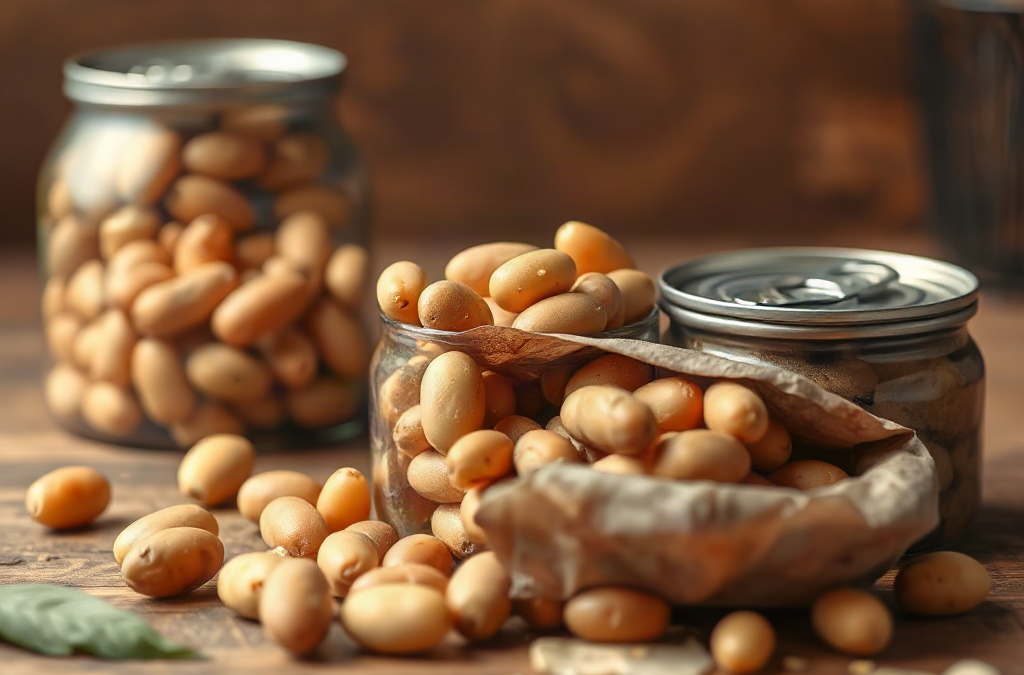
Canned organic beans are a practical pantry choice when you compare sodium per serving, serving size, ingredient lists, can condition, and preparation needs before buying. Choose no-salt-added or lower-sodium options when they fit the meal, but compare labels because wording and values vary among products. Draining removes packing liquid, while rinsing may remove additional surface sodium; neither step makes every product nutritionally identical. Convenience also depends on usable quantity, price per drained amount, storage, texture, and whether the beans can go directly into soups, salads, or quick meals.
How Should You Compare Sodium Labels?
The most useful sodium comparison starts with the labeled serving size rather than the claim on the front of the can. Two products can display different sodium numbers simply because one label defines a smaller serving. Compare equal quantities whenever possible, then consider how much of the can you will actually eat. If a can contains several servings but goes into a two-person dinner, the sodium contribution per person will be higher than the single-serving figure suggests.
Front-label descriptions such as “no salt added,” “low sodium,” and “reduced sodium” are not interchangeable. A no-salt-added product may still contain naturally occurring sodium, while a reduced-sodium version is generally being compared with a regular version from the manufacturer. The Nutrition Facts panel gives the usable comparison. Check both milligrams and percent Daily Value, and make sure the serving units match before deciding that one can is the lower-sodium choice.
Ingredients explain where the number comes from. Beans, water, and salt make a straightforward formula. Some products also contain calcium chloride for firmness, disodium EDTA to help preserve color, seasonings, or prepared sauces. These ingredients serve different functions, and an unfamiliar name should not automatically be treated as sodium. Instead, use the ingredient list to identify added salt, sodium-containing additives, sweeteners, oils, and flavorings that may affect how the beans fit a particular dish.
| Label Check | What to Compare | Why It Changes the Decision |
|---|---|---|
| Serving size | The same weight or volume | Unequal servings distort sodium comparisons |
| Sodium | Milligrams per serving and expected portion | The amount eaten matters more than the printed serving alone |
| Servings per container | How many portions the can realistically provides | A whole-can meal can multiply the listed value |
| Ingredients | Salt, sauces, seasonings, and additives | These affect flavor, sodium, and recipe flexibility |
| Drained quantity | Usable beans rather than total can weight | Liquid contributes to weight but may not reach the plate |
For example, plain chickpeas intended for a salad offer more control than chickpeas packed in a seasoned sauce. The sauced version may save a preparation step, yet its sodium and flavor can be difficult to adjust. A common mistake is choosing solely by the lowest number without considering portion size or recipe use. Prioritize a fair label comparison first, then decide whether the flavor and time savings justify any tradeoff.
Does Draining or Rinsing Reduce Sodium?
Draining removes the packing liquid, while rinsing washes more of that liquid from the bean surfaces. Both actions can reduce some sodium associated with the brine, but the exact result varies with the bean, formulation, processing, and rinsing method. The value printed on the label should remain the dependable reference point unless the manufacturer specifically explains how its nutrition information accounts for draining.
A practical method is to empty the beans into a colander, let the liquid drain, and rinse them under cool running water until the clinging liquid is gone. Briefly shake the colander and allow excess water to run off. This process is useful for salads, grain bowls, tacos, and other dishes where the packing liquid is unnecessary. Rinsing can also soften the canned flavor and prevent thick brine from changing a dressing or sauce.
Draining without rinsing may be preferable when the liquid contributes useful body. Bean liquid can thicken soup, chili, or a mashed-bean filling, although it also carries flavor and sodium from the can. A cook using no-salt-added beans may reasonably keep some liquid, taste the finished dish, and season later. With regular salted beans, discarding the liquid usually offers greater control over the final seasoning.
Texture creates another tradeoff. Vigorous rinsing or rough handling can break soft beans, especially cannellini beans and other creamy varieties. For an intact salad presentation, use a gentle stream and minimal tossing. For hummus, purée, or soup, minor breakage is irrelevant. The preparation should match the intended result rather than treating rinsing as a universal ritual.
The weak assumption is that rinsing transforms any regular product into the equivalent of a no-salt-added can. It does not provide that certainty, and it cannot remove sodium incorporated throughout the food. People following a clinician-directed sodium restriction should base purchases on the label and their individual plan rather than relying on rinsing alone. A sensible priority is to buy an appropriate product first and use draining or rinsing as an additional preparation choice.
What Makes Canned Beans Genuinely Convenient?
Convenience includes readiness, predictable texture, shelf stability, cleanup, usable quantity, and compatibility with the planned meal. Canned beans are already cooked, so they can often be heated briefly or eaten cold after draining and rinsing. That advantage matters on a busy evening, during travel with kitchen access, or when cooking a small amount of dried beans would require more time than the meal allows.
Price per can does not reveal the whole value. Compare the drained weight or expected yield because packing liquid is normally discarded for many recipes. A larger can may be economical for soup but inconvenient for one salad if the remainder will not be used promptly. Smaller cans or shelf-stable pouches may reduce leftovers, although they may cost more for the same amount of beans.
A compact purchase check keeps convenience claims tied to actual use:
- Match the bean to the dish: firm chickpeas suit bowls and salads, while softer white beans work well in soups and purées.
- Estimate the portion: decide whether the whole container, half, or only a small amount will be used.
- Check preparation: account for draining, rinsing, heating, seasoning, and cleanup.
- Plan the remainder: transfer unused beans to a covered container and refrigerate them rather than storing leftovers in the opened can.
- Compare usable cost: consider drained quantity, not merely package price or total weight.
Consider two weekday scenarios. A no-salt-added can used in vegetable soup allows the cook to season the whole pot gradually, and the liquid may be useful for thickness. For a desk lunch, a pull-tab can or pouch of seasoned beans may remove the need for a can opener and extra seasoning. The second option can be more convenient even if it offers less control, provided its label fits the eater’s needs.
Convenience fails when the product creates avoidable waste or extra work. A heavily seasoned bean may clash with the recipe, an oversized can may leave an unused remainder, and an extremely soft product may collapse in a salad. Keeping two or three versatile varieties on hand often works better than stocking many specialty flavors. Plain black beans, chickpeas, and white beans can move among soups, wraps, salads, dips, and grain dishes with modest seasoning changes.
Organic Label, Quality, and Can Safety Checks
An organic claim addresses how qualifying agricultural ingredients were produced and handled; it does not guarantee lower sodium, a shorter ingredient list, better texture, or greater convenience. Organic and conventional canned beans can both range from no-salt-added products to highly seasoned preparations. Treat organic status as one product attribute, then evaluate the Nutrition Facts panel and ingredient list separately.
Certification language also deserves a precise reading. Look for a recognized organic seal and the product’s organic wording rather than relying only on green packaging, farm imagery, or phrases that merely suggest naturalness. Beans packed with other ingredients may display different organic statements depending on the formulation. Shoppers who care about certification should read the actual label instead of inferring it from branding.
Can condition is a separate food-safety check. Avoid containers that are bulging, leaking, badly rusted, punctured, or deeply dented around seams. Minor cosmetic marks are not equivalent to damage that compromises the container, but uncertainty around a seam or lid is a good reason to choose another can. Check date markings for inventory rotation and follow the manufacturer’s storage directions. A date is not a substitute for inspecting the package.
After opening, notice obvious spoilage signals such as an unexpected odor, unusual appearance, or abnormal release of pressure. Do not taste questionable food to determine whether it is safe. Discard a suspicious product and follow local food-safety guidance when the container is damaged or behaves abnormally. Once opened, transfer unused beans and liquid to a clean, covered food-storage container and refrigerate promptly according to applicable storage guidance.
Quality checks begin after safety is established. Beans should suit the intended use: intact and firm enough for salads, or tender enough for mashing and soups. Excessive splitting is not necessarily a safety problem, but it may make a product unsuitable for presentation-focused dishes. Cloudy or thick liquid can be normal for some beans because starch enters the packing water, so appearance must be interpreted in context rather than judged by a single cosmetic feature.
A common purchasing error is letting the organic seal stand in for every other decision. The stronger order is package integrity first, sodium and ingredients second, then texture, quantity, opening method, and price. That sequence prevents a desirable production claim from obscuring practical suitability or a damaged container.
Frequently Asked Questions
Are organic canned beans automatically lower in sodium?
No. Organic certification does not determine sodium content, so compare the Nutrition Facts panels of regular, lower-sodium, and no-salt-added products.
Should canned beans always be rinsed?
No. Rinsing is useful when you want to remove packing liquid and gain more seasoning control, but the liquid may add body to soups or mashed dishes.
Is no-salt-added the same as sodium-free?
Not necessarily. Beans can contain naturally occurring sodium, so use the sodium value on the Nutrition Facts panel rather than relying on the front-label phrase.
How should leftover canned beans be stored?
Move leftovers to a clean, covered container, refrigerate them promptly, and follow the product label and applicable food-safety guidance for storage time.
Are canned beans less useful than dried beans?
They serve different constraints. Canned beans offer speed and predictable readiness, while dried beans provide more control over cooking texture, seasoning, batch size, and cooking liquid.
Conclusion
A sound canned-bean choice combines a fair sodium comparison with an honest assessment of how the product will be used. Read serving size and servings per container before comparing milligrams, then inspect ingredients for salt, sauces, and seasonings. Choose no-salt-added versions when greater control matters, and treat rinsing as an extra preparation step rather than a substitute for label reading.
Convenience should account for drained yield, opening method, texture, leftovers, cleanup, and recipe compatibility—not merely the fact that the beans are cooked. Confirm organic claims from the label, but keep certification separate from sodium, quality, and safety judgments. Before checkout, inspect the can for seam damage, bulging, leaks, or serious rust. A quick comparison of two or three suitable products usually reveals which option offers the best balance of sodium control, usable quantity, and immediate meal value.