Tofu nutrition and practical organic meal choices come down to using tofu as a versatile protein source while pairing it with vegetables, whole grains, and flavorful fats. Firm and extra-firm tofu provide more protein per portion than silken varieties, while calcium-set products may contribute calcium depending on the label. Pressing improves texture rather than dramatically changing nutrition, and baking or pan-searing can produce a satisfying centerpiece without relying on heavy sauces. Organic certification reflects production standards, not automatically higher protein or better overall nutrition, so compare ingredient lists, fortification, sodium, serving size, and price before buying. People managing soy allergies, thyroid-related concerns, or medically prescribed diets should seek individualized guidance.
What Tofu Contributes to an Organic Meal
Tofu is a pressed soy-food made by coagulating soy milk, and its nutrition varies with firmness, added ingredients, fortification, and serving size. Firm and extra-firm tofu generally offer more protein in a compact portion because they contain less water than silken tofu. Tofu also supplies fat, iron, and, in some products, calcium; the exact contribution should be checked on the package rather than assumed from the word “tofu.”
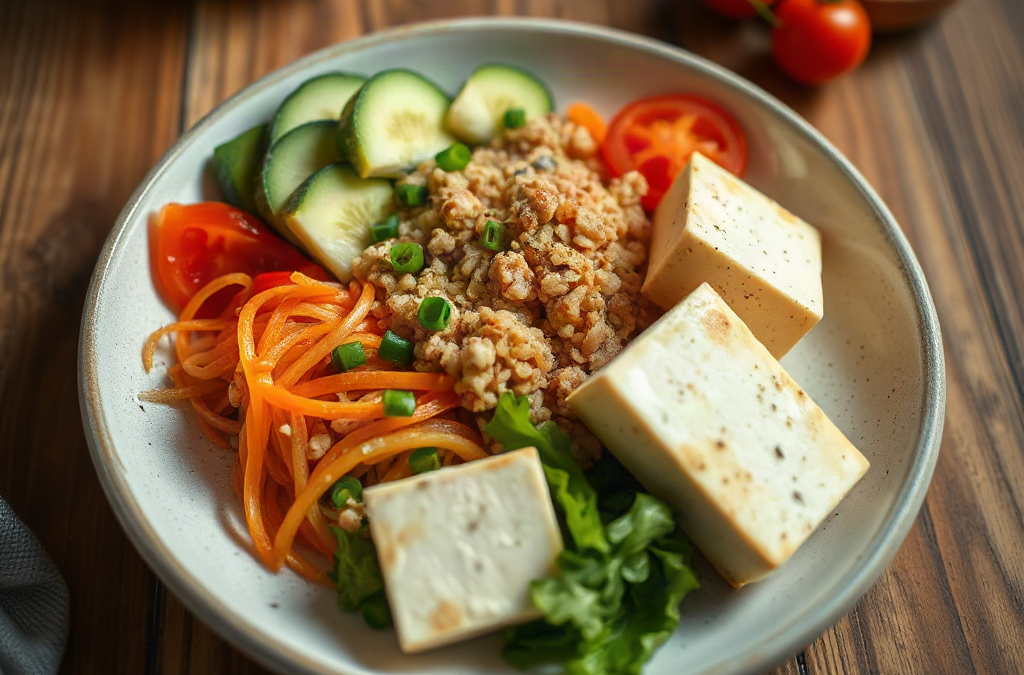
The practical advantage is composition flexibility. Tofu can replace part or all of the meat, eggs, or cheese in a meal, but it does not automatically create a complete or satisfying plate. A bowl of baked tofu with brown rice, broccoli, carrots, and a sesame-lime dressing has a different balance from tofu simmered in a sugary sauce over refined noodles. The surrounding foods determine fiber, carbohydrate quality, sodium, and the meal’s overall energy density.

Protein needs differ by person, and a single tofu serving should not be treated as a universal target. A person wanting a lighter lunch may use tofu with edamame and vegetables, while someone needing a more substantial meal may add quinoa, beans, or a larger grain portion. Comparing tofu with chicken, eggs, or tempeh is more useful when serving size, cooking fat, sodium, and the rest of the plate are considered together.
A common mistake is judging tofu as either a perfect health food or an inadequate substitute. Plain tofu is usually more adaptable than flavored versions, but it may taste bland unless seasoned and browned. Conversely, a heavily processed tofu entrée can accumulate sodium and oil even when its base ingredient is organic. Use tofu as a nutrient-dense building block, then evaluate the complete meal. For more plant-based meal context, see Tofu nutrition and practical organic meal choices.
Choosing Tofu by Texture, Ingredients, and Nutrition
Texture should be the first buying decision because it determines how tofu behaves in a recipe. Silken tofu works well in blended sauces, soups, smoothies, and soft desserts. Medium tofu can be useful in gentle simmering dishes, while firm and extra-firm tofu hold their shape for roasting, grilling, stir-frying, and crumbling. Selecting extra-firm tofu for a blended soup wastes money and can produce a grainy result; selecting silken tofu for a high-heat stir-fry often leads to breakage.
Read the Nutrition Facts panel and ingredient list together. Compare protein, sodium, saturated fat, calcium, and serving size across brands. Calcium sulfate or magnesium chloride may appear as coagulants, and calcium-set products may provide more calcium, but label values are the reliable comparison. Organic soy indicates that the soybeans were produced under applicable organic standards; it does not guarantee a specific protein level, a superior texture, or a lower sodium content.
Plain refrigerated tofu is often the simplest option for flexible cooking. Shelf-stable tofu can be convenient for a pantry, though texture and flavor may differ. Ready-to-eat tofu bites and seasoned products can save time, but inspect sauces and marinades for sodium, added sugars, and oils. A short ingredient list is useful when it reflects a plainly made product, not because every unfamiliar ingredient is automatically unsafe.
Budget changes the best choice. Organic tofu may cost more, while a larger plain package can provide several meals if stored correctly after opening. Compare cost per usable serving, not package price alone. If a specialty product encourages waste because it fits only one recipe, an ordinary firm block may be the better purchase. The weak assumption to avoid is that an organic label settles every nutrition question; it addresses production standards, while the label and recipe reveal the meal’s actual profile.
Building Practical Meals Around Tofu
A dependable tofu meal combines a protein source, colorful produce, a satisfying carbohydrate, and a measured source of fat or sauce. This structure keeps tofu from carrying every nutritional and flavor responsibility. For a weeknight bowl, roast extra-firm tofu with garlic and ginger, add cabbage and snap peas, then serve it with brown rice and a modest tahini or peanut dressing. The vegetables contribute volume and fiber, while the grain supplies a familiar base.
Breakfast is another useful application. Crumbled firm tofu can be cooked with mushrooms, spinach, turmeric, and black pepper, then served with whole-grain toast or potatoes. The result resembles a savory scramble but does not need to imitate eggs perfectly. For lunch, chilled tofu can be cubed into a salad with greens, roasted sweet potato, pumpkin seeds, and a citrus dressing. Silken tofu can become a blended dressing or soup thickener, which is a different use from the browned cubes many people associate with tofu.
Flavor works through contrast: browning adds savory notes, acid brightens a dense sauce, and aromatics create depth before sweeteners are added. Marinating helps the surface pick up flavor, but tofu is porous only to a limited degree, so a thick glaze applied near the end may be more effective than a very watery overnight marinade. Pressing can remove surface water and improve browning, yet lengthy pressing is not necessary for every recipe, especially when tofu will be crumbled.
Choose the meal format according to the constraint. A sheet-pan dinner suits batch cooking; a quick scramble suits a short morning; silken tofu suits a blender-based sauce when chewing or preparation time is limited. Watch for two failure signs: a plate that leaves you hungry soon after eating may need more grain, beans, seeds, or vegetables, while a meal dominated by salty sauce can overshadow the tofu’s nutritional advantages. The linked meal-planning notes can help adapt the same block to different portions and cuisines.
Cooking Methods, Common Mistakes, and Food Safety
High-heat cooking works best when tofu’s surface is dry and the pan or oven is adequately hot. Pat firm tofu dry, cut it into similarly sized pieces, toss with a small amount of oil and seasoning, and bake or sear until the edges are browned. Cornstarch can create a crisp coating, but it is optional; excessive oil or a crowded pan can steam the tofu instead of browning it.
Pressing is often overemphasized. It may improve texture for cubes, but it does not turn tofu into a meat-like product or remove all moisture. Freezing and thawing can create a more porous, chewy texture, which may suit a braised dish but can be undesirable in a smooth sauce. Crumbling tofu directly into a pan is faster for scrambles and fillings, while cutting neat cubes is more appropriate for roasting or skewers.
Sauces deserve as much attention as the cooking method. Soy sauce, tamari, miso, and bottled marinades can produce excellent flavor but may raise sodium quickly. Use acid, garlic, scallions, chili, toasted spices, or fresh herbs to reduce dependence on a large quantity of salty seasoning. A thick sauce added after browning generally gives better control than soaking the tofu in a large volume of sauce from the beginning.
Handle tofu as a refrigerated perishable food. Follow the package storage directions, refrigerate opened tofu promptly, use clean utensils, and discard it if its smell, appearance, or texture has clearly deteriorated. Do not assume that organic status changes basic food-handling needs. People with a soy allergy should avoid tofu, and those with a medically managed condition or prescribed dietary restriction should ask a qualified clinician how soy foods fit their individual plan. Tofu is a food, not a treatment for a disease.
Organic Buying Priorities and Realistic Tradeoffs
Organic tofu can fit a values-based grocery plan, but a practical purchase should weigh certification, nutrition, convenience, and affordability together. If organic sourcing is a priority, compare certified products while still checking texture, calcium content, sodium, package size, and refrigeration requirements. If budget is tight, buying plain tofu in a larger package and pairing it with inexpensive seasonal vegetables may offer more value than purchasing small prepared portions.
Organic meal planning does not require every ingredient to be premium or specialty-branded. A useful approach is to prioritize the foods you eat most often, reduce avoidable waste, and build meals from staples that can cross several recipes. One block of firm tofu might become roasted cubes on Monday, a vegetable stir-fry on Wednesday, and a crumbled taco filling later in the week. That versatility matters more than buying an elaborate sauce for a single use.
Consider environmental and personal tradeoffs without turning them into absolute claims. Tofu can be a convenient plant-based alternative to some animal proteins, but the sustainability of a meal also reflects food waste, transportation, packaging, and what replaces it. Nutritionally, tofu paired with vegetables and whole grains is a different choice from ultra-processed meat alternatives; neither comparison can be settled by one label alone.
Use this short priority order at the store: choose the texture needed for the recipe, check the serving information and protein, review sodium and added ingredients, confirm storage capacity, then compare organic certification and price. That sequence prevents the organic label from distracting from practical fit. A product that remains unused is not a better meal choice than a plain block that becomes several balanced dinners.
Frequently Asked Questions
Is tofu a good source of protein?
Firm and extra-firm tofu can contribute meaningful plant protein, but the amount varies by product and serving size. Check the package rather than relying on texture alone.
Does organic tofu have more nutrients?
Organic certification describes production practices, not a guaranteed nutrient advantage. Compare protein, calcium, sodium, ingredients, and serving size on the label.
Should tofu always be pressed?
No. Pressing can improve browning for cubes, but crumbled tofu and many silken-tofu recipes do not require it.
What should be served with tofu?
Pair it with vegetables, a whole-grain or starchy food, and a flavorful fat or sauce. Brown rice, greens, roasted squash, beans, seeds, and citrus-based dressings are practical options.
Can everyone eat tofu?
People with soy allergies should avoid it. Anyone following a medically prescribed diet or managing a health condition should ask a qualified professional how tofu fits their individual needs.
Conclusion
Good tofu choices begin with the recipe, not the marketing claim. Select silken tofu for blending, firm tofu for crumbling or simmering, and extra-firm tofu for browning. Then build the plate with vegetables, a satisfying carbohydrate, and a sauce whose sodium and added sugar fit the meal. Organic certification may align with personal purchasing priorities, but it does not replace label comparison or sensible food handling. Try one flexible preparation—such as baked cubes with seasonal vegetables and brown rice—and adjust texture, seasoning, and portion size after eating it. That practical feedback reveals more than a rigid rule about which tofu is “best.”
Huge Discount on the Best Certified Organic Nutrient Dense Supplement!