
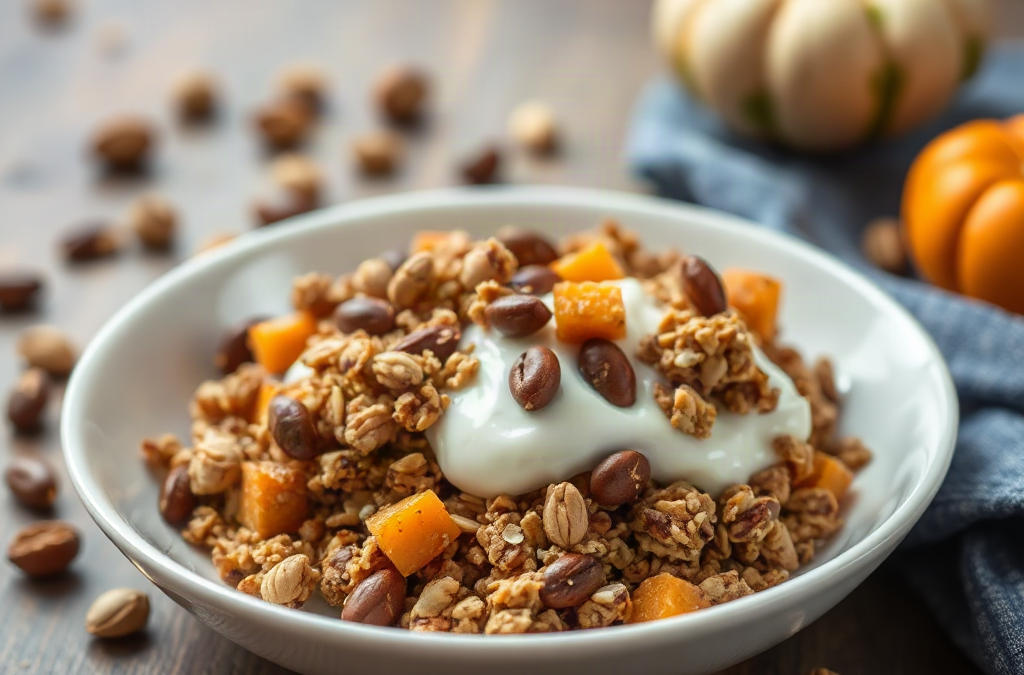
Pumpkin seed flax granola serving guidance centers on a modest portion—about 1/4 to 1/2 cup—matched with yogurt, milk, fruit, or another substantial food rather than eaten as an unlimited snack. Pumpkin seeds and flax add unsaturated fat, fiber, and plant-based nutrients, but granola can also contain concentrated calories, added sweeteners, and sodium depending on the recipe. Check the ingredient list and serving size, measure the first portion, and adjust based on hunger, the rest of the meal, and personal tolerance to fiber. People managing allergies, digestive symptoms, blood sugar, or medically prescribed diets should choose ingredients and portions with professional guidance.
How Much Pumpkin Seed Flax Granola Belongs in a Serving
A practical starting portion for pumpkin seed flax granola is 1/4 to 1/2 cup, depending on whether it is a topping or a substantial part of the meal. A few spoonfuls may add crunch to plain yogurt or sliced fruit, while the larger amount may suit a breakfast bowl with milk and additional fruit. The correct portion is not determined by the seeds alone: oats, oils, sweeteners, dried fruit, and clusters can make the mixture more energy-dense than it appears.
Measuring the first serving is useful because granola is easy to pour directly from a jar. A loose 1/2 cup and a compact scoop containing large clusters may not contain the same amount. After checking the package or recipe, use its stated serving size as a reference rather than assuming every granola has the same composition. Homemade batches also vary widely; a recipe with more oil, maple syrup, coconut, or dried fruit will need different expectations from a lightly sweetened oat-and-seed mixture.

The serving should fit the role granola plays in the meal. As a garnish, 2 to 3 tablespoons can provide texture without displacing yogurt or fruit. As the carbohydrate-rich part of breakfast, 1/3 to 1/2 cup paired with unsweetened milk or yogurt may be more satisfying. Someone eating it as a snack may need a smaller portion alongside fruit, while someone with a physically demanding morning may reasonably build a larger meal around it.
A common mistake is treating a seed-containing granola as automatically light or unlimited. Pumpkin seeds and flax offer fiber and unsaturated fats, but those qualities do not remove the calories contributed by oils, syrups, or large clusters. A sensible test is to serve a measured amount, eat it with a complementary food, and notice whether hunger returns unusually quickly or whether the portion feels heavy. That information is more useful than chasing a universal number.
Reading the Recipe and Balancing the Bowl
The ingredient list determines how pumpkin seed flax granola should be served more reliably than its health-oriented name. Look first at the base: rolled oats, nuts, seeds, coconut, puffed grains, or dried fruit each change texture and density. Then check sweeteners and fats, which may include sugar, honey, maple syrup, date paste, butter, or oil. A granola with several sweet ingredients can taste less sweet than expected if spices and seeds dominate, yet still contribute a substantial amount of added sugar.
Flax may appear as whole seeds, ground flax, or flax meal. Ground flax blends into clusters and may make the mixture easier to eat quickly, whereas whole flax contributes a more noticeable texture. Pumpkin seeds provide crunch and a savory contrast to sweet coatings. Neither ingredient turns the finished product into a complete meal by itself. The bowl becomes more balanced when granola is paired with a food supplying protein or a moist, nutrient-dense component, such as plain yogurt, milk, kefir, or fruit.
For example, a bowl of 1/3 cup granola with plain yogurt and berries serves a different purpose from a large bowl of granola with sweetened plant milk. The first combination may provide more variety in texture and nutrients while moderating the granola portion. The second can become predominantly grain and sweetener, especially if the milk contains added sugar. Unsweetened soy milk may offer a different protein profile from almond or rice milk, so the choice of pairing matters when the goal is a more sustaining breakfast.
Use the package panel or recipe notes to compare serving size, added sugars, fiber, saturated fat, and sodium. These figures are not a verdict on the food; they help explain why one mixture works as a topping and another is better treated as an occasional sweet snack. People with nut or seed allergies should verify every ingredient and cross-contact statement. A food labeled with pumpkin seed and flax is not automatically safe for every allergy pattern.
Readers looking for a broader way to apply Pumpkin seed flax granola serving guidance should prioritize the complete bowl, not the marketing language on the front of a package. The main failure mode is selecting a product for its seed content while overlooking syrup, chocolate, candy-like inclusions, or a serving size too small to reflect the amount normally eaten.
Choosing Timing, Pairings, and Portion Adjustments
Timing should follow appetite, activity, and the meal structure rather than a rigid schedule. Granola can work at breakfast, as a yogurt topping after exercise, or as a measured afternoon snack. Eating it with yogurt, milk, or fruit slows the experience of the meal compared with nibbling dry clusters straight from the container. The best pairing depends on what the rest of the day lacks: add fruit for freshness and carbohydrate, plain dairy or fortified soy for a more substantial base, or a smaller portion when the meal already includes toast, eggs, or another grain.
A useful decision method is to identify the role first. If granola is only adding crunch, choose 2 to 3 tablespoons. If it is replacing cereal in a bowl, begin around 1/3 cup and add liquid or yogurt before deciding whether more is needed. If it is part of a portable snack, combine a modest portion with fruit or plain yogurt rather than eating repeatedly from a bag. These approaches preserve flexibility without pretending that every person has the same energy needs.
Digestive tolerance deserves attention because flax and oats contribute fiber, while dried fruit and large seed portions may add still more. A person who rarely eats high-fiber foods may experience bloating after suddenly having a large serving. Starting with a smaller amount and increasing gradually, while drinking fluids normally, may be more comfortable. Persistent pain, severe diarrhea, constipation, or other concerning symptoms are reasons to seek medical advice rather than repeatedly adjusting granola portions.
Blood glucose response also depends on the entire meal, the recipe, and the individual. A sweetened granola eaten alone may be a different choice from a smaller amount mixed with plain yogurt and berries. No single pairing guarantees a particular response, and people using glucose-lowering medication should not change their dietary pattern as a substitute for clinical guidance. The practical priority is to identify added sweeteners, avoid accidental double portions, and observe how the chosen meal fits personal needs.
For a household with different appetites, serve the granola separately instead of building every bowl to the same size. That makes it easier for one person to use a topping portion while another adds more to a larger breakfast. See Pumpkin seed flax granola serving guidance when comparing a breakfast serving with a snack serving; the food can stay the same while the portion and pairing change.
Storage, Tolerance, and Common Serving Mistakes
Storage affects both eating quality and how confidently portions can be judged. Flax and pumpkin seeds contain fats that can develop stale flavors when exposed to heat, air, light, or moisture. Keep homemade granola in a clean, airtight container and follow the recipe’s storage advice. Cool the batch fully before sealing it; trapped warmth can soften clusters and encourage condensation. Commercial products should be stored according to the package instructions, especially after opening.
Freshness is easy to assess without a laboratory test. A pleasant toasted aroma and crisp texture suggest the granola is in good condition, while paint-like, bitter, or unusually stale odors are reasons not to serve it. Moisture can also change texture and create an environment where spoilage becomes more likely. If a batch contains fresh fruit, wet ingredients, or inadequate baking, its storage needs differ from a dry, fully baked mixture. When in doubt about visible mold, off odors, or questionable handling, discard it rather than tasting repeatedly.
Portion mistakes often begin with the serving vessel. A large mug can make a standard portion look small, while a narrow measuring cup can compress clusters and alter the amount. A kitchen measure or food scale can clarify the first few servings, especially for a homemade recipe with uneven pieces. Once the visual reference is familiar, strict measuring may be unnecessary for every meal, but it remains helpful when appetite, activity, or the recipe changes.
Another weak assumption is that adding more seeds always improves the mixture. Extra pumpkin seeds or flax may increase crunch and fiber, but they can make a serving heavier and may be poorly tolerated by someone increasing fiber quickly. The better approach is to adjust one variable at a time: reduce the granola, change the base, select a less sweet recipe, or add fruit. That makes it easier to identify what improved the meal and what created discomfort.
- Working approach: measure a starting portion, pair it with a substantial base, and store it dry and sealed.
- Warning sign: repeated grazing, digestive discomfort, stale flavor, or a bowl dominated by sweetened clusters.
- Next adjustment: reduce the portion, alter the pairing, check ingredients, or stop using a questionable batch.
For a final meal-planning reference, Pumpkin seed flax granola serving guidance works best as a flexible framework rather than a prescription. A registered dietitian or clinician can provide individualized advice for allergies, gastrointestinal conditions, diabetes, or therapeutic diets.
For dependable details on food composition, ingredient labeling, and dietary fiber, consult the USDA FoodData Central database, the U.S. Food and Drug Administration’s nutrition labeling resources, and guidance from a registered dietitian or qualified healthcare professional when personal medical conditions affect food choices.
Frequently Asked Questions
What is a reasonable starting serving of pumpkin seed flax granola?
Start with 1/4 to 1/2 cup, using the package or recipe serving size as a reference. Choose the smaller amount when granola is a topping and the larger amount only when it forms part of a complete meal.
Should granola be eaten with milk or yogurt?
Either can work. Plain yogurt, milk, or unsweetened soy milk can make the bowl more substantial, while fruit adds moisture and flavor. Check the pairing for added sugars if the granola is already sweetened.
Is pumpkin seed flax granola suitable as a snack?
Yes, a measured portion can fit a snack pattern, particularly with fruit or plain yogurt. Eating dry granola directly from the package makes repeated portions more likely, so a bowl or container is preferable.
Can flax and pumpkin seeds cause digestive discomfort?
They may, especially when a person increases fiber quickly or eats a large serving. Try a smaller portion and gradual changes; persistent or severe symptoms should be discussed with a healthcare professional.
How should homemade granola be stored?
Cool it completely, then keep it in an airtight container away from heat, light, and moisture. Discard it if it develops mold, a bitter or paint-like odor, or other clear signs of spoilage.
Conclusion
A useful serving of pumpkin seed flax granola depends on its role in the meal, the recipe’s sweeteners and oils, and the eater’s appetite and tolerance. Begin with 1/4 to 1/2 cup, measure at least the first few portions, and treat smaller amounts as toppings rather than assuming a seed-based product is unlimited. Pair it with plain yogurt, milk, fruit, or another substantial food when a bowl needs more balance. Check labels for added sugars, allergens, and serving sizes, and increase fiber gradually if flax and oats are new to your routine. Store homemade batches dry and sealed, and discard granola with suspicious odors or visible spoilage. Individual medical, allergy, or digestive concerns deserve personalized advice.
Huge Discount on the Best Certified Organic Nutrient Dense Supplement!



