
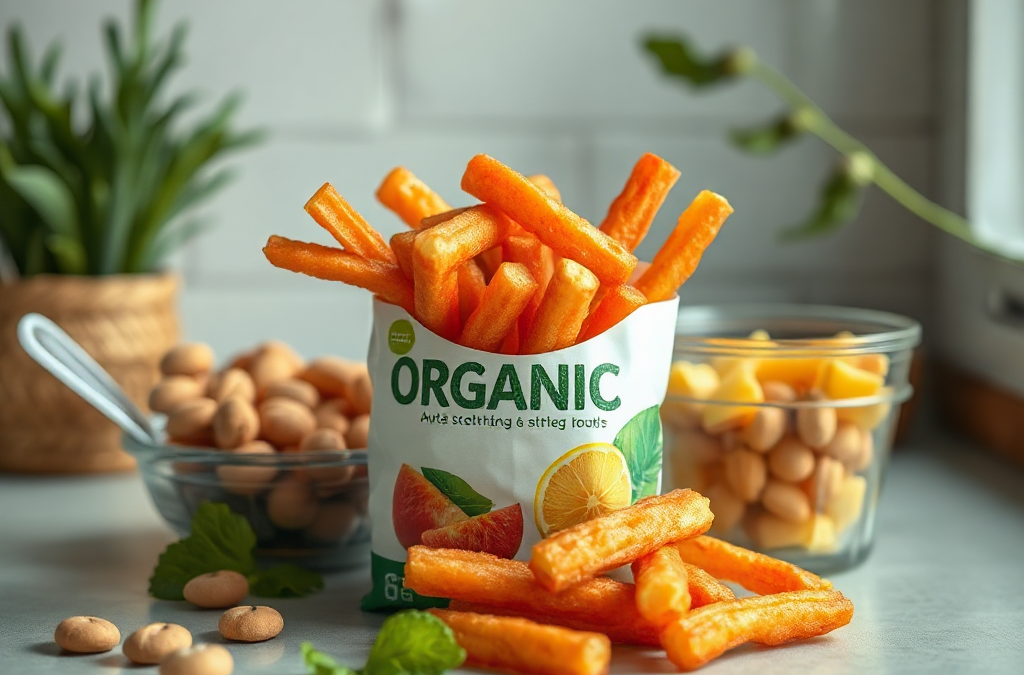
Organic snacks can sometimes be misleading because the organic label describes farming and processing standards, not automatically a food’s sugar content, calorie density, portion size, or overall nutritional quality. A certified organic cookie, cereal bar, or fruit snack may still contain refined flour, added sweeteners, sodium, and concentrated calories. Marketing terms such as “natural,” “made with organic ingredients,” and “no artificial flavors” can further distract from the ingredient list and Nutrition Facts panel. Compare serving sizes, added sugars, fiber, protein, and the first several ingredients, then judge the snack against the eating occasion rather than its front-of-package claims.
What The Organic Label Actually Tells You
The organic designation answers a specific production question: how the agricultural ingredients were grown and, depending on the claim, how the product was handled and processed. It does not answer whether a snack is low in added sugar, rich in fiber, minimally processed, or appropriate for frequent eating. That distinction explains why a certified organic granola bar and a conventional granola bar can have similar nutritional profiles even though their farming standards differ.
Packaged snacks often combine several ingredients, so the organic status of the product may reflect the proportion and treatment of those ingredients rather than the overall character a shopper imagines. A product labeled “made with organic ingredients” is not the same as a product carrying a broader certified organic claim. The wording should be read precisely, not treated as a general health endorsement.
Organic farming standards may matter to shoppers who prioritize production practices, environmental concerns, or limits on certain agricultural inputs. Those are legitimate purchasing values. The mistake is converting that value-based signal into an assumption about nutrition. An organic chocolate sandwich cookie remains a sweet, energy-dense snack; an organic fruit-flavored strip may still provide little protein or fiber compared with whole fruit and nuts.
Use the organic claim as one information category. Then examine nutrition, ingredients, price, taste, storage, and the reason you are buying the item. A parent seeking a convenient school snack may reasonably value an organic option, but the decision should still include allergen information, serving size, and whether the child will be satisfied by it. For broader context, compare the label with why organic snacks can sometimes be misleading rather than relying on package color or certification language alone.
Why Front-Of-Package Claims Distort The Picture
Front labels are designed for quick recognition, while the information that determines nutritional quality usually appears in smaller type on the back or side. Words such as “organic,” “natural,” “pure,” “plant-based,” and “no artificial flavors” may all be accurate within their intended meaning, yet none gives a complete account of the snack. A shopper can see several positive claims before noticing that the product contains a substantial amount of added sugar or offers little fiber.
The phrase “made with organic ingredients” deserves particular attention. It signals that organic ingredients are present, but it does not mean every ingredient is organic. Similarly, “no artificial colors” does not mean the product is free from intense sweetness, refined starches, or high calorie density. A fruit snack colored with fruit or vegetable concentrates can still function nutritionally more like confectionery than a serving of fresh fruit.
Package imagery can reinforce the confusion. Oats, berries, leaves, or farm scenes suggest wholesomeness, but images are not ingredient evidence. Even a snack built around a nutritious ingredient may contain enough syrup, oil, or sweetener to change the practical balance. An oat bar with whole grains may be a useful option, yet the presence of oats alone does not establish that it is filling or low in sugar.
A useful reading order is simple: identify the product type, check the serving size, scan added sugars and fiber, then read the ingredient list. Treat the front panel as a description of the brand’s selling points, not as a nutritional verdict. The common failure is stopping at the first favorable claim and never testing whether the back-panel details support it.
Ingredients And Portion Size Matter More Than The Halo
The ingredient list reveals how the snack is assembled, while the Nutrition Facts panel shows how much of that formulation is in a stated serving. Both are necessary because neither tells the entire story alone. Ingredients appear by weight, so the first few entries help identify whether the product is centered on whole grains, nuts, dried fruit, sweeteners, refined flour, or added fats.
Consider two organic snack bars. One may list oats, almonds, dates, and seeds near the beginning, with a chewy texture created largely by dried fruit. Another may list organic syrup, rice flour, vegetable oil, and sugar before smaller amounts of nuts or fruit. Both can use organic ingredients, but they may differ in satiety, sweetness, and calorie concentration. The second product is not automatically unacceptable; it simply deserves a different role, perhaps an occasional treat rather than a dependable afternoon meal bridge.
Serving size creates another trap. A small pouch may contain multiple servings, and a bar marketed as an individual snack may provide less food than a hungry person expects. Dried fruit illustrates the issue particularly well: removing water concentrates sweetness and energy, making a modest-looking portion easy to eat quickly. Nut-based snacks have the opposite challenge; they can provide protein, unsaturated fat, and minerals, but a small handful can be calorie-dense.
Compare labels using the amount you are actually likely to eat, not only the printed serving. If you would eat the entire pouch, multiply the listed values accordingly. Look for a combination of fiber and protein when fullness matters, and pair a sweeter snack with plain yogurt, cheese, or nuts when that fits your diet and allergy needs. The weak assumption to avoid is that a short ingredient list automatically means a balanced snack; dates, coconut, oil, and syrup can still produce a concentrated product.
A Better Way To Compare Packaged Snacks
Snack comparison works best when it begins with purpose. A small item eaten before exercise, a child’s midday snack, and a dessert after dinner have different requirements. A sweet organic bar may be convenient before activity, while a higher-fiber option with protein may be more useful during a long gap between meals. Judging every package by one universal standard creates unnecessary confusion.
Use this compact label check:
- Clarify the job: Decide whether you need quick energy, portability, appetite control, or simply an enjoyable treat.
- Check the actual portion: Compare the package amount with the quantity you will eat.
- Read the first ingredients: Note whether whole grains, nuts, legumes, fruit, sweeteners, or refined starches dominate.
- Compare added sugar, fiber, and protein: These details often distinguish a sustaining snack from a sweet bite.
- Inspect the price and alternatives: Organic pricing may be worthwhile for your priorities, but a banana, roasted chickpeas, or plain oats may deliver better value in a different setting.
Imagine choosing between an organic cracker and an organic trail mix. The crackers may be easier to portion and more suitable alongside hummus, but they may provide limited protein by themselves. The trail mix may offer nuts and seeds, yet dried fruit and chocolate pieces can raise sweetness and energy density. Neither product wins automatically; the better choice depends on the pairing, portion, and timing.
Signs that your choice is working include predictable hunger, a portion that feels satisfying, and a product that fits your budget without displacing more nourishing foods. Signs of a poor fit include eating several servings unintentionally, feeling hungry again quickly, or treating the organic claim as permission to ignore the rest of the label. Keep notes on actual use for a week if a household repeatedly buys snacks that go unfinished or disappear without satisfying anyone.
When Organic Packaged Snacks Make Sense
Organic packaged snacks can be sensible when convenience, taste, dietary preferences, and production values all matter. They may help someone carry food during travel, provide a shelf-stable option for an emergency drawer, or make a family more comfortable with a product’s sourcing standards. A packaged item can fit a balanced eating pattern when it complements meals and is selected with its nutritional limits in view.
The best use is often specific rather than idealized. An organic whole-grain cracker paired with bean dip can contribute texture and portability to a snack. An organic nut bar may be practical for a hike where refrigeration is unavailable. An organic popcorn product may be preferable to a heavily sweetened snack when its portion and toppings are reasonable. These examples do not turn packaged foods into fresh foods; they show how context changes the decision.
Budget creates a real tradeoff. Paying more for an organic version may leave less money for vegetables, beans, eggs, fruit, or other foods that contribute variety and nutrients. If the price difference is substantial, compare the value of the farming claim with the rest of the household’s food priorities. A conventional snack with a simpler nutritional profile may be a reasonable choice, while an organic snack with heavy sweetening may offer little practical advantage beyond the label.
Do not use organic snacks as a substitute for medical nutrition advice, and do not assume they are suitable for every allergy, intolerance, or dietary goal. Check allergen statements and shared-facility warnings where relevant. For a more grounded shopping habit, connect label reading with why organic snacks can sometimes be misleading and review your most frequently purchased items rather than obsessing over a single occasional treat.
Frequently Asked Questions
Are organic snacks healthier than conventional snacks?
Not automatically. Organic status concerns production standards, while nutrition depends on ingredients, added sugar, fiber, protein, sodium, portion size, and the wider diet.
Can an organic snack still contain a lot of sugar?
Yes. Organic sweeteners are still added sugars, and products such as bars, cookies, and fruit snacks can contain substantial sweetness despite organic claims.
What does “made with organic ingredients” mean?
It means organic ingredients are included, but it does not necessarily mean every ingredient is organic. Read the complete label for the exact claim and product details.
Should I avoid organic dried fruit?
No. Dried fruit can be convenient and provide fiber, but its water has been removed, so portion size matters and it may be less filling than whole fruit.
What should I check first on an organic snack label?
Check the serving size, added sugar, fiber, protein, and first several ingredients. Then decide whether the product fits your purpose, budget, and dietary needs.
Conclusion
Organic snacks are not deceptive simply because they are packaged or sweet; the confusion comes from asking the organic claim to answer questions it was never designed to answer. Use it to assess production preferences, then evaluate the snack’s serving size, ingredients, added sugar, fiber, protein, sodium, price, and intended use. A bar for travel, crackers paired with hummus, and dried fruit for a hike may each work differently from a cookie eaten straight from a large package. Review the labels of the snacks you buy most often, portion multi-serving packages before eating, and compare organic options with both conventional alternatives and simple whole foods. That approach preserves the value of informed organic purchasing without granting packaged snacks an automatic health halo.
Huge Discount on the Best Certified Organic Nutrient Dense Supplement!



