
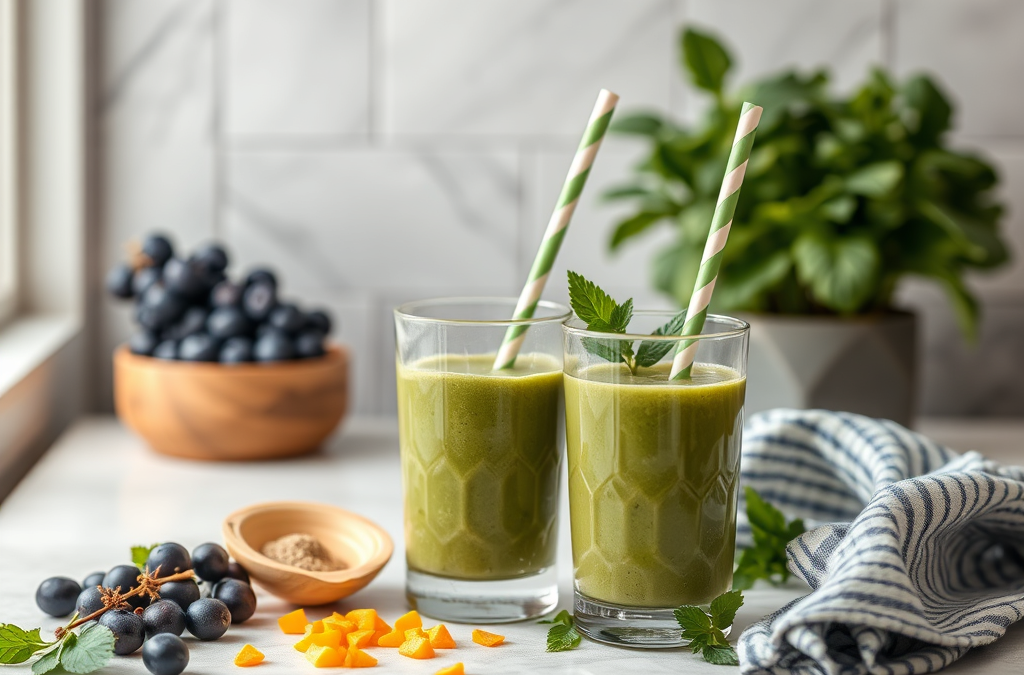
To make organic smoothies that taste great, start by selecting ripe organic fruits such as bananas, berries, and mangoes, which provide natural sweetness and flavor. Incorporate a base like organic yogurt or almond milk for creaminess, and add leafy greens like spinach or kale for nutritional benefits without overpowering the taste. To wrap up, enhance the flavor with natural sweeteners like honey or vanilla extract, while ensuring the right balance of ingredients for a smooth texture.
Choosing the Right Ingredients
To create organic smoothies that truly taste great, the foundation lies in selecting high-quality, ripe organic ingredients. Start with fruits such as bananas, strawberries, and mangoes, which provide natural sweetness and vibrant flavors. Organic berries, in particular, are not only delicious but also packed with antioxidants, making them a healthful choice.
Next, consider adding a base liquid. Options like organic almond milk, coconut water, or even fresh orange juice can enhance the smoothie’s flavor while providing hydration. For those looking for creaminess, organic yogurt or dairy alternatives offer a rich texture. When incorporating greens, opt for mild varieties like spinach or baby kale, which add nutrients without overwhelming the taste.

It’s essential to balance the flavors of your ingredients. For instance, if using tart fruits like raspberries, pairing them with sweeter fruits like bananas can create a more harmonious blend. Experimenting with different combinations will help you discover your personal favorites.
Choosing the Right Ingredients matters because it turns make organic smoothies that taste great from a broad idea into a decision the reader can actually apply. The practical difference usually shows up in the details: how much is needed, when the choice is made, what tradeoff is acceptable, and what sign shows the approach is working. For nutrition topics, the strongest advice connects portion size, food quality, timing, and recovery instead of treating every meal as a fixed serving.
A useful way to handle this section is to compare the normal baseline with the situation that creates extra demand. If organic is the baseline concern, then taste becomes the adjustment point and ingredients becomes the outcome to watch. That keeps the advice specific without forcing the reader into a rigid formula that may not fit their routine, budget, tolerance, schedule, or current level of experience.
The most common mistake is changing too many variables at once. A better approach is to choose one measurable adjustment, use it consistently long enough to see a pattern, and then refine the next step based on energy, comfort, performance, safety, or reliability. This makes the guidance easier to trust because the reader can connect the recommendation to what they observe rather than guessing from a generic checklist.
The practical takeaway is to make the section actionable: identify the main constraint, choose the smallest useful change, and compare the result against the goal. When the outcome improves, the reader can keep the approach. When it does not, the next change should target the most likely bottleneck rather than repeating the same step with more effort.
Blending Techniques for Smooth Consistency
The method of blending plays a crucial role in achieving a smooth and enjoyable texture in your organic smoothies. Begin by adding liquid first; this helps the blades of the blender move freely and ensures that the other ingredients blend seamlessly. Layer the fruits and greens on top of the liquid to prevent them from getting stuck at the bottom.
When blending, start at a low speed to break down the larger pieces before gradually increasing to a higher speed. This technique helps to prevent any chunks from remaining in the final product. For those looking for an ultra-smooth consistency, blending for an additional 30 seconds after the initial blending can make a significant difference.
Another consideration is the order of ingredients. Adding softer items like bananas or yogurt last can help create a creamy texture while preventing them from being over-processed. If you find that your smoothie is too thick, you can always add more liquid gradually until the desired consistency is reached.
Blending Techniques for Smooth Consistency matters because it turns make organic smoothies that taste great from a broad idea into a decision the reader can actually apply. The practical difference usually shows up in the details: how much is needed, when the choice is made, what tradeoff is acceptable, and what sign shows the approach is working. For technology topics, the strongest advice connects the user goal, system constraint, maintenance burden, and measurable outcome.
A useful way to handle this section is to compare the normal baseline with the situation that creates extra demand. If blending is the baseline concern, then make becomes the adjustment point and organic becomes the outcome to watch. That keeps the advice specific without forcing the reader into a rigid formula that may not fit their routine, budget, tolerance, schedule, or current level of experience.
The most common mistake is changing too many variables at once. A better approach is to choose one measurable adjustment, use it consistently long enough to see a pattern, and then refine the next step based on energy, comfort, performance, safety, or reliability. This makes the guidance easier to trust because the reader can connect the recommendation to what they observe rather than guessing from a generic checklist.
Flavor Enhancements and Add-Ins
To elevate your organic smoothies beyond the basics, consider incorporating various flavor enhancements and nutritious add-ins. Natural sweeteners such as honey, maple syrup, or agave nectar can complement the flavors without relying on refined sugars. A splash of vanilla extract or a sprinkle of cinnamon can also enhance the overall taste profile.
In addition to sweeteners, superfood add-ins like chia seeds, flaxseeds, or protein powders can boost nutritional value. For example, adding a tablespoon of chia seeds not only increases fiber but also contributes to a thicker texture. If you’re looking for a protein boost, organic protein powder can make your smoothie more filling, ideal for breakfast or post-workout recovery.
Don’t shy away from experimenting with herbs and spices. Fresh mint or basil can add a refreshing twist, while ginger or turmeric provides a unique flavor and potential health benefits. The key is to start with small amounts and adjust according to your taste preferences.
Flavor Enhancements and Add-Ins matters because it turns make organic smoothies that taste great from a broad idea into a decision the reader can actually apply. The practical difference usually shows up in the details: how much is needed, when the choice is made, what tradeoff is acceptable, and what sign shows the approach is working. For nutrition topics, the strongest advice connects portion size, food quality, timing, and recovery instead of treating every meal as a fixed serving.
A useful way to handle this section is to compare the normal baseline with the situation that creates extra demand. If organic is the baseline concern, then taste becomes the adjustment point and make becomes the outcome to watch. That keeps the advice specific without forcing the reader into a rigid formula that may not fit their routine, budget, tolerance, schedule, or current level of experience.
Common Mistakes to Avoid
While making organic smoothies can be straightforward, several common mistakes can hinder your results. One frequent issue is using too many ingredients, which can lead to a muddled flavor profile. It’s best to stick to a few key ingredients that complement each other.
Another mistake is not balancing sweet and tart flavors. If a smoothie is overly sweet, it might mask the natural flavors of the fruits. Conversely, too much acidity can make it unpalatable. Always taste as you go to find the right balance.
Additionally, consider the texture. Adding too much ice can dilute the flavor and make the smoothie too icy rather than creamy. Instead, use frozen fruits to achieve a cold smoothie without compromising taste. All in all, ensure your blender is powerful enough to handle tough ingredients like leafy greens and frozen fruits; a weak blender may leave chunks, resulting in an unpleasant texture.
Common Mistakes to Avoid matters because it turns make organic smoothies that taste great from a broad idea into a decision the reader can actually prevent. The practical difference usually shows up in the details: how much is needed, when the choice is made, what tradeoff is acceptable, and what sign shows the approach is working. For technology topics, the strongest advice connects the user goal, system constraint, maintenance burden, and measurable outcome.
A useful way to handle this section is to compare the normal baseline with the situation that creates extra demand. If make is the baseline concern, then taste becomes the adjustment point and ingredients becomes the outcome to watch. That keeps the advice specific without forcing the reader into a rigid formula that may not fit their routine, budget, tolerance, schedule, or current level of experience.
Huge Discount on the Best Certified Organic Nutrient Dense Supplement!

Popular Questions
How can I create an effective table of contents for my document?
To create an effective table of contents, start by outlining the main sections and subsections of your document. Use clear and descriptive headings that accurately reflect the content. Ensure the formatting is consistent and update the table of contents as you make changes to the document.
What are the best practices for organizing a table of contents?
Organize your table of contents logically, typically following the order of topics as they appear in the document. Use hierarchical numbering or indentation to distinguish between main sections and subsections. Keep the titles concise but informative to help readers easily navigate the content.
How do I update the table of contents when I add or remove sections?
Most word processing tools allow you to update the table of contents automatically. After making changes to your document, simply refresh or update the table of contents to reflect the new structure. This ensures that page numbers and headings remain accurate and helpful for readers.


