
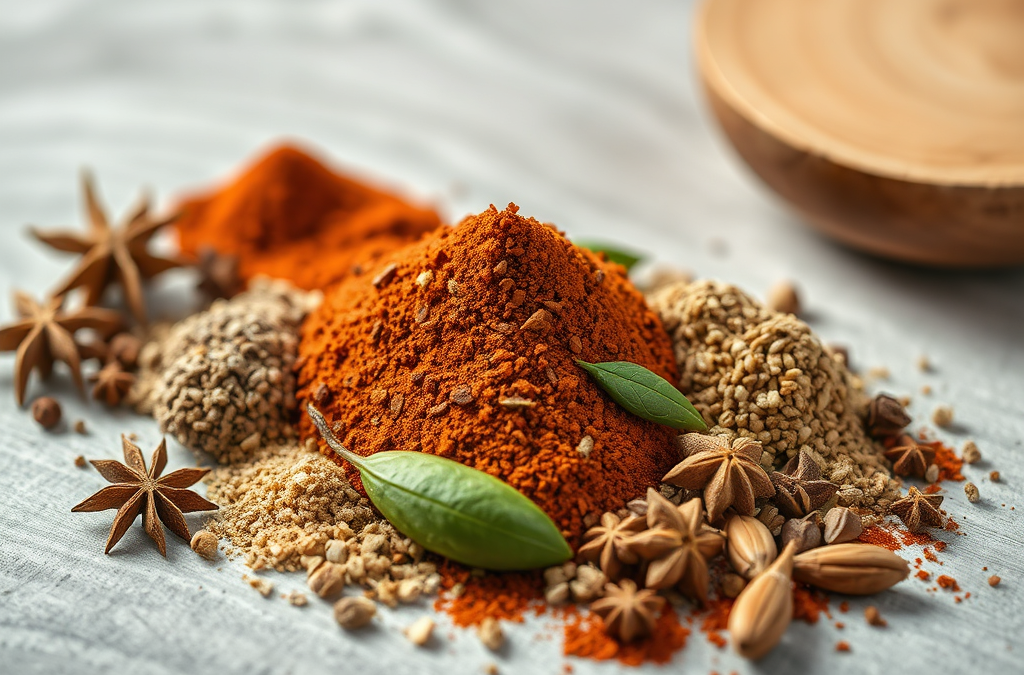
To enhance flavor with organic spices, incorporate techniques such as toasting, grinding, and blending spices to release their full aromatic potential. Pair spices like cumin with coriander or turmeric with ginger to create depth in your dishes. Understanding the right timing for adding spices during cooking can also significantly influence the final taste, ensuring that the flavors meld beautifully.
Understanding Organic Spices
Organic spices are derived from plants grown without synthetic fertilizers or pesticides, making them a healthier choice for flavoring your meals. These spices not only enhance the taste of dishes but also offer various health benefits due to their antioxidant properties. Understanding the unique characteristics of each spice can help you select the right ones for your culinary needs, whether you’re aiming for warmth, earthiness, or freshness in your cooking.
For example, spices like cinnamon and nutmeg provide warmth and sweetness, while cumin and coriander add earthy undertones. Familiarizing yourself with the flavor profiles of different organic spices allows you to experiment and create unique combinations that elevate your dishes.

Understanding Organic Spices matters because it turns enhance flavor with organic spices from a broad idea into a decision the reader can actually apply. The practical difference usually shows up in the details: how much is needed, when the choice is made, what tradeoff is acceptable, and what sign shows the approach is working. For nutrition topics, the strongest advice connects portion size, food quality, timing, and recovery instead of treating every meal as a fixed serving.
A useful way to handle this section is to compare the normal baseline with the situation that creates extra demand. If spices is the baseline concern, then organic becomes the adjustment point and flavor becomes the outcome to watch. That keeps the advice specific without forcing the reader into a rigid formula that may not fit their routine, budget, tolerance, schedule, or current level of experience.
The most common mistake is changing too many variables at once. A better approach is to choose one measurable adjustment, use it consistently long enough to see a pattern, and then refine the next step based on energy, comfort, performance, safety, or reliability. This makes the guidance easier to trust because the reader can connect the recommendation to what they observe rather than guessing from a generic checklist.
The practical takeaway is to make the section actionable: identify the main constraint, choose the smallest useful change, and compare the result against the goal. When the outcome improves, the reader can keep the approach. When it does not, the next change should target the most likely bottleneck rather than repeating the same step with more effort.
Techniques for Flavor Enhancement
To maximize the flavor of organic spices, employing specific techniques is essential. Toasting spices in a dry pan for a few minutes can significantly enhance their aroma and flavor. This process releases the essential oils within the spices, making them more potent. Grinding whole spices just before use ensures that they retain their freshness and flavor, providing a more vibrant taste in your cooking.
Additionally, blending spices can create complex flavor profiles. For instance, a blend of smoked paprika, garlic powder, and onion powder can transform a simple roasted vegetable dish into a flavorful experience. Timing is also crucial; adding spices at the beginning of cooking allows their flavors to infuse into the dish, while adding them towards the end can provide a burst of freshness and intensity.
Techniques for Flavor Enhancement matters because it turns enhance flavor with organic spices from a broad idea into a decision the reader can actually apply. The practical difference usually shows up in the details: how much is needed, when the choice is made, what tradeoff is acceptable, and what sign shows the approach is working. For technology topics, the strongest advice connects the user goal, system constraint, maintenance burden, and measurable outcome.
A useful way to handle this section is to compare the normal baseline with the situation that creates extra demand. If flavor is the baseline concern, then spices becomes the adjustment point and enhance becomes the outcome to watch. That keeps the advice specific without forcing the reader into a rigid formula that may not fit their routine, budget, tolerance, schedule, or current level of experience.
The most common mistake is changing too many variables at once. A better approach is to choose one measurable adjustment, use it consistently long enough to see a pattern, and then refine the next step based on energy, comfort, performance, safety, or reliability. This makes the guidance easier to trust because the reader can connect the recommendation to what they observe rather than guessing from a generic checklist.
The practical takeaway is to make the section actionable: identify the main constraint, choose the smallest useful change, and compare the result against the goal. When the outcome improves, the reader can keep the approach. When it does not, the next change should target the most likely bottleneck rather than repeating the same step with more effort.
Flavor Pairings That Work
Pairing spices effectively can elevate your dishes to new heights. Certain spices complement each other beautifully, creating harmonious flavors. For instance, turmeric pairs well with black pepper, enhancing its absorption and potency. Similarly, the warm notes of cinnamon can enhance the sweetness of dishes featuring apples or pears.
Experimenting with spice pairings can yield delightful results. A combination of cumin and coriander is often used in Indian cuisine, while chili powder and oregano are staples in Mexican dishes. Understanding which spices work well together allows you to create dishes that are not only flavorful but also well-balanced.
Flavor Pairings That Work matters because it turns enhance flavor with organic spices from a broad idea into a decision the reader can actually apply. The practical difference usually shows up in the details: how much is needed, when the choice is made, what tradeoff is acceptable, and what sign shows the approach is working. For technology topics, the strongest advice connects the user goal, system constraint, maintenance burden, and measurable outcome.
A useful way to handle this section is to compare the normal baseline with the situation that creates extra demand. If spices is the baseline concern, then flavor becomes the adjustment point and dishes becomes the outcome to watch. That keeps the advice specific without forcing the reader into a rigid formula that may not fit their routine, budget, tolerance, schedule, or current level of experience.
Common Mistakes to Avoid
When working with organic spices, there are several common pitfalls to avoid. One major mistake is using stale spices, which can lead to bland flavors. Always check the freshness of your spices and replace them regularly. Another common error is overusing spices; while they enhance flavor, too much can overwhelm a dish. It’s essential to start with small amounts and adjust according to taste.
Additionally, neglecting to consider the cooking method can result in lost flavors. For example, adding delicate spices like basil or parsley too early in the cooking process can cause them to lose their vibrant flavor. Understanding how and when to incorporate spices is key to achieving the best results in your cooking.
Common Mistakes to Avoid matters because it turns enhance flavor with organic spices from a broad idea into a decision the reader can actually prevent. The practical difference usually shows up in the details: how much is needed, when the choice is made, what tradeoff is acceptable, and what sign shows the approach is working. For technology topics, the strongest advice connects the user goal, system constraint, maintenance burden, and measurable outcome.
A useful way to handle this section is to compare the normal baseline with the situation that creates extra demand. If spices is the baseline concern, then flavor becomes the adjustment point and enhance becomes the outcome to watch. That keeps the advice specific without forcing the reader into a rigid formula that may not fit their routine, budget, tolerance, schedule, or current level of experience.
The most common mistake is changing too many variables at once. A better approach is to choose one measurable adjustment, use it consistently long enough to see a pattern, and then refine the next step based on energy, comfort, performance, safety, or reliability. This makes the guidance easier to trust because the reader can connect the recommendation to what they observe rather than guessing from a generic checklist.
Frequently Asked Questions
What are organic spices?
Organic spices are derived from plants cultivated without synthetic pesticides or fertilizers, ensuring higher quality and flavor.
How can I enhance the flavor of spices?
Enhance spice flavor by toasting them in a dry pan, grinding them fresh, and blending complementary spices.
What spices pair well together?
Spices like cumin and coriander, turmeric and black pepper, and cinnamon with apples create harmonious flavor combinations.
How do I know if my spices are fresh?
Check for strong aroma and vibrant color; if spices are dull or lack scent, they may be stale and should be replaced.
What common mistakes should I avoid with spices?
Avoid using stale spices, overusing spices, and adding delicate spices too early in the cooking process.
Conclusion
Enhancing flavor with organic spices involves understanding their unique properties, employing effective techniques, and making thoughtful pairings. By toasting, grinding, and blending spices, you can unlock their full potential. Avoiding common mistakes will ensure your dishes are flavorful and balanced. Take the time to experiment with different organic spices, and you will elevate your culinary creations to new levels of deliciousness.
Huge Discount on the Best Certified Organic Nutrient Dense Supplement!