
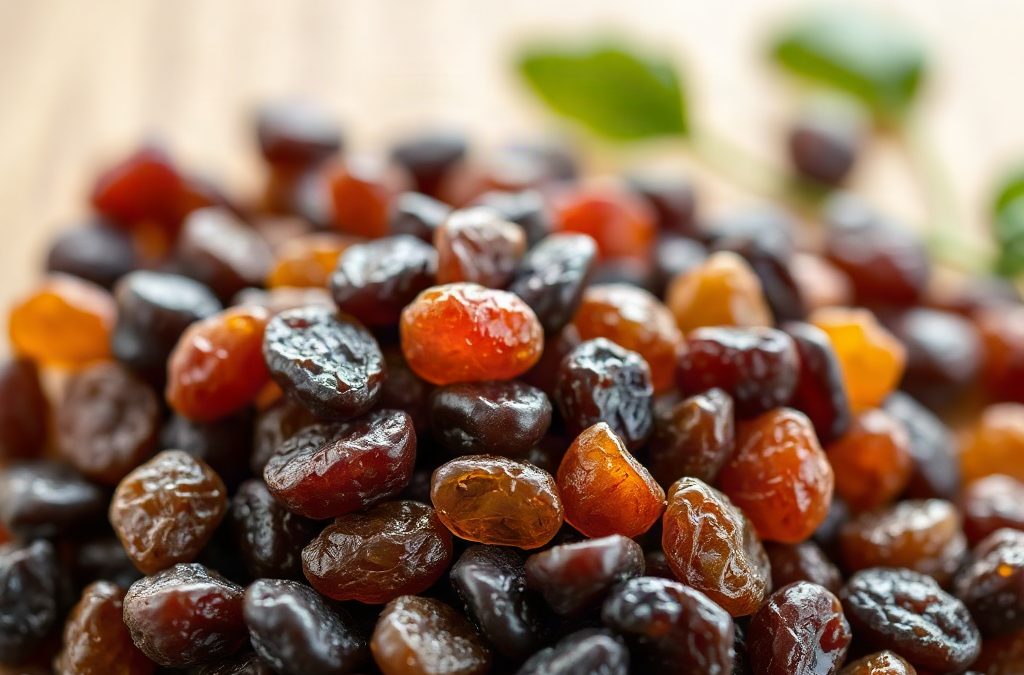
Organic raisins are dried grapes with naturally concentrated sugar, so a practical serving is usually about 1/4 cup, while added sugar depends on the ingredient list rather than the organic label. Drying removes water and concentrates the fruit’s natural sugars, making a small handful more energy-dense than the same volume of fresh grapes. Choose packages listing raisins as the only ingredient when you want no added sweetener, and compare serving sizes before judging carbohydrate or sugar amounts. People managing diabetes, dental risk, or total carbohydrate intake may need a smaller portion or should pair raisins with foods such as plain yogurt, nuts, or oatmeal rather than eating from the bag.
What a Raisin Serving Really Represents
A raisin is a grape with most of its water removed. That simple change explains why serving size matters: the fruit becomes smaller, sweeter, and easier to eat quickly, while its naturally occurring carbohydrates become concentrated in each bite. A cup of raisins therefore represents far more fruit than a cup of fresh grapes by volume. Comparing the two without accounting for water content can make dried fruit seem unexpectedly high in sugar.
A useful starting portion is about 1/4 cup, often described as a small handful. The exact weight and nutrition values vary by brand and raisin size, so the package label remains the best reference. A tablespoon can be a more suitable amount when raisins are being added to cereal, salad, trail mix, or a baked dish rather than eaten as the main snack.

The practical question is not whether raisins are “good” or “bad,” but how much concentrated fruit fits the eating occasion. Someone sprinkling raisins over oatmeal may need only a tablespoon because oats, nuts, seeds, and yogurt provide the bulk of the meal. Someone packing a compact hiking snack may choose a larger portion because raisins are portable and do not require refrigeration. The tradeoff is that convenience makes accidental over-serving easy.
Use a measuring cup or small container for the first few portions instead of relying on a large handful. A portion that fits comfortably in the palm may be reasonable for one person and excessive for another, particularly if the same snack includes sweetened granola, chocolate, or juice. Readers comparing dried fruit with fresh fruit should compare similar weights or the label’s stated serving sizes, not simply equal cups.
For a more tailored reference, Organic raisins: serving sizes and added sugar can be considered alongside the rest of the meal. Portion awareness is especially useful when raisins are eaten frequently, because small deviations repeated every day can matter more than one occasional larger serving.
Natural Sugar Versus Added Sugar on the Label
Plain raisins contain sugar that originated in the grape. That sugar is not the same as sugar added during processing, even though both appear in the product’s total sugar amount. Drying concentrates the grape’s natural sugars; it does not automatically mean that table sugar, syrup, or another sweetener was added.
The ingredient list answers the added-sugar question most directly. A simple package may list “raisins” as the sole ingredient. Other products, particularly flavored blends or coated snacks, may include cane sugar, glucose syrup, fruit juice concentrate, honey, or other sweetening ingredients. Organic certification does not by itself mean a product is unsweetened. An organic raisin product can still contain an added sweetener if the ingredient list and labeling rules permit it.
The Nutrition Facts label adds a second layer of information. Total sugars include naturally occurring and added sugars, while the added sugars line identifies sugar introduced during processing. A product may show zero grams of added sugar yet still contain a substantial amount of total sugar because raisins naturally contain concentrated fruit sugar. Conversely, a raisin snack with added sweetener may have both the raisins’ natural sugar and the extra ingredient.
Check the ingredient list before assuming that words such as “natural,” “organic,” or “fruit snack” describe the sugar profile. For instance, a raisin-and-cranberry mix may be organic but sweetened, while a plain conventional raisin package may contain no added sugar. Organic production and added-sugar status are separate purchasing decisions.
Package comparisons can be misleading when one label uses a tablespoon and another uses a 1/4-cup serving. Normalize the comparison by checking serving size, total sugar, added sugar, and the number of servings in the container. A small box may look like one snack but contain more than one labeled serving. If a product has several ingredients, ask whether the extra sweetness adds a purpose you actually want; otherwise, plain raisins offer a simpler way to control what goes into the snack.
Choosing a Portion for Snacks and Meals
The best raisin serving depends on what the raisins replace and what accompanies them. Eaten alone, a small measured portion may be more satisfying when paired with protein, fat, or fiber from another food. Mixed into plain Greek yogurt, unsweetened oatmeal, or a salad with chickpeas and seeds, raisins contribute sweetness and texture without requiring a large amount. Eating them directly from a family-size bag provides less visual control and often turns a planned serving into repeated handfuls.
A practical portion method is to decide the role of the raisins first. For a topping, use one or two tablespoons. For a compact snack, measure roughly 1/4 cup and combine it with nuts or seeds if that pairing suits your dietary needs. For baking, follow the recipe’s amount, then consider how many portions the finished food produces; raisins in muffins or bars can be easy to overlook when counting the sweet ingredients.
Pairing does not cancel the sugar or carbohydrate in raisins. It changes the eating context by adding volume, texture, and other nutrients that may make a smaller amount feel complete. A handful of raisins alongside a sweetened granola bar is different from raisins folded into plain oats with walnuts. Neither comparison makes a universal prescription, but it shows why the whole snack matters more than the raisin label alone.
People monitoring blood glucose should pay attention to their own response and the total carbohydrate in the meal rather than assuming that organic status changes the metabolic effect. A smaller measured portion may be more workable than avoiding raisins entirely, while another person may prefer fresh fruit because its water content makes a larger-volume serving easier to manage. Those with diabetes or a medically prescribed eating plan should coordinate individual choices with their clinician or dietitian.
Dental considerations also favor portion awareness. Sticky dried fruit can remain on tooth surfaces longer than juicy fresh fruit, especially when nibbled repeatedly throughout the day. Keeping raisins with a meal instead of grazing on them for hours, drinking water afterward, and maintaining regular oral care are reasonable habits. They do not turn raisins into a risk-free food, but they reduce the pattern of constant exposure.
Common Mistakes and Better Ways to Use Raisins
The most common mistake is treating a large package as a single serving. A resealable bag encourages casual eating, and the small size of each raisin makes portions difficult to estimate by sight. Pre-portion raisins into small containers or place them in a bowl before eating. The intervention is simple, but it addresses the actual cause of overconsumption: low visual friction and concentrated sweetness.
A second mistake is assuming that “no added sugar” means low sugar overall. Unsweetened raisins still contain their natural fruit sugars, and drying means that a modest volume contains more sugar than the same volume of fresh grapes. The useful distinction is not between “sugar-free” and “sugary,” but between naturally concentrated fruit and products with additional sweeteners.
A third mistake is using organic certification as a shortcut for every nutrition decision. Organic labeling concerns production standards, not a guaranteed portion size, calorie level, or absence of sweeteners. Read the ingredients and Nutrition Facts panel even when the front of the package emphasizes organic farming. If your priority is avoiding added sugar, the words you need to verify are found in those label sections.
Raisins work well when their sweetness replaces a less deliberate sweetener. Stirring a small amount into unsweetened porridge can reduce the need for sugar or flavored syrup. Chopping them into a lentil salad can balance acidic dressing and savory ingredients. In contrast, adding them to an already sweet cereal, dessert, or snack bar may increase sweetness without improving the meal’s overall balance.
Use this compact check before buying or serving:
- Confirm the labeled serving size and count how many servings the package contains.
- Read the ingredient list for sugar, syrup, honey, juice concentrate, or other sweeteners.
- Check total sugar and added sugar separately.
- Choose a measured portion suited to a topping, meal, or standalone snack.
- Notice whether repeated grazing, dental concerns, or a medical carbohydrate target calls for a different approach.
Another useful resource on Organic raisins: serving sizes and added sugar can support a broader review of dried-fruit choices. The priority is not finding a perfect package; it is matching an unsweetened or sweetened product, portion, and eating pattern to the purpose of the food.
Frequently Asked Questions
Are organic raisins lower in sugar than regular raisins?
Not necessarily. Organic and conventional raisins can have similar naturally occurring sugar; compare the Nutrition Facts panel and serving size.
How can I tell whether raisins have added sugar?
Read the ingredient list and the added sugars line. A package listing only raisins generally has no added sweetener.
What is a reasonable serving of raisins?
About 1/4 cup is a common reference, while one or two tablespoons may be enough as a topping. Use the package label for the exact serving.
Are raisins a good substitute for table sugar?
They can add sweetness, texture, and some fruit nutrients to foods such as oats or salads, but their natural sugar still counts toward the meal.
Should people with diabetes avoid raisins?
Not everyone needs to avoid them, but portion and total carbohydrate matter. Individual guidance from a clinician or dietitian may be appropriate.
Conclusion
Raisins fit most clearly into a balanced eating pattern when you treat them as concentrated dried fruit rather than as a free-flowing snack. Measure a portion, check whether the ingredient list includes a sweetener, and compare the label’s serving size before judging total or added sugar. Plain organic raisins may contain no added sugar, but organic certification does not remove the natural sugar concentrated by drying. Use smaller amounts as toppings, combine a snack portion with foods that add substance, and avoid grazing from the package. Fresh fruit may be a better choice when greater volume or hydration is the priority. If blood-glucose management, dental health, or a prescribed carbohydrate target shapes your diet, adjust the portion to that specific need rather than relying on the front-of-package label.
Huge Discount on the Best Certified Organic Nutrient Dense Supplement!



