Comparing labels on organic plant-based protein powders means weighing protein per serving, ingredient simplicity, amino acid sources, organic certification, and serving cost rather than relying on front-label claims. Check the serving size first, then compare grams of protein, added sugars, sodium, sweeteners, gums, and the number of ingredients. Pea, soy, and blended formulas may provide more complete amino acid coverage than a single lower-protein grain or seed powder, but tolerance and dietary restrictions still matter. Organic certification describes production standards, not automatically higher protein quality or better taste. A useful comparison also checks allergen statements, third-party testing information, and whether the powder fits the smoothie or meal where you plan to use it.
Read the Nutrition Panel Before the Front Label
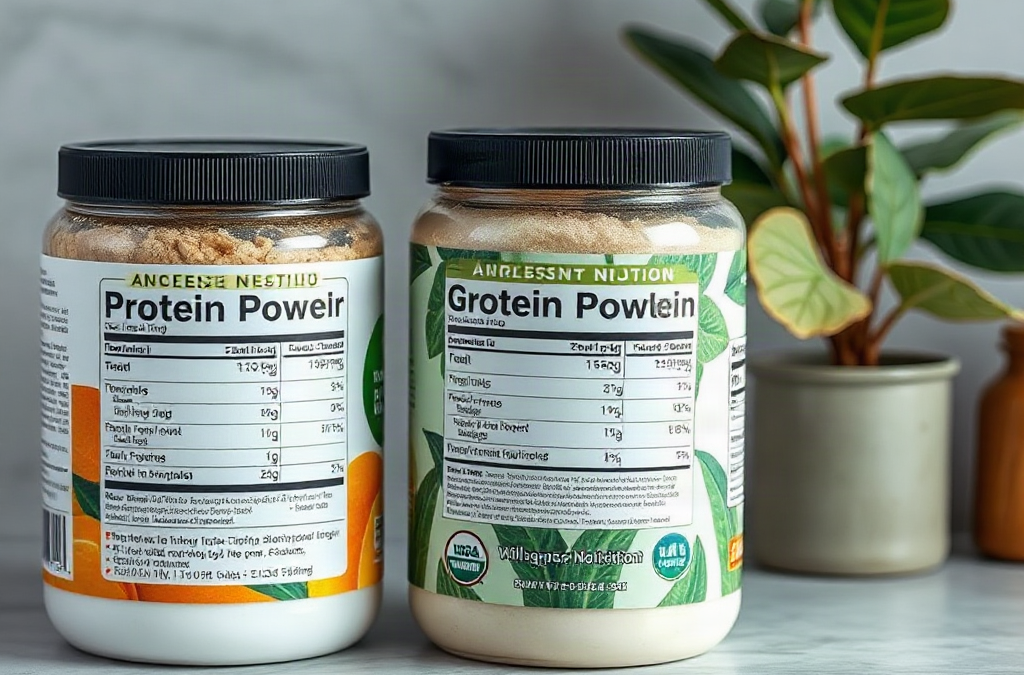
The nutrition facts panel provides the most useful starting point because package phrases such as “clean,” “complete,” or “high protein” do not show how the product compares with another powder. Record the serving size, protein grams, calories, carbohydrate, fiber, fat, added sugars, and sodium. A scoop labeled as 30 grams cannot be compared fairly with a 45-gram serving until both products are viewed on the same serving basis.
Protein density is a practical comparison. A powder with 20 grams of protein in 120 calories offers a different nutritional profile from one with 18 grams in 180 calories, especially if the second product includes substantial starch, coconut ingredients, or sweeteners. Neither is automatically wrong: the higher-calorie option may suit someone building a filling breakfast, while the more concentrated option may work better in a smaller smoothie. The mistake is treating the scoop size or protein number alone as the whole decision.
Added sugar deserves its own line of scrutiny. Some flavored products use cane sugar, coconut sugar, or syrups; others use stevia, monk fruit, or sugar alcohols. “No added sugar” does not mean unsweetened, and naturally occurring carbohydrate from ingredients such as oats or dates is different from a separately added sweetener. Look at the ingredient list alongside the panel rather than assuming a health-oriented package front tells the full story.
A quick label note can include four figures: serving grams, protein grams, added sugar, and sodium. Then compare products used in the same way. A plain powder mixed with unsweetened soy milk is not nutritionally equivalent to a sweetened powder blended with fruit, nut butter, and juice. For a broader explanation of label reading, the Comparing labels on organic plant-based protein powders resource can serve as an internal reference while you check actual packages.
Compare Protein Sources and Amino Acid Context
The plant source changes the protein profile, texture, flavor, and likely tolerance of a powder. Pea protein is common in concentrated formulas and is often paired with rice protein. Soy protein can provide a relatively protein-dense option, while hemp, pumpkin seed, and whole-grain ingredients may bring fiber, fats, or a distinctive flavor along with less protein per scoop. A blend is not automatically superior, but combining sources may address the limitations of relying on one plant ingredient.
Protein quality is more than the number printed in bold. Amino acids are the building blocks of protein, and plant proteins vary in their amino acid patterns and digestibility. A label may not list every amino acid, so the ingredient order and formulation can still provide useful clues. A pea-and-rice blend offers a different amino acid mix from a single rice powder. That does not make a single-source product useless; the rest of the day’s diet contributes protein from foods such as beans, lentils, tofu, tempeh, nuts, seeds, and grains.
Consider the intended use. Someone adding powder to oatmeal may value a neutral flavor and moderate protein because the oats, seeds, and soy milk already contribute nutrients. Someone using a shake after a meal with little protein may prioritize a higher-protein serving and a formula that is easy to digest. Athletes or people with higher protein needs may want individualized guidance rather than assuming a package claim defines an appropriate intake.
A common failure is choosing a powder because “plant-based” appears on the front while ignoring the source-specific tradeoff. Hemp powder may provide more fiber but can feel gritty. A pea-only powder may be concentrated but taste earthy. Soy may be unsuitable for someone avoiding soy, even when its protein profile is attractive. Compare source, protein density, texture, and dietary fit together, then use the label comparison notes to record why one formula suits your routine better than another.
Separate Organic Claims From Ingredient Quality
Organic certification and nutritional quality answer different questions. An organic label relates to how qualifying agricultural ingredients were produced and handled under the applicable certification system; it does not guarantee a certain protein amount, flavor, amino acid pattern, calorie level, or absence of processing. Two organic powders can therefore have very different nutrition panels and ingredient lists.
Check the certification statement and the scope of the claim rather than treating the word “organic” as a complete quality score. A product may contain an organic plant protein base but also list other ingredients that require closer reading. Packaging can use several organic-related phrases, so the certification seal or certifier information is more informative than a general natural-looking design. If the claim is unclear, consult the manufacturer’s documentation or the relevant official organic program rather than guessing.
Processing also needs a balanced interpretation. Protein powders are concentrated, shelf-stable foods made through steps that separate or mill ingredients, and that convenience distinguishes them from whole beans, lentils, tofu, or seeds. A powder may make it easier to add protein to a breakfast, but it usually does not replace the variety, water, fiber structure, and culinary value of whole foods. This is a tradeoff, not a reason to reject every processed product.
For example, compare an organic pea protein with two ingredients to an organic “superfood” blend containing several powders, flavoring agents, and sweeteners. The blend might offer a more appealing taste or extra fiber, while the short formula makes the protein source and serving economics easier to evaluate. Neither label proves a superior overall diet. Prioritize certification clarity, protein amount, ingredient transparency, and how the product fits alongside foods such as chickpeas, black beans, quinoa, tofu, and unsweetened dairy alternatives.
Check Sweeteners, Additives, and Tolerance
Ingredient lists explain why two powders with similar protein numbers can produce different experiences. Sweeteners, cocoa, flavorings, thickeners, emulsifiers, and added fibers affect taste, texture, mixing, and gastrointestinal tolerance. A short list is not a guarantee of comfort, but it makes troubleshooting easier because fewer variables are involved.
Gums and fibers may improve suspension and mouthfeel, yet some people notice bloating or loose stools after products containing particular fibers or sugar alcohols. A formula with inulin, chicory-root fiber, or a large amount of concentrated added fiber may be less suitable for someone whose digestive system reacts to those ingredients. The response is individual, so a careful comparison should include what happens after use, not just what looks appealing on paper.
Allergen and cross-contact information matters even when the main protein is familiar. Soy, pea, tree nuts, peanuts, wheat, and sesame may appear in the formula or in facility warnings. People with allergies should follow medical advice and manufacturer labeling; an informal “probably safe” judgment is not an adequate substitute. Anyone with a diagnosed condition, medication concern, or persistent digestive symptom should discuss supplement choices with a qualified clinician.
A practical trial uses one product at a time, a measured serving, and a familiar liquid or food. If a flavored powder tastes overly sweet in water, it may work better in plain yogurt or a blended breakfast, but that changes the total nutrition and allergen context. The common mistake is changing the powder, milk alternative, fruit, and fiber additions simultaneously, which makes the source of a problem impossible to identify. Comparing labels on organic plant-based protein powders works best when sensory and digestive observations are written beside the printed ingredients.
Use Serving Cost and Testing to Make the Final Choice
Price per container can hide the real cost of the protein. Divide the purchase price by the number of labeled servings, then compare the cost per 20 grams of protein or another consistent amount. A larger tub may be cheaper per serving but wasteful if the flavor becomes unpleasant or the powder is used only occasionally. A smaller package can be a sensible test when texture and tolerance are uncertain.
Serving economics also reveal the effect of incomplete scoops or oversized portions. If one powder requires two scoops to reach the protein amount provided by one scoop of another, compare the actual grams and cost rather than the scoop count. Include the liquid or foods needed to make each option enjoyable. An inexpensive plain powder may become less economical if it requires several additional ingredients every time, while a flavored powder may be convenient but contain more sweetener than you want.
Quality verification deserves attention, but labels should be interpreted accurately. Look for transparent manufacturer contact details, batch or lot information, allergen disclosure, and any credible third-party testing statement. Testing can address identity or contamination concerns depending on the program, but a seal alone does not tell you whether the product tastes good, suits your diet, or provides the amount of protein you need. Do not treat “tested” as a substitute for reading the nutrition panel.
Use this priority order when two products seem close:
- First: rule out allergens, ingredients you avoid, and unclear serving information.
- Next: compare protein density, added sugar, sodium, and source or blend.
- Then: assess certification details, testing transparency, flavor, texture, and digestive tolerance.
- To wrap up: calculate cost per comparable amount of protein and choose the product you will use consistently.
The best label is therefore context-dependent. A plain, concentrated powder may suit a person who controls flavor with berries and nut butter; a modestly sweetened blend may be more realistic for someone who otherwise skips protein at breakfast. Neither choice should displace varied whole-food sources without a reason, and neither should be used to make treatment or disease-prevention claims.
Frequently Asked Questions
What should I compare first on a protein powder label?
Check serving size, grams of protein, calories, added sugar, sodium, and the main protein source before assessing flavor or marketing claims.
Is an organic protein powder automatically healthier?
No. Organic status addresses production and certification standards, while protein content, sweeteners, additives, allergens, and overall dietary fit require separate evaluation.
Are plant-based protein blends better than single-source powders?
A blend may provide a broader amino acid pattern, but a single-source powder can still fit a balanced diet. Taste, digestion, restrictions, and protein density also matter.
How can I compare the cost of two different tubs?
Calculate the price per labeled serving, then compare the cost for the same amount of protein, such as 20 grams, rather than comparing container price or scoop count.
What if a plant protein powder causes digestive discomfort?
Review added fibers, sugar alcohols, gums, serving size, and accompanying ingredients. Stop using a product that causes concerning symptoms and seek qualified medical advice when symptoms persist or are severe.
Conclusion
A useful label comparison begins with measurable details: serving size, protein density, ingredient source, added sugar, sodium, allergens, and cost per comparable protein amount. Organic certification can matter to your purchasing values, but it should not replace those checks. Read the panel beside the ingredient list, distinguish a concentrated powder from a broader meal ingredient, and account for texture and digestive tolerance during a small trial. Choose a blend when its amino acid context and taste fit your needs; choose a simpler formula when transparency and flexibility matter more. Keep beans, lentils, tofu, tempeh, nuts, seeds, and other whole foods in the wider eating pattern. The strongest purchase is the one with clear labeling that you can use comfortably and consistently without overlooking the rest of your diet.
Huge Discount on the Best Certified Organic Nutrient Dense Supplement!

Related Content
- Best Organic Protein Powder in Dandridge Tennessee
- The Role of Organic Foods in Alleviating Joint Pain
- Can Organic Produce Reduce Exposure to Heavy Metals: Understanding the Impact on Health and Nutrition
- Best Organic Vitamins in Price Texas
- The Ultimate Guide to 10 Effective nutrient dense vegan nutrition Strategies for 2025