
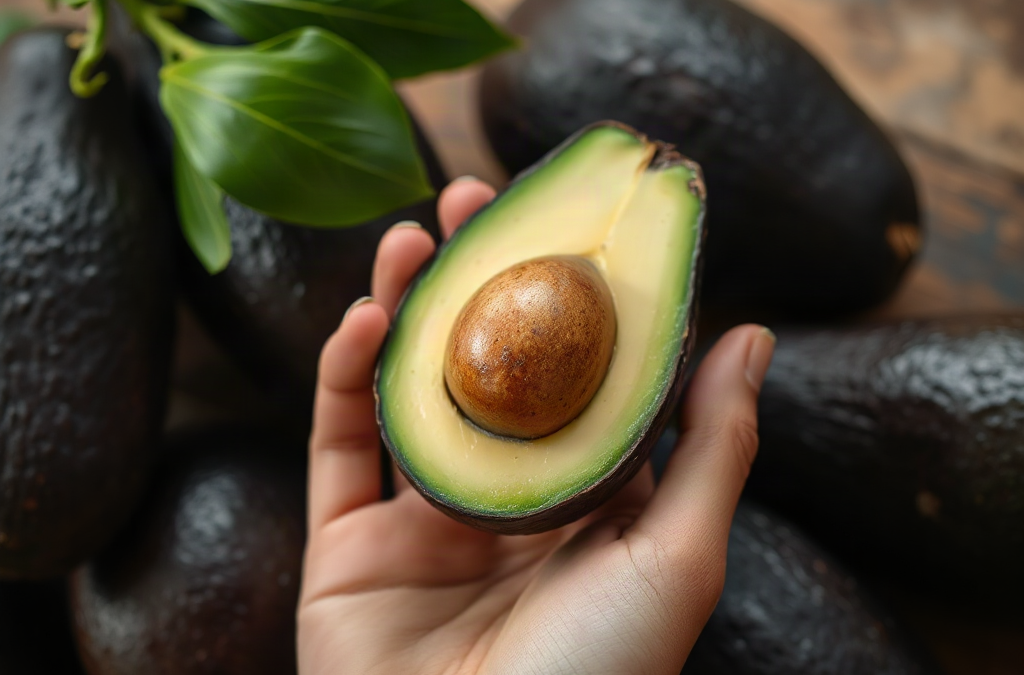
Avocado ripeness checks and storage decisions depend on firmness, stem-end color, intended use, and whether the fruit is whole or cut. A ripe avocado usually yields slightly to gentle palm pressure without feeling hollow, while a loose stem can reveal green or brown flesh beneath it. Keep firm avocados at room temperature until they soften, then refrigerate them to slow further ripening; refrigerate cut pieces in an airtight container with a little lemon or lime juice and use them promptly. Avoid relying on skin color alone, since varieties differ and bruising can imitate ripeness.
How to Tell When an Avocado Is Ripe
Firmness is the most useful everyday ripeness signal for an avocado. Hold the fruit in your palm and press gently with the broad part of your fingers rather than poking it with a fingertip. A ready avocado should give slightly and evenly, then recover without feeling hard, mushy, or sunken. A fruit that feels completely rigid needs more time; one that collapses under light pressure may already be overripe.
The stem end provides a helpful secondary check. If the small stem cap comes away easily, the flesh underneath may offer a clue: green often suggests a usable interior, while brown can indicate browning or overripeness near that end. The stem test is not conclusive, because removing the cap can damage the fruit and does not reveal every internal defect. Use it alongside firmness rather than treating it as a pass-or-fail test.

Skin color deserves caution. Hass avocados commonly darken as they soften, but color varies by cultivar and may reflect surface aging, bruising, or handling rather than the condition of the flesh. Green-skinned varieties can remain green when ripe. A dark exterior is not proof of readiness, and a bright green exterior is not proof that the fruit needs several more days.
Match the check to the meal you have planned. For slicing onto toast, a ripe but resilient avocado is easier to cut cleanly than one that feels soft. For guacamole, slightly softer fruit may blend well, provided it has no sour odor, mold, watery leakage, or extensive dark flesh. If a hard avocado is needed for a specific meal, buying several at different firmness levels is more reliable than forcing one fruit to ripen on a deadline. The related Avocado ripeness checks and storage decisions page can help organize that timing choice.
Choosing Room Temperature or Refrigerated Storage
Unripe whole avocados generally belong at room temperature because chilling slows the natural softening process. Place them in a dry spot away from direct sunlight and strong heat. A countertop is usually more practical than a warm window or the area beside a stove, where uneven heat can soften the outside faster than the center.
A paper bag may concentrate naturally released ethylene around the fruit and speed ripening, especially when an avocado is stored with another ripe fruit. That approach can be useful when dinner is approaching, but it reduces your margin for error. Check the fruit at least daily once it begins to yield. A sealed plastic bag is a weaker choice because trapped moisture can encourage surface deterioration, while pressure from stacked produce can create bruises that resemble ripeness.
Refrigeration becomes useful after the avocado reaches the desired softness. The cold environment does not reverse ripeness, but it can slow further softening and give you more time to use the fruit. This is a tradeoff: a firm avocado placed in the refrigerator may remain hard longer than expected, while a ripe avocado chilled for a short period is easier to schedule for a later meal.
Consider the condition of the fruit before choosing its location. A nearly ripe avocado with one bruised area should be used soon rather than stored for an extended period. A firm, unblemished fruit can wait at room temperature. Do not store avocados beneath heavy items; pressure injuries may darken the flesh even when the exterior initially looks acceptable. A simple routine is to separate fruit by firmness, check the softest pieces first, and refrigerate only the ones that have reached the texture you want.
Storing Cut Avocado Without Unnecessary Waste
Cut avocado changes faster than an intact fruit because the exposed flesh contacts oxygen. That exposure encourages enzymatic browning, which affects appearance more quickly than it necessarily affects safety. Reduce the exposed surface, limit air contact, and refrigerate the piece promptly rather than leaving it on the counter while preparing the rest of a meal.
For half an avocado, leave the pit in only if it helps protect a small area; the pit does not preserve the entire exposed surface. Press food-safe plastic wrap directly against the flesh, or place the half in an airtight container with minimal empty space. A small amount of lemon or lime juice can slow browning, though it changes the flavor and does not make the cut fruit last indefinitely. Use a clean knife and utensil, especially when the avocado will be served without further cooking.
Mashed avocado presents a different storage problem because more of its surface is exposed. Smooth it into a shallow container, press wrap directly over the top, and refrigerate it. The surface may darken despite these steps. Stirring can redistribute the color change, but it will not restore freshness if the mixture has developed an off smell, slimy texture, or unusual fermentation-like taste.
Use appearance together with smell and texture. A thin brown layer can sometimes be removed from otherwise normal flesh, but widespread discoloration, mold, excessive liquid, or unpleasant odor is a reason to discard it. Refrigeration slows deterioration; it does not stop it. If you need avocado for lunches, cutting only the portion required for each meal often preserves quality better than preparing several days of portions at once. For broader meal-planning ideas, see Avocado ripeness checks and storage decisions alongside your usual produce-storage routine.
Common Ripeness Mistakes and Better Decisions
The most common mistake is squeezing an avocado repeatedly with the fingertips. Concentrated pressure bruises the flesh beneath the skin, creating dark patches that can be mistaken for natural ripeness. Use a gentle palm check instead, and rotate the fruit to notice whether softness is even. A single soft spot may indicate impact damage rather than a fully ripe avocado.
Another weak assumption is that every avocado ripens on the same schedule. Size, variety, starting maturity, room temperature, and handling all affect timing. A fruit that is still hard after several days may have been harvested at a different stage, while one stored in a warm kitchen may pass from firm to mushy quickly. Check progress rather than relying on a fixed number of countertop days.
Do not cut an avocado open simply to test it unless you are prepared to use it. Once cut, it has a larger exposed surface and needs prompt refrigeration. If a whole fruit feels close to ready, plan a meal around it and move it to the refrigerator if the meal is delayed. That choice usually preserves more quality than cutting it early and hoping an airtight container will maintain the original texture.
A practical decision sequence is:
- Hard and unblemished: keep it at room temperature and check daily.
- Slightly yielding: use soon or refrigerate to slow softening.
- Soft but intact: cut, inspect, and use promptly.
- Cut and normal-smelling: cover tightly, refrigerate, and monitor for browning or texture change.
- Leaking, moldy, sour-smelling, or extensively slimy: discard it.
These choices protect both quality and food value. Avocado is calorie-dense and supplies monounsaturated fat, fiber, and nutrients such as potassium, but those benefits do not justify keeping fruit that shows clear spoilage. The priority is not perfect color; it is sound texture, clean aroma, and timely use. When buying several avocados, select a mix of firm and ready-to-eat fruit rather than expecting one storage method to suit every piece.
A Simple Storage Plan for Real Meals
The best storage decision follows the meal schedule. If you are shopping for a weekend meal, choose mostly firm fruit and allow it to soften on the counter. If you need an avocado tonight, select one with slight, even give and avoid fruit with deep dents. For packed lunches, refrigerate ripe whole fruit overnight and cut it close to serving time whenever possible.
Households with uneven use benefit from dividing fruit by readiness. Keep hard avocados together in a visible place, move ripe ones to the refrigerator, and label a container of cut fruit with the day it was prepared. This is more dependable than placing every avocado in the refrigerator immediately, which may postpone ripening and make meal planning unpredictable.
Texture also determines the best application. A firm avocado can be diced carefully for a salad, although it may lack the creamy consistency expected in a spread. A softer fruit is better for guacamole or blending, but inspect it closely for internal bruising. Choosing the right use for the fruit’s condition reduces waste without pretending that an overripe avocado can deliver the texture of a fresh one.
For readers comparing storage choices with preparation habits, Avocado ripeness checks and storage decisions offers a useful reference point: judge the whole fruit first, control temperature second, and protect cut surfaces last. That order reflects how the fruit changes and prevents a common error—using a storage trick to compensate for a poor-quality or already damaged avocado.
Frequently Asked Questions
How can you tell if an avocado is ripe without cutting it?
Press gently with your palm. Slight, even give usually indicates readiness; a hard feel means it needs more time, while collapse or large soft spots may indicate overripeness or bruising.
Should unripe avocados be refrigerated?
Usually no. Keep firm whole avocados at room temperature so they can soften, then refrigerate them after they reach the texture you want.
Does leaving the pit in prevent avocado browning?
No. The pit protects only the small area it covers. Airtight wrapping or a container that limits air contact is more useful for the exposed flesh.
Can brown avocado flesh still be used?
A thin brown layer may be removable if the remaining flesh smells and feels normal. Discard the avocado if it has mold, a sour odor, leaking liquid, or widespread sliminess.
What is the best way to store half an avocado?
Apply a little citrus juice if desired, press wrap directly against the cut surface, place it in an airtight container, and refrigerate it for prompt use.
Conclusion
Good avocado storage begins before the knife touches the fruit. Use gentle, even pressure to judge firmness, treat skin color as a supporting clue rather than proof, and inspect the stem end only as an additional signal. Keep hard whole avocados at room temperature, refrigerate ripe ones when a meal is delayed, and protect cut flesh from air with tight coverage and prompt chilling. Texture, aroma, and visible spoilage matter more than achieving a perfectly green surface. Buying avocados at different stages of readiness also makes timing easier and reduces waste. When a fruit has deep damage, mold, leakage, or an unpleasant smell, discard it instead of trying to rescue it with seasoning or blending.
Huge Discount on the Best Certified Organic Nutrient Dense Supplement!