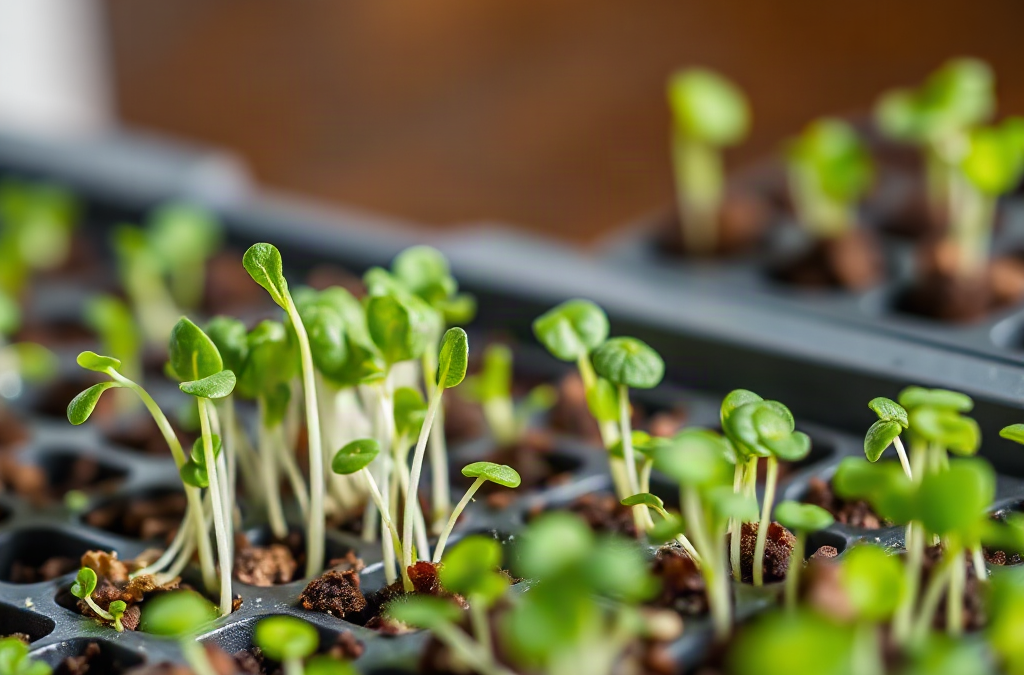
Sprouts and microgreens differ most in how they are grown, which affects both nutrition and safety: sprouts germinate in warm, humid conditions and are eaten with the seed and root, while microgreens grow in soil or another medium and are cut above it. Both can supply vitamins, minerals, fiber, and plant compounds, but nutrient levels vary widely by species and serving size. Raw sprouts carry the greater foodborne-illness concern because bacteria on seed can multiply during sprouting. Choose microgreens when minimizing microbial risk is the priority, and cook sprouts thoroughly when serving pregnant people, young children, older adults, or anyone with weakened immunity.
How Sprouts and Microgreens Differ
Growth stage—not appearance alone—separates a sprout from a microgreen. A sprout is a germinated seed harvested before leaves develop substantially, often within several days. The entire plant is eaten, including the seed, emerging root, and shoot. Familiar examples include alfalfa, mung bean, clover, radish, and broccoli sprouts.
Microgreens grow longer, usually until the seed leaves have opened and the first true leaves are beginning to appear. They need light and are rooted in soil, a fiber mat, or another growing substrate. Harvesters cut the stems above the growing medium, leaving roots and seed remnants behind. Broccoli, kale, mustard, radish, pea, sunflower, and cilantro are commonly sold as microgreens.
Those production differences shape the safety comparison. Sprouts are produced with moisture, warmth, and close contact among seeds—the same conditions that allow certain bacteria to multiply rapidly. Contamination may begin on or inside a seed, so rinsing the finished sprouts cannot reliably undo growth that occurred during germination. Microgreens can become contaminated through seed, water, handling, equipment, or growing medium, but their cooler, light-exposed production and above-medium harvest generally present a different risk profile.
The two are not interchangeable in cooking. Mung bean sprouts retain some crunch when stir-fried, whereas delicate radish microgreens are better added after cooking. Pea microgreens can contribute a fresh, slightly sweet bite to sandwiches or grain bowls. Broccoli sprouts have a finer texture and are more easily distributed through cooked eggs, noodles, or soups.
A common mistake is calling any tiny leafy plant a sprout and assuming identical handling rules. Check whether roots and attached seeds are present. A tangled product sold as whole germinated plants is generally a sprout; trimmed stems with open leaves are generally microgreens. That distinction should guide preparation, particularly when food will be served raw.
Nutrition Differences That Matter on the Plate
Both foods can add micronutrients and phytochemicals, but neither has one fixed nutritional profile. Species, seed quality, maturity, light exposure, growing conditions, storage time, and portion size all affect the final composition. Broccoli sprouts and pea microgreens should not be treated as nutritionally equivalent simply because both are young plants.
During germination, stored compounds in a seed are mobilized to support growth. This process changes carbohydrates, proteins, enzymes, and certain plant compounds. Cruciferous sprouts, including broccoli and radish, are often selected for glucosinolate-related compounds. Legume sprouts can contribute folate, vitamin C, and small amounts of protein, although their nutrient density depends heavily on the amount eaten.
Microgreens have begun photosynthesis and developed visible leaves. Depending on the crop, they may provide vitamin C, vitamin K, carotenoids, folate, and phenolic compounds. Deep green, red, or purple varieties often contain pigments with antioxidant activity. These compounds are nutritionally interesting, but laboratory concentration does not automatically translate into a major dietary effect from a garnish-sized serving.
Serving size is the overlooked constraint. A few pinches of microgreens may enhance color and flavor yet contribute less total nutrition than a full serving of mature vegetables. Likewise, a small layer of sprouts on a sandwich does not replace beans, leafy greens, or other substantial foods. Young plants work best as additions to a varied eating pattern rather than as concentrated substitutes for produce, protein, or medical care.
Use flavor and application to make the choice practical. Peppery mustard microgreens can replace part of a salty condiment on a grain bowl. Pea shoots add bulk and texture to a salad. Cooked mung bean sprouts fit naturally into a noodle dish, while broccoli sprouts can be folded into a hot omelet near the end of cooking. Pairing them with legumes, whole grains, eggs, fish, or other nutrient-dense foods produces a more complete meal than focusing on one celebrated compound.
Organic certification does not guarantee higher nutrient concentrations or freedom from pathogens. It addresses defined production requirements, not the sterility of seed or finished produce. Readers comparing sprouts and microgreens for nutrition and safety should prioritize variety, realistic portions, freshness, and appropriate handling over broad label-based assumptions.
Why Raw Sprouts Carry More Microbial Risk
Raw sprouts warrant extra caution because contamination can amplify while the plant germinates. Seeds may encounter pathogens during cultivation, harvest, processing, storage, or transport. Once germination begins, repeated moisture and moderate warmth give organisms such as Salmonella, pathogenic Escherichia coli, and Listeria an opportunity to grow along with the sprout.
Washing has a limited role. Rinsing can remove loose debris and may reduce some surface contamination, but bacteria can lodge in crevices, adhere to tissue, or originate within damaged seed structures. A sprout that looks crisp and smells fresh may still carry harmful organisms. Appearance, flavor, and an expiration date cannot confirm microbiological safety.
Microgreens are not risk-free. Contaminated irrigation water, unclean trays, animal intrusion, soil amendments, poor worker hygiene, and dirty cutting tools can introduce hazards. Once cut, wet leaves can also deteriorate quickly. The meaningful comparison is lower versus higher concern—not hazardous versus perfectly safe.
Risk tolerance should change with the person eating the food. Pregnant people, adults of advanced age, young children, and people with weakened immune systems face a greater chance of serious consequences from foodborne infection. For these groups, public-health guidance commonly advises avoiding raw or lightly cooked sprouts. Thorough cooking is the more protective option; briefly warming sprouts or adding them as a final raw topping does not provide the same margin.
At home, sprouting seed marketed for food production is preferable to ordinary garden seed, which may not have been processed with edible sprouting in mind. Even purpose-labeled seed is not sterile. Sanitized jars and careful rinsing reduce avoidable contamination from equipment, but they cannot guarantee that a contaminated seed lot becomes safe.
The weak assumption is that home-grown automatically means controlled and therefore harmless. Home production removes visibility into commercial practices but introduces its own variables: water quality, hand hygiene, room temperature, drainage, and cleaning consistency. Anyone who cannot maintain clean equipment, good drainage, refrigeration after harvest, and separation from raw meat should choose commercially produced microgreens or cooked vegetables instead of home-grown raw sprouts.
Buying, Storing, and Preparing Them Safely
Good purchasing decisions begin with temperature and condition. Select packaged sprouts or microgreens from a refrigerated display. Avoid containers with pooled liquid, slimy stems, collapsed leaves, damaged packaging, mold, or a sour odor. A visible use-by date helps with stock rotation, but it does not replace inspection or cold storage.
Take refrigerated greens home promptly and keep them cold in a clean section of the refrigerator. Store them away from raw meat, poultry, seafood, and leaking packages. Follow the producer’s storage and washing directions because some products are sold as ready to eat, while others require rinsing. Rewashing a ready-to-eat product can add contamination if the sink, colander, hands, or towels are unclean.
When rinsing is directed, use clean running water rather than soaking produce in a filled sink. Soap, bleach, and household disinfectants do not belong on food. Drain well and use clean utensils. Excess water speeds quality loss, so avoid washing far in advance unless the product instructions support it and the greens can be dried thoroughly.
Cooking is the strongest household control for sprouts. Heat them throughout rather than merely searing the exterior or scattering them onto a finished dish. For example, add mung bean sprouts early enough in a stir-fry for the entire portion to become steaming hot. If broccoli sprouts are intended for a higher-risk diner, mix them into a cooked dish instead of placing them on top after the pan leaves the heat. Exact cooking results vary with the dish, quantity, and equipment, so uniform heating matters more than a token period in contact with warmth.
Microgreens are often eaten raw, making clean handling especially relevant. Cut only what is needed if harvesting at home, use a sanitized blade, and avoid pulling roots or growing medium into the edible portion. Discard a tray showing mold, unusual odor, persistent sliminess, or widespread collapse rather than trying to salvage unaffected-looking leaves.
For a household balancing convenience and risk, use raw microgreens soon after purchase and reserve sprouts for meals that will be cooked. That simple division preserves the fresh texture of microgreens while addressing the more distinctive sprout hazard. More detail on sprout and microgreen selection should always be interpreted alongside package instructions and current public-health advice.
A Practical Raw-Eating Checklist
The best choice depends less on which food sounds healthier and more on who will eat it, whether it will be cooked, and how reliably it has been kept cold. A peppery microgreen garnish may suit a healthy adult comfortable with ordinary raw-produce risk. Thoroughly cooked sprouts are the more cautious choice for a household serving vulnerable people.
Use this compact checklist before buying or serving either product:
- Identify the product. Confirm whether it is a whole germinated sprout or a cut, leafy microgreen.
- Consider the diner. Avoid serving raw sprouts to people at increased risk from foodborne illness.
- Inspect the package. Reject damaged, warm, slimy, moldy, leaking, or foul-smelling products.
- Plan the preparation. Buy sprouts for thorough cooking when risk reduction is the priority.
- Protect the cold chain. Refrigerate promptly and prevent contact with raw animal foods.
- Use them while fresh. Follow label dates and discard products showing deterioration.
Signs that handling is working include dry, crisp leaves; clean-smelling sprouts; intact packaging; prompt refrigeration; and clean separation from raw foods. Signs of failure include condensation combined with wilting, standing liquid, slime, mold, off odors, or uncertainty about how long the product sat unrefrigerated. Discarding questionable produce is more sensible than attempting to wash or trim away a microbial problem.
Nutrition goals can then break a tie between acceptable options. Choose assertive mustard or radish microgreens when a small amount will replace a richer topping and make vegetables more appealing. Choose pea or sunflower microgreens when more leaf volume and mild flavor are useful. Choose mung bean sprouts when a cooked dish benefits from crisp bulk. Variety across the week is more defensible than relying on one species for a promised health outcome.
Cost and waste matter as well. Microgreens can be expensive per ounce, and delicate varieties have a short usable window. Sprouts may be less costly but require a cooking plan in safety-conscious households. Buy a package size that matches the next few meals rather than treating either product as a long-storage staple. The practical value of comparing sprouts with microgreens lies in matching the product to the diner, dish, and handling conditions.
Frequently Asked Questions
Are microgreens safer than sprouts?
Microgreens generally present a lower microbial concern than sprouts because they are not produced entirely under the warm, wet germination conditions that encourage bacterial multiplication. They still require clean production, refrigeration, and careful raw handling.
Does washing raw sprouts make them safe?
No. Rinsing may remove debris and some surface organisms, but it cannot reliably eliminate bacteria that multiplied during germination or became protected within plant tissues. Thorough cooking provides a stronger safety control.
Which is more nutritious, sprouts or microgreens?
Neither category is consistently more nutritious. Nutrient and phytochemical levels vary by species, growth stage, storage, and serving size. Compare specific products and use them to complement, rather than replace, substantial servings of vegetables and other whole foods.
Can pregnant people eat microgreens?
Microgreens do not carry the same distinctive germination risk as sprouts, but they are still raw produce. Pregnant people should choose fresh, refrigerated products from a reliable source, follow washing directions, and seek individualized advice from a healthcare professional.
Can sprouts and microgreens be grown safely at home?
Careful sanitation, edible sprouting seed, clean water, drainage, clean cutting tools, and prompt refrigeration can reduce avoidable hazards, but home growing cannot guarantee pathogen-free produce. Raw sprouts remain the higher-risk choice.
Conclusion
Choose between sprouts and microgreens by looking beyond nutrient claims. Species and portion size determine how much nutritional value reaches the plate, while the production method determines the most relevant handling concerns. Microgreens offer leafy texture and varied flavors with the ordinary precautions expected for raw produce. Sprouts deserve stricter treatment because contamination on seed can multiply during warm, wet germination.
Check the intended diner first, then inspect freshness, refrigeration, preparation, and serving size. Use raw microgreens promptly, keep both products separate from raw animal foods, and cook sprouts thoroughly when reducing risk matters most. No label, rinse, or home-growing method guarantees safety. A varied diet, sensible portions, and preparation matched to individual vulnerability provide more reliable value than choosing either product for a single nutrient or wellness claim.
Huge Discount on the Best Certified Organic Nutrient Dense Supplement!

Related Content
- Best Organic Probiotics in Dean Texas
- Why You Should Consider Switching to a Whole Foods Diet
- Best Organic Whole Food Supplement in Plympton Massachusetts
- The Future Of Organic Whole Food Nutrition: Essential Ingredients for a Healthier Tomorrow
- Best Local Organic Herb Gardens in Somerset, Massachusetts 02725


