
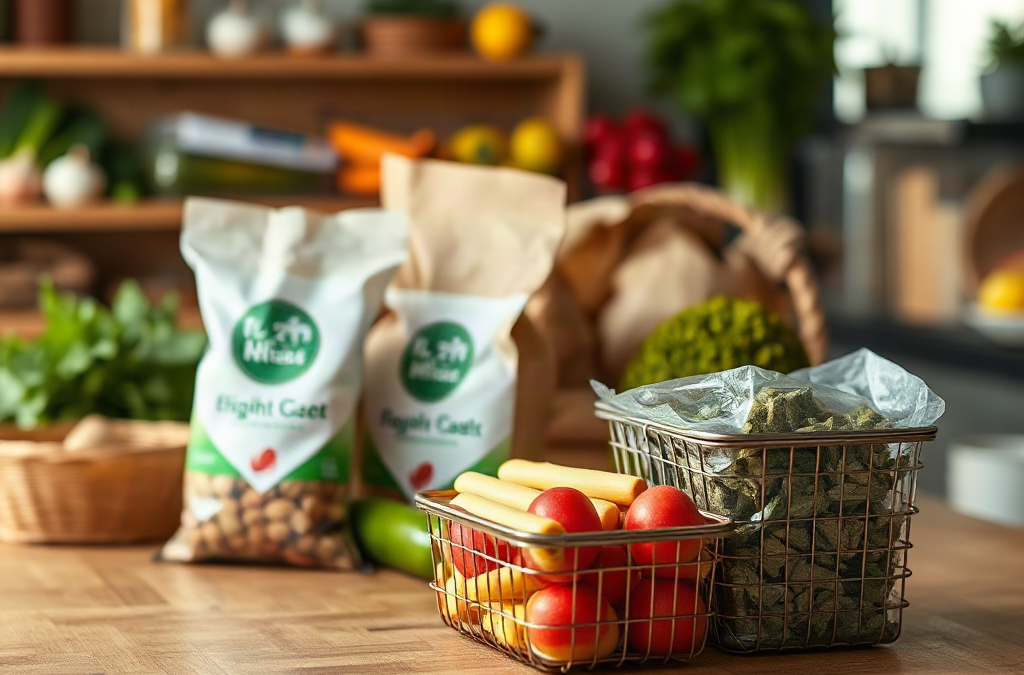
Unit-price comparisons for organic and conventional staples are most useful when prices are converted to the same ounce, pound, or usable serving and then weighed against package size, expected waste, and how often the ingredient is eaten. Shelf tags may display different measurement bases, while bulk packages can appear economical even when part of the food goes unused. Compare equivalent forms—dry rice with dry rice, drained beans with drained beans—and check whether an organic premium fits the household’s priorities. The better purchase is not automatically the lowest unit price; it is the option with the lowest practical cost for the amount likely to be consumed.
How Do You Calculate Comparable Unit Prices?
A valid comparison puts both products on the same measurement basis. Divide the package price by its net weight, volume, count, or number of realistic servings. A $6 bag containing 48 ounces costs $0.125 per ounce, while a $4.50 bag containing 32 ounces costs about $0.141 per ounce. The larger package has the lower unit price even though its checkout price is higher.

Retail shelf labels often perform this calculation, but their displayed units are not always consistent. One oatmeal label might show price per ounce while another shows price per pound. Multiplying a per-ounce price by 16 converts it to a per-pound price. Conversely, divide a per-pound figure by 16 to obtain the price per ounce. Comparing the prominent package prices without normalizing the measurement can reverse the apparent result.
| Staple | Useful Comparison Unit | Adjustment to Check |
|---|---|---|
| Rice, oats, and flour | Price per pound or ounce | Compare the same dry form |
| Canned beans | Price per drained ounce | Account for liquid not eaten |
| Milk | Price per fluid ounce | Consider spoilage before the carton is finished |
| Eggs | Price per egg or dozen | Match egg size when possible |
| Cooking oil | Price per fluid ounce | Compare similar oil types and intended uses |
The net quantity printed on the package is usually a better starting point than the serving count. Manufacturer serving sizes may differ, and shoppers do not necessarily use the labeled portion. For eggs or tortillas, price per item is intuitive. For flour, rice, and oil, weight or volume produces a cleaner comparison. Cost per serving becomes valuable only when the servings reflect actual household use.
Product form must remain equivalent. A can of ready-to-eat beans cannot be compared directly with dry beans solely by package weight because dry beans gain weight during cooking. Likewise, instant oats and old-fashioned oats may differ in convenience and texture even when their nutritional profiles and unit prices look similar. The common mistake is treating a mathematical match as a product match. First align the units, then ask whether the products perform the same job in meals.
When Does the Package Price Mislead Shoppers?
Package price becomes misleading when it hides differences in size, edible yield, storage life, or required preparation. A small conventional package can cost less at checkout while carrying a higher price per ounce than a larger organic package. The reverse is equally possible: a family-size organic bag may post an attractive unit price but still waste money if it becomes stale or attracts pantry pests before use.
Usable quantity matters especially for products packed with liquid or containing inedible material. Canned beans provide a practical example. Two cans may each list a 15-ounce net weight, yet different drained weights can produce different amounts for a salad or soup. If drained weight is available, divide the price by that number. If it is not, compare like brands and can styles cautiously rather than assuming every ounce contributes equally to the meal.
Waste can overwhelm a modest unit-price advantage. Imagine that a half-gallon of organic milk has a lower promotional price per fluid ounce than a quart, but a one-person household regularly discards the final quarter of the larger carton. Its effective cost rises because the calculation should use the amount consumed, not merely the amount purchased. A smaller conventional or organic carton may then be the more economical choice despite its higher shelf-tag unit price.
Preparation costs deserve proportionate attention rather than exaggerated precision. Dry beans generally require soaking or cooking, while canned beans cost more but save time and provide predictable portions. Energy and water contribute something to the final cost, but time, planning, and kitchen access may be more decisive. Someone assembling a fast lunch may reasonably pay more per edible ounce for canned beans; a household batch-cooking several meals may benefit from dry beans.
Promotions create another weak comparison. A temporary discount, loyalty requirement, or multi-buy offer is useful only when the shopper qualifies and can use the quantity. Compare the price that will actually be paid, including the required number of packages. A “two for” sign may allow purchase of one item at half the combined price, but store policies vary. Check the shelf label or receipt rather than assuming how the offer works.
How Much Does the Organic Premium Matter by Staple?
The organic premium should be calculated for each staple rather than assumed from the overall basket. Subtract the conventional unit price from the organic unit price to find the added cost per unit. Dividing that difference by the conventional unit price and multiplying by 100 expresses the premium as a percentage. The percentage is useful for comparison, but the dollar difference often matters more for a household budget.
Suppose conventional oats cost $0.12 per ounce and organic oats cost $0.15 per ounce. The organic option carries a 25% premium, yet the added cost is three cents per ounce. If a household uses 20 ounces a month, the monthly difference is $0.60. A smaller percentage premium on a frequently purchased, expensive product could have a much larger effect on total spending. Frequency and quantity turn the shelf comparison into a budget decision.
Organic and conventional labels describe production methods; they do not make two products nutritionally or functionally identical. Compare ingredient lists, fortification, added sugar, sodium, and product form where relevant. An organic flavored oatmeal with added sweeteners is not a direct substitute for plain conventional oats. Similarly, an organic oil and a conventional oil made from different crops may have different flavors, smoke points, and culinary uses. The certification label should not displace the basic product comparison.
A selective approach works better than applying one organic buying rule to every staple. Households can reserve the organic premium for items that carry personal value, are eaten often, and remain affordable without reducing dietary variety. Other staples can stay conventional when the price gap is large or the organic version creates waste. This is a preference and purchasing decision, not a treatment strategy or a guarantee of a particular health outcome.
Store brands, sales, and package formats can narrow or widen the difference. Compare an organic store brand with a conventional national brand as well as with the conventional store brand. The first pairing may make organic appear unusually competitive because brand pricing is mixed with production-method pricing. The second better isolates the organic premium. The common failure is attributing the entire price gap to certification when brand positioning, package size, convenience features, and retailer promotions also affect the shelf price.
Building a Practical Comparison Routine
A repeatable routine keeps unit-price checking focused on purchases where it can change the decision. Start with staples bought frequently or in large quantities, such as oats, rice, flour, beans, milk, eggs, and cooking oil. Saving a small amount on an occasional jar matters less than correcting a persistent price difference on a product used every week.
Record the normal unit price for two or three high-use items rather than trying to memorize the entire store. A phone note can list the usual conventional and organic prices in one consistent unit. Update it when package sizes change. This makes promotions easier to evaluate and exposes shrinkflation: a familiar package price may stay steady while the net quantity falls, raising the unit cost.
- Match the product: Compare the same staple, form, and broadly similar ingredient profile.
- Standardize the unit: Convert both prices to ounces, pounds, fluid ounces, or count.
- Adjust for use: Consider drained weight, cooking yield, spoilage, and realistic portions.
- Calculate the premium: Note both the percentage difference and the added dollars per week or month.
- Choose by priority: Balance production preference, nutrition label, convenience, storage, and budget.
A working routine also needs a stopping point. Spending several minutes to resolve a difference of a few cents may not be worthwhile, particularly for an infrequent purchase. Focus closer attention on large packages, foods with high waste risk, and products whose organic premium is substantial in actual dollars. If two choices remain close, package size and likely use are often more useful tie-breakers than percentage calculations.
Signs that the approach is working include fewer partially used packages, predictable spending on recurring groceries, and confidence that sale prices are genuinely favorable. Warning signs include buying oversized packages solely for a lower unit figure, comparing unmatched forms, or repeatedly discarding food. Receipts can reveal the pattern: review what was purchased, what was consumed, and which “bargains” returned as waste.
Household circumstances can change the result. A large family may finish bulk rice or oats well within their quality window, while a small household may need a sealed smaller bag. Limited pantry space, transportation, and cash flow can also make the lowest theoretical unit cost inaccessible. The smart comparison respects those constraints. A higher unit price can still be the sound purchase when it lowers checkout cost, fits available storage, or prevents predictable loss.
Frequently Asked Questions
Is organic food always more expensive per unit?
No. Store brands, temporary discounts, package sizes, and retailer pricing can make an organic staple equal to or cheaper than a conventional alternative. Check the same unit and product form each time.
Should I trust the unit price printed on the shelf tag?
Use it as a shortcut, then confirm that both tags use the same unit and correspond to the correct package. Promotions, misplaced labels, and differing units can distort a quick comparison.
How do I compare dry beans with canned beans?
Compare cost per usable cooked amount rather than package weight alone. Include the canned product’s drained quantity and the dry product’s cooking yield, while recognizing the time and convenience difference.
Is a lower unit price always the better deal?
No. The advantage disappears if the package exceeds available storage, strains the immediate budget, or leaves food unused. Practical cost depends on consumption as well as purchase quantity.
Should nutritional differences affect the price comparison?
Yes. Compare ingredients, added sugar, sodium, fortification, and intended use before treating two packages as substitutes. Organic certification alone does not establish nutritional equivalence.
Conclusion
Good grocery comparisons begin with equivalent products and a shared measurement unit, but they should end with the household’s actual use. Check net quantity, drained or cooked yield, storage life, preparation needs, and the chance that part of a package will be wasted. Calculate an organic premium in both percentage and dollar terms so a dramatic-looking percentage does not obscure a minor monthly difference—or hide a meaningful recurring expense.
Choose several frequently purchased staples and record their normal prices per ounce, pound, or item. Recheck the figures when packages change or promotions appear. Keep the organic option where its production standard fits personal priorities and the added cost remains workable; choose conventional where the gap would crowd out useful foods or create avoidable waste. That product-by-product method produces a more realistic basket than any blanket rule.
Huge Discount on the Best Certified Organic Nutrient Dense Supplement!

Related Content
- Why Organic Isn’t Always the Healthiest Choice: Understanding Nutritional Limitations and Farming Practices
- How Organic Foods Help in Managing Stress and Anxiety
- How to Make Organic Meals That Kids Will Enjoy: Creative Recipes and Flavorful Ingredients
- Maximizing Iron Absorption from Plants
- Regenerative Organic Certified Versus Standard Organic: Farming Practices, Label Differences, and Buying Decisions