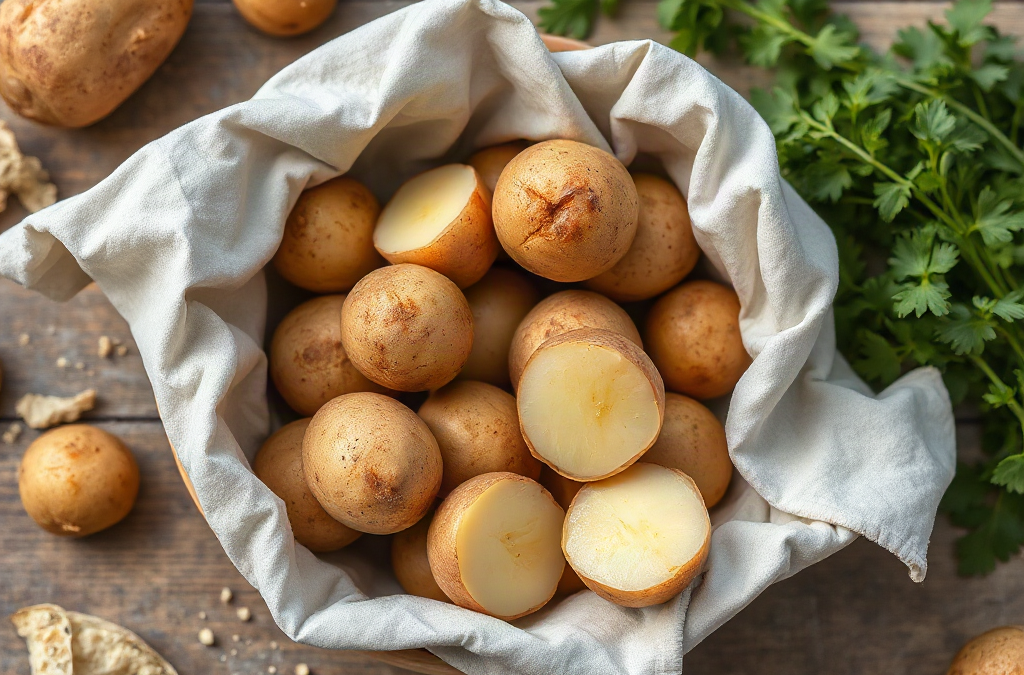
Organic potatoes make filling, nutrient-rich meals when they are cooked with their skins, paired with protein and vegetables, and served in portions that fit the rest of the plate. Potatoes provide carbohydrate, potassium, vitamin C, vitamin B6, and some fiber, while beans, eggs, fish, yogurt, or tofu improve protein balance and staying power. Baking, boiling, steaming, and roasting with modest oil preserve their versatility without relying on heavy toppings. Organic certification addresses farming practices rather than superior nutrient content, so freshness, storage, cooking method, and the foods served alongside the potatoes remain the more useful meal-planning priorities.
What Do Organic Potatoes Contribute to a Meal?
A potato is primarily a carbohydrate-rich whole food, but it contributes more than starch. Depending on variety, size, peeling, and preparation, it can supply potassium, vitamin C, vitamin B6, and fiber. The skin adds fiber, although nutrients are present throughout the potato rather than being confined to the peel. Its high water content and substantial volume can make a potato more satisfying than a smaller portion of a concentrated refined carbohydrate.
Organic and conventionally grown potatoes have broadly similar nutritional roles. Organic certification concerns production standards, including restrictions on many synthetic pesticides and fertilizers; it does not guarantee that a potato contains more vitamins or will be fresher. Variety, soil conditions, time in storage, and cooking method can all influence quality. Choose organic potatoes when that farming approach matches your priorities, but do not treat the label as a substitute for checking firmness, freshness, or preparation.
The meal surrounding the potato determines whether it feels balanced. A plain baked potato may provide substantial carbohydrate but relatively little protein or fat. Adding lentils, plain Greek yogurt, sautéed spinach, and pumpkin seeds changes the composition: protein and fat slow the pace of eating and contribute staying power, while the vegetables increase volume and nutrient variety. Conversely, loading the same potato with large amounts of butter, cheese sauce, and processed meat can make the dish high in saturated fat and sodium without adding much produce.
Preparation affects both nutrition and eating experience. Boiling may move some water-soluble nutrients into the cooking water, especially when potatoes are cut into small pieces. Baking preserves a dry, fluffy center but can encourage oversized toppings. Roasting delivers browning and crispness, although oil can accumulate quickly if poured without measuring. Cooling cooked potatoes also changes part of their starch structure, and cooled potatoes can work well in salads or be reheated for later meals. That change should not be interpreted as making portion size irrelevant.
A common mistake is assigning a health value to the potato alone. A better assessment looks at the full plate, cooking fat, sodium, protein source, produce, and portion. The practical goal is not to make potatoes perform every nutritional job; it is to use them as a satisfying base while other foods supply the protein, color, texture, and nutrient range they lack.
How Do You Build a Filling Potato Plate?
A filling potato plate combines a sensible amount of potato with a meaningful protein source, at least one vegetable, and a moderate amount of fat or flavorful sauce. This structure works because fullness is influenced by food volume, protein, fiber, fat, texture, and eating pace—not simply by the number of ingredients. The potato supplies an accessible energy source, while its partners make the meal more complete.
Begin by choosing the potato portion in relation to appetite and activity rather than treating one serving as universal. A smaller potato may be enough beside salmon and a large salad, while a larger portion may suit someone eating the meal after sustained physical activity. People managing blood glucose or following a medically prescribed eating pattern may need individualized guidance from a registered dietitian or other qualified clinician.
Next, add protein that fits the dish. Black beans turn a baked potato into an inexpensive plant-based dinner. Eggs pair well with diced potatoes and peppers at breakfast. Tuna, salmon, chicken, cottage cheese, plain yogurt, tempeh, and tofu are other practical choices. Cheese can contribute protein, but using it as the only substantial topping may bring more saturated fat and sodium than the eater intended.
Vegetables should be integrated rather than treated as decoration. Broccoli florets, cabbage, mushrooms, peas, kale, tomatoes, onions, and roasted cauliflower all work with potatoes. A bowl made from roasted potato wedges, chickpeas, chopped cucumber, tomatoes, and a yogurt-herb sauce offers contrasting textures and can be prepared from inexpensive staples. For a colder option, combine cooled potato chunks with green beans, white beans, parsley, and a mustard vinaigrette.
Use this compact plate-building sequence:
- Select the potato: Match the variety and amount to the cooking method and appetite.
- Anchor with protein: Include beans, eggs, fish, poultry, tofu, tempeh, yogurt, or another substantial option.
- Add produce: Choose one or two vegetables with contrasting color and texture.
- Finish deliberately: Add measured oil, seeds, avocado, yogurt sauce, or another flavorful fat rather than pouring freely.
- Check the plate: If it is mostly potato and rich toppings, rebalance it before serving.
Signs the structure is working include comfortable fullness, enjoyable texture, and enough variety that the meal does not depend on excessive salt or sauce. If hunger returns quickly, the plate may be short on protein or total food. If it feels heavy, greasy, or monotonous, reduce rich toppings and increase vegetables. The useful adjustment is usually to change the combination, not to blame or eliminate the potato.
Five Practical Cooking Methods and Their Tradeoffs
Cooking method should match the meal, available time, and desired texture. No single method is nutritionally perfect, and differences in toppings and oil often matter more than the choice between baking and boiling. These five approaches cover most everyday uses without requiring specialized equipment.
1. Bake for a Self-Contained Meal Base
Baking produces a crisp skin and fluffy interior, making it useful when toppings will provide the protein and vegetables. Scrub the potato, pierce it, and bake until the center is tender. A baked potato topped with chili made from beans, tomatoes, onions, and peppers is more balanced than one relying mainly on butter and cheese. The main drawback is time, especially for large potatoes.
2. Boil for Mash, Soups, and Salads
Boiling is dependable and requires little added fat. Leave potatoes whole or in large pieces when practical, and avoid cooking them past tenderness because waterlogged potatoes lose structure. For mash, use milk, olive oil, broth, or yogurt in measured amounts, depending on the desired flavor. If the potatoes are part of a soup, nutrients that enter the liquid remain in the dish rather than being discarded with cooking water.
3. Steam for Moisture Without Waterlogging
Steaming is useful for small potatoes and warm salads because the pieces do not sit directly in water. It can preserve a firm texture that holds dressing well. Pair steamed potatoes with green beans, eggs, and a mustard vinaigrette for a substantial lunch. The limitation is batch size: crowded steamers cook unevenly, so larger households may find boiling more efficient.
4. Roast for Browning and Crisp Edges
Roasting concentrates flavor and makes vegetables easy to cook on the same tray. Cut potatoes into similar sizes, use enough space for hot air to circulate, and measure the oil before tossing. Add sturdy vegetables such as carrots, Brussels sprouts, cauliflower, or onions, then serve with chickpeas, tofu, chicken, or fish. Crowding the pan traps steam, while excessive oil turns a simple side into a much more energy-dense dish.
5. Sauté Leftovers for a Fast Second Meal
Previously cooked potatoes can become a quick skillet meal. Brown chunks in a lightly oiled pan, then add peppers, greens, and leftover beans or shredded chicken. Starting with cooked potatoes shortens the process and reduces food waste. The failure point is repeatedly adding oil as the pan dries; a splash of water and a lid can heat the center before a final uncovered browning step.
Choose baking when the potato is the meal’s container, steaming or boiling when a tender texture matters, and roasting when flavor and shared-pan convenience are priorities. Leftover sautéing is best for speed. Whichever method you use, check doneness with a fork and focus on the entire dish rather than assuming crispness, softness, or the organic label determines nutritional quality.
Buying, Storing, and Preparing Organic Potatoes
Good potato meals begin with firm tubers suited to the intended recipe. Waxy varieties, including many red and fingerling potatoes, tend to hold their shape in salads, soups, and tray roasts. Starchier potatoes become fluffy when baked or mashed. All-purpose varieties sit between those textures. Organic packaging does not remove the need to inspect for cuts, damp spots, deep bruising, shriveling, mold, or extensive sprouting.
Store potatoes in a cool, dark, dry, well-ventilated place rather than on a bright counter. Light can cause greening, while trapped moisture encourages spoilage. Avoid sealing them in an airtight plastic container. Keep them away from strong heat sources and inspect the supply regularly so one deteriorating potato does not remain unnoticed. Refrigeration can alter how potato starch and sugars behave during cooking, so a suitable cool cupboard or pantry is generally more practical for short-term household storage.
Wash potatoes under running water and scrub away clinging soil just before use. Soap and produce detergents are unnecessary. Peeling is optional: intact skins add texture and fiber, but peeling may be preferable for a very smooth mash, damaged skin, or a diner who dislikes the texture. Remove bruised or spoiled areas generously. Potatoes that are extensively green, bitter, badly shriveled, moldy, or heavily sprouted are poor candidates for a meal and should be discarded rather than rescued through heavy trimming.
Budget also deserves attention. Organic potatoes may cost more, and the nutritional value of the meal does not depend on purchasing every ingredient organically. If the premium strains the grocery budget, prioritize an adequate supply of vegetables, protein foods, and minimally processed staples rather than reducing dietary variety to preserve an all-organic basket. Conventionally grown potatoes remain a useful whole-food option when washed, stored, and cooked appropriately.
Meal preparation is easiest when potatoes are cooked for more than one use. Roast a tray for dinner, refrigerate leftovers promptly in a covered container, and use them in a vegetable-and-egg skillet or bean salad. Do not leave cooked potatoes sitting at room temperature for extended periods, and reheat leftovers until thoroughly hot. If stored potatoes repeatedly sprout, soften, or turn green before use, the purchasing quantity or storage location needs adjustment. Buying less at a time is often more effective than trying to extend the life of an oversized bag.
Conclusion
Potatoes work best as a versatile foundation rather than a complete plate by themselves. Choose firm tubers in a variety suited to the recipe, store them away from light and moisture, and use cooking methods that deliver the desired texture without uncontrolled amounts of oil or rich toppings. Keep edible skins when their texture fits the dish, but discard potatoes showing extensive greening, bitterness, mold, or serious deterioration.
For the next meal, pair baked, boiled, steamed, roasted, or leftover potatoes with a clear protein source and a generous serving of vegetables. Judge organic options by farming priorities, condition, price, and expected use—not by an assumption that certification guarantees greater nutrient content. A well-composed potato meal should be satisfying, varied, affordable enough to repeat, and adaptable to the ingredients already available.
Frequently Asked Questions
Are organic potatoes more nutritious than conventional potatoes?
Not necessarily. Organic certification describes farming practices, while variety, freshness, storage, preparation, and the rest of the meal often have more practical influence on nutritional value.
Should potato skins be eaten?
Clean, undamaged skins are edible and contribute fiber and texture. Scrub them under running water, and peel when the recipe, damaged skin, or personal preference calls for it.
What protein goes well with potatoes?
Beans, lentils, eggs, fish, poultry, tofu, tempeh, cottage cheese, and plain yogurt can all turn potatoes into a more substantial meal.
Are baked potatoes healthier than roasted potatoes?
Either can fit a nutrient-rich plate. Roasted potatoes usually require more added oil, while baked potatoes can become heavy when covered with large amounts of butter, cheese, or processed meat.
Can cooked potatoes be used for meal preparation?
Yes. Refrigerate cooked potatoes promptly in a covered container, use them within a safe leftover window, and reheat hot dishes thoroughly before eating.