Organic lettuce varieties differ in nutrient density, with dark red and deep green leaves generally offering more carotenoids, folate, vitamin K, and protective plant pigments than pale inner leaves. Romaine, red leaf, green leaf, and butterhead are practical nutrient-rich choices, while iceberg contributes hydration and crispness but fewer micronutrients per serving. Color, leaf position, freshness, storage, and serving size all affect what reaches the plate. Choose intact heads or fresh loose leaves, rotate colors, refrigerate promptly, and pair lettuce with other vegetables and a source of dietary fat rather than expecting one variety to provide complete nourishment.
Which Lettuce Varieties Are Most Nutrient-Dense?
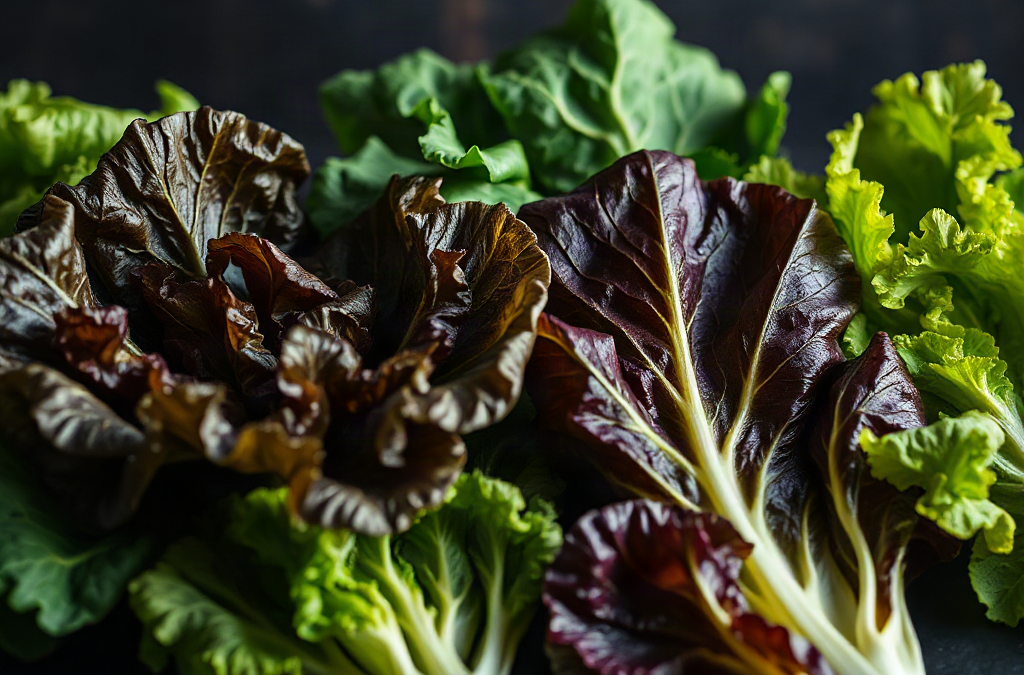
Dark red and deep green lettuces usually deserve first consideration when micronutrient concentration is the priority. Their richly colored leaves tend to contain more carotenoids and other plant pigments than pale, tightly packed leaves. Romaine, red leaf, green leaf, and butterhead lettuce each offer a useful combination of folate, vitamin K, carotenoids, water, and modest amounts of several minerals. Exact values vary by cultivar, growing conditions, maturity, and the portion analyzed, so color is a practical shopping clue rather than a precise laboratory ranking.

Romaine is a dependable all-purpose choice because its outer leaves are dark, sturdy, and easy to use in substantial portions. It works in chopped salads, wraps, grain bowls, and lightly cooked dishes. Red leaf lettuce adds red-purple pigments called anthocyanins alongside the compounds commonly found in green leaves. Green leaf lettuce provides tender texture and broad culinary flexibility, while butterhead varieties such as Bibb and Boston lettuce offer soft leaves with more color than the pale heart of iceberg.
| Variety | Notable Characteristics | Useful Application | Practical Limitation |
|---|---|---|---|
| Romaine | Dark outer leaves; carotenoids, folate, and vitamin K | Chopped salads, wraps, and bowls | Ribs can dominate delicate dishes |
| Red leaf | Red-purple pigments plus green-leaf compounds | Mixed salads and sandwiches | Tender leaves deteriorate relatively quickly |
| Green leaf | Deeply colored, flexible leaves | Everyday salads and layered sandwiches | Wilts sooner than crisphead lettuce |
| Butterhead | Soft green leaves with a mild flavor | Lettuce cups and delicate salads | Bruises easily during handling |
| Iceberg | High water content and firm crunch | Wedges, tacos, and texture-focused dishes | Pale inner leaves are less micronutrient-dense |
Iceberg is not nutritionally empty, and dismissing it can discourage people who genuinely prefer its crunch. It supplies water, some fiber, and small amounts of micronutrients. Its main disadvantage is opportunity cost: a bowl filled only with pale iceberg generally provides less pigment-associated nutrition than an equal volume of darker lettuce. A realistic solution is to combine iceberg with romaine or red leaf rather than replacing a favored texture completely.
The common mistake is treating the variety name as the only variable. A small garnish of dark lettuce may contribute less than a generous serving of a moderately colored variety. Prioritize a lettuce that is fresh, appealing, and likely to be eaten in a meaningful quantity, then introduce darker leaves for variety.
Why Do Color and Leaf Structure Matter?
Leaf color reflects both plant biology and growing conditions. Lettuce leaves exposed to more light generally develop more chlorophyll and protective compounds than sheltered inner leaves. Green pigments often accompany carotenoids such as beta-carotene and lutein, while red varieties can contain anthocyanins. These compounds perform protective functions in the plant and contribute to the nutritional differences seen across leaf colors.
Structure changes nutrient distribution within the same head. An outer romaine leaf is darker and more exposed than a pale leaf near the core, so discarding every sound outer leaf can remove a nutrient-rich part of the vegetable. Outer leaves may also collect more soil or suffer mechanical damage. Keep leaves that remain crisp and free from decay, wash them carefully, and discard those that are slimy, badly bruised, or visibly spoiled.
Color should not be interpreted as proof that a lettuce is superior in every respect. Butterhead may be easier to chew for someone who dislikes fibrous ribs, iceberg can make a meal more enjoyable through crunch, and tender green leaf may be easier to fit into sandwiches than bulky romaine. Nutrient density has practical value only when the food fits the eater’s preferences, budget, chewing ability, and meal pattern.
Organic production describes how the crop was grown and handled under an applicable certification system; it does not guarantee that every organic head contains more vitamins than every conventionally grown head. Cultivar, sunlight, soil conditions, harvest maturity, transport, and storage can all influence composition. Choosing organic may reflect preferences concerning farming practices, but the label should not replace inspection for freshness or comparison among leaf colors.
A useful store-level comparison is to examine two heads of the same general type. Favor the one with saturated color, crisp leaves, and no wet decay rather than choosing a tired head solely because its label or cultivar sounds more nutritious. With mixed baby leaves, look for a range of green and red colors, but avoid bags with excessive moisture, collapsed leaves, or obvious browning. Those signs suggest declining quality and a higher likelihood that the greens will be discarded before use.
The weak assumption is that the darkest lettuce alone can cover a person’s vegetable needs. Lettuce contributes useful micronutrients, but it is low in energy and does not provide the full range or quantity supplied by legumes, whole grains, fruit, cruciferous vegetables, orange vegetables, nuts, seeds, and protein-rich foods. Use color to improve a lettuce choice, not to turn lettuce into a nutritional shortcut.
How Should You Choose, Store, and Prepare Lettuce?
Freshness and handling determine whether a nutrient-rich head becomes an actual meal or food waste. At purchase, check that leaves are crisp and appropriately colored for the variety. Avoid heads with slimy patches, sour odors, widespread dark decay, or liquid collecting around the leaves. Minor wilting may affect texture without necessarily indicating spoilage, but extensive breakdown is a reason to choose another package.
Whole heads often keep their quality longer than pre-cut leaves because cutting creates damaged surfaces and increases moisture loss. Bagged greens offer speed and can still be the better choice when convenience makes regular use more likely. The tradeoff is a shorter usable window after opening. Buy an amount that matches the household’s actual pace rather than selecting a large container that repeatedly ends in the compost bin.
Refrigerate lettuce promptly and protect it from crushing. Keep leaves dry enough to discourage rapid deterioration, but not exposed to strong airflow that causes wilting. If washing a whole head in advance, dry the leaves thoroughly before storage. A clean container lined with an absorbent towel can manage residual moisture; replace the towel if it becomes saturated. Follow package instructions for ready-to-eat products and keep lettuce separate from raw meat, poultry, and seafood.
A compact quality checklist makes shopping and storage decisions easier:
- Color: Choose the characteristic green or red tone without widespread yellowing.
- Texture: Favor resilient leaves rather than collapsed or slimy ones.
- Moisture: Avoid pooled liquid in packaged greens.
- Quantity: Purchase only what can realistically be used while fresh.
- Rotation: Use tender loose leaves before sturdy romaine or unopened heads.
Preparation does not need to be complicated. Remove damaged leaves, separate the remaining leaves, rinse under clean running water, and dry them without bruising. Soap, detergent, and household disinfectants are not appropriate produce washes. Dry leaves hold dressing more evenly, which improves flavor and reduces the temptation to drown the salad in dressing.
Chopping lettuce days ahead may save minutes but accelerates quality loss. A better compromise is to wash and dry whole leaves, then tear or cut them close to serving. Signs the routine is working include crisp leftovers, little discarded produce, and enough prepared greens to assemble a quick lunch. Repeatedly finding wet, browned leaves means the buying quantity, drying method, or storage setup needs adjustment.
How Can Lettuce Build a More Nourishing Meal?
Lettuce becomes more valuable when it serves as one part of a varied meal rather than the entire meal. A bowl of leaves and low-calorie dressing may provide volume but little protein, energy, or lasting satisfaction. That pattern can be mistaken for superior nutrient density because the meal looks vegetable-heavy. A stronger plate combines lettuce with vegetables of different colors, a protein source, a fiber-rich carbohydrate when appropriate, and some dietary fat.
For example, romaine can form the base of a bowl containing chickpeas, roasted red pepper, shredded carrot, whole grains, and a tahini-lemon dressing. The lettuce contributes folate, vitamin K, carotenoids, water, and texture; the chickpeas add protein and fiber; the grains provide energy; and the colorful vegetables broaden the mixture of plant compounds. Fat from tahini also helps the body use fat-soluble carotenoids. This does not require a heavy dressing—a modest amount distributed across the bowl can serve both flavor and nutritional purposes.
Red leaf lettuce works well with lentils, beets, walnuts, and citrus. Butterhead leaves can hold tofu, chicken, beans, or a mushroom filling, but several small lettuce cups may still need a side dish to create a complete meal. Iceberg can be combined with darker leaves in tacos, burgers, or chopped salads, preserving its crunch while increasing color diversity.
Rotation is more useful than searching for a permanent winner. Buying romaine one week and red leaf or butterhead the next changes flavor, texture, and pigment exposure without requiring elaborate planning. A mixed-lettuce bowl is another practical option, provided the tender varieties can be used before they deteriorate. People taking anticoagulant medication should seek individualized guidance about vitamin K intake; consistency may matter more than suddenly avoiding or greatly increasing leafy greens.
The most frequent meal-building error is concentrating on lettuce while overlooking toppings and portions. Sugary sauces, large quantities of cheese, or heavily salted processed meats can shift the character of a salad, while an austere bowl may be too unsatisfying to replace a meal. Neither extreme is required. Use lettuce as a fresh foundation, then add enough protein, varied produce, and flavorful fat to make the dish nutritionally broader and worth eating.
Evaluate the result by more than the color of the leaves. A successful approach produces meals that are satisfying, uses the purchased lettuce before spoilage, and regularly includes more than one plant-food category. If salads leave you hungry soon afterward or unused greens repeatedly wilt, adjust the components, serving format, or purchase size rather than assuming a different cultivar alone will solve the problem.
Conclusion
Choose lettuce by combining visible leaf color, freshness, intended use, and the quantity your household can finish. Romaine, red leaf, green leaf, and butterhead are strong choices when deeper pigmentation is a priority, while iceberg remains useful for crunch and can be mixed with darker leaves. Preserve quality by buying intact, crisp produce, managing moisture during refrigeration, and cutting leaves near serving time.
The larger nutritional gain comes from how lettuce is used. Rotate red and green varieties, retain sound outer leaves, and build salads or wraps with additional vegetables, protein-rich foods, and a modest source of dietary fat. Organic certification may align with production preferences, but it should not be treated as a guaranteed nutrient ranking. At the next purchase, compare color and condition first, then select the variety most likely to become a satisfying meal rather than unused produce.
Frequently Asked Questions
Is romaine more nutrient-dense than iceberg lettuce?
Romaine generally provides more deeply colored leaf tissue and higher concentrations of several micronutrients and carotenoids. Iceberg still offers hydration and crunch, and mixing the two is a practical way to retain texture while increasing leafy-green variety.
Does organic lettuce always contain more nutrients?
No. Organic certification concerns production practices, not a guaranteed vitamin advantage. Variety, leaf color, growing conditions, maturity, freshness, storage, and serving size can all affect the nutritional value of the lettuce eaten.
Are red lettuce varieties healthier than green lettuce?
Red leaves provide anthocyanin pigments that green leaves do not supply in the same way, but dark green varieties also contain valuable carotenoids and folate. Rotating red and green lettuce offers broader variety than declaring one color universally better.
Should the dark outer lettuce leaves be discarded?
Keep outer leaves that are crisp and free from decay because they are often deeply colored. Remove leaves that are slimy, severely damaged, or spoiled, and wash the usable leaves under clean running water.
Does salad dressing reduce the nutritional value of lettuce?
Dressing does not erase lettuce nutrients, and fat in a dressing can assist the use of fat-soluble carotenoids. Portion and ingredients still matter, so choose an amount that adds flavor without overwhelming the vegetables.