
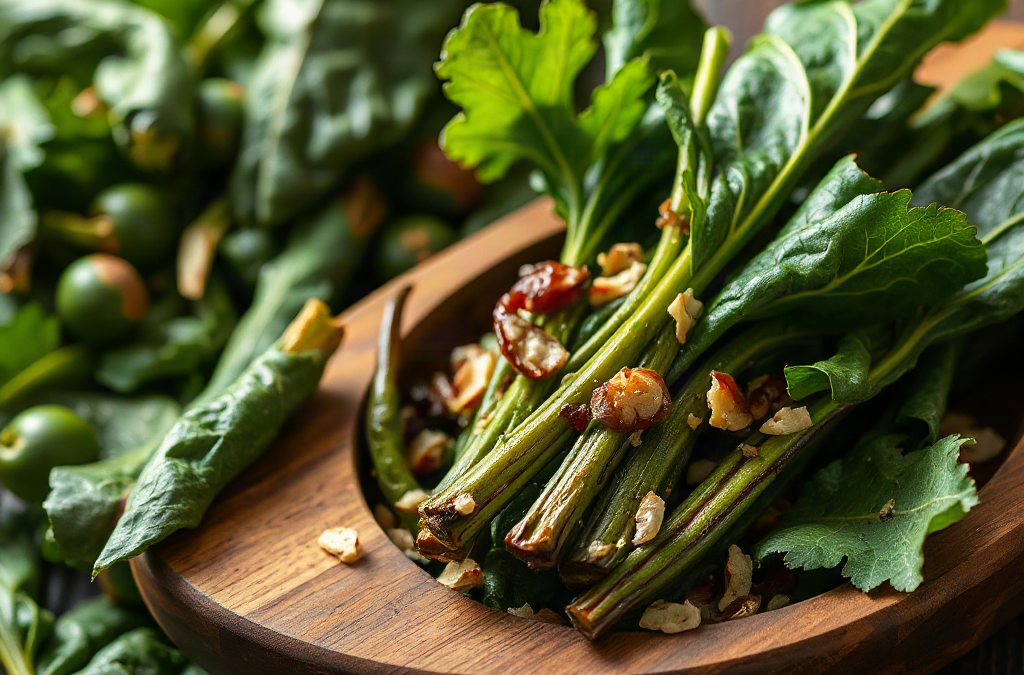
Collard greens preparation for balanced meals works best when the leaves are thoroughly washed, sliced evenly, cooked until tender, and paired with protein, whole grains or starchy vegetables, and a modest source of fat. Brief sautéing preserves a firmer texture, while covered braising softens mature leaves and mellows their bitterness. Acidic ingredients such as lemon juice or vinegar brighten the finished greens, but adding them near the end avoids slowing tenderization. Build a satisfying plate by combining collards with foods such as beans, eggs, chicken, brown rice, sweet potatoes, or cornmeal rather than treating the greens as a complete meal by themselves.
How Should Collard Greens Be Washed, Trimmed, and Cut?
Collard leaves need more deliberate cleaning than a quick rinse because soil can remain in their folds and along the thick central ribs. Separate the leaves from the bunch, discard any slimy or badly damaged pieces, and rinse each leaf under cool running water while rubbing both surfaces with clean fingers. If the greens are noticeably gritty, swish them in a large bowl of cool water, lift them out rather than pouring the water over them, and repeat with fresh water until no sediment remains.

Do not wash leafy greens with soap, detergent, or household produce cleaners. The U.S. Food and Drug Administration advises washing produce under running water, and it recommends keeping produce separate from raw meat and the utensils used for it. Drying the leaves with a clean towel or salad spinner is particularly useful before sautéing because excess surface water causes splattering and turns a quick sauté into uneven steaming.
The central rib is edible, but it cooks more slowly than the leafy portion. For tender greens with a consistent texture, fold each leaf lengthwise and slice the leaf away from the rib. The ribs can be finely chopped and cooked first with onions, or saved for soup rather than discarded. Young, narrow ribs may soften quickly enough to remain attached; large, mature ribs are usually better removed.
Cut size should match the intended method. Thin ribbons roughly half an inch wide soften quickly in a skillet and mix easily into grain bowls. Wider strips hold their shape during a longer braise. Stacking several leaves, rolling them loosely, and slicing across the roll is efficient, but an oversized stack can slip under the knife. Working in small batches gives more even pieces and safer control.
A useful preparation sequence is:
- Inspect: Remove wilted, yellowed, or damaged areas.
- Wash: Rinse individual leaves and repeat if grit remains.
- Dry: Remove excess water for sautéing; slight moisture is acceptable for braising.
- Trim: Separate thick ribs from the tender leaf portions.
- Slice: Choose narrow ribbons for fast cooking or broad strips for simmering.
The common failure is treating the entire bunch as though every part cooks at the same rate. Whole ribs can remain fibrous after the leaves are tender, while randomly sized strips produce a mixture of mushy and chewy pieces. Sorting the tougher stems from the leaves adds only a few minutes and makes the final texture much more predictable.
Which Cooking Method Produces the Best Texture?
The best cooking method depends on whether the meal needs fresh-tasting, structured greens or a softer, deeply seasoned vegetable. Sautéing suits tender leaves and quick meals, while braising is more forgiving with mature collards. Blanching can prepare a large batch for later use, but it provides less flavor unless the greens are subsequently seasoned or incorporated into another dish.
Quick Sautéing for Firmer Greens
Heat a small amount of olive, avocado, or another cooking oil in a wide skillet, soften chopped onion or garlic if desired, and add dry, thinly sliced collards. Toss until the leaves wilt, then add a spoonful of water or broth and cover briefly if they need more softening. A wide pan matters: crowded greens release water faster than it can evaporate, leaving them steamed and wet rather than lightly browned.
Sautéed collards work well when the other meal components are already cooked. For example, warm brown rice and black beans can be topped with freshly sautéed greens, chopped tomato, and pumpkin seeds. The collards retain enough structure to contrast with the softer beans and rice. The approach is less successful with very mature leaves, which may remain tough even after their color darkens.
Covered Braising for Tender Results
Braising uses a modest amount of liquid and a covered pot to soften the leaves over gentler heat. Start with aromatics, add broad strips of collards and enough low-sodium broth or water to create steam without submerging everything, then simmer until the texture suits the dish. Check periodically rather than relying only on a fixed cooking time; leaf age, strip width, and pot size all affect tenderness.
Smoked meat is traditional in some preparations, but it is not required for savory depth. Mushrooms, smoked paprika, toasted spices, or a small amount of miso can contribute umami, although miso and packaged broth also add sodium. White beans can braise alongside the greens near the end, turning the pot into a more complete meal component. When using beans, avoid vigorous stirring that breaks them down and muddies the cooking liquid.
Collards are ready when the leaves are tender enough to chew comfortably without disintegrating. Bright color alone is not a dependable sign; greens can look cooked while their fibers remain resistant. If they are tough, add a little liquid, cover, and continue gently. If they are watery, uncover the pan and let excess moisture evaporate before adjusting the seasoning.
How Can You Balance Bitterness Without Excess Salt?
Bitterness is best managed through ingredient balance and suitable cooking rather than by repeatedly adding salt. Collards naturally have a robust flavor, particularly when mature or harvested under warmer conditions. Heat softens their fibrous texture and changes how that bitterness is perceived, while aromatic, acidic, savory, and mildly sweet ingredients create contrast.
Begin with onions, shallots, or garlic cooked until fragrant. Browning onions more deeply adds sweetness without turning the dish into a sugary side. Red pepper flakes, black pepper, cumin, coriander, or smoked paprika can add complexity, but too many strong seasonings can obscure the vegetable rather than complement it. Choose one flavor direction that fits the rest of the plate.
Acid is especially effective at the finish. Lemon juice, apple cider vinegar, or red wine vinegar can make cooked greens taste less heavy and sharpen muted flavors. Add a small amount after the leaves have softened, taste, and increase gradually. Strongly acidic cooking liquid introduced too early may slow the softening of plant tissues, particularly in a gentle braise, so finishing with acid offers more control.
Fat carries flavor and offsets the dry or astringent impression that some people experience with leafy greens. A teaspoon of olive oil, a spoonful of tahini dressing, chopped nuts, seeds, or a little cheese may be enough, depending on the full meal. More fat is not automatically better: heavily oiling the greens can make a plate feel dense when beans, meat, cheese, or avocado already supply substantial fat.
Salt should be assessed across the entire dish. Canned beans, cured meat, cheese, miso, bottled sauces, and commercial broth may already contribute plenty. Rinsing canned beans and choosing unsalted or lower-sodium broth provide more control, though label values vary by product. Taste after the liquid has reduced because evaporation concentrates salt.
A practical correction sequence prevents over-seasoning:
- If the greens are tough and bitter, cook them longer with a splash of water before changing the seasoning.
- If they are tender but flat, add a little acid and an aromatic spice.
- If they are too salty, combine them with unsalted beans, grains, or additional greens rather than trying to mask the salt.
- If they are greasy, add acid and serve with a plain starch instead of adding more seasoning.
The mistake to avoid is correcting every problem with one ingredient. Salt cannot tenderize undercooked ribs, sugar does not remove grit, and vinegar cannot restore overcooked texture. Identify whether the issue is cleaning, doneness, moisture, or flavor before making an adjustment.
Building a Balanced Meal Around Collard Greens
Collard greens provide the vegetable portion of a meal, but balance comes from what surrounds them. A practical plate also needs a meaningful protein source, an energy-providing carbohydrate when appropriate, and enough fat to make the meal flavorful and satisfying. Exact portions depend on appetite, activity, health needs, and the other foods eaten during the day, so a rigid formula is less useful than checking which role each ingredient serves.
For a plant-forward bowl, pair braised collards with black-eyed peas or white beans, brown rice or barley, and a spoonful of toasted seeds. Beans contribute protein and carbohydrate, while the grain makes the meal more substantial. The greens add folate, vitamin K, carotenoids, vitamin C, and fiber, although nutrient amounts vary with serving size, freshness, and cooking. People taking medications affected by vitamin K intake should seek individualized guidance from a qualified clinician rather than abruptly changing their usual intake of leafy greens.
An egg-based meal can combine sautéed collard ribbons with scrambled or poached eggs, roasted sweet potato, and sliced tomato. For an animal-protein option, serve lemon-finished collards beside baked fish or chicken and a whole grain. These combinations are usually more sustaining than a plate consisting only of greens, yet they avoid assuming that every meal needs meat.
The cooking liquid can shape the rest of the plate. Collards braised with beans and tomatoes may already contain protein and carbohydrate, requiring only cornbread or another grain to round out the meal. Greens cooked alone in broth remain a vegetable side and should not be mistaken for a complete entrée. Similarly, bacon-flavored collards may contain some protein, but a small amount used for seasoning is not necessarily enough to serve as the meal’s primary protein source.
| Meal Component | Practical Options | What to Check |
|---|---|---|
| Collard greens | Sautéed, braised, or folded into soup | Tender texture, controlled sodium, no remaining grit |
| Protein | Beans, lentils, eggs, tofu, fish, or chicken | A substantial serving rather than a garnish |
| Carbohydrate | Brown rice, barley, cornmeal, potatoes, or whole-grain bread | Amount matched to appetite and meal context |
| Flavorful fat | Olive oil, tahini, nuts, seeds, or avocado | Account for fat already used during cooking |
| Finishing flavor | Lemon, vinegar, herbs, or pepper | Add gradually after tasting the complete dish |
Batch cooking makes these meals practical, but storage quality matters. Cool cooked greens promptly, refrigerate them in a shallow covered container, and use standard food-safety guidance for leftovers. Store grains or crisp toppings separately when possible so they do not absorb all the braising liquid. Reheat only the portion needed, adding a splash of water if the greens have dried out.
A balanced approach is working when the collards are pleasant to chew, the plate includes more than one food group, and no single salty or fatty ingredient dominates. It is failing when the greens remain gritty, the stems are stringy, or the meal leaves a person hungry because vegetables were served without enough protein or energy. Adjust the missing component rather than simply increasing the quantity of greens.
Conclusion
Reliable collard preparation begins with removing grit, separating thick ribs when needed, and cutting the leaves to suit the cooking method. Use a quick sauté for thin ribbons and a firmer bite; choose covered braising for mature leaves or a softer result. Season in layers, then use acid near the end and judge salt only after broths, sauces, or cured ingredients have reduced.
For the next meal, assign the collards a clear role as the vegetable and add a substantial protein, a suitable grain or starchy vegetable, and a measured source of fat. Check the finished plate for tenderness, moisture, sodium, and staying power. If something feels incomplete, correct the specific issue: cook tough leaves longer, reduce excess liquid, brighten flat flavor, or add protein and carbohydrate rather than relying on a larger pile of greens.
Frequently Asked Questions
Can collard greens be eaten raw?
Yes, but mature leaves can be tough and assertive. Remove the ribs, slice the leaves very thinly, and massage them briefly with dressing. Tender young leaves are better suited to raw salads than large mature leaves.
How do you keep collard greens from tasting bitter?
Cook them until genuinely tender, build flavor with onion or garlic, and finish with a small amount of lemon juice or vinegar. Salt alone will not correct bitterness caused by undercooked, fibrous leaves.
Should collard stems be discarded?
Not necessarily. Thick stems can be finely chopped and cooked before the leaves, added to soup, or reserved for stock. Leaving large pieces attached may produce tough bites because stems soften more slowly.
What proteins pair well with collard greens?
Beans, lentils, eggs, tofu, fish, and chicken all pair well. Choose according to the meal's flavor profile and check whether salty ingredients such as cured meat, cheese, or packaged broth are already present.
Can cooked collard greens be prepared ahead?
Yes. Braised collards often reheat well because their texture is already soft. Cool them promptly, refrigerate in a covered container, and follow current government food-safety guidance for storage and reheating leftovers.