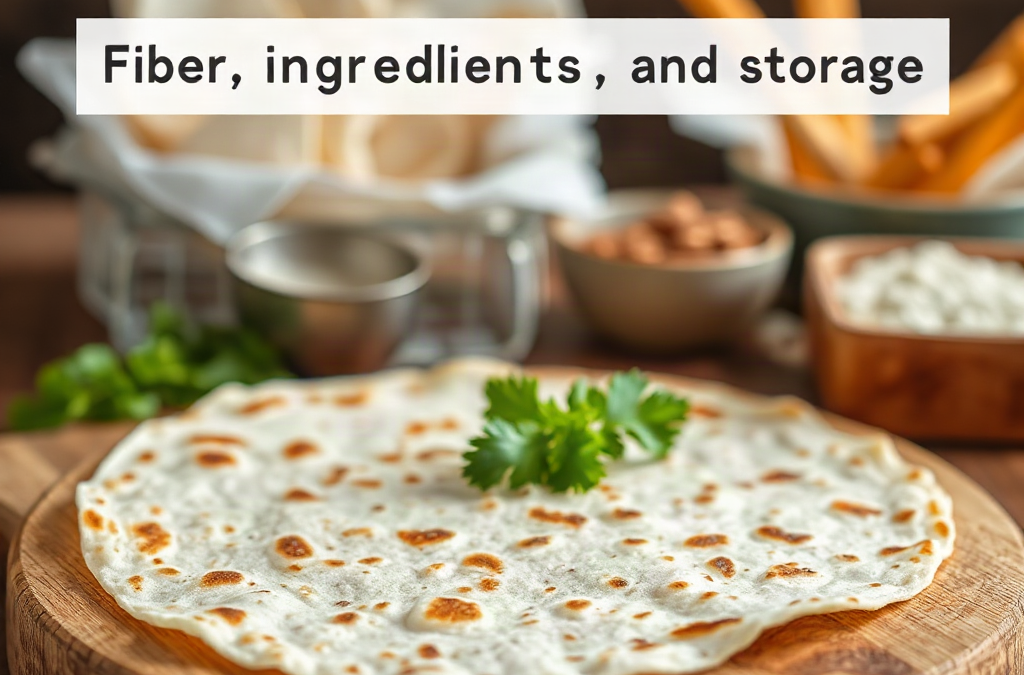
Fiber, ingredients, and storage for organic tortillas are linked: the flour or grain determines fiber, the ingredient list reveals how minimally the tortilla is made, and storage controls texture and spoilage. Whole-grain corn or whole-wheat tortillas generally provide more fiber than refined flour versions, but the Nutrition Facts panel is the reliable comparison because organic certification does not automatically mean high-fiber. Check for whole grain near the beginning of the ingredient list, compare fiber per serving, and watch for added oils, gums, sodium, or preservatives when those matter to you. Keep unopened packages according to the label, refrigerate opened tortillas when recommended, and freeze extras in smaller stacks to limit moisture and freezer burn.
How Tortilla Fiber Varies by Grain and Milling
Fiber content depends more on the grain and how much of it remains after milling than on the word “organic” alone. A tortilla made from whole corn or whole wheat retains more of the grain’s outer layers than one made from refined flour, so it will often contribute more dietary fiber per serving. The package’s Nutrition Facts panel settles the comparison because serving sizes differ and a darker color is not proof of whole-grain content.
Whole-grain wheat tortillas usually contain bran and germ along with the starchy endosperm. Whole-corn tortillas may provide a different texture and flavor, while some flour tortillas combine whole wheat with refined wheat flour. A product labeled multigrain may contain several grains without being predominantly whole grain. Look for “whole wheat” or another clearly identified whole grain in the ingredient list rather than relying on front-of-package language.
Fiber adds structure and absorbs water, which affects flexibility. Higher-fiber tortillas may feel denser or become less pliable when overheated. That is a texture tradeoff, not necessarily a defect. For a bean-and-vegetable wrap, a sturdier tortilla may be useful; for folding around a delicate filling, a thinner corn tortilla may perform better. Pairing the tortilla with beans, lentils, vegetables, nuts, seeds, or fruit can raise the meal’s total fiber more reliably than choosing a package based on marketing terms.
Use fiber, ingredients, and storage for organic tortillas as separate checks rather than treating them as one health claim. Compare fiber per serving, identify the grain, and consider how many tortillas you actually eat. People with digestive conditions or a sudden increase in fiber may need individualized advice; increasing portions quickly can cause bloating or discomfort even when the food is nutritious.
Ingredient Lists That Reveal More Than the Organic Seal
An organic label addresses how covered agricultural ingredients were produced, but it does not by itself describe fiber level, sodium, texture, or the presence of every type of processing aid. The ingredient list and Nutrition Facts panel answer different questions. The list shows what is included in descending order by weight, while the panel shows nutrients such as fiber, sodium, fat, and calories per stated serving.
For a simple tortilla, expect a short list built around corn or wheat, water, and perhaps salt or oil. Other products may contain leavening agents, gums, acids, or preservatives to improve softness, shelf life, or handling. None of those ingredients automatically makes a tortilla unsuitable. The useful question is whether the formulation fits your needs. Someone prioritizing a very short pantry list may choose a simpler product, while someone needing a soft tortilla for packed lunches may accept a small amount of added oil or a stabilizer.
Oil type and quantity can affect mouthfeel and calories, but “no added oil” does not guarantee higher fiber. Sodium deserves a direct comparison, especially when tortillas are combined with salted beans, cheese, salsa, or packaged fillings. A tortilla that looks wholesome can still make a meal salty when several ingredients contribute sodium. Conversely, a modest amount of salt may improve flavor enough to reduce the need for heavily seasoned fillings.
Check allergy and dietary statements separately from organic certification. Wheat tortillas contain gluten unless specifically formulated otherwise, and corn tortillas can still be produced in facilities handling other allergens. If you are comparing ingredient choices in organic tortillas, read the entire label rather than stopping at “whole grain,” “sprouted,” or “stone-ground.” Those terms may describe a useful feature, but they do not replace the actual nutrient and ingredient information.
Storage Methods for Texture and Food Quality
Storage affects tortillas through moisture loss, condensation, temperature changes, and exposure to air. Unopened tortillas should generally remain in the location specified on the package. Once opened, reseal the original package tightly or move the tortillas to an airtight bag or container. Pressing out excess air helps limit drying, while keeping the package away from heat and direct sunlight protects texture.
Refrigeration can extend usability for some packaged tortillas, but it may also make them firmer. Follow the manufacturer’s instruction because products differ in moisture and preservation. If a refrigerated tortilla cracks, brief warming in a covered skillet or microwave-safe setup may restore flexibility; overheating will instead dry the edges. Warm only the amount needed for the meal and return the remainder to storage promptly.
Freezing is practical when a package will not be used soon. Separate tortillas with small sheets of freezer paper or freeze them in manageable portions so the entire stack does not need to thaw. Use a well-sealed freezer bag, label it with the date, and thaw the portion in the refrigerator or at room temperature while still covered. Condensation is less troublesome when the package stays closed during thawing. Freezer storage preserves convenience, but prolonged exposure to air can cause freezer burn and brittle edges.
Discard tortillas with visible mold, unusual discoloration, a sour or otherwise abnormal odor, or a package that is swollen when it should not be. Do not scrape off mold and eat the rest; soft, moist foods can have contamination below the visible area. A stale tortilla that is merely dry is a quality problem, while mold or unexplained spoilage is a safety concern. Storage cannot rescue a product that was already compromised, so inspect the package when purchasing and avoid damaged seals.
A Practical Buying and Serving Checklist
The best choice is the tortilla that matches both the meal and the way you will store it. Start with the Nutrition Facts panel, then confirm the grain and ingredients, and All in all decide whether the package size fits your household. Buying a large package for occasional use may cost less per tortilla but create waste if freezing is inconvenient. A smaller package can be the better value when it will be eaten fresh.
Use this compact sequence at the shelf:
- Fiber: Compare grams per serving and verify whether the serving equals one tortilla or more.
- Grain: Look for whole wheat or whole corn when higher grain-based fiber is the priority.
- Ingredients: Check oils, salt, gums, and preservatives against your personal preferences and dietary restrictions.
- Function: Choose a pliable flour tortilla for large wraps, or corn when its flavor and smaller format suit tacos or tostadas.
- Storage: Confirm whether the package calls for pantry storage, refrigeration after opening, or another method.
Serving context changes the nutritional result. A high-fiber tortilla filled with beans, greens, peppers, and avocado creates a different meal from the same tortilla filled mainly with processed meat and cheese. A lower-fiber tortilla may still be appropriate when a person is temporarily limiting fiber under clinical guidance. Nutrition decisions should account for the whole meal, tolerance, and medical advice rather than assigning a health verdict to one package.
Common mistakes include assuming every organic tortilla is whole grain, comparing packages with unequal serving sizes, and leaving an opened stack loosely wrapped on the counter. Another mistake is judging freshness only by softness: added moisture can make a product seem pliable while also creating conditions for spoilage if it is mishandled. Use the label for storage instructions, your senses for obvious deterioration, and portioned freezing when regular use is uncertain.
For meal planning, keep one package accessible for the next few days and freeze the balance in meal-size portions. That approach preserves flexibility without encouraging unnecessary waste. Readers researching organic tortilla nutrition and freshness can apply the same process to corn, flour, and whole-grain varieties, while recognizing that exact fiber values and storage directions remain product-specific.
Frequently Asked Questions
Are organic tortillas automatically high in fiber?
No. Organic certification does not establish a tortilla’s fiber content. Check the Nutrition Facts panel and look for a whole grain in the ingredient list.
Which is usually higher in fiber, corn or flour tortillas?
It depends on the recipe and serving size. Whole-grain versions of either type may provide more fiber than refined versions, so compare labels rather than assuming.
Should opened tortillas be refrigerated?
Follow the package directions. Refrigeration may extend quality for some products but can firm the tortillas, making careful reheating useful.
Can organic tortillas be frozen?
Most packaged tortillas can be frozen for longer storage when tightly sealed. Divide the stack into portions and protect it from air to reduce freezer burn.
When should tortillas be discarded?
Discard tortillas showing mold, unexplained discoloration, an abnormal odor, or other clear spoilage signs. Do not remove mold from a soft tortilla and eat the remainder.
Conclusion
Choosing organic tortillas works best as a three-part label and handling decision. Use the fiber number to compare actual nutrition, inspect the grain and supporting ingredients, and treat organic status as one production attribute rather than a complete health verdict. Match the tortilla to its job: a sturdy whole-grain wrap may suit a bean-and-vegetable filling, while a softer or smaller tortilla may work better for another meal. Storage deserves equal attention. Seal opened packages, follow product-specific refrigeration directions, freeze surplus in portions, and discard anything with mold or suspicious spoilage. Those steps preserve texture, reduce waste, and keep expectations realistic while allowing the rest of the meal—not a single front-label claim—to determine its overall nutritional value.
Huge Discount on the Best Certified Organic Nutrient Dense Supplement!