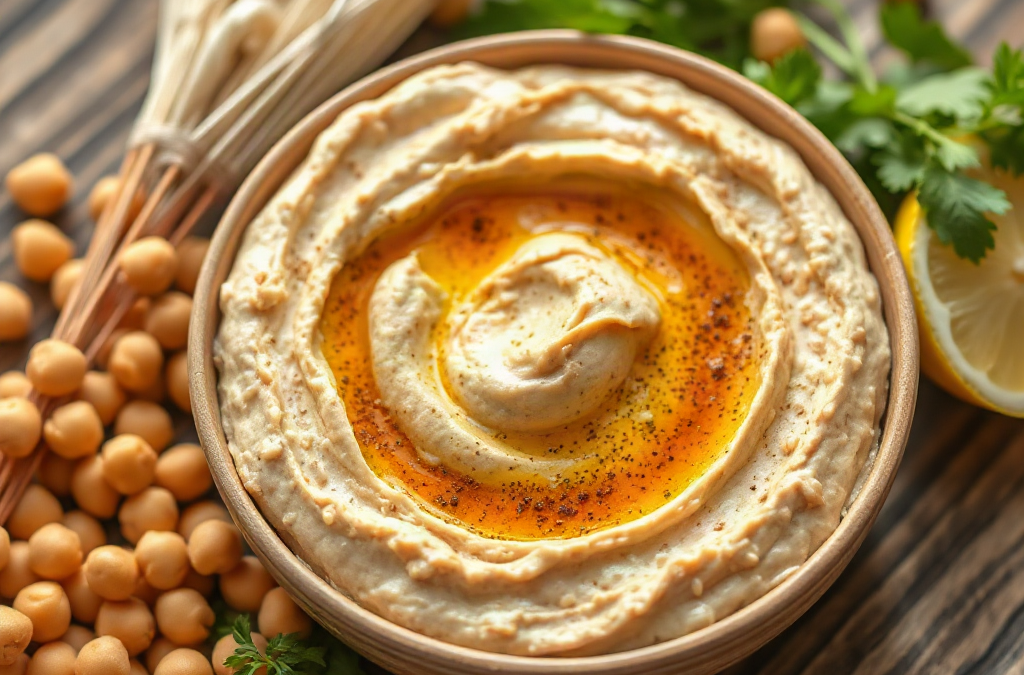
Ingredient checks for choosing organic hummus should prioritize the chickpea base, the type of oil, sodium, tahini, and any preservatives or flavor additives. Look for chickpeas, sesame tahini, lemon juice, garlic, and a modest amount of oil, while checking whether the oil is clearly named rather than hidden in a broad blend. Organic certification addresses how qualifying agricultural ingredients were produced, but it does not automatically mean the recipe is low in sodium, minimally processed, or free from allergens. Compare serving sizes before judging salt or calories, and inspect the refrigerated package after opening for separation, odor, or an unusually swollen seal.
Read the Ingredient List in the Right Order
The ingredient list reveals how a hummus is built, not just how it is marketed. Traditional hummus generally centers on cooked chickpeas, tahini made from sesame seeds, lemon juice, garlic, water, and salt. Oil may be blended into the spread or added mainly as a finishing ingredient. A short list is not automatically better, but a list that begins with a recognizable legume and names its supporting ingredients makes the product easier to evaluate.
Ingredients appear by weight, so the first few entries deserve the closest attention. If chickpeas lead the list and tahini appears near the beginning, the spread is likely built around the expected ingredients. If water, oil, or a vague vegetable puree appears before chickpeas, the texture and nutritional profile may differ from what you expect. That does not make the product unsafe or unacceptable; it simply changes the buying decision.
Compare two refrigerated tubs with similar front labels. One may list organic chickpeas, water, organic tahini, lemon juice, garlic, salt, and olive oil. Another may include stabilizers, concentrated lemon flavor, extra starch, or a seasoning blend. The second product may have a smoother texture or longer refrigerated life, while the first may offer a more recognizable recipe. The useful question is not whether every unfamiliar ingredient is harmful, but whether each addition has a clear purpose you value.
Use the list as a priority screen:
- Identify the main bean and confirm that chickpeas are prominent.
- Find the oil source instead of assuming the product uses olive oil.
- Check for added sugar, starches, gums, preservatives, or flavor concentrates.
- Look for sesame disclosure if tahini is included.
A common mistake is treating the number of ingredients as a quality score. Lemon juice, garlic, citric acid, or a small amount of a texture aid may be functional and reasonable. Conversely, a very short list can still produce a spread high in sodium or saturated fat. Ingredient order gives context, but it must be read alongside the Nutrition Facts panel and allergen statement. For more label-focused context, see Ingredient checks for choosing organic hummus.
Assess Oil, Tahini, Salt, and Texture
Oil, tahini, and salt often determine whether a hummus fits your preferences more than the word organic on the front of the package. Tahini contributes sesame flavor, fat, and creaminess; oil can soften the spread and carry flavor; salt sharpens otherwise mild chickpeas and lemon. None of these ingredients is automatically a problem, but their amounts and type affect how the product works in a meal.
Look for a specifically named oil. Olive oil, avocado oil, canola oil, and sunflower oil produce different flavor and cost profiles. A blend labeled only as “vegetable oil” gives less information about the formulation. Some products use a neutral oil in the base and reserve olive oil for the surface drizzle. That can be perfectly functional, but a shopper seeking olive oil as the primary fat should check the full list rather than relying on the package image.
Tahini deserves a separate check because sesame is both a defining hummus ingredient and a major allergen. A product without tahini may be designed for a sesame-free diet, but it may also use another seed butter or extra oil to create body. Read the allergen statement and shared-facility language when allergy risk is relevant. Organic status does not remove allergen concerns.
Sodium requires a serving-size comparison. A small label serving can make two products appear similar even when one is much saltier per typical scoop. Compare the sodium value per serving and note whether you usually eat the stated portion with crackers, vegetables, sandwiches, or a grain bowl. A salty hummus may be manageable as a thin spread but less suitable as a frequent dip eaten by the spoonful.
Texture can also expose formulation choices. A very smooth product may rely on extensive blending, extra water, or stabilizers, while a coarse product may reflect a simpler preparation. Smoothness is not proof of quality, and separation is not proof of failure; natural oil and water separation can occur in less stabilized foods. Stir the product if the package is intact and within date. If texture changes into a watery, sour, or unusually bubbly spread, freshness becomes a more important concern than culinary style.
Separate Organic Certification From Recipe Quality
Organic certification and ingredient quality answer different questions. Organic labeling concerns the production and handling standards that apply to qualifying ingredients and the product category under the relevant certification system. It does not promise a low-sodium recipe, a high proportion of chickpeas, a particular oil, or the absence of all processing aids.
A jar can contain certified organic chickpeas and still be heavily salted. Another product can use a conventional ingredient that matters to you while presenting a recipe with fewer additives. Shoppers who want organic hummus should verify the certification wording and also inspect the complete ingredient panel. The organic claim should be one filter, not the entire decision.
Pay attention to how the claim is presented. Packaging may distinguish between a product made with organic ingredients and a product carrying a broader certified-organic claim. The exact wording can vary by certification and formulation, so official certification information or the certifier’s details can clarify what the label means. Avoid assuming that a green package, farm imagery, or words such as natural and pure carry the same meaning as organic certification.
The same distinction applies to “clean label.” That phrase is not a substitute for reading ingredients. A clean-label hummus may still contain substantial sodium, and a hummus with a small amount of xanthan gum or citric acid may be easier to portion, transport, or keep fresh. The best choice depends on your purpose:
- For a simple everyday spread, prioritize recognizable ingredients and moderate sodium.
- For allergy-sensitive households, prioritize the allergen statement and manufacturing information.
- For meal preparation, prioritize a texture that remains stable and a package size you can finish safely.
- For a specific fat preference, verify the named oil and the role of tahini.
Weak assumptions create poor comparisons. “Organic” is not the same as “nutritionally superior,” and “minimal ingredients” is not the same as “better for every person.” A careful label check respects both production standards and recipe details. The USDA’s organic information and the product’s certifier can help explain the claim, while the package itself remains the source for the current formula.
Check Allergens, Freshness, and Serving Fit
Hummus is often treated as a simple plant-based snack, yet the practical checks extend beyond the ingredient list. Chickpeas, sesame tahini, added oils, and flavor ingredients can affect allergies, dietary patterns, and tolerance. Garlic, onion, hot peppers, and acidic ingredients may also matter to people who find certain foods difficult to tolerate, although individual responses vary.
Read the allergen declaration even when sesame is obvious from the word tahini. Manufacturers may change recipes, and flavored varieties can add dairy, nuts, or other ingredients not present in plain hummus. Roasted red pepper, pesto, chipotle, and dessert-style versions deserve a fresh review rather than being judged by the plain product’s label. For households managing a diagnosed food allergy, follow medical guidance and use the manufacturer’s current package information; ingredient advice cannot replace an individualized allergy plan.
Freshness is especially relevant for refrigerated hummus. Check the seal, use-by or best-by information, storage instructions, and package condition. A damaged lid, leakage, unexpected gas, or an off odor is a reason not to taste the product. Once opened, use the manufacturer’s handling guidance and keep the container cold. Do not assume that organic or additive-free products keep for the same length of time as more stabilized alternatives.
Serving context changes the value of a recipe. Hummus can add chickpea protein, fiber, and creaminess to vegetables, whole-grain toast, wraps, or a grain bowl, but the meal’s total sodium and energy come from the whole plate. A label that looks moderate in isolation can become less moderate when paired with salted crackers, cured foods, or a large amount of oil. Conversely, a richer hummus may be useful when a small portion replaces a more heavily processed spread.
Try the product in the setting where you will actually eat it. A firm hummus may work well in a sandwich but crumble as a dip; a looser product may suit vegetables but soak into bread. The common failure is choosing based only on front-label claims and then compensating with extra portions because the texture or flavor does not fit the meal. Taste, portion, storage, and allergen checks belong in the same decision.
Use a Fast Store-Shelf Decision Process
A reliable comparison takes less than a minute when the checks are done in order. First confirm that the product meets your organic preference and dietary requirements. Next scan the first several ingredients, identify the oil and tahini, and then compare sodium and serving size. Finish by checking package condition, refrigeration, and whether the container is realistic for your household to use before quality declines.
Imagine choosing between a plain hummus with seven familiar ingredients and a flavored variety with a longer list. The plain tub may be the better base if you want to add lemon, herbs, or roasted vegetables yourself. The flavored product may be worthwhile when convenience matters and its added sugar, sodium, or oil fit your meal. A longer list is not a verdict; it is a prompt to identify what each ingredient contributes.
Budget and waste also belong in the calculation. Organic hummus may cost more, and a large container is not economical if it sits open until the texture and aroma deteriorate. A smaller tub can be the more sensible choice for occasional use. If you buy plain hummus in bulk, portioning it into clean containers may reduce repeated exposure to air, but follow the package storage instructions rather than extending its safe life by guesswork.
Use this priority order when labels compete:
- Rule out allergens or ingredients that conflict with your dietary needs.
- Verify the organic claim using the package wording and certification information.
- Choose the recipe with the oil, tahini, and sodium profile that fits your normal portions.
- Prefer a texture and package size suited to the meals you will make.
- Recheck the seal, date, and storage requirements before purchase.
The approach fails when shoppers focus on a single badge, a single nutrient, or the shortest possible ingredient list. A better label check weighs production claims, recipe composition, nutrition, safety, and actual use together. For meal ideas that make portion and texture easier to judge, connect this assessment with Ingredient checks for choosing organic hummus and your broader Ingredient checks for choosing organic hummus planning.
For current explanations of organic labeling, packaged-food labeling, and allergen declarations, consult USDA organic guidance, the U.S. Food and Drug Administration’s food-labeling resources, and the manufacturer’s current product label. These sources are more reliable than front-of-package marketing when a formula or certification detail needs verification.
Frequently Asked Questions
What ingredients should appear in a basic organic hummus?
A basic recipe commonly includes chickpeas, tahini, lemon juice, garlic, water, salt, and sometimes oil. Variations may add spices, herbs, or texture aids, so the full list matters more than a fixed ingredient count.
Does organic hummus automatically contain healthier ingredients?
No. Organic status addresses production standards for qualifying ingredients, while sodium, oil type, serving size, and additives still require separate evaluation.
How can I tell whether hummus uses olive oil?
Read the ingredient list for a specific oil name. Package images or phrases such as Mediterranean style do not establish that olive oil is the main oil in the recipe.
Is tahini a concern when buying hummus?
Tahini is a traditional sesame ingredient and a major allergen. Check the allergen statement and manufacturing information when sesame or cross-contact presents a health concern.
What should I do if oil separates on top?
Natural separation can occur, especially in less stabilized products. If the seal is intact, the product is within date, and the aroma and texture are normal, stir it according to the package directions; discard it if the container is swollen, leaking, or smells off.
Conclusion
Choosing organic hummus takes more than spotting an organic badge. Confirm the certification claim, then examine the chickpea-to-tahini balance, named oil, sodium per realistic serving, additives, allergen statement, and package condition. A short ingredient list can be appealing, but it should not outweigh a recipe that fits your dietary needs, meal plans, and storage habits. Plain hummus may offer flexibility, while a flavored variety can be practical when its added ingredients are acceptable. Compare products side by side, buy a size you can use while fresh, and judge the spread in the context of the foods served with it. That process produces a more useful choice than relying on claims such as natural, clean, or premium alone.
Huge Discount on the Best Certified Organic Nutrient Dense Supplement!