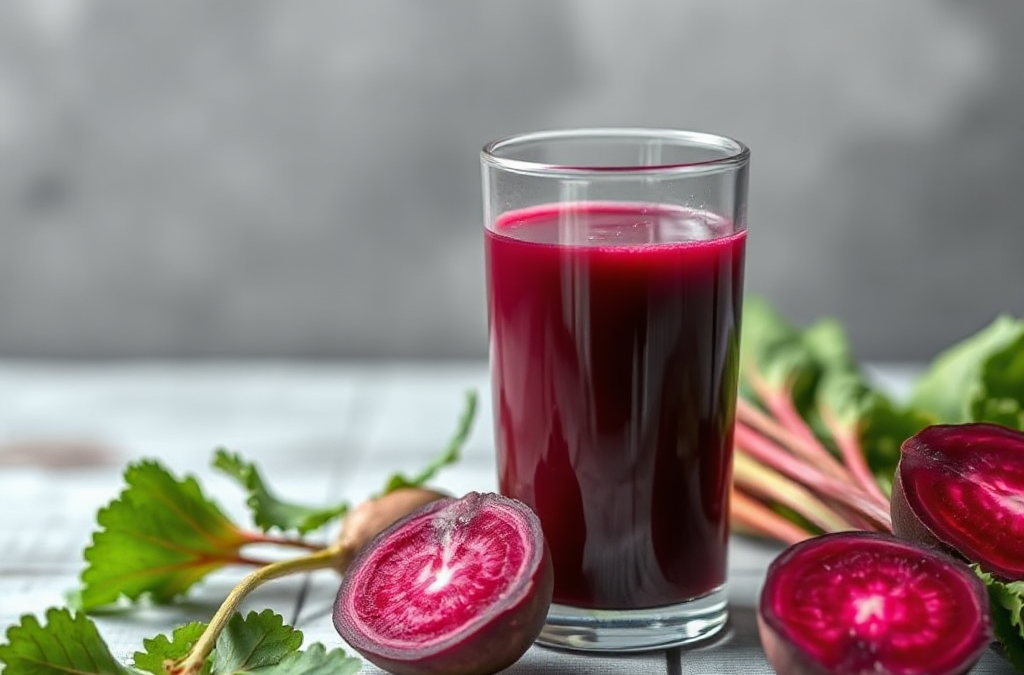
Organic beet juice benefits and safety considerations center on dietary nitrates, exercise support, blood-pressure effects, sugar content, and kidney-related risks. Nitrates can be converted to nitric oxide, which may help blood vessels relax and may modestly support exercise efficiency or blood-pressure readings in some people. Organic certification affects farming and processing standards, but it does not make beet juice risk-free or automatically more nutritious. Choose a pasteurized product with minimal added sugar, begin with a small serving, and avoid treating it as a substitute for prescribed care. People with a history of calcium oxalate kidney stones, low blood pressure, or medication-related blood-pressure concerns should ask a clinician before using it regularly.
What Gives Beet Juice Its Potential Benefits
Beet juice is notable for its naturally occurring nitrate content, betalain pigments, folate, and small amounts of potassium and other nutrients. The nitrate pathway is the main reason it receives attention: oral bacteria help convert nitrate into nitrite, and the body can then use nitrite to produce nitric oxide. Nitric oxide participates in blood-vessel relaxation, so beet juice may influence circulation and oxygen use without functioning like a stimulant.
That mechanism does not mean every bottle produces the same result. Nitrate levels vary with beet variety, growing conditions, processing, and concentration. A juice made from whole beets also differs from a highly concentrated “shot.” The latter may deliver more nitrate in a smaller volume, while the former may be easier to incorporate into a meal but may contain more total fluid and carbohydrate.
Betalains give beets their red or purple color and have antioxidant activity in laboratory settings. That finding is useful context, not proof that beet juice prevents disease or removes the need for a varied diet. Whole beets provide fiber that strained juice largely lacks. Fiber affects fullness, digestion, and the pace at which carbohydrates are consumed, making roasted beets or blended beet drinks a different nutritional choice from clear juice.
A useful comparison is beet juice versus a serving of beets in a meal. Juice is convenient and may be easier to consume before activity, but it can deliver concentrated sugars with little fiber. Whole beets take longer to eat and offer more texture and fiber. Readers deciding between them should prioritize the form that fits the intended purpose: a measured beverage for convenience, or whole vegetables for regular eating.
For broader context on organic beet juice benefits and safety considerations, separate three claims that are often blended together: nitrate-related effects, the general value of vegetables, and the meaning of organic production. Each deserves its own evidence and safety judgment.
Possible Effects on Exercise and Blood Pressure
Beet juice may be most useful when someone wants to explore nitrate-rich nutrition around endurance activity or a blood-pressure conversation with a healthcare professional. Nitric oxide can affect vascular tone, and some research has associated dietary nitrate intake with modest changes in exercise efficiency or blood-pressure measurements. The response is variable, and a noticeable sensation is not required for the product to have an effect.
Timing is less important than consistency and tolerance. Some people use a serving several hours before exercise because nitrate conversion takes time; others prefer it with a meal to reduce stomach discomfort. A first trial should not happen immediately before an important race, long ride, or demanding training session. Beet juice can cause nausea, loose stools, or an unexpectedly urgent bathroom stop in sensitive users.
Consider a recreational cyclist comparing water, a sports drink, and beet juice. Water supplies hydration but no meaningful carbohydrate or nitrate; a sports drink may provide fluid and fuel; beet juice may provide nitrate but may not replace the carbohydrate, sodium, or fluid plan needed for prolonged exercise. These products are not interchangeable. Beet juice should be evaluated as one component, not as a complete performance strategy.
For blood pressure, a juice serving should never be used to adjust medication or to interpret a single home reading. Blood pressure changes with posture, stress, cuff fit, illness, hydration, and time of day. Anyone taking antihypertensive drugs or medicines that lower blood pressure should discuss regular use with a clinician, particularly if dizziness or faintness occurs.
- Test tolerance on an ordinary day before using it around strenuous activity.
- Record blood-pressure readings under consistent conditions rather than reacting to one measurement.
- Compare the label for added sugar, serving size, and concentration.
Claims that beet juice “boosts oxygen” or guarantees better athletic performance are too broad. Effects depend on the person, activity, baseline diet, dose, and product composition. The practical goal is a measured experiment with realistic expectations, not a replacement for training, sleep, adequate food, or medical treatment.
Organic Labels, Product Quality, and Serving Choices
“Organic” describes agricultural and handling standards rather than a guarantee of superior nitrate content or greater safety for every consumer. Certification may address permitted inputs, production practices, and processing requirements, but an organic beet can still be contaminated if handled poorly, and organic juice can still contain naturally occurring sugars, acids, and oxalates. The label should inform a buying decision without becoming the entire nutrition assessment.
Read the ingredient panel before comparing products. A straightforward bottle may list beet juice and perhaps water or lemon juice, while another may contain apple juice, sweeteners, flavorings, or a concentrated beet extract. Added fruit juice can make the flavor more appealing but may increase total sugar. Pasteurization can improve food-safety stability, although it does not turn a product into a shelf-stable item after opening; follow storage instructions and discard juice that has been kept too long or develops an unusual odor, pressure, or appearance.
Serving size also changes the decision. A small concentrated shot may be practical for someone testing tolerance, whereas a large glass can add more sugar and fluid than intended. Starting with less is sensible when the product is unfamiliar. Diluting it with water does not remove nitrate or oxalate, but it can make the flavor milder and may make the serving easier to consume gradually.
Compare beet juice with a homemade blended drink. A blender preserves more pulp and therefore more fiber, but raw produce requires careful washing and clean equipment. Commercial juice offers convenience and consistent labeling, but its nitrate amount may not be stated. Neither option is automatically best. Busy readers may value a pasteurized, unsweetened product; people focused on fiber may prefer cooked beets blended with yogurt, citrus, or another meal ingredient.
Organic shoppers should also consider freshness and handling. Keep refrigerated products cold, use clean glasses, avoid drinking directly from a shared bottle, and follow the package’s opening guidance. Red urine or stool after beets can be harmless and temporary, but a new or persistent change that does not clearly follow beet consumption deserves medical attention.
Safety Concerns, Interactions, and Warning Signs
The most relevant safety issue for many regular users is not the organic label but personal medical context. Beet products contain oxalates, compounds that may contribute to calcium oxalate stone formation in susceptible people. A history of kidney stones does not automatically prohibit beets, yet frequent concentrated juice may be a poor self-directed choice without individualized dietary advice. Kidney disease can also change how a person should approach potassium, fluids, and concentrated foods.
Beet juice may lower blood pressure modestly in some settings. That possibility matters for people with naturally low readings, dehydration, fainting tendencies, or prescriptions that already lower pressure. Seek clinical advice before making it a daily habit if you use antihypertensive medication, nitrate medicines, or other treatments where a blood-pressure change could matter. Do not stop or reduce medication because a beverage seems to work.
Digestive effects are common enough to plan for. Nausea, abdominal discomfort, or loose stools may result from a large serving, drinking it quickly, consuming it on an empty stomach, or reacting to added ingredients. A smaller amount with food can help identify whether the problem is dose-related, but severe symptoms, swelling, breathing difficulty, repeated vomiting, or fainting require prompt medical attention rather than another trial.
Beeturia—the appearance of red or pink urine—can occur after eating beets and is often benign. It should not be used to judge nitrate absorption or product quality. If urine discoloration persists after beets are stopped, appears with pain or clots, or is accompanied by fever or weakness, contact a healthcare professional because blood in urine can have other causes.
Pregnancy, breastfeeding, childhood use, and medically restricted diets call for extra caution because serving advice is not one-size-fits-all. A registered dietitian or clinician can account for the person’s kidney function, medications, blood-pressure pattern, and total dietary intake. A common mistake is to focus on the word “organic” while overlooking concentrated dose, sugar, storage, or an existing stone history.
A Practical Way to Decide Whether to Use It
A sensible decision begins with the intended benefit. If the goal is to eat more vegetables, whole beets may offer a better everyday choice because they provide fiber and can replace less nutritious foods. If the goal is to test a nitrate-containing beverage around exercise, a small, clearly labeled serving may be more relevant. If the goal is to treat high blood pressure, beet juice is not an adequate substitute for evaluation, prescribed care, and a broader eating pattern.
Use a simple trial rather than committing to a large daily dose. Choose a product with minimal added sugar, check whether it requires refrigeration, and try a modest serving with food on a noncritical day. Note digestive symptoms, dizziness, and—only if medically relevant—blood-pressure readings taken consistently. Stop and seek advice if symptoms are concerning or if the drink conflicts with a kidney-stone or renal nutrition plan.
Results should be judged by practical signals, not dramatic promises. Tolerating the drink, fitting it into meals, and avoiding excess sugar are useful signs that the choice is workable. Recurrent stomach upset, unexplained light-headedness, escalating portions, or replacing balanced meals are signs the approach is failing. A product that is expensive, difficult to store, or unpleasant may not be sustainable even if its nutrient profile looks attractive.
Keep the rest of the pattern visible. Pairing a small amount with a meal containing beans, grains, greens, or a protein source is generally more nutritionally complete than drinking juice alone. Citrus, herbs, or sparkling water can improve flavor without requiring added sweetener, while a blended preparation can restore some pulp. Readers comparing organic beet juice benefits with whole-food options should ask which form better serves the specific goal and medical constraints.
The priority order is straightforward: check personal risk, inspect the ingredient list, start with a modest amount, and evaluate tolerance before increasing use. Organic certification can be a meaningful purchasing preference, but safety depends more on the complete product and the person drinking it.
Frequently Asked Questions
Does organic beet juice contain more nutrients than conventional beet juice?
Not necessarily. Organic certification concerns production and handling standards; nitrate and nutrient levels can vary with variety, growing conditions, concentration, and processing.
Can beet juice lower blood pressure?
It may modestly affect blood-pressure readings in some people, but responses vary. It should not replace prescribed treatment, and people taking blood-pressure medication should ask a clinician before regular use.
Is beet juice safe for people with kidney stones?
People prone to calcium oxalate stones should use caution because beets contain oxalates. Discuss frequent or concentrated servings with a clinician or renal dietitian.
Why does beet juice turn urine or stool red?
Beet pigments can cause temporary red or pink discoloration. If the change persists after stopping beets or occurs with pain, fever, clots, or weakness, seek medical evaluation.
When should beet juice be consumed for exercise?
Some people use it several hours before endurance exercise, but timing and response vary. Test it during ordinary training first, and do not assume it replaces hydration or carbohydrate fueling.
Conclusion
Organic beet juice can be a convenient source of dietary nitrate and beet pigments, with possible value for people exploring exercise nutrition or a vegetable-rich eating pattern. Its advantages are limited by the absence of much fiber in strained juice, variable product concentration, added sugars, digestive tolerance, and medical factors such as kidney-stone history or blood-pressure medication. Choose a plainly labeled product, begin with a modest serving, and test it away from important athletic or medical decisions. Whole beets remain a strong everyday alternative when fiber and meal satisfaction matter more than convenience. Treat any change in blood pressure, urine color, or symptoms with appropriate context rather than assuming the beverage explains everything. Regular use should fit the person’s total diet and health plan, not displace professional care.
Huge Discount on the Best Certified Organic Nutrient Dense Supplement!

Additional Resources
Authoritative Sources
- The Potential Benefits of Red Beetroot Supplementation in ...
pmc.ncbi.nlm.nih.govAs a source of nitrate, beetroot ingestion provides a natural means of increasing in vivo nitric oxide (NO) availability and has emerged as a potential strategy ...