
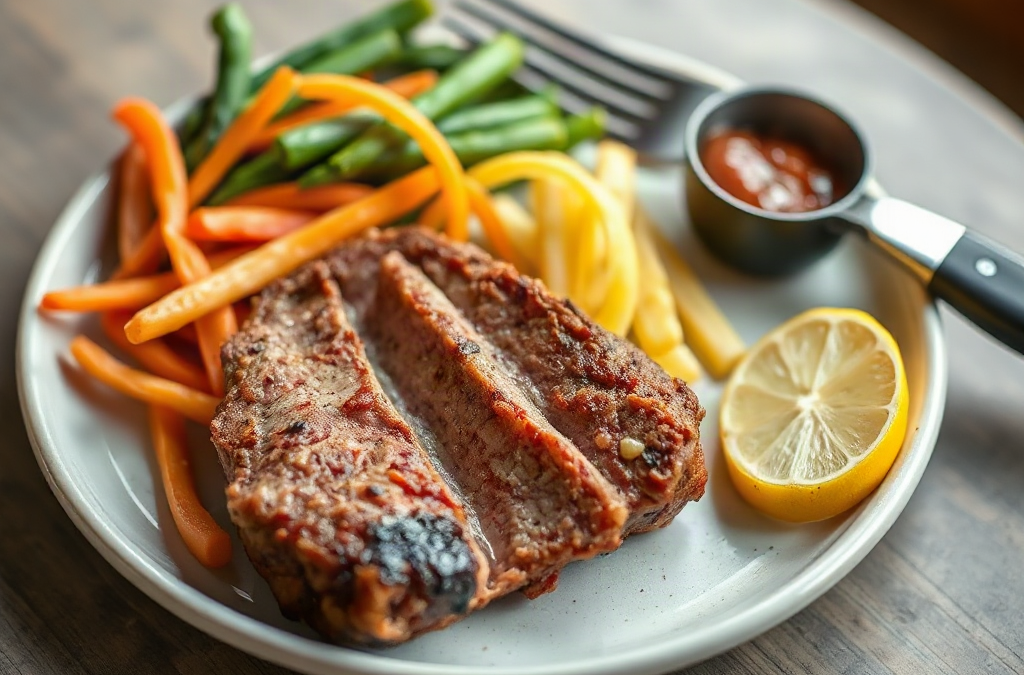
Organic meat portions in a balanced eating pattern work best when a modest serving provides protein while vegetables, legumes, whole grains, fruit, and unsaturated fats fill out the meal. A practical starting point is about 3 to 4 ounces of cooked meat, adjusted for appetite, body size, activity, and the rest of the day’s protein sources. Choosing lean cuts more often, limiting processed meat, and varying beef, pork, poultry, fish, beans, eggs, and tofu can improve overall balance. The organic label describes production methods, not a guaranteed nutrient advantage, so portion size, preparation, food variety, sodium, and saturated fat still deserve attention.
What a Practical Meat Portion Looks Like
A useful cooked meat portion for many adults is roughly 3 to 4 ounces, or about the size of a deck of cards. That amount can supply a substantial protein contribution without allowing meat to crowd out vegetables, beans, grains, or other nutrient-dense foods. The portion should be judged after cooking because meat loses water and some fat as it cooks; a raw piece that looks larger may yield a considerably smaller cooked serving.
Portion guidance is not a rigid prescription. A smaller person with a low-protein meal pattern may need less at one sitting, while someone with higher energy needs may reasonably eat more. Age, appetite, activity, pregnancy, medical conditions, and total dietary intake all affect the appropriate amount. The most useful question is not whether every meal contains exactly the same serving, but whether meat is functioning as one component of the pattern rather than the entire plate.

Visual estimates help when a kitchen scale is unavailable. A thin 3-ounce chicken breast slice, a small lean pork chop, or a modest portion of roast beef can represent a typical serving once cooked. Ground meat is harder to judge because a large burger may contain several servings before cooking. Reading the package weight and dividing it into planned portions prevents the common mistake of treating a restaurant-size patty as a normal individual serving.
Organic status does not change the basic portion calculation. Organic beef, pork, or poultry can fit the same balanced pattern as conventionally produced meat, but the label primarily addresses production standards rather than serving size or a guaranteed health outcome. Readers comparing products should therefore consider the organic certification claim alongside leanness, processing, price, freshness, and how the meat will be prepared. For broader context, organic meat portions in a balanced eating pattern should be evaluated as part of the whole meal.
Building a Balanced Plate Around Meat
A balanced plate uses meat as the protein centerpiece without making it the only substantial component. Pairing a modest serving with vegetables, a fiber-rich carbohydrate, and a small amount of unsaturated fat creates more nutritional variety than doubling the meat and leaving the side dishes minimal. For example, 3 ounces of roasted organic chicken can sit alongside lentils, roasted broccoli, and brown rice; the lentils add fiber and plant protein while the vegetables contribute color, texture, and volume.
The reason this arrangement works is practical as well as nutritional. Meat provides protein and nutrients such as iron, zinc, and vitamin B12, but it generally supplies little fiber. Beans, whole grains, vegetables, fruit, nuts, and seeds help cover that gap. A plate made from a large steak, refined bread, and a small garnish may contain adequate protein yet still offer less dietary variety than a smaller steak with beans and several vegetables.
Portion balance can be adjusted according to the meat’s richness. A lean turkey cutlet may pair comfortably with a larger serving of avocado or olive-oil dressing, while a fattier beef cut may call for lighter preparation and more vegetables. That is not a rule that one meat must be avoided; it is a way to manage total saturated fat and energy across the meal. The same reasoning applies to sauces, cheese, creamy casseroles, and bacon toppings, which can turn a moderate meat serving into a much heavier dish.
A practical meal-building sequence is simple:
- Choose the meat portion first, usually around 3 to 4 cooked ounces for a general adult starting point.
- Fill a generous part of the plate with vegetables or a vegetable-based dish.
- Add beans, potatoes, whole grains, or another carbohydrate according to hunger and activity.
- Use herbs, spices, citrus, vinegar, or a measured amount of oil before relying on salty or sugary sauces.
For instance, a taco bowl can use a smaller amount of organic ground beef, black beans, cabbage, tomatoes, and brown rice rather than a large meat mound with chips and cheese as the main volume. The meat remains satisfying, but the meal gains fiber and a wider range of nutrients. Guidance on planning portions across the week can also help prevent every meal from defaulting to the same animal protein.
Choosing Cuts, Forms, and Cooking Methods
The form of meat often matters as much as the portion. Fresh, minimally processed cuts such as chicken breast, turkey, lean beef, pork tenderloin, or trimmed roast make portion control relatively straightforward. Ground meat can also fit, but its fat percentage, preparation, and serving size deserve closer attention. Processed meats such as bacon, sausage, hot dogs, and deli slices may contain substantial sodium or saturated fat, so they are better treated as occasional components rather than interchangeable with fresh meat at every meal.
Cooking method changes the final meal without changing the organic label. Grilling, roasting, broiling, braising, or pan-cooking with a modest amount of oil can preserve the character of the meat while limiting added fat. Deep-frying or covering a serving with rich cream sauce adds energy that is easy to overlook. Charring should not be treated as a health feature; avoiding heavily blackened surfaces and preventing drippings from producing excessive smoke is a sensible cooking practice.
Consider two otherwise similar dinners. A 4-ounce breaded and fried cutlet with creamy potatoes may be much heavier than a 4-ounce roasted cutlet with steamed greens and a baked potato. The meat portion is similar, but coating, oil, sauce, and side-dish preparation change the meal’s overall profile. Choosing organic meat does not cancel those differences, and paying a higher price for an organic product does not make an oversized or heavily processed serving automatically balanced.
Shopping decisions can support portion control before cooking begins. Divide a family pack into meal-size packages, freeze what will not be used promptly, and note whether the package weight is raw. For ground meat, compare leaner options when they suit the recipe, then drain excess fat if appropriate. For poultry, remove skin when a lower-fat meal is preferred, while recognizing that skin can contribute flavor and moisture when used in a controlled portion.
Another mistake is assuming that “organic” means “nutritionally superior” in every respect. Production standards and nutrient composition are separate questions. A certified organic sausage is still processed sausage, and organic breaded chicken is still breaded chicken. Use the label as one purchasing value, then assess the ingredient list, preparation, sodium, fat, and serving size. The best portion decision comes from the product and the meal together, not from the front-of-package claim alone.
Adjusting Portions for Real-World Needs
Portion size should respond to the rest of the eating pattern. Someone who eats eggs at breakfast, yogurt at lunch, and beans at dinner may not need a large meat serving at night. Someone with limited access to other protein sources may use a somewhat larger serving, although adding affordable beans, lentils, eggs, canned fish, or tofu can widen choices. A balanced pattern is built over days and weeks, not judged by one isolated plate.
Activity and appetite also affect practical amounts. A physically active adult may prefer a larger total meal, but increasing vegetables, whole grains, potatoes, fruit, or legumes can provide energy without simply multiplying the meat. A smaller adult or someone with a low appetite may find a 2- to 3-ounce serving easier to combine with other foods. Children need age-appropriate portions rather than scaled-down adult rules, and older adults with reduced appetite may benefit from nutrient-dense meals planned with a clinician or dietitian when intake is a concern.
Health circumstances can change the advice. People managing kidney disease, cardiovascular risk, diabetes, iron deficiency, or another diagnosed condition may need individualized guidance about protein, sodium, saturated fat, or iron sources. This article is not a treatment plan. The organic label should not be presented as a substitute for medical care, and a person with a specific dietary restriction should use professional advice to tailor both food selection and serving size.
A weekly approach is often more realistic than demanding meat at every meal. For example, a household might serve organic poultry on one day, lentil chili on another, fish on a separate day, and a small lean beef portion later in the week. That pattern creates room for variety and can reduce budget pressure. If cost is a concern, compare the price per edible serving rather than the package price alone; beans, eggs, and less expensive cuts can extend a meal without sacrificing satisfaction.
Signs that portions are working include consistent fullness, meals with visible plant foods, and enough variety to avoid relying on processed meat for convenience. Signs of imbalance include meat occupying most of the plate, vegetables appearing only as garnish, frequent oversized restaurant servings, or several processed-meat choices in the same day. Those signals call for changing the pattern, not necessarily abandoning organic purchases.
Common Mistakes and a Simple Meal Check
The most frequent mistake is treating a package, restaurant entrée, or large steak as one natural serving. Commercial portions often exceed what a person needs for a balanced plate, and leftovers can be planned rather than eaten automatically. A second mistake is measuring meat while ignoring the rest of the dish. A small amount of meat in a casserole may be reasonable, but a modest steak combined with bacon, cheese, and cream can produce a very different meal.
Use a short check before serving: Is the cooked meat roughly the intended portion? Does the plate contain a meaningful vegetable or fruit component? Is there a fiber-rich carbohydrate or legume when appropriate? Are sauces, breading, cheese, and cured ingredients adding more sodium or saturated fat than expected? Will leftovers be stored safely and used in a planned meal? These questions are more useful than searching for a single perfect organic serving.
A lunch example shows how the check works. A 3-ounce sliced organic turkey sandwich may look moderate, but several slices of processed deli meat, salty cheese, and a large refined roll can make the meal less balanced. Swapping some of the meat for hummus, adding tomato and greens, and choosing a whole-grain roll changes the meal without eliminating the desired protein. If the turkey is fresh roasted meat rather than cured deli meat, the sodium decision may differ, but the vegetable and portion questions still apply.
Another useful strategy is to plate the meat after measuring it once or twice. Visual familiarity makes later meals easier to judge. Keep the kitchen scale for unfamiliar cuts, ground meat, or meal preparation, rather than assuming every piece has the same cooked yield. When eating out, sharing a large entrée or boxing half before starting can prevent the restaurant portion from defining the meal.
Food safety remains part of portion planning. Cook meat according to recognized food-safety guidance, prevent cross-contamination, refrigerate leftovers promptly, and reheat them thoroughly. Organic production does not remove the need for safe handling. The goal is a repeatable pattern: moderate fresh-meat portions, plenty of plant foods, varied protein sources, sensible preparation, and adjustments based on personal needs.
Frequently Asked Questions
How much organic meat should one person eat at a meal?
A cooked serving of about 3 to 4 ounces is a practical starting point for many adults. Adjust it for appetite, body size, activity, other protein foods, and individual medical guidance.
Does organic meat require a smaller portion?
No. Organic certification concerns production standards, not a special serving size. Portion decisions still depend on the meat’s form, preparation, fat content, and place in the overall meal.
Can organic beef fit into a balanced eating pattern?
Yes. A modest lean beef serving can be paired with vegetables, beans, whole grains, or potatoes. Varying beef with poultry, fish, eggs, tofu, and legumes can improve dietary variety.
Are processed organic meats a healthier choice?
Organic status does not remove the characteristics of processing. Organic bacon, sausage, or deli meat may still be high in sodium or saturated fat, so use these products less often than fresh cuts when possible.
How can I estimate a meat portion without a scale?
After cooking, a 3-ounce serving is approximately the size of a deck of cards, though thickness and shape vary. Weigh an unfamiliar cut once, then use that visual reference for future meals.
Conclusion
Balanced use of organic meat depends less on a special organic serving rule than on proportion, variety, and preparation. Begin with a moderate cooked portion, then give the rest of the plate a clear role through vegetables, legumes, whole grains, fruit, or other nutrient-dense foods. Compare fresh cuts with processed forms, account for sauces and cooking fats, and remember that an organic claim does not guarantee lower sodium, less saturated fat, or a better overall meal. Spread protein choices across the week so meat is one useful option rather than the default at every meal. If a medical condition, pregnancy, appetite concern, or athletic goal changes your needs, obtain individualized advice. For everyday planning, measure unfamiliar portions once, plate intentionally, and judge success by the pattern across several days.
Huge Discount on the Best Certified Organic Nutrient Dense Supplement!



