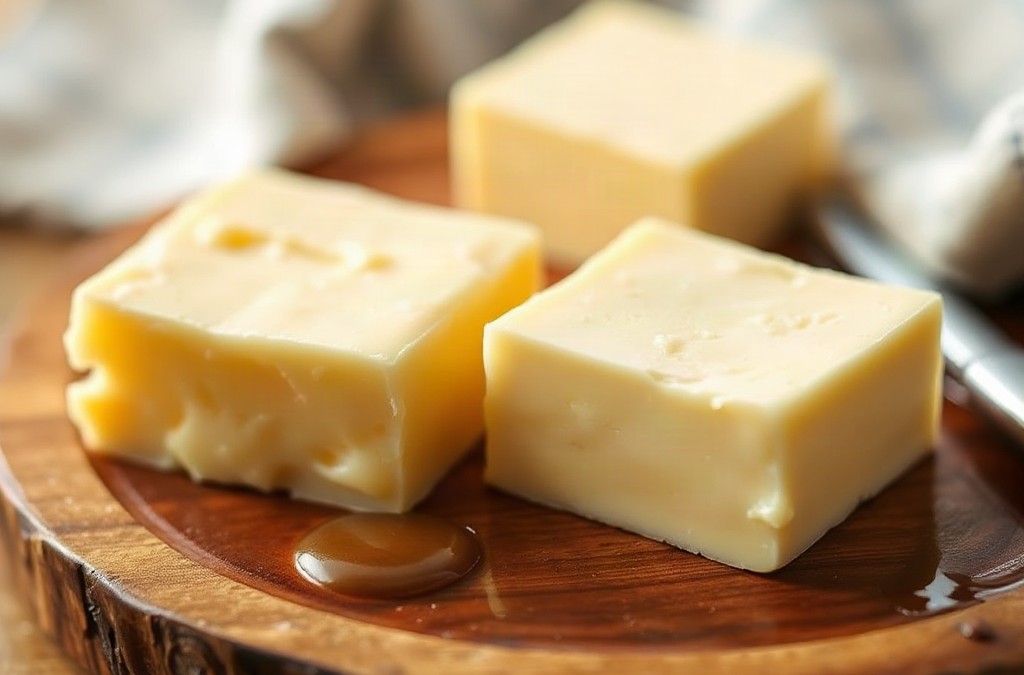
Organic ghee and butter differ mainly in water content, milk solids, cooking behavior, and flavor: ghee is clarified and generally better suited to higher-heat sautéing, while butter gives baking and sauces a richer dairy character. Ghee’s removed milk solids reduce browning and scorching, but it remains a concentrated dairy fat rather than a universally healthier substitute. Butter is usually the more predictable choice for pastries because its water contributes to dough structure and steam. Choose ghee for roasted vegetables, searing, and recipes where a nutty flavor fits; choose butter for baking, finishing, and delicate sauces.
How Ghee and Butter Differ in the Pan
Ghee is butter that has been heated so much of its water evaporates and the milk solids separate from the fat. The clarified fat is strained, leaving a golden product with a toasted, sometimes nutty aroma. Butter contains milk fat, water, and milk solids, so it behaves differently as soon as it reaches a skillet. Those distinctions—not the word “organic” alone—determine which ingredient performs better for a particular dish.
When butter melts, its water turns to steam and its milk solids can foam, brown, and eventually burn. That sequence is useful when making beurre noisette or adding a browned dairy flavor to vegetables, but it can become a problem during prolonged sautéing. Ghee contains little of the water and milk solids found in ordinary butter, so it stays clear and fluid for longer under comparable heat.
For example, a cook preparing onions and carrots over moderate heat may prefer butter because the milk solids add a gently browned flavor. The same cook may choose ghee for potatoes that need more time in the pan without repeatedly scraping dark residue from the bottom. Neither outcome makes one fat universally better. The correct choice depends on whether the recipe needs dairy browning, moisture, or resistance to scorching.
A common mistake is treating ghee as simply “stronger butter.” It has a different concentration and aroma, and its lower water content changes measurements in baking and doughs. Use organic ghee versus butter as a recipe decision, not as a blanket replacement rule. If the original recipe depends on butter’s water, replacing it one-for-one by volume may alter texture.
Smoke Point, Heat, and Cooking Performance
Ghee is often selected for higher-heat cooking because removing most milk solids reduces the components that darken and smoke first. Butter can still work well over low or moderate heat, but it needs closer attention when a pan becomes hot. Smoke point is useful, yet it is not the only measure of performance: pan temperature, cooking time, food moisture, and the condition of the fat all affect what happens.
For a quick sauté, the difference may be modest. A pat of butter added to a cool or moderately warm pan can coat green beans, mushrooms, or fish with a rich flavor before it browns. If the pan is already very hot, butter may foam aggressively and develop burnt specks before the food is ready. Ghee is less likely to produce that specific milk-solid residue, although any fat can smoke if overheated.
Ghee works particularly well for roasting vegetables, searing sturdy proteins, and frying aromatics such as cumin, garlic, or ginger. Its flavor can complement cauliflower, squash, lentils, and rice, but it may compete with a delicate white fish or a subtle cream sauce. Butter remains useful for finishing vegetables, basting, and pan sauces where its water and milk solids help create the desired texture.
Heat management still matters. A smoking pan is not a sign that the cooking fat is performing well. Lower the heat, remove the pan briefly, or add the ingredients promptly if the recipe calls for it. Another failure mode is adding ghee to an empty pan and leaving it unattended because it appears stable; its smoke point is not infinite, and prolonged overheating can degrade flavor.
For a practical sequence, warm the pan gradually, add the selected fat, watch for visual changes, and cook according to the food rather than a fixed burner setting. Ghee should smell clean and nutty, not acrid. Butter should smell sweet and toasted when browned, not sharp or burnt. Those sensory checks are more useful than relying on a single smoke-point number that may vary by product and testing method.
Flavor, Texture, and Recipe Fit
Butter brings a rounded dairy taste, slight sweetness, and a creamy mouthfeel. Ghee offers a more concentrated fat texture with a toasted aroma that can be noticeable even in a small amount. The flavor difference is easy to detect in simple foods such as warm rice, sautéed greens, toast, or roasted squash, where there are few ingredients to mask the fat.
Choose butter when its water and milk solids are part of the recipe’s structure. Cakes, biscuits, laminated doughs, and some pie crusts are formulated around butter’s moisture and the way solid fat disperses through flour. Ghee can produce a tender result in some cookies or short doughs, but the recipe may need adjustment. A direct substitution can make baked goods more crumbly, greasy, or less layered because the water component has disappeared.
Ghee is a natural fit for recipes where a clean, clarified fat is desirable. Brush it over vegetables before roasting, stir a small amount into grains, or use it to bloom spices at the beginning of a stew. In these applications, the nutty note is part of the dish rather than an accidental change. Butter may be preferable for mashed potatoes, pan-finished asparagus, or a lemon-butter sauce when a softer dairy profile is the goal.
Flavor intensity also affects portion decisions. A strongly aromatic ghee may allow a cook to use less while still noticing it, but that does not automatically make the dish lower in energy. Both are calorie-dense fats, so replacing butter with ghee should be based on cooking behavior and taste rather than an assumption that the swap removes nutritional tradeoffs.
Try a side-by-side test with the same cooked vegetable: one portion finished with butter and one with ghee. Notice aroma, coating, salt perception, and aftertaste after the food cools slightly. This small comparison is more reliable for personal preference than a label claim or a generalized statement that one fat tastes better.
Nutrition, Labels, and Practical Portions
Organic certification describes how the agricultural ingredients were produced and handled under the applicable certification system; it does not turn ghee or butter into a fat-free or risk-free food. Both remain concentrated dairy fats and should be considered within the overall pattern of meals. Their nutritional profiles can vary by product, so the package label is the appropriate place to check serving size, saturated fat, sodium, and added ingredients.
Ghee generally has very little milk protein and lactose because the water and milk solids are separated during clarification, but “very little” is not the same as a guaranteed absence. People with a milk allergy should not assume that ghee is safe without professional guidance and a careful product review. Individuals managing a medical condition or following a prescribed diet should use advice from a qualified clinician rather than treating a cooking comparison as medical guidance.
Butter may be salted or unsalted, while ghee is often sold plain but can also contain flavorings or added oils. Salted butter can change the balance of a cake, sauce, or vegetable dish, especially when the recipe includes stock, cheese, or seasoned spices. Unsalted butter gives more control in baking. For ghee, inspect the ingredient list and storage directions; a product with only clarified butter is easier to compare with standard butter than a spiced or blended version.
Portion size is a practical control regardless of the choice. Measure fat before adding it to a skillet when calories or saturated fat matter, and use broth, water, or the moisture released by vegetables when the recipe permits. A teaspoon used to coat a pan is a different decision from several tablespoons used for frying or finishing. More ghee is not automatically an improvement in flavor or cooking performance.
Weak label assumptions can mislead shoppers. Organic does not necessarily mean unsalted, minimally processed, lower in saturated fat, or suitable for every dietary restriction. Compare the nutrition panel and ingredient list, then prioritize the property that matches the task: clarified composition for heat, butter’s water for baking, or flavor compatibility for finishing.
A Simple Choice for Everyday Cooking
The fastest way to choose between the two is to identify the recipe’s dominant need. If the pan will stay hot for several minutes, ghee may offer more tolerance before milk solids brown. If the dish depends on browned dairy notes, butter may be the better ingredient. If the food is baked, follow the recipe’s fat specification unless you are prepared to adjust liquid and texture.
A compact kitchen decision checklist looks like this:
- For high-heat sautéing or roasting: consider ghee, while still controlling the pan temperature.
- For browning dairy solids: use butter and watch the color closely.
- For pastry and laminated dough: use the specified butter unless the formula was designed for ghee.
- For finishing: choose butter for creamy dairy flavor or ghee for a toasted, clarified-fat note.
- For dietary questions: read the label and seek individualized advice when allergy or medical restrictions apply.
Storage and freshness deserve attention too. Keep products in clean, well-sealed containers and follow the package directions, particularly for flavored preparations or products handled with wet utensils. Rancid fat may smell stale, paint-like, or sharply unpleasant; discard it rather than trying to cover the odor with spices.
Start with the smallest useful substitution. Replacing the fat in one vegetable dish gives you a low-risk way to assess flavor and pan behavior. Changing the fat in a cake or pastry is a larger experiment because moisture and structure are involved. Readers comparing cooking comparison: organic ghee versus butter should record what changed—browning speed, aroma, crispness, and cleanup—rather than judging only by the ingredient name.
For balanced meals, pair either fat with vegetables, beans, whole grains, eggs, fish, or other foods that contribute protein and fiber. The fat is one component of the dish, not the nutritional identity of the entire meal. A thoughtful choice therefore considers heat, recipe chemistry, taste, portion, and the rest of the plate.
Frequently Asked Questions
Is organic ghee healthier than butter?
Not automatically. Both are concentrated dairy fats, and organic status describes production practices rather than proving a superior nutritional profile. Compare labels and portions.
Can ghee replace butter in baking?
Sometimes, but not always one-for-one. Ghee has far less water, so cakes, biscuits, and pastry may change in spread, tenderness, or structure.
Which is better for high-heat cooking?
Ghee is often more practical because it contains fewer milk solids that can brown and burn quickly. It can still smoke if the pan is overheated.
Does ghee contain dairy?
Yes. Ghee is made from butter and remains a dairy product, even though clarification removes most water and milk solids. Anyone with a milk allergy should seek individualized guidance.
When does butter taste better?
Butter is often preferable when a recipe benefits from creamy dairy flavor, browned milk solids, or butter’s water, such as sauces, finishing, and many baked goods.
Conclusion
Choose ghee when the cooking task calls for a clarified fat with a toasted flavor and greater tolerance for sustained skillet heat. Choose butter when moisture, browned milk solids, creamy flavor, or established baking chemistry matters more. Organic labeling may be meaningful for how the product was produced, but it does not settle the cooking or nutrition decision by itself. Read the ingredient list, check whether the product is salted or flavored, measure the portion, and consider the whole meal. For a first comparison, test both fats on the same vegetables or grains and note browning, aroma, texture, and cleanup. That small experiment gives more useful evidence for your kitchen than treating either ingredient as a universal replacement.
Huge Discount on the Best Certified Organic Nutrient Dense Supplement!