
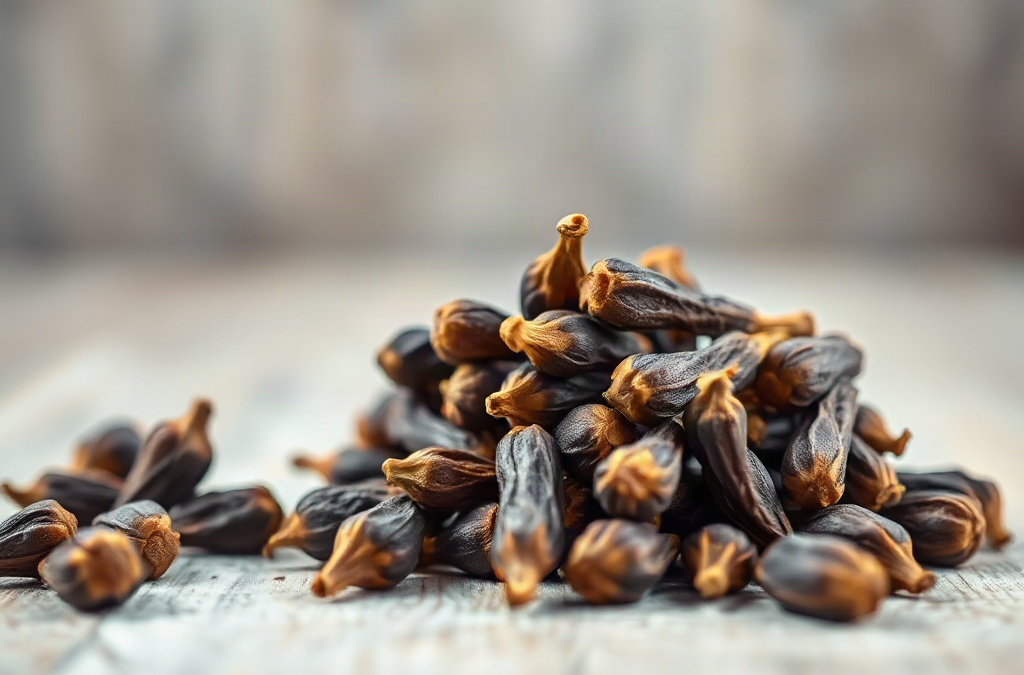
Choosing Whole Cloves for the Kitchen
Whole cloves are dried flower buds from the clove tree, valued for their concentrated fragrance and warm, slightly sweet flavor. In the jar, they should look firm and dry, with a rounded head attached to a narrow stem. Organic certification addresses how the crop was produced; it does not automatically mean the cloves are fresher, stronger, or better suited to every recipe. Freshness still depends on harvesting, packaging, storage, and how long the container has been open.
A strong aroma is the most useful kitchen test. Rub or gently crush one clove between your fingers and smell it. A noticeable scent suggests that its volatile oils are still present. A dusty, nearly odorless clove may be safe to use if it has remained dry, but it will contribute little flavor. Avoid buds with dampness, webbing, visible mold, or an unusually soft texture. Small differences in size also matter: large, intact cloves are easier to count and remove from a pot than broken fragments.
Buying a modest package is often more practical than selecting a large bulk bag. Cloves are used in small quantities, and a container exposed to air for years may lose aroma before it shows obvious spoilage. If you use them for both savory food and drinks, a tightly sealed glass jar with a clear label can prevent confusion with ground spices or similarly shaped seasonings. The internal link Cooking and storing organic whole cloves can fit naturally beside other pantry practices on a site about organic ingredients.
Do not assume that more cloves produce a more complex dish. Their eugenol-rich aroma is powerful, and an excessive amount can make broth, fruit, or rice taste medicinal or numbing. Begin with the lower end of a recipe’s suggested amount, especially when combining cloves with cinnamon, allspice, star anise, or nutmeg. You can add more infusion time or another clove later; removing an overpowering spice from a finished liquid is much harder.
How to Cook With Cloves Without Overpowering Food

The best cooking method depends on whether you want a background aroma or a concentrated burst of flavor. Add whole cloves directly to simmering liquid when making stock, lentils, rice, poached fruit, cider, or a braise. Heat and moisture draw aromatic compounds from the bud gradually, distributing flavor through the surrounding liquid. For a milder result, add them partway through cooking or use fewer buds. For a deeper infusion, keep them in during a longer simmer, then remove them before plating.
Cloves can also be pressed into an onion or citrus peel so they remain easy to retrieve. That technique suits a pot of beans, a broth, or a sauce where loose spices would be difficult to locate. Count the cloves as they go in and out. Accidentally leaving one in a serving of rice creates a hard, intensely flavored bite rather than a pleasant seasoning experience. A spice sachet or fine-mesh infuser offers the same control when several whole spices are involved.
Ground cloves and whole cloves are not interchangeable in every situation. Ground spice disperses throughout a batter, rub, or dessert and delivers flavor immediately, while whole cloves release flavor more slowly and can be removed. A baked apple cake may benefit from ground cloves because a uniform distribution is desirable; a mulled drink is usually easier to manage with whole buds. Crushing whole cloves shortly before use can increase aroma, but it also shortens their usable storage life because more surface area is exposed to air.
For an everyday example, place two or three whole cloves in a pot of rice with a bay leaf and a small piece of cinnamon, then remove all aromatics before serving. The rice should smell warm rather than taste sharply spicy. In a lentil stew, add cloves with the cooking liquid and taste near the end; tomato, onion, and legumes can soften the perceived intensity, but the spice may still become dominant if left in a small pot. A common mistake is adding whole cloves to a dry pan for too long. They can scorch quickly, producing bitterness, so toast them briefly only when a recipe specifically calls for it and watch the heat.
For more context on using pantry spices alongside meals, see Cooking and storing organic whole cloves as a practical reference rather than treating the spice as a supplement. Cloves are a seasoning ingredient, not a substitute for medical care or a reason to consume concentrated amounts.
Storing Cloves for Longer-Lasting Aroma
Store organic whole cloves in an airtight container in a cool, dry, dark cupboard. Heat, light, oxygen, and moisture gradually reduce the aroma of dried spices. A cabinet away from the stove, dishwasher, sink, and direct sunlight is usually better than a shelf beside the cooktop. The original package may work while sealed, but a resealable jar or well-closed tin offers better protection after opening.
Moisture is the most immediate storage problem. Steam from a simmering pot can enter a container if you sprinkle cloves directly over the stove, causing clumping and eventually encouraging mold. Use a clean, completely dry measuring spoon and close the jar before returning it to the pantry. Never put a damp spoon into the container. If a few cloves have fallen into a wet dish, do not return them to the jar.
Label the container with the purchase or opening date. Whole cloves often remain usable for a long time when kept dry, but their quality declines before there is a clear spoilage signal. Check the scent periodically rather than relying only on a printed date. Faded aroma means the cloves may need a larger amount to make an impression, which can create an uneven or overly woody flavor. Replacing a small jar is often preferable to compensating with many old buds.
Refrigeration is rarely necessary and may introduce condensation when the container moves between cold and warm environments. Freezing can protect some dry foods, but it is usually excessive for a small household supply and can create moisture problems if the jar is opened before returning to room temperature. A stable pantry is simpler. If you buy in bulk, divide the supply into a working jar and a sealed reserve so the entire quantity is not repeatedly exposed to air.
Quality failure and safety failure are different. Weak scent indicates declining culinary quality; dampness, mold, insects, or a stale musty odor indicates that the product should be discarded. Do not try to rescue visibly moldy spices by drying or toasting them. Keep cloves away from strong-smelling cleaners and other pungent pantry items because dried spices can absorb odors through imperfect packaging.
Common Mistakes, Safety, and Practical Use
The most reliable routine is simple: inspect the cloves, measure a small amount, contain them during cooking, remove them before serving, and return the unused supply to a dry cupboard. This sequence protects both flavor and texture. A quick checklist is useful when a recipe does not specify much detail:
- Use intact, strongly scented buds for infusions.
- Choose ground cloves when the seasoning must disappear evenly into a mixture.
- Count whole cloves added to liquid so they can be removed.
- Keep the storage jar away from steam, heat, and sunlight.
- Discard cloves exposed to moisture, mold, pests, or a musty smell.
Safety also depends on how cloves are consumed. Culinary quantities in food are different from concentrated clove oil or large amounts taken by mouth. Clove oil is highly concentrated and should not be treated as an ordinary cooking substitute. People who are pregnant, taking medication, preparing food for young children, or managing a bleeding disorder or other health condition should ask a qualified clinician about concentrated clove products rather than extrapolating from normal food use.
Another misconception is that organic whole cloves need special handling because they are organic. They should be stored and cooked like other properly dried spices, while the organic label remains a production and certification detail. Washing dry cloves is not useful and can add moisture; inspect them and use them dry. If the buds are being added to a beverage, strain the finished drink instead of allowing loose spices to remain in the cup.
When a dish tastes too strong, removing the cloves immediately is the first practical step. Dilution with unsalted stock, water, grains, beans, or additional vegetables may help, depending on the recipe, but adding sugar or acid does not reliably erase the flavor. If the aroma is too weak, simmering longer may extract more, whereas adding several crushed cloves at the end can produce a harsh result. This distinction—gradual infusion versus sudden concentration—is the main reason whole cloves are useful in controlled cooking.
Pantry organization can make the habit easier. Keep whole cloves with other infusing spices, reserve ground cloves for baking, and store both in containers that show whether the contents remain dry. The anchor Cooking and storing organic whole cloves is most useful when paired with a recipe’s actual cooking time, liquid volume, and removal method rather than followed as a fixed dosage rule.
For food-storage questions, consult current guidance from the USDA FoodKeeper resource and extension publications from accredited universities. These sources can help readers evaluate pantry conditions, moisture exposure, and general dried-food quality without treating a spice’s organic label as a guarantee of indefinite freshness.
Frequently Asked Questions
How many whole cloves should be used in a dish?
Use the recipe's amount as a starting point, often only a few buds for a pot of rice, stew, or beverage. Adjust for liquid volume and other strong spices, and remove the cloves before serving.
Should whole cloves be crushed before cooking?
Crushing releases aroma faster and suits spice blends, but it makes the flavor stronger and harder to remove. Keep cloves whole when you want a gradual infusion and easy retrieval.
Where should organic whole cloves be stored?
Use a tightly closed, dry container in a cool, dark cupboard away from the stove, sink, dishwasher, and direct sunlight.
How can you tell when cloves are too old?
Rub one and smell it. A faint or dusty aroma signals declining quality, while moisture, mold, insects, clumping, or a musty odor means the cloves should be discarded.
Can whole cloves be left in food while it is served?
They can be technically edible, but their hard texture and concentrated flavor make an unexpected bite unpleasant. Count them during cooking and strain or remove them before serving.
Conclusion
Good results with organic whole cloves come from controlling extraction and protecting the remaining spice from moisture. Choose intact buds with a clear aroma, use a restrained amount, and add them to liquid when you want a warm background note rather than a sharp burst. A sachet, infuser, or simple count makes removal straightforward, especially in rice, broth, braises, and spiced drinks. Keep the unused cloves sealed in a cool, dark, dry cupboard, and replace them when the scent fades or discard them if moisture, mold, pests, or mustiness appears. Treat concentrated clove oil separately from culinary seasoning. Those small decisions preserve flavor, prevent unpleasant bites, and make the organic label one part of a sound kitchen-storage routine rather than the only quality check.
Huge Discount on the Best Certified Organic Nutrient Dense Supplement!