
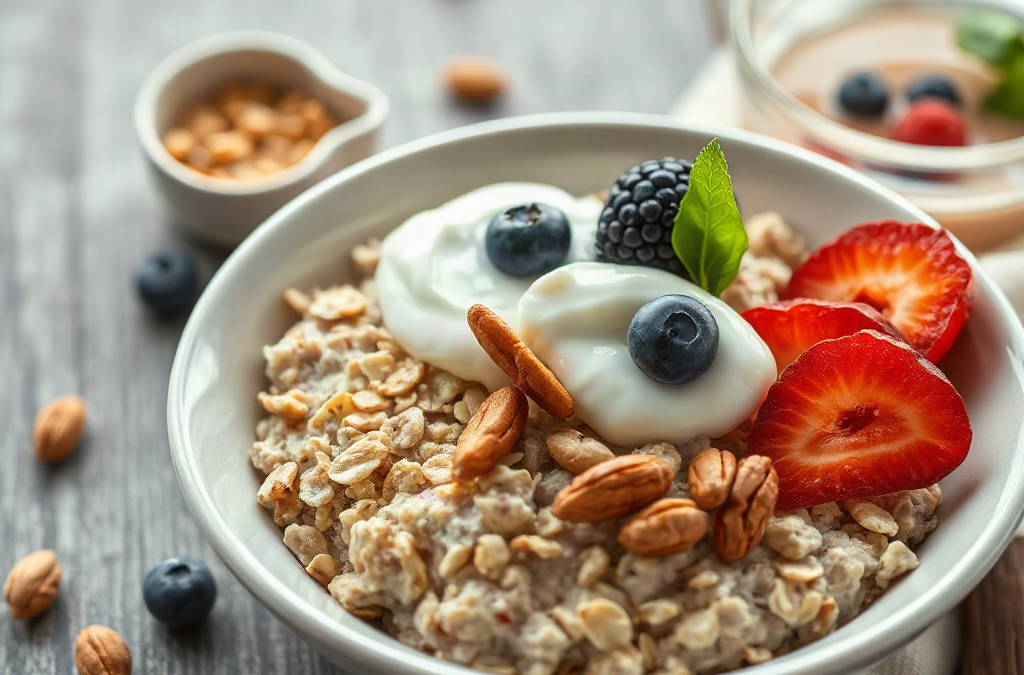
Balanced breakfast toppings for organic oatmeal combine fruit for flavor and carbohydrates, nuts or seeds for unsaturated fat, and a protein-rich ingredient such as Greek yogurt, milk, or nut butter. Oats already provide complex carbohydrates and fiber, but a bowl made with only syrup or dried fruit may be less satisfying and more concentrated in added or naturally occurring sugars. Build the bowl around one fresh fruit, one protein source, and one modest portion of nuts or seeds, then add cinnamon or unsweetened coconut for extra flavor. Choose certified organic ingredients when that standard matters to you, but compare nutrition labels because organic status does not automatically mean low-sugar or minimally processed.
What Makes an Oatmeal Topping Combination Balanced
A well-composed bowl of organic oatmeal usually includes a carbohydrate base, a protein source, a source of unsaturated fat, and a fruit or vegetable component. Rolled or steel-cut oats supply starch and fiber, while toppings determine how filling the meal feels and how quickly it is eaten. A spoonful of brown sugar adds sweetness but contributes little texture or protein; berries, walnuts, and plain yogurt create a more varied meal with contrasting nutrients and flavors.
The practical goal is not to make every bowl nutritionally perfect. It is to avoid letting one ingredient dominate. A useful starting pattern is one fruit, one protein-rich topping, and one nut or seed topping. Milk or fortified soy beverage can contribute protein while cooking the oats, and cinnamon, cardamom, or grated orange zest can make a lightly sweetened bowl taste fuller without relying on a large amount of syrup.
Portion matters because toppings are easy to underestimate. Nut butters, nuts, seeds, coconut, and granola are concentrated foods, so several generous spoonfuls can turn a modest bowl into a much heavier meal. That does not make them poor choices; it means they should be selected deliberately. Someone eating breakfast before a long morning may prefer oats with peanut butter and banana, while a lighter breakfast may work better with berries, pumpkin seeds, and plain yogurt.
Organic certification addresses how an ingredient is produced and labeled, not whether it is automatically lower in sugar, calories, or sodium. Organic maple syrup is still a sweetener, and organic granola may still contain substantial added sugar. Compare the ingredient list and Nutrition Facts panel when buying packaged toppings. The Balanced breakfast toppings for organic oatmeal approach works best when food quality, personal preference, budget, and portion are considered together.
Fruit Choices: Fresh, Frozen, and Dried
Fruit gives oatmeal acidity, color, sweetness, and moisture, which can make a bowl satisfying without heavy sweeteners. Fresh berries, sliced peaches, chopped apple, pear, or kiwi work well when available. Frozen berries are also useful because they can be stirred into hot oats, cool the serving slightly, and release juice that blends with the porridge. Choosing fruit with natural tartness, such as raspberries or cherries, can be especially helpful when the rest of the bowl contains a creamy or rich topping.
Fresh and frozen fruit are generally easier to portion by volume than dried fruit. Dried cranberries, raisins, dates, and apricots are shelf-stable and convenient, but removing water concentrates their sweetness. A small amount can add chewiness, while a large handful may make the bowl taste more like dessert. Dried cranberries may also contain added sugar, including when the package emphasizes organic production, so the ingredient list deserves a quick check.
Cooking fruit changes the eating experience rather than making it universally better or worse. Apples simmered with oats become soft and release flavor throughout the bowl; diced apple added at the end stays crisp. Bananas mashed into the cooking liquid provide sweetness and thickness, whereas banana slices added afterward offer a clearer fruit texture. These differences let you adjust the bowl without adding another sweetener.
For a practical serving, combine about one type of fruit with a contrasting topping instead of piling on several sweet ingredients. For example, blueberries with plain Greek yogurt and almonds provide a cool, creamy contrast, while warm apple oatmeal with tahini and cinnamon has a deeper, less berry-like profile. If the bowl tastes flat, try a pinch of salt or citrus zest before adding more syrup. If it tastes overly sweet, use tart berries, unsweetened applesauce, or grated pear and reduce dried fruit.
Nuts, Seeds, and Protein-Rich Additions
Nuts and seeds add texture and mostly unsaturated fat, while protein-rich toppings make the meal more substantial. Walnuts, almonds, pecans, pistachios, chia seeds, hemp hearts, ground flaxseed, and pumpkin seeds each bring a different texture. Chia and ground flax absorb liquid and thicken oatmeal; toasted nuts provide crunch; pumpkin seeds add a savory edge that works with cinnamon, cocoa, or pumpkin puree.
Protein can come from plain Greek yogurt, cottage cheese, milk, fortified soy beverage, silken tofu, or a spoonful of nut or seed butter. These options are not interchangeable in taste or texture. Greek yogurt adds tang after cooking, soy beverage can be incorporated into the oats, and peanut butter creates a dense, creamy bowl that may need extra liquid. A nut butter is useful for convenience, but it usually contributes more fat than protein per spoonful, so it should not automatically be treated as the entire protein component.
Heat and timing affect texture. Stirring yogurt into boiling oatmeal can make it thin or slightly lumpy, while letting the oats cool briefly produces a creamier result. Seeds can be mixed in during cooking when a thick consistency is desired, or sprinkled on top when their texture matters. Ground flaxseed is more practical than whole flax for some uses because the ground form is easier to incorporate, although it should be stored according to package directions to preserve quality.
A realistic combination might be oats cooked with milk, topped with strawberries, pumpkin seeds, and a small spoonful of yogurt. A dairy-free version could use fortified soy beverage, blueberries, chia seeds, and almond butter. People with nut allergies should avoid cross-contact and choose seeds only when their safety is established. Anyone managing kidney disease, diabetes, food allergies, or a medically prescribed diet should individualize portions and ingredients with a qualified clinician rather than assuming that an organic label resolves those concerns.
Building and Adjusting a Breakfast Bowl
The most reliable way to build balanced oatmeal is to add toppings in an intentional order: establish creaminess, add fruit, include protein, then finish with texture and flavor. Start with oats cooked in water, dairy milk, or an unsweetened fortified alternative. Next, add fruit based on the desired result. Mashed banana or cooked apple blends into the base, while berries or sliced stone fruit create a fresher topping.
Choose one principal protein source rather than adding several rich ingredients automatically. Plain yogurt works well for a cool, tangy bowl; soy beverage is convenient during cooking; cottage cheese can provide a savory-sweet contrast when paired with peaches or berries. Add a modest amount of nuts or seeds afterward. This order makes it easier to judge whether the bowl needs more richness, crunch, or sweetness before adding extra calories from multiple toppings.
Use the following compact check when preparing breakfast:
- Base: Choose plain organic oats and decide whether water or a milk alternative best fits the meal.
- Produce: Add fresh or frozen fruit, or use a small portion of dried fruit for convenience.
- Protein: Include yogurt, milk, soy beverage, tofu, cottage cheese, or a suitable nut or seed spread.
- Texture: Finish with nuts, seeds, toasted whole-grain cereal, or unsweetened coconut.
- Flavor: Use cinnamon, vanilla, cocoa, citrus zest, or a small amount of maple syrup.
Adjust the bowl according to what happens after breakfast. If hunger returns quickly, increase the protein or add a more substantial seed or nut portion rather than simply adding syrup. If the meal feels too heavy, reduce concentrated toppings and use fruit or yogurt for volume. If the texture is gluey, use less chia or flax and add them after cooking. These small changes are more useful than following a rigid formula that ignores appetite, schedule, and cooking method.
Common Topping Mistakes and Practical Fixes
The most common mistake is treating sweetness as the measure of a successful oatmeal bowl. Maple syrup, honey, sweetened granola, dates, banana, and dried fruit can all appear together, producing a breakfast that is flavorful but poorly balanced for the individual. The fix is not to remove every sweet ingredient. Choose one main sweet element, then build contrast with tart fruit, plain dairy or soy foods, nuts, seeds, and spices.
Another error is adding several concentrated toppings because each appears wholesome on its own. Almond butter, walnuts, chia, flax, coconut, and granola can create excessive richness and obscure the oats. Select one crunchy topping and one creamy topping first. Add another only if the serving size and the rest of the day’s meals support it. Organic granola deserves the same scrutiny as conventional granola: check for added sugars, oils, and serving size rather than relying on the front label.
Some preparation habits also undermine the intended texture. Adding all toppings before cooking can make nuts soft and yogurt hot, while adding dry seeds without enough liquid can produce a thick, pasty spoonful. Keep delicate toppings for the end, and add a splash of milk if the finished oatmeal tightens as it sits. For meal preparation, store fruit separately when possible so it does not make the oats watery or shorten their appealing texture.
Flavor fatigue is another sign that the combination needs adjustment. Eating the same cinnamon-and-banana bowl every day may encourage extra sweetener simply because the flavor has become predictable. Rotate profiles: apple with tahini and cardamom, berries with yogurt and pumpkin seeds, or pear with walnuts and ginger. The oatmeal topping combinations that last are flexible enough to use seasonal produce, pantry staples, and affordable substitutions.
In summary, do not assume that “balanced” means identical portions for everyone. A child, an endurance athlete, a person with a small appetite, and someone following a therapeutic diet may need different amounts or ingredients. Notice energy, hunger, digestion, and enjoyment without treating one breakfast response as a medical diagnosis. A registered dietitian can help when food restrictions or health conditions make ordinary trial and adjustment inappropriate.
For general nutrient information and food-label guidance, readers can consult the USDA FoodData Central database, the U.S. Food and Drug Administration’s Nutrition Facts resources, and guidance from university extension programs. These sources can help compare oats, fruits, seeds, dairy products, and packaged toppings without treating organic certification as a substitute for nutrition information.
Frequently Asked Questions
What is the simplest balanced topping combination for organic oatmeal?
Try berries, plain Greek yogurt, and chopped walnuts or pumpkin seeds. Use a small amount of maple syrup only if the fruit and yogurt do not provide enough sweetness.
Are organic oatmeal toppings automatically healthier?
No. Organic status reflects production and labeling standards, while sugar, sodium, fiber, protein, and portion size still depend on the specific product.
Is fresh or frozen fruit better for oatmeal?
Both can work well. Frozen fruit is convenient and blends into hot oats, while fresh fruit often offers more contrast in texture. Choose based on availability, cost, and preference.
Can nut butter count as the protein topping?
Nut butter contributes some protein but is also concentrated in fat. Pairing it with milk, yogurt, soy beverage, or seeds may create a more substantial protein combination.
How can I make oatmeal sweet without using much syrup?
Use ripe banana, cooked apple, berries, cinnamon, vanilla, citrus zest, or unsweetened applesauce. Tart fruit and a pinch of salt can make modest sweetness taste more pronounced.
Conclusion
Balanced organic oatmeal comes from combining contrasting food groups rather than collecting as many “healthy” toppings as possible. Keep the base plain, add fruit for moisture and flavor, include a dependable protein source, and finish with a measured portion of nuts or seeds. Check packaged granola, dried fruit, plant beverages, and nut butters for added sugar and serving size because organic labeling does not settle those questions. Adjust the bowl according to hunger, texture, budget, allergies, and preparation time. A practical next step is to choose two combinations—one using fresh or frozen fruit and one built from pantry ingredients—then compare how each affects fullness and enjoyment. That flexible approach produces a breakfast pattern you can actually maintain.
Huge Discount on the Best Certified Organic Nutrient Dense Supplement!



